How Do You Know Your Oil Is Low And What You Should Do
Knowing your oil is low can save your engine from serious damage. You can spot warning signs like dashboard lights, strange engine noises, and reduced performance. This guide shows you exactly how to check your oil level and what steps to take next.
Your car’s engine relies on oil to keep everything running smoothly. Without enough oil, metal parts grind against each other and cause damage. But how do you know your oil is low before it becomes a big problem?
The good news is that your vehicle gives you several clear signs. From dashboard lights to strange sounds, your car tries to tell you when something is wrong. The key is knowing what to look for and acting fast. In this guide, we walk you through every sign of low oil and the simple steps you can take right away.
Whether you are a new car owner or have been driving for years, understanding your engine oil level matters. It is one of the easiest maintenance tasks you can do at home. A few minutes of checking can save you hundreds of dollars in repairs. Let us dive into everything you need to know about how do you know your oil is low and what you should do about it.
Key Takeaways
- Check the dipstick regularly: It is the easiest and most reliable way to monitor your engine oil level at home.
- Watch for dashboard warning lights: The oil pressure light and check engine light often signal low oil before other symptoms appear.
- Listen for unusual engine sounds: Knocking, ticking, or grinding noises can indicate your engine is running without enough lubrication.
- Act quickly when oil is low: Topping off oil promptly prevents costly engine repairs and keeps your vehicle running smoothly.
- Know when to seek professional help: Persistent low oil levels may point to leaks or internal engine problems that need expert attention.
- Follow your owner’s manual: Every vehicle has specific oil type, capacity, and change interval recommendations you should follow.
- Prevention is cheaper than repair: Regular oil checks and timely oil changes are the best ways to avoid engine damage.
📑 Table of Contents
- Why Engine Oil Matters So Much
- How Do You Know Your Oil Is Low: The Clear Warning Signs
- Step-by-Step: How to Check Your Oil Level
- What You Should Do When Oil Is Low
- Common Causes of Low Engine Oil
- Prevention Tips to Keep Your Oil at the Right Level
- Expert Insight: The Hidden Dangers of Ignoring Low Oil
- Conclusion
Why Engine Oil Matters So Much
Engine oil is the lifeblood of your vehicle. It lubricates moving parts, reduces friction, and keeps the engine cool. Without proper oil levels, your engine can overheat and suffer severe wear. Understanding this helps you take oil checks seriously.
Here is what engine oil does every time you drive:
- It reduces friction between metal parts inside the engine
- It carries heat away from hot combustion areas
- It cleans away sludge and harmful deposits
- It seals gaps between piston rings and cylinder walls
- It prevents rust and corrosion inside the engine
When your oil level drops, these functions weaken. Even a short drive with low oil can cause permanent damage. This is why recognizing the signs early makes all the difference. The sooner you catch low oil, the better protected your engine stays.
How Do You Know Your Oil Is Low: The Clear Warning Signs
Your vehicle uses several methods to tell you about low oil. Some signs are obvious, while others are more subtle. Let us go through each one so you can spot trouble early.
The Oil Pressure Warning Light
This is the most direct signal your car sends you. The oil pressure light looks like an old-fashioned oil can symbol on your dashboard. When it turns on, your oil pressure has dropped below safe levels.
Do not ignore this light. Many drivers make the mistake of hoping it will go away. In most cases, it means your oil level is dangerously low. Pull over safely and check your oil as soon as you can. Driving with this light on can destroy your engine within minutes.
The Check Engine Light
While the check engine light can mean many things, low oil is one possible cause. Your car’s computer monitors oil pressure and triggers this light when something is off. If the check engine light comes on alongside other symptoms, low oil may be the culprit.
A simple scan tool can read the error codes stored in your vehicle’s computer. Codes starting with P0520 or P0524 often point to oil pressure problems. However, do not guess. Always verify with a physical oil check using your dipstick.
Unusual Engine Noises
Oil acts as a cushion between engine parts. When oil runs low, those parts start touching metal on metal. This creates sounds you should never ignore.
Common noises linked to low oil include:
- Ticking or tapping sounds: These often come from the valve train when it lacks lubrication
- Knocking sounds: A deep knock from inside the engine is a serious warning sign
- Grinding noises: This means metal parts are grinding together without any oil buffer
If you hear any of these sounds, stop driving and check your oil level immediately. Continuing to drive can cause catastrophic engine failure.
Decreased Engine Performance
Low oil affects how well your engine runs. You might notice your car feels sluggish or less responsive. The engine may struggle to accelerate or feel rough when idling.
These performance drops happen because parts are not getting the lubrication they need. Friction increases, efficiency drops, and your engine works harder than it should. If your car feels different, checking the oil should be one of the first things you do.
Burning Oil Smell
A sharp, oily smell inside or outside your car is a red flag. When oil levels are low, the remaining oil can overheat and start to burn. This produces a distinct smell that is hard to miss.
A burning oil smell can also mean an oil leak. Oil may be dripping onto hot engine parts like the exhaust manifold. Either way, you should investigate the source right away. Low oil combined with a burning smell is a situation that needs immediate attention.
Exhaust Smoke
Your exhaust should be mostly invisible. Blue or gray smoke coming from the tailpipe can signal that oil is entering the combustion chamber. This often happens when oil levels are very low or when internal seals are failing.
Do not confuse this with white steam on a cold morning. Blue or gray smoke that persists after the engine warms up is a problem. Have your oil level checked and inspect for leaks underneath the vehicle.
The Dipstick Reading
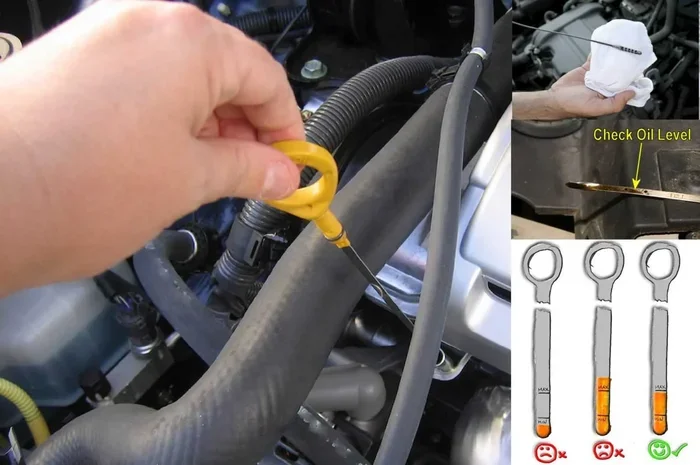
The dipstick is the most direct tool for checking your oil level. Every vehicle has one, and it is simple to use. Pop the hood, pull out the dipstick, wipe it clean, reinsert it, and pull it out again.
Look at the markings on the dipstick. Most dipsticks have two lines or holes. The oil should fall between these marks. If the oil line is below the lowest mark, your oil is low. This is the most reliable way to confirm low oil levels at home.
Step-by-Step: How to Check Your Oil Level
Checking your oil is one of the simplest maintenance tasks. You can do it at home with no special tools. Here is exactly how to do it the right way.
Step 1: Park on Level Ground
Make sure your car is parked on a flat surface. Turn off the engine and wait a few minutes. This lets the oil settle back into the oil pan for an accurate reading.
Step 2: Locate the Dipstick
Open the hood and look for the dipstick handle. It usually has a brightly colored ring or tab. The handle is often yellow or orange, making it easy to spot.
Step 3: Pull and Clean
Pull the dipstick out completely. Wipe it with a clean rag or paper towel. You want a clean surface for an accurate reading. Hold it horizontally and wipe from the tip upward.
Step 4: Reinsert and Read
Slide the dipstick all the way back in. Then pull it out again and look at the oil level. The oil will leave a streak between the two marks. That streak tells you exactly where your oil level stands.
Step 5: Check Oil Color and Condition
While you have the dipstick out, check the oil color. Fresh oil is amber or light brown. Dark brown or black oil means it is time for an oil change. Milky or foamy oil could signal a coolant leak, which is a serious problem requiring immediate attention.
What You Should Do When Oil Is Low
Finding out your oil is low can feel stressful. But the good news is that you can take action right away. Here is exactly what you should do in this situation.
Topping Off the Oil
The first step is to add oil to bring the level back to normal. Here is how to do it safely:
- Find the right oil type for your vehicle. Check your owner’s manual for the recommended viscosity and specification
- Locate the oil fill cap on top of the engine. It usually has an oil can symbol on it
- Remove the cap and pour in a small amount of oil
- Wait a minute for the oil to settle, then recheck with the dipstick
- Add more oil gradually until the level reaches the full mark
- Replace the fill cap and start the engine
- Let it run for a few minutes, then recheck the dipstick one more time
Never overfill the oil. Too much oil can cause foaming and pressure problems. Always add oil in small increments and check frequently.
When to See a Mechanic
Topping off oil is a quick fix, but it does not address the root cause. You should visit a mechanic if:
- Your oil keeps dropping faster than normal between changes
- You notice visible oil leaks under your parked car
- The oil pressure light stays on even after adding oil
- You hear persistent knocking or tapping noises
- The oil appears contaminated or has a strange color
A professional mechanic can inspect for oil leaks, check the oil pump, and assess internal engine health. Regular oil changes and oil filter replacements are also essential parts of vehicle maintenance that help prevent low oil issues in the future.
Understanding Oil Capacity and Change Intervals
Every engine has a specific oil capacity. This is the total amount of oil the engine holds when full. You can find this number in your owner’s manual or on the manufacturer’s website. Knowing your oil capacity helps you understand how much oil to add when you are topping off.
Oil change intervals vary by vehicle and oil type. Traditional conventional oil typically needs changing every 3,000 to 5,000 miles. Synthetic oil can last 7,500 to 10,000 miles or more. Always follow the recommendations in your owner’s manual for the best engine protection.
Common Causes of Low Engine Oil
Oil levels drop over time through normal use. But sometimes, low oil points to a bigger issue. Understanding the common causes helps you prevent future problems.
Oil Leaks
Oil leaks are the most common reason for low oil between changes. Leaks can develop from worn gaskets, loose oil drain plugs, or damaged oil pans. Look for dark puddles under your parked car as a telltale sign of a leak.
Burning Oil
Some oil consumption is normal, especially in older vehicles. But burning too much oil means your engine rings or valve seals may be worn. If you need to add oil frequently, have a mechanic inspect the engine internally.
Oil Dilution
Fuel can sometimes leak into the oil pan and dilute the oil. This is more common in direct-injection engines. Diluted oil loses its lubricating properties and can lead to increased engine wear. Regular oil changes help prevent this problem.
Improper Oil Change Intervals
Skipping oil changes or going too long between services causes oil to break down. Old oil loses viscosity and cannot properly lubricate engine parts. This leads to increased friction, sludge buildup, and eventually low oil protection.
Prevention Tips to Keep Your Oil at the Right Level
Preventing low oil is much easier than dealing with engine damage. A few simple habits can keep your engine healthy for years.
- Check your oil weekly: Make it a habit to check your dipstick at least once a week
- Keep spare oil in your trunk: A quart of the right oil can save you in an emergency
- Follow the manufacturer’s oil change schedule: Do not skip or delay oil changes
- Watch your dashboard lights: Address any warning lights immediately
- Inspect for leaks regularly: Look under your car for fresh oil spots
- Use the correct oil type: Always use the oil grade recommended by your vehicle manufacturer
- Replace your oil filter on time: A clogged oil filter restricts oil flow and reduces protection
These prevention tips are small efforts that pay off big. They keep your engine lubricated, cool, and running efficiently. A well-maintained engine lasts longer and performs better.
Expert Insight: The Hidden Dangers of Ignoring Low Oil
Many drivers underestimate how quickly low oil can damage an engine. Without proper lubrication, metal components grind together at high speeds. This creates heat, friction, and metal shavings that circulate through the engine.
Within a short time, low oil can cause:
- Worn piston rings and cylinder walls: These expensive repairs require major engine work
- Seized engine: In extreme cases, the engine locks up completely and becomes unusable
- Damaged bearings: Rodent and main bearings fail without oil, leading to costly replacements
- Clogged oil passages: Sludge and debris block oil flow, starving critical engine parts
The cost of an oil change or topping off oil is a fraction of the cost of engine repair or replacement. This is why paying attention to your oil level is one of the smartest things you can do as a car owner. Regular vehicle maintenance, including oil level checks, protects your investment and keeps you safe on the road.
Conclusion
Now you know exactly how do you know your oil is low and what steps to take. From dashboard warning lights to strange engine noises, your vehicle gives you plenty of signals. The oil pressure light, the dipstick reading, and unusual sounds are your best tools for catching low oil early.
When you do find that your oil is low, act quickly. Top off the oil with the correct type, and monitor the level closely. If the oil keeps dropping, visit a mechanic to rule out leaks or internal problems. Prevention through regular checks and timely oil changes is always better than expensive repairs.
Your engine is the heart of your vehicle. Treating it well with proper oil maintenance ensures years of reliable performance. Start checking your oil today, and your car will thank you tomorrow.
Frequently Asked Questions
How often should I check my engine oil level?
You should check your oil at least once a week and always before a long trip. Regular checks help you catch low oil early and prevent engine damage. Making it a habit takes only a couple of minutes each time.
Can I drive my car if the oil is low?
You should avoid driving with low oil whenever possible. Even a short distance can cause serious engine wear. If you must drive, add oil first and drive directly to the nearest service station. Never ignore the oil pressure warning light.
What type of oil should I add if my level is low?
Always use the oil type and viscosity recommended in your owner’s manual. Using the wrong oil can reduce engine protection and performance. Check the oil fill cap or owner’s manual for the correct specification before adding oil.
Why does my oil keep getting low even after I add more?
Consistently low oil usually points to an oil leak or burning oil inside the engine. External leaks can come from gaskets, seals, or the oil pan. Internal burning may indicate worn piston rings or valve seals. A mechanic can diagnose the exact cause.
Is it normal for oil level to drop between oil changes?
A small drop is normal due to normal oil consumption and minor leaks. However, a significant drop between changes is not normal. If you are adding more than a quart between changes, have your vehicle inspected for leaks or engine problems.
What happens if I run out of oil completely?
Running out of oil completely can cause the engine to seize. Metal parts grind together without any lubrication, causing catastrophic damage. In most cases, a seized engine requires a full engine replacement or expensive rebuild. This is why never letting your oil reach zero is so important.