How Do I Know If My Toyota Alternator Is Going Bad
Your Toyota alternator keeps your electrical system alive. If it fails, you’ll face dim lights, a dead battery, and strange noises. This guide shows you exactly how to spot the warning signs and test it yourself.
If you drive a Toyota, you rely on the Toyota alternator to keep everything running. It charges your battery and powers the electrical system while the engine is on. When it starts to fail, you’ll notice clear warning signs. Ignoring those signs can leave you stranded with a dead battery. This guide walks you through every sign, test, and fix so you can act fast.
Your Toyota alternator is a small but mighty part. It turns mechanical energy into electrical energy. Think of it as the generator for your car. Without it, your battery alone can’t power the lights, radio, or ignition for long. So, knowing how to spot a bad Toyota alternator saves time, money, and hassle.
In this article, you’ll learn the top symptoms, how to test it yourself, and when to call a mechanic. We’ll cover common mistakes that cause early failure too. By the end, you’ll feel confident diagnosing the issue on your Toyota model, whether it’s a Camry, Corolla, or RAV4.
Key Takeaways
- Dashboard warning light: The charge light is a clear signal that your charging system needs attention.
- Dim headlights: Flickering lights often point to a failing alternator, not just a weak battery.
- Strange noises: Whining or grinding sounds under the hood can mean bad bearings or a worn belt.
- Dead battery: A Toyota alternator that can’t charge will leave you stranded with a dead battery.
- Electrical gremlins: Power windows, radio, and accessories acting up are red flags for electrical issues.
- Simple test: A multimeter reading below 13.5 volts at idle often means your alternator is failing.
📑 Table of Contents
- What Does a Toyota Alternator Actually Do?
- 5 Clear Signs Your Toyota Alternator Is Going Bad
- Bad Alternator vs Bad Battery: How to Tell the Difference
- How to Test Your Toyota Alternator at Home
- Toyota Alternator Replacement Cost and What to Expect
- Common Mistakes and When to Pull Over
- Final Thoughts: Protect Your Toyota with a Healthy Alternator
What Does a Toyota Alternator Actually Do?
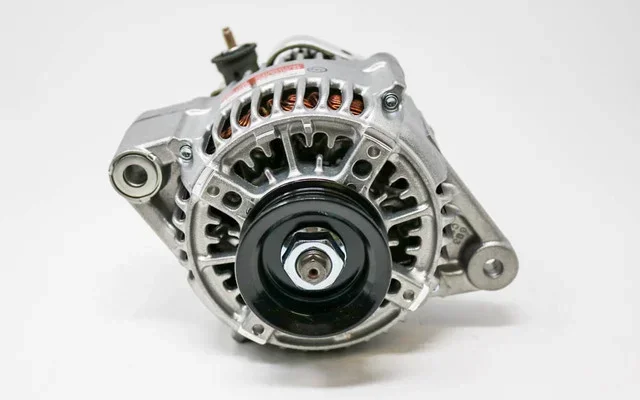
The Toyota alternator has one main job: keep your battery charged. It does this by converting engine rotation into electricity. A serpentine belt spins the alternator pulley. Inside, a rotor creates a magnetic field. That field passes through stator coils and generates AC power. A diode then converts that AC power into DC power for your car’s electrical system.
Your battery stores energy, but it can’t run everything on its own. The Toyota alternator supplies power to the ignition, fuel injectors, lights, and accessories while you drive. If the alternator fails, the battery tries to do all the work. It will drain quickly and die. That’s why a failing Toyota alternator often looks like a bad battery problem.
The Basic Job of an Alternator
Every Toyota alternator works on the same principle. The engine turns a pulley attached to the alternator shaft. The shaft spins a rotor inside a stator. This movement creates an electrical current. A voltage regulator controls the output to protect your battery and electronics. A healthy Toyota alternator produces between 13.5 and 14.5 volts. That’s the sweet spot for charging without overcharging. The regulator senses the battery voltage and adjusts the field current to maintain a steady output.
How It Works with Your Battery
Your battery and Toyota alternator work as a team. The battery provides the big burst of power to start the engine. Once the engine is running, the Toyota alternator takes over. It powers all the electrical loads and recharges the battery. If the alternator can’t keep up, the battery dips into its reserves. Over time, this deep cycling damages the battery too. The two components depend on each other. A weak battery can even cause the alternator to overwork and fail early.
5 Clear Signs Your Toyota Alternator Is Going Bad
Spotting the signs early can save you from a breakdown. Here are the most common symptoms of a Toyota alternator that’s on its way out.
Dashboard Warning Light
Your dashboard has a light shaped like a battery or the word ALT. If this charge light turns on, don’t ignore it. It means the Toyota alternator isn’t charging properly. Sometimes the light flickers when you turn on the headlights or A/C. That flickering is a clear sign of electrical issues. Even if the light goes off, get it checked. A loose connection or a failing diode can trigger it.
Dim or Flickering Headlights
Your headlights need steady power. If they dim when you idle or brighten when you rev the engine, your Toyota alternator is struggling. Flickering dash lights or a dim dome light are also red flags. This happens because the alternator can’t maintain a stable voltage output. A healthy Toyota alternator keeps the voltage steady around 14 volts. If it drops below 13 volts, your lights will show it.
Weird Noises Under the Hood
A bad Toyota alternator often makes noise. Listen for a high-pitched whining sound that changes with engine speed. This is called alternator whine. It happens when the internal bearings wear out. You might also hear a grinding or rattling noise. That could mean a worn serpentine belt or a loose idler pulley. Any new noise from the engine bay deserves a closer look.
Battery Keeps Dying
If you have to jump-start your car frequently, the Toyota alternator is the likely culprit. A dead battery caused by a bad alternator is very common. The battery simply can’t hold a charge because it never gets fully recharged. You might notice a slow crank when you turn the key. The starter motor turns slowly because it’s not getting enough power. This is a classic sign of alternator failure.
Electrical Accessories Acting Strange
Your Toyota has many electrical accessories. Power windows, the radio, the heated seats, and the A/C all rely on the alternator. If these accessories start working slowly or stop working altogether, suspect the Toyota alternator. For example, your power windows might move slower than usual. The radio might fade in and out. These are signs that the electrical system isn’t getting enough power.
Bad Alternator vs Bad Battery: How to Tell the Difference
Many drivers assume a no-start means a dead battery. But a failing Toyota alternator can cause the exact same symptoms. Understanding the difference helps you fix the right part the first time.
A bad battery usually shows a slow crank or a click when you turn the key. The engine might not turn over at all. A bad Toyota alternator often shows electrical issues while driving. The lights dim, the radio cuts out, or the charge light flashes. A simple test can tell them apart. With the engine off, check the battery voltage. It should read 12.6 volts or higher. Start the engine. The voltage should rise to 13.5–14.5 volts. If it stays at 12.6 volts or drops, your Toyota alternator isn’t working.
| Symptom | Likely Bad Battery | Likely Bad Alternator |
|---|---|---|
| Engine cranks slowly | Yes | Sometimes |
| Charge light on | No | Yes |
| Lights dim at idle | No | Yes |
| Battery dies after sitting | Yes | Yes |
| Voltage below 13.5V with engine running | No | Yes |
This table helps you quickly narrow down the problem. Always test the charging system before replacing parts. A new Toyota alternator costs more than a battery, so you want to be sure.
How to Test Your Toyota Alternator at Home
You don’t need a mechanic to check your Toyota alternator. A simple multimeter test takes just a few minutes. Here’s how to do it safely.
The Multimeter Test
First, make sure your engine is off. Set your multimeter to DC voltage (20V range). Touch the red probe to the positive battery terminal and the black probe to the negative terminal. A fully charged battery should read around 12.6 volts. Now start the engine. The Toyota alternator should boost that voltage. A healthy reading is between 13.5 and 14.5 volts. If you see less than 13 volts, your Toyota alternator isn’t charging properly.
If you see more than 15 volts, the voltage regulator might be failing. Overcharging will damage your battery and electrical components. If the voltage drops when you rev the engine, the alternator might have a bad diode or worn brushes. This test gives you a clear picture of your Toyota alternator health.
Visual and Listen Check
Pop the hood and look at the serpentine belt. A cracked or glazed belt can slip and cause the alternator to undercharge. Check the belt tension too. A loose belt won’t spin the alternator fast enough. Next, start the engine and listen carefully. A smooth hum is normal. A whining or grinding noise points to bad bearings inside the alternator. You can also use a rubber hose as a stethoscope. Place the hose on the alternator housing and listen at the other end. This helps you pinpoint the exact source of the noise.
Check the Alternator Fuse and Connections
Sometimes the problem isn’t the alternator itself. A blown fuse or a corroded connector can stop the charging circuit. Locate your fuse box and check the alternator fuse. Refer to your owner’s manual for the exact location. Also, inspect the wiring at the back of the alternator. A loose or green-corroded plug will increase resistance and reduce output. Clean any corroded terminals with electrical contact cleaner and a wire brush.
Toyota Alternator Replacement Cost and What to Expect
Replacing a Toyota alternator isn’t overly expensive, but the cost varies. Let’s break down what you can expect.
| Option | Parts Cost | Labor Cost | Total Cost | Time Needed |
|---|---|---|---|---|
| DIY Replacement | $200 – $450 | $0 | $200 – $450 | 1 – 2 hours |
| Independent Mechanic | $200 – $450 | $100 – $200 | $300 – $650 | 1 – 2 hours |
| Toyota Dealer | $300 – $600 | $150 – $300 | $450 – $900 | 1 – 3 hours |
The Toyota alternator part itself is the biggest cost. OEM parts from the dealer are more expensive but come with a warranty. Aftermarket alternators from quality brands work just as well for most owners. The labor is straightforward on most Toyota models. You’ll need a ratchet, socket set, and serpentine belt tool. The whole process usually takes about an hour.
Parts and Labor Breakdown
For a Toyota Camry or Corolla, the alternator is easy to access. The serpentine belt is on the front of the engine. You’ll need to release the belt tension, remove the old alternator, and bolt the new one in place. Then route the new belt and check the tension. A Toyota RAV4 might have a slightly different layout, but the steps are similar. Always disconnect the negative battery terminal before you start. Safety first.
Is It Worth Fixing Yourself?
If you’re comfortable with basic car maintenance, DIY replacement is a great way to save money. You’ll need a new Toyota alternator that matches your model year. Check your owner’s manual for the part number. Many online stores sell remanufactured alternators at a lower price. Just make sure the warranty covers at least one year. If you’re not sure, a local mechanic can do the job quickly and often cheaper than the dealer.
Common Mistakes and When to Pull Over
Most Toyota alternator failures don’t happen overnight. Small mistakes wear it down over time. Knowing when to stop driving can save you from a bigger breakdown.
Overlooking Belt Wear
The serpentine belt is the lifeline of your Toyota alternator. A worn, cracked, or glazed belt will slip and cause the alternator to spin too slowly. This leads to undercharging. Many owners replace the belt only when it breaks. Instead, inspect the belt every oil change. Look for cracks, fraying, or glazing. A fresh belt costs very little and prevents a lot of headaches.
Ignoring Small Electrical Leaks
Moisture can cause corrosion on the alternator connector. A dirty or corroded connection increases resistance and reduces charging output. Over time, this heats up the diode rectifier and kills it. Keep the alternator connector clean and dry. If you see green or white buildup on the plug, clean it with electrical contact cleaner. A simple wipe can save you from a full alternator replacement.
Using Cheap Aftermarket Parts
Not all alternators are created equal. A very cheap replacement Toyota alternator might use low-quality bearings or a weak voltage regulator. These fail quickly and can even damage your new battery. Stick with reputable brands or OEM parts. The slight extra cost is worth the reliability and peace of mind.
Red Flags That Mean You Should Stop Driving
If your dashboard warning light comes on and stays solid, don’t keep driving far. The same goes if you notice a complete loss of power steering or brakes (though these are separate systems, a total electrical failure can affect them). If your headlights go completely dark at night, pull over safely. A dead Toyota alternator means your battery is the only power source. Once the battery dies, your engine will stall and you won’t restart. Call a tow truck if you’re stuck.
Also, listen for a loud grinding noise that suddenly appears. That could mean a bearing has seized. Continuing to drive can destroy the alternator completely and even damage the serpentine belt. A broken belt can also cause the engine to overheat if it drives the water pump. So, when in doubt, shut it down and get help.
Final Thoughts: Protect Your Toyota with a Healthy Alternator
Your Toyota alternator works hard every time you turn the key. It keeps your battery charged and your electronics running. By watching for the warning signs, you can catch a problem early. A simple multimeter test can confirm your suspicions. And when it’s time for a replacement, you know exactly what to expect.
Don’t wait until you’re stranded on the side of the road. Check your charging system regularly, especially on older Toyotas. A healthy Toyota alternator means reliable starts and a happy drive. Keep your eyes on the dashboard lights and your ears open for strange noises. That small bit of attention goes a long way toward keeping your Toyota running strong for years to come.
Frequently Asked Questions
How long does a Toyota alternator usually last?
Most Toyota alternators last between 80,000 and 150,000 miles. However, driving habits and maintenance play a big role. Regular belt inspections and keeping the electrical connections clean can extend its life significantly.
Can a bad alternator damage my Toyota battery?
Yes, absolutely. A failing alternator either undercharges or overcharges the battery. Undercharging leaves the battery constantly low, which causes sulfation and early death. Overcharging can boil the battery fluid and ruin the internal plates. Always replace a bad Toyota alternator quickly to protect your battery.
What does a Toyota alternator whine sound like?
A failing alternator often makes a high-pitched whining noise that gets louder when you rev the engine. It might sound like a small fan or a buzzing mosquito. If you hear this and it changes with engine speed, the internal bearings or the voltage regulator are likely failing.
Is it safe to drive with a bad Toyota alternator?
It’s risky. You can drive short distances on battery power alone, but the battery will drain quickly. If the battery dies completely, your engine will stall and you won’t be able to restart. For safety, have your Toyota alternator tested as soon as you notice symptoms and avoid long trips.
How much does it cost to replace a Toyota alternator?
The total cost typically ranges from $300 to $650 for most Toyota models, including parts and labor. DIY replacement saves you the labor charge, bringing the cost down to just the part price, which is usually $200 to $450. Dealer pricing will be on the higher end.
What causes a Toyota alternator to fail prematurely?
Common causes include a worn serpentine belt, a faulty voltage regulator, corroded connectors, and overheating. Jump-starting your car incorrectly can also send a voltage spike that damages the internal diodes. Regular maintenance and using quality parts help prevent early Toyota alternator failure.