How Do I Know Which Tire Is Low on My Toyota Corolla
Knowing which tire is low on your Toyota Corolla is essential for safety, fuel efficiency, and tire longevity. Your Corolla comes equipped with a tire pressure monitoring system (TPMS) that alerts you when pressure drops, but understanding the exact warning signs and manual checks helps you act faster. This guide walks you through every method — from dashboard indicators to using a tire pressure gauge — so you can confidently identify and fix a low tire pressure Toyota Corolla issue in minutes.
You’re driving your Toyota Corolla down the road, and suddenly a yellow warning light pops up on your dashboard. Your heart sinks a little. What does it mean? Which tire is low? Is it safe to keep driving?
Don’t worry. This is a common situation for Toyota Corolla owners, and it’s easy to handle once you know what to look for. Whether your Corolla tire pressure warning comes on suddenly or gradually, understanding how to identify the low tire can save you time, money, and stress.
In this guide, we’ll walk you through every method — from your dashboard sensors to simple manual checks — so you can confidently answer the question: how do I know which tire is low on my Toyota Corolla. You’ll learn about the TPMS system, the physical signs of underinflation, and exactly what to do when you find a low tire.
Key Takeaways
- TPMS Light: Your Toyota Corolla’s dashboard warning light is the first and most reliable indicator of low tire pressure.
- Manual Check: Using a tire pressure gauge on each tire is the most accurate way to find the exact low tire.
- Visual Inspection: Uneven tire wear, bulging sidewalls, and visible deflation are clear physical signs of underinflation.
- Recommended PSI: Most Toyota Corolla models require 32-35 PSI, found on the driver-side door jamb sticker.
- TPMS Reset: After inflating tires, resetting the TPMS light ensures your system recalibrates correctly.
- Prevention: Regular monthly checks and temperature awareness help prevent unexpected low-pressure situations.
📑 Table of Contents
- Understanding Tire Pressure Warnings on Your Toyota Corolla
- The Tire Pressure Monitoring System (TPMS) Explained
- How to Check Each Tire Manually
- Common Signs That a Tire Is Low on Your Toyota Corolla
- Step-by-Step Guide to Finding the Low Tire
- How to Fix and Prevent Low Tire Pressure Issues
- Why Tire Pressure Matters for Your Toyota Corolla
- Conclusion
Understanding Tire Pressure Warnings on Your Toyota Corolla
Your Toyota Corolla has a built-in system designed to warn you about tire pressure problems. This system is called the Tire Pressure Monitoring System, or TPMS for short. It’s been a standard feature on Corollas for many years now, and it works hard to keep you safe on the road.
The TPMS uses sensors inside each tire or on the valve stems. These sensors measure the air pressure inside each tire in real time. When the pressure drops below a safe threshold, the system sends a signal to your dashboard. A yellow warning light shaped like a horseshoe with an exclamation mark appears.
What the TPMS Light Looks Like
The Toyota Corolla tire pressure light is easy to spot. It looks like a cross-section of a tire with an exclamation point in the center. You’ll usually see it on the instrument cluster, right behind the steering wheel.
There are two ways this light behaves:
- Solid Yellow Light: This means one or more tires have low pressure. It’s a warning to check your tires soon.
- Flashing Yellow Light: This often indicates a malfunction in the TPMS system itself, not necessarily a low tire. Still, you should check your tire pressure.
If you see either light, don’t ignore it. Driving on an underinflated tire can reduce your fuel economy, cause uneven tire wear, and even lead to a blowout at higher speeds.
Why the TPMS Light Comes On
Several things can trigger your Corolla tire pressure warning:
- A slow leak from a nail or screw in the tread.
- A loose or damaged valve stem.
- Temperature drops — cold weather reduces tire pressure by about 1 PSI for every 10°F drop.
- A faulty TPMS sensor that needs replacement.
- Recent tire changes or rotations that affected sensor alignment.
Understanding why the light came on helps you determine the next steps. Sometimes it’s a quick fix. Other times, you might need a new sensor.
The Tire Pressure Monitoring System (TPMS) Explained
Let’s take a closer look at how the TPMS works on your Toyota Corolla. There are two types of TPMS systems, and knowing which one your Corolla has helps you understand the warnings better.
Direct TPMS
Most modern Toyota Corollas use a direct TPMS. This means each tire has its own small sensor, usually located inside the wheel or attached to the valve stem. These sensors measure the exact air pressure inside each tire and send the data wirelessly to your car’s computer.
The big advantage of a direct TPMS is precision. Your Corolla’s computer knows exactly which tire is low. When the light comes on, it’s because the system detected a specific pressure drop in one or more tires.
Indirect TPMS
Some older Toyota Corolla models use an indirect TPMS. This system doesn’t have physical pressure sensors inside the tires. Instead, it uses the wheel speed sensors from your anti-lock braking system (ABS). When a tire is underinflated, its rolling radius changes slightly, causing it to spin at a different speed than the other tires.
The car’s computer notices this difference and triggers the TPMS light. Indirect systems are less precise but still effective at alerting you to a problem.
Limitations of TPMS
While TPMS is incredibly helpful, it has limitations. Here are a few things to keep in mind:
- The TPMS light typically activates when pressure drops 25% below the recommended level.
- It doesn’t tell you the exact PSI of each tire — just that something is off.
- Sensors can fail or batteries can die, causing false warnings.
- The system may not detect a slow leak that develops gradually over weeks.
This is exactly why knowing how to check your tires manually is so important. The TPMS is a safety net, not a replacement for regular tire maintenance.
How to Check Each Tire Manually
The most reliable way to find out which tire is low is to check them yourself. You don’t need fancy equipment — just a simple tire pressure gauge and a few minutes of your time.
Step 1: Find the Recommended PSI
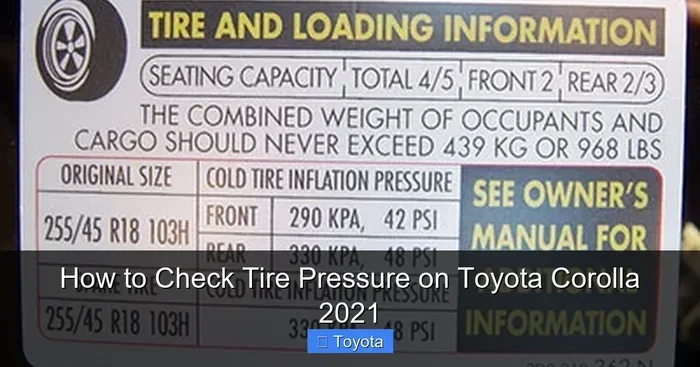
Before you check anything, know what the correct pressure should be. For most Toyota Corolla models, the recommended tire pressure PSI is between 32 and 35 PSI. You’ll find this information on a sticker located on the driver-side door jamb. It shows the recommended pressure for both front and rear tires.
You can also check your owner’s manual for the exact specifications. Never use the PSI number printed on the tire sidewall — that’s the maximum pressure the tire can handle, not the recommended pressure for your Corolla.
Step 2: Get a Tire Pressure Gauge
A tire pressure gauge is a small, inexpensive tool you can buy at any auto parts store for under $15. Digital gauges are easy to read and very accurate. Pencil-style gauges work fine too, though they can be slightly less precise.
Keep one in your glove box. You’ll use it regularly once you make it a habit.
Step 3: Check All Four Tires
Here’s the process:
- Remove the valve cap from the first tire.
- Press the gauge firmly onto the valve stem.
- Read the PSI number on the gauge.
- Compare it to the recommended PSI on the door jamb.
- Repeat for all four tires.
The tire that reads significantly below the recommended PSI is your low tire. Write down each reading so you can track patterns over time.
Quick Tip
Check your tire pressure when the tires are cold — meaning the car has been parked for at least three hours or driven less than a mile. Driving heats up the air inside the tires, which can give you a falsely high reading.
Common Signs That a Tire Is Low on Your Toyota Corolla
Sometimes the TPMS light isn’t the first clue that a tire is low. There are several other warning signs that experienced drivers watch for. Knowing these signs helps you catch a low tire pressure Toyota Corolla problem before it becomes serious.
Visual Warning Signs
Your eyes can tell you a lot about your tire health. Look for these visible clues:
- Flat-looking sidewalls: If the tire looks visibly deflated, especially on the sides, the pressure is likely too low.
- Uneven tire wear: Underinflated tires wear out faster on the outer edges of the tread. Run your hand along the tread — if the inner and outer edges feel more worn than the center, you likely have a pressure problem.
- Bulging or blisters: Low pressure causes the tire sidewall to flex excessively, which can create bulges or bubbles in the rubber.
- Visible objects: Sometimes you can see a nail, screw, or sharp object embedded in the tread that’s causing a slow leak.
Driving Behavior Clues
Your car will tell you when something feels off. Pay attention to these driving cues:
- Pulling to one side: A low tire on one side causes the car to drift toward that side.
- Reduced fuel economy: Underinflated tires create more rolling resistance, which means your engine works harder and uses more gas.
- Sluggish handling: The car may feel less responsive in turns or when braking.
- Vibrations: Uneven tire pressure can cause unusual vibrations through the steering wheel or seat.
Audible Signs
In some cases, a very low tire makes noise. You might hear a flapping sound if the tire is severely deflated, or a hissing sound if air is escaping from a puncture. If you hear either of these, pull over safely and inspect the tire immediately.
Common Mistake
Many drivers ignore the TPMS light for weeks, hoping it will go away on its own. This is a dangerous habit. Even a slow leak gets worse over time, and driving on a low tire causes permanent damage to the tire sidewall that can’t be repaired.
Step-by-Step Guide to Finding the Low Tire
Now let’s put it all together. Here’s a clear, step-by-step process to identify exactly which tire is low on your Toyota Corolla.
Method 1: Dashboard First
When the TPMS light comes on, your first step is to note which system is telling you. Some newer Toyota Corolla models display individual tire pressure readings right on the dashboard or through the multimedia screen. If your Corolla has this feature, check the live readings to see exactly which tire is low.
If your model doesn’t display individual readings, move to the next method.
Method 2: The Visual Walk-Around
Walk around your parked Corolla and look at each tire from the front and the side. Compare them visually. The low tire will often look noticeably thinner or flatter than the others. This method works well for significantly low tires but won’t catch a tire that’s only slightly underinflated.
Method 3: The Manual Gauge Check
This is the most accurate method and the one we recommend for every driver:
- Park your Corolla on a flat surface.
- Locate the valve stem on each tire.
- Remove the valve cap and attach the gauge.
- Record the PSI reading for each tire.
- Compare each reading to the recommended PSI on the door jamb.
- The tire with the lowest reading is your problem tire.
Method 4: The Soapy Water Test
If you suspect a slow leak but can’t find it, mix some dish soap with water in a spray bottle. Spray the solution onto each tire, focusing on the tread, sidewalls, and valve stem. Bubbles will form at the exact location of the leak. This trick is a favorite among mechanics and DIY enthusiasts alike.
Expert Insight
Toyota technicians recommend checking your tire pressure at least once a month and before any long road trips. Temperature changes in seasons can cause pressure to drop by 1-2 PSI per month even without a leak. Regular checks catch problems early and extend the life of your tires significantly.
How to Fix and Prevent Low Tire Pressure Issues
Once you’ve identified the low tire, the next step is fixing it and preventing the problem from happening again. Here’s everything you need to know.
Inflating Your Tire
If your tire is slightly low, inflating it is quick and easy:
- Find an air compressor at a gas station, tire shop, or use a portable compressor at home.
- Remove the valve cap and attach the air hose nozzle to the valve stem.
- Add air in short bursts, checking the PSI with your gauge between each burst.
- Stop when you reach the recommended PSI on the door jamb sticker.
- Replace the valve cap securely.
Overinflating is just as bad as underinflating, so go slowly and check frequently.
When to Visit a Tire Shop
Some situations require professional help:
- A puncture in the sidewall — these cannot be safely repaired.
- A leak that keeps coming back despite multiple inflations.
- A damaged or corroded valve stem.
- A TPMS sensor that needs replacement or reprogramming.
- A tire that has been driven on while severely low, which may have internal damage.
Prevention Tips for Long-Term Tire Health
Keeping your tires properly inflated doesn’t have to be a chore. Here are some simple habits that make a big difference:
- Set a monthly reminder on your phone to check tire pressure.
- Check before long trips — even a short drive to the next town.
- Invest in a quality digital gauge and keep it in your car at all times.
- Check tire pressure in the morning for the most accurate readings.
- Rotate your tires every 5,000-7,500 miles to promote even wear.
- Keep a tire inflator in your trunk for emergencies.
- Monitor seasonal temperature changes — add air as temperatures drop in fall and winter.
TPMS Reset After Inflation
After you’ve inflated your tire to the correct pressure, you may need to reset the TPMS light. Here’s how on most Toyota Corolla models:
- Turn the ignition to the “ON” position (don’t start the engine).
- Locate the TPMS reset button — it’s usually beneath the steering column or on the dashboard.
- Press and hold the button until the TPMS warning light blinks three times.
- Start the engine and drive for about 20 minutes.
- The light should turn off, indicating the system has recalibrated.
If the light stays on after resetting, there may be a deeper issue. Visit a Toyota dealer or tire shop for a diagnostic check.
TPMS vs. Manual Check: Which Is Better?
Here’s a quick comparison of both methods:
| Feature | TPMS (Automatic) | Manual Gauge Check |
|---|---|---|
| Accuracy | Good for major drops only | Very precise |
| Convenience | Hands-free, automatic | Requires a few minutes |
| Cost | Included with the car | $10-$25 for a gauge |
| Detects Slow Leaks | Only after significant loss | Yes, immediately |
| Maintains Over Time | No — sensors can fail | Yes — gauge lasts years |
The best approach combines both methods. Let your TPMS alert you to potential problems, and use manual checks to verify and catch issues early.
Why Tire Pressure Matters for Your Toyota Corolla
You might wonder why all this fuss about tire pressure matters so much. The truth is, proper tire inflation affects more than just avoiding a flat tire. It impacts nearly every aspect of how your Corolla performs.
Safety: Properly inflated tires provide the best grip on the road, especially on wet surfaces. Underinflated tires have a larger contact patch, which increases the risk of overheating and blowouts.
Fuel Economy: The Department of Energy estimates that underinflated tires can reduce fuel efficiency by about 3%. Over time, that adds up to real money at the pump.
Tire Longevity: Tires that are consistently underinflated wear out 20-30% faster on the outer edges of the tread. Replacing a tire costs significantly more than a few minutes of pressure checks each month.
Ride Comfort: Correctly inflated tires absorb road imperfections better, giving you a smoother, quieter ride in your Corolla.
Handling and Braking: Proper tire pressure ensures your Corolla stops and turns as the engineers intended. Even a 10% drop in pressure can noticeably affect braking distance.
Key Takeaways
Finding out which tire is low on your Toyota Corolla is straightforward once you know what to look for. Trust your TPMS warning light as the first alert, but always verify with a manual gauge check. Watch for visual signs like uneven wear and visible deflation. Pay attention to how your car drives — pulling, vibrations, and reduced fuel economy can all point to a pressure problem.
Make tire pressure checks a regular habit, and your Corolla’s tires will last longer, perform better, and keep you safer on every drive.
Conclusion
So, how do I know which tire is low on my Toyota Corolla? The answer is simpler than you might think. Start with your dashboard TPMS light — it’s designed to catch problems early. Then confirm with a manual tire pressure gauge check on all four tires. Look for visual signs like uneven wear or visible deflation, and trust your instincts if the car feels off while driving.
The Toyota Corolla tire pressure monitoring system is a valuable tool, but it works best when paired with regular manual checks and good maintenance habits. Keep a quality gauge in your glove box, check your pressure monthly, and stay ahead of potential problems before they become expensive repairs.
Your Corolla is a reliable, efficient car. Treat its tires right, and they’ll return the favor for thousands of miles. Take five minutes today to check your tire pressure — it’s one of the simplest things you can do to keep your Corolla running safely and smoothly.
Frequently Asked Questions
Can I drive my Toyota Corolla with a low tire?
You should avoid driving on a significantly low tire if possible. Even a short distance can cause permanent damage to the tire sidewall and reduce handling safety. If you must drive, keep your speed low and head directly to the nearest gas station or tire shop to inflate the tire.
How often should I check my Toyota Corolla tire pressure?
Toyota recommends checking your tire pressure at least once a month and before any long trips. Temperature changes also affect pressure, so it’s wise to check more frequently during seasonal transitions, especially in fall and winter.
What is the recommended tire pressure for a Toyota Corolla?
Most Toyota Corolla models require a tire pressure of 32-35 PSI. Always check the sticker on the driver-side door jamb for the exact specifications for your specific model year and trim level.
Why does my TPMS light come on even when my tires look fine?
This often happens due to temperature drops. Cold weather can reduce tire pressure by 1-2 PSI for every 10°F decrease, which may trigger the TPMS light. It can also indicate a failing TPMS sensor battery that needs replacement.
Can I reset the TPMS light myself?
Yes, most Toyota Corolla models allow you to reset the TPMS light using the reset button. Simply inflate all tires to the recommended PSI, turn the ignition to ON, press and hold the reset button until the light blinks three times, and drive for 20 minutes.
How much does it cost to replace a TPMS sensor on a Toyota Corolla?
TPMS sensor replacement typically costs between $50 and $100 per sensor, depending on the model year and whether you visit a dealership or independent shop. Some tire shops offer free sensor replacement if you purchase new tires from them.