Does Toyota Mirai Run on Water and Is It Really Possible
The Toyota Mirai does not literally run on water. Instead, it uses hydrogen gas in a fuel cell to generate electricity, with pure water vapor as the only tailpipe emission. This makes the Mirai a true zero emissions vehicle and a fascinating example of fuel cell technology in action.
You have probably seen the headlines. Someone posts a video of a Toyota Mirai tailpipe dripping water and the caption screams “This car runs on water!” It sounds too good to be true. And honestly, it kind of is. But there is a real, science-backed story behind this claim that is way more interesting than the hype.
So, does Toyota Mirai run on water? The short answer is no, not directly. But the longer answer is where things get exciting. The Toyota Mirai is a fuel cell vehicle that uses hydrogen gas to create electricity. The only thing that comes out of the tailpipe is pure water vapor. That is right, water. But the car does not drink water to move. It drinks hydrogen.
In this article, we are going to break down exactly how this works. We will look at the Toyota Mirai specs, the science behind the fuel cell, and whether this hydrogen-powered car is actually a practical choice for everyday driving. By the end, you will have a clear picture of what the Mirai is all about and why it matters for the future of clean transportation.
Key Takeaways
- The Mirai uses hydrogen, not liquid water: The car generates its own electricity through a chemical reaction between hydrogen and oxygen, producing only water vapor as a byproduct.
- Fuel cell technology is real and proven: The Toyota Mirai has been on the market since 2014 and represents a genuine alternative fuel vehicle with impressive range and performance.
- Water vapor is the only exhaust: The Mirai emits nothing but clean water vapor, making it one of the cleanest vehicles you can drive today.
- Hydrogen refueling is fast and convenient: Filling up a Mirai takes about five minutes, similar to a gasoline car, which is much faster than most electric vehicles.
- The Mirai has a competitive range: With a Mirai range of over 400 miles on a single fill, it rivals many traditional and electric cars.
- Hydrogen infrastructure is growing: More hydrogen refueling stations are being built, making fuel cell vehicles increasingly practical for daily use.
- Green hydrogen is the future: As hydrogen production becomes cleaner, fuel cell vehicles like the Mirai will play a bigger role in the hydrogen economy.
📑 Table of Contents
What Is the Toyota Mirai?
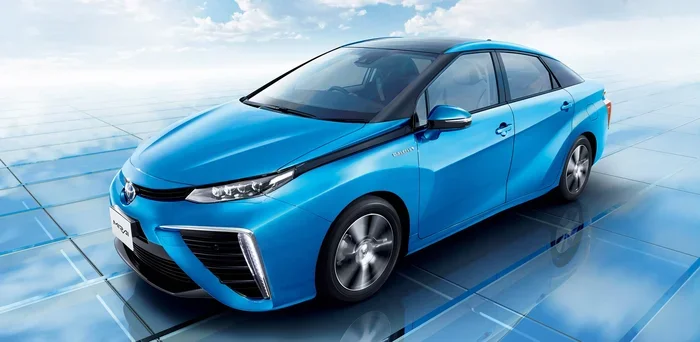
The Toyota Mirai is one of the most talked-about alternative fuel vehicles on the market today. It is a sedan that runs on a hydrogen fuel cell instead of a gasoline engine or a battery. Toyota launched the first generation of the Mirai in 2014, and the second generation arrived in 2020 with major improvements.
The name “Mirai” means “future” in Japanese. And that is exactly what Toyota intended. The car was designed to show the world that hydrogen fuel cell technology can power a practical, comfortable, and stylish vehicle without burning fossil fuels.
A Brief History of the Mirai
The first-generation Mirai came out in 2014 and was one of the first fuel cell vehicles available to consumers. It had a limited range and fewer features than today’s model. But it proved that hydrogen cars were not just a concept. They were real.
The second-generation Mirai, introduced in 2020, was a huge step forward. It offered a longer Mirai range, better Mirai performance, a more stylish design, and improved Mirai efficiency. Toyota also lowered the Mirai price compared to the first generation, making it more accessible to buyers.
Toyota Mirai Specs at a Glance
Here is a quick look at what the current Mirai brings to the table:
- Power Source: Hydrogen fuel cell
- Horsepower: 182 hp
- Torque: 221 lb-ft
- Mirai Range: Up to 402 miles on a full tank
- Refueling Time: About 5 minutes
- Tailpipe Emission: Pure water vapor
- Starting Price: Around $49,500
- Fuel Type: Green hydrogen
These numbers put the Mirai in a strong position. The range is competitive with many gasoline sedans. The refueling time is much faster than most electric vehicles. And the emissions are about as clean as it gets.
Does Toyota Mirai Run on Water?
This is the question everyone asks, and it is a fair one. The videos of water dripping from a Mirai tailpipe are real. But the story behind them is a bit more nuanced than most people realize.
The Science Behind the Claim
The Mirai does not run on water. It runs on hydrogen gas. Here is what actually happens inside the car. Hydrogen from the fuel tank enters the fuel cell stack. Oxygen from the air enters from the outside. These two elements combine in a chemical reaction. That reaction produces electricity. The electricity powers an electric motor. And the only byproduct is pure water vapor.
So when people say “the Mirai runs on water,” they are really seeing the result of the process, not the input. The car takes in hydrogen and air. It gives out electricity and water. That water is what you see dripping or steaming from the tailpipe.
What Actually Comes Out of the Tailpipe
The water that comes out of a Mirai’s tailpipe is clean. It is distilled water. In fact, some owners have reported that the water is so pure it is safe to drink. Of course, we do not recommend drinking it. The exhaust system and tailpipe are not designed for that purpose.
But the point stands. A zero emissions vehicle like the Mirai produces nothing harmful. No carbon dioxide. No nitrogen oxides. No particulate matter. Just water vapor. This is what makes hydrogen fuel cell technology so compelling for the future of clean transportation.
Quick Tip
If you ever see a Mirai on the road and notice steam coming from the tailpipe on a cold day, that is just the water vapor condensing in the cold air. It is completely normal and totally harmless.
Common Mistakes People Make About the Mirai
There are a few misconceptions that keep coming up when people talk about the Mirai. Let us clear them up.
- Mistake 1: Thinking the car stores water in its tank and burns it. The Mirai stores hydrogen, not water. The water is a result of the reaction, not the fuel.
- Mistake 2: Confusing hydrogen fuel cells with hydrogen combustion. The Mirai does not burn hydrogen. It uses a fuel cell stack to create electricity through a chemical process. No combustion means no harmful emissions.
- Mistake 3: Assuming the Mirai is just an electric vehicle. It is an electric vehicle in the sense that it uses an electric motor. But the electricity comes from hydrogen, not a battery that you plug in. This makes it a different category of alternative fuel vehicle.
How Hydrogen Fuel Cells Power the Mirai
Understanding how the fuel cell technology works is key to understanding why the Mirai is so special. The system is elegant, efficient, and surprisingly simple.
The Fuel Cell Stack Explained
The heart of the Mirai is the fuel cell stack. This is a bundle of individual cells stacked together. Each cell has a membrane coated with special catalysts. When hydrogen gas flows through one side and oxygen flows through the other, the membrane forces electrons to move. That movement of electrons is electricity.
The electricity then goes to the electric motor. The motor drives the wheels. Meanwhile, the hydrogen and oxygen combine to form water. That water exits as vapor through the tailpipe.
The entire process is quiet, smooth, and efficient. There are no moving parts in the fuel cell stack itself. That means less wear and tear and lower maintenance costs over time.
From Hydrogen to Electricity
Let us walk through the process step by step:
- Hydrogen gas is stored in high-pressure tanks on the car.
- The gas flows into the fuel cell stack.
- Oxygen from the air enters the stack from the other side.
- The membrane in the stack separates the hydrogen protons from the electrons.
- The electrons flow through an external circuit, creating electricity.
- The electricity powers the electric motor.
- The protons and electrons recombine with oxygen to form water.
- Water vapor exits through the tailpipe.
That is it. Eight simple steps. No combustion. No pollution. Just clean electricity and pure water.
Expert Insight
According to the U.S. Department of Energy, fuel cell vehicles like the Mirai can convert up to 60% of the hydrogen’s energy into usable power. That is significantly more efficient than a traditional gasoline engine, which typically converts only about 20% to 30% of fuel energy into motion.
Quick Tips for Understanding Hydrogen Fuel Cells
- Think of the fuel cell as a battery that never runs out, as long as you keep supplying hydrogen.
- The Mirai has two hydrogen tanks made of carbon fiber, rated to withstand very high pressure.
- The fuel cell stack is the same basic technology used in spacecraft and submarines for decades.
Toyota Mirai Performance and Range
Now let us talk about how the Mirai drives. Because no matter how clean a car is, it still needs to be fun and practical to own.
Mirai Range and Efficiency
The second-generation Mirai offers an impressive Mirai range of up to 402 miles on a single tank of hydrogen. That is more than many gasoline sedans and well above most battery electric vehicles in its class. You can comfortably drive from Los Angeles to San Francisco and back without stopping for fuel.
In terms of Mirai efficiency, the car uses about 0.9 kilograms of hydrogen per 100 kilometers. At current hydrogen prices, that works out to roughly the same cost per mile as a gasoline car, though this varies by region.
Real-World Driving Experience
So how does it actually feel to drive? The Mirai drives like a smooth, quiet electric car. There is no engine noise. The acceleration is instant and linear. The ride is comfortable and composed. Toyota designed the second-generation Mirai with a lower center of gravity and a more rigid platform, which improves handling and stability.
The Mirai performance is respectable for a sedan. The 182 horsepower motor provides plenty of power for highway merging and everyday driving. It is not a sports car, but it is far from sluggish.
| Feature | Toyota Mirai | Tesla Model 3 | Honda Clarity Fuel Cell |
|---|---|---|---|
| Power Source | Hydrogen fuel cell | Battery electric | Hydrogen fuel cell |
| Range | ~402 miles | ~358 miles | ~360 miles |
| Refuel/Recharge Time | ~5 minutes | ~30 min (fast charge) | ~5 minutes |
| Tailpipe Emission | Water vapor | None | Water vapor |
| Starting Price | ~$49,500 | ~$40,000 | ~$59,000 (discontinued) |
| Refueling Infrastructure | Growing network | Widespread (chargers) | Limited stations |
As you can see from the table, the Mirai holds its own against both battery electric and other hydrogen vehicles. The refueling time is a major advantage, and the range is competitive.
The Pros and Cons of Owning a Mirai
Every car has strengths and weaknesses. The Mirai is no different. Let us look at both sides honestly.
Advantages of Hydrogen Power
- Fast refueling: Filling up takes about five minutes. No waiting for hours like some electric vehicles.
- Long range: Over 400 miles on a single fill. Great for road trips and long commutes.
- Zero tailpipe emissions: The only output is water vapor. You are genuinely driving a zero emissions vehicle.
- Quiet and smooth: The electric motor provides a refined, whisper-quiet driving experience.
- Low maintenance: Fewer moving parts than a gasoline engine means fewer things to break or replace.
- Government incentives: In some states, you can get tax credits and rebates for purchasing a fuel cell vehicle.
Challenges to Consider
- Limited hydrogen refueling stations: The biggest hurdle. Hydrogen refueling stations are still concentrated in California and a few other regions. If you live elsewhere, owning a Mirai is not practical yet.
- Hydrogen production: Most hydrogen today is produced from natural gas, which is not perfectly clean. Green hydrogen production is growing but still expensive.
- Higher fuel costs: Hydrogen per kilogram can cost more than gasoline per gallon in many areas.
- Limited model availability: The Mirai is only available in select markets. It is not a mass-market vehicle yet.
- Mirai price: While more affordable than the first generation, the Mirai still costs more than many comparable gasoline sedans.
Common Mistakes When Considering a Mirai
Do not assume that hydrogen refueling is as easy as finding a gas station. The network is still limited. Do not assume the Mirai is the same as a plug-in hybrid. It is not. You cannot plug it in. And do not assume hydrogen is dangerous. The tanks are built to withstand extreme conditions and have passed rigorous safety testing.
The Future of Hydrogen Cars
The Mirai is not just a car. It is a statement about where transportation is headed. And the hydrogen economy is slowly but surely taking shape.
Is Hydrogen the Next Big Thing?
Hydrogen has been talked about for years as the fuel of the future. And for good reason. When hydrogen is produced using renewable energy, it is completely clean. This is called green hydrogen, and it is the holy grail of clean transportation.
The hydrogen economy refers to a future where hydrogen is produced, stored, and distributed as a clean energy carrier. Fuel cell vehicles like the Mirai are a key part of this vision. They offer the convenience of gasoline cars with the emissions profile of electric vehicles.
How the Mirai Fits Into the Bigger Picture
Toyota has been investing heavily in hydrogen technology for decades. The company believes that hydrogen fuel cell vehicles will play a major role alongside battery electric vehicles in the transition to clean transportation.
Some experts argue that hydrogen is better suited for larger vehicles like trucks and buses. The fast refueling time and long range make it practical for commercial use. But the Mirai proves that the technology works for passenger cars too.
As hydrogen production becomes greener and the refueling infrastructure expands, we can expect more hydrogen-powered cars on the road. The Mirai is leading the charge.
Quick Tip
If you are considering a Mirai, check the hydrogen refueling stations near your home and workplace first. The car is a great daily driver if you have easy access to refueling. Without nearby stations, it may not be practical yet.
Conclusion
So, does Toyota Mirai run on water? The answer is both yes and no. The Mirai does not drink water or burn water. It uses hydrogen gas to create electricity through a fuel cell process. And the only thing that comes out the back end is pure water vapor.
The Toyota Mirai is a remarkable piece of engineering. It proves that clean, efficient, and practical transportation does not have to come at the cost of the environment. With its impressive Mirai range, fast refueling, and zero harmful emissions, it stands as a strong contender in the alternative fuel vehicle market.
Yes, there are challenges. The refueling network is still growing. Green hydrogen production needs to scale up. And the Mirai price is still higher than many gasoline options. But the technology works. The car drives well. And the vision of a hydrogen economy powered by clean fuel cell technology is no longer science fiction.
If you care about the environment and want a car that truly leaves nothing behind but clean water vapor, the Toyota Mirai deserves your attention. It is not just a car. It is a glimpse into the future of driving.
Frequently Asked Questions
Can you drink the water that comes out of a Mirai’s tailpipe?
The water vapor that exits the Mirai’s tailpipe is essentially distilled water and is chemically pure. However, it is not recommended to drink it. The exhaust system is not designed for human consumption, and there is no quality testing done on the output for drinking purposes.
How long does it take to refuel a Toyota Mirai?
Refueling a Toyota Mirai takes about five minutes, which is comparable to filling up a gasoline car. This is one of the biggest advantages over battery electric vehicles, which can take anywhere from 20 minutes to several hours depending on the charging setup.
Is the Toyota Mirai worth buying in 2024?
The Mirai is worth considering if you live in an area with good hydrogen refueling infrastructure, you value zero emissions driving, and you want a comfortable, practical sedan. However, if you do not have easy access to hydrogen stations, a battery electric vehicle may be a better fit.
Where can you find hydrogen refueling stations?
Hydrogen refueling stations are most common in California, with growing networks in other parts of the United States and in countries like Japan, Germany, and South Korea. You can check online maps from providers like Shell and Toyota to find stations near you.
Is hydrogen safe to use in a car?
Yes. The Mirai’s hydrogen tanks are made of carbon fiber and are built to withstand extreme conditions, including high impact and fire. Toyota has conducted extensive crash testing and safety evaluations, and the Mirai has received top safety ratings.
How does the Mirai compare to regular battery electric vehicles?
The Mirai offers faster refueling and longer range than most battery electric vehicles in its class. However, battery electric vehicles have a much wider charging network and typically lower operating costs. The best choice depends on your driving habits and local infrastructure.