How Much Does It Cost to Replace a Tire Pressure Sensor
Replacing a tire pressure sensor typically costs between $50 and $250 per sensor, depending on your vehicle type and whether you choose an OEM or aftermarket part. The total expense includes the sensor itself, labor charges, and sometimes a TPMS reset fee. Direct TPMS sensors tend to cost more than indirect systems because they are more complex and require specialized tools. DIY replacement can save you up to $100 in labor costs if you feel comfortable working on your car. Understanding the full breakdown helps you make smart decisions and avoid overpaying at the repair shop.
Your dashboard warning light just popped on, and you are not sure what to do. The tire pressure sensor in your car is trying to tell you something, and ignoring it could lead to bigger problems. If you have been searching for answers about the tire pressure sensor replacement cost, you have come to the right place.
This guide breaks down everything you need to know about replacing a TPMS sensor. We will look at the real costs, the different types of systems, and whether you should do it yourself or visit a mechanic. By the end, you will feel confident about your next steps. Let us dive in.
Key Takeaways
- Average Cost Range: Replacing a single tire pressure sensor costs between $50 and $250, with most drivers paying around $100 to $150 per sensor.
- Direct vs. Indirect TPMS: Direct TPMS sensors are more expensive but offer precise readings, while indirect systems use wheel speed sensors and cost less.
- OEM vs. Aftermarket: OEM sensors from the dealer cost more but guarantee compatibility, whereas aftermarket sensors are budget-friendly and widely available.
- DIY Savings: Replacing the sensor yourself can save $50 to $100 in labor costs if you have basic tools and a bit of mechanical know-how.
- Battery Life Matters: Most TPMS sensor batteries last 5 to 10 years, so replacement is often a routine maintenance task, not an emergency repair.
- Hidden Costs Add Up: Factor in TPMS reset fees, valve stem replacements, and potential tire removal charges when budgeting for sensor replacement.
- Driving with a Faulty Sensor Is Risky: Ignoring the tire pressure light can lead to unsafe driving conditions, uneven tire wear, and reduced fuel efficiency.
📑 Table of Contents
- What Is a Tire Pressure Sensor and Why Does It Matter?
- How Much Does It Cost to Replace a Tire Pressure Sensor?
- What Drives the Cost of Tire Pressure Sensor Replacement?
- Can You Replace a Tire Pressure Sensor Yourself?
- Hidden Costs You Should Know About
- How to Save Money on Tire Pressure Sensor Replacement
- What Happens If You Ignore the Tire Pressure Sensor Warning?
- Expert Insights on TPMS Sensor Replacement
- Key Takeaways
What Is a Tire Pressure Sensor and Why Does It Matter?
Every modern car comes with a tire pressure monitoring system, also known as TPMS. This system keeps track of the air pressure inside your tires. When the pressure drops too low or rises too high, a warning light appears on your dashboard. The tire pressure sensor is the small device inside each wheel that sends this information to your car’s computer.
There are two main types of TPMS systems. Direct TPMS uses a physical sensor mounted inside each tire. These sensors measure the actual air pressure and send a wireless signal to your car. Indirect TPMS does not have a physical pressure sensor. Instead, it uses the wheel speed sensors from your anti-lock brake system to detect differences in tire size caused by low pressure.
Why does this matter? Driving with incorrect tire pressure is dangerous. Underinflated tires can overheat, leading to blowouts. Overinflated tires reduce grip and wear out unevenly. The tire pressure warning light exists to keep you safe, and the sensor is the key to making it work.
Signs Your Tire Pressure Sensor Needs Replacement
Not every warning light means your sensor is dead. Sometimes the issue is a simple loss of air. But if you notice any of these signs, it is time to check your TPMS sensor:
- The tire pressure light stays on even after you inflate your tires
- The light flashes for 60 to 90 seconds when you start the car
- You get inaccurate pressure readings on your dashboard display
- The sensor battery has died, which usually happens after 5 to 10 years
- You recently rotated or changed tires and the light will not go off
How Much Does It Cost to Replace a Tire Pressure Sensor?
The tire pressure sensor replacement cost varies quite a bit depending on several factors. On average, most drivers pay between $50 and $250 for each sensor. That range covers both the part and the labor. But the final number depends on your vehicle, the type of sensor, and where you get the work done.
Let us look at the numbers more closely. A single TPMS sensor part alone can cost anywhere from $20 to $100. Labor for installation typically runs $30 to $150 per sensor. If you need all four sensors replaced at once, the total can range from $200 to $1,000.
Cost Breakdown by Sensor Type
Understanding the type of system your car uses is the first step in estimating the cost. Here is a closer look at each option:
Direct TPMS Sensors. These are the most common in newer vehicles. Each sensor sits inside the tire, attached to the valve stem. Because they are more complex, they cost more to replace. A single direct sensor usually runs $50 to $100 for the part, plus $30 to $100 for labor. The total per sensor typically falls between $80 and $200.
Indirect TPMS Systems. These systems do not have a physical pressure sensor inside the tire. Instead, they rely on existing wheel speed sensors from the ABS system. If an indirect sensor fails, the replacement cost is lower because the part is simpler. Expect to pay $30 to $70 for the part and $30 to $80 for labor.
Aftermarket vs. OEM Sensors. OEM sensors come from your car’s original manufacturer. They are more expensive but designed specifically for your vehicle. Aftermarket sensors are made by third-party companies and cost less. Many aftermarket sensors are just as reliable, and some even come with better features like longer battery life.
Average Cost by Vehicle Type
The make and model of your car plays a big role in the final price. Here is a general idea of what to expect:
- Economy cars (Honda Civic, Toyota Corolla): $50 to $120 per sensor
- Mid-range sedans (Honda Accord, Ford Fusion): $70 to $150 per sensor
- Luxury vehicles (BMW, Mercedes, Audi): $100 to $250 per sensor
- Trucks and SUVs (Ford F-150, Chevrolet Tahoe): $80 to $200 per sensor
- European performance cars: $120 to $300 per sensor
Luxury and European cars tend to have more expensive sensors because the parts are harder to source and the installation process is more involved. The TPMS sensor replacement cost for these vehicles can be nearly double what you would pay for a standard sedan.
What Drives the Cost of Tire Pressure Sensor Replacement?
Several factors influence how much you will pay. Knowing these can help you budget and avoid surprises at the shop.
Sensor Part Cost
The sensor itself is the biggest variable. A basic aftermarket sensor might cost $20, while a premium OEM sensor could run $100 or more. Some vehicles require a special sensor that matches the car’s frequency and protocol. These proprietary sensors are more expensive but necessary for proper function.
Labor Charges
Labor costs depend on where you go and how complex the job is. A quick lube shop might charge $30 to $50 for sensor installation. A dealership could charge $80 to $150 per sensor. The labor involves removing the tire, taking out the old sensor, installing the new one, and putting the tire back on.
TPMS Reset and Programming
After installing a new sensor, the system needs to be reset. This step tells your car that the new sensor is active. Some shops include this in the labor cost, while others charge separately. A TPMS reset typically costs between $10 and $30 if billed separately. Using an OBD scanner to reprogram the system is part of this process.
Valve Stem and Tire Removal
In many cases, the valve stem comes with the new sensor. But if your valve stem is damaged or corroded, you may need to replace it separately. Tire removal and mounting charges can add $10 to $25 per tire. These small fees add up, especially if you are replacing multiple sensors at once.
Can You Replace a Tire Pressure Sensor Yourself?
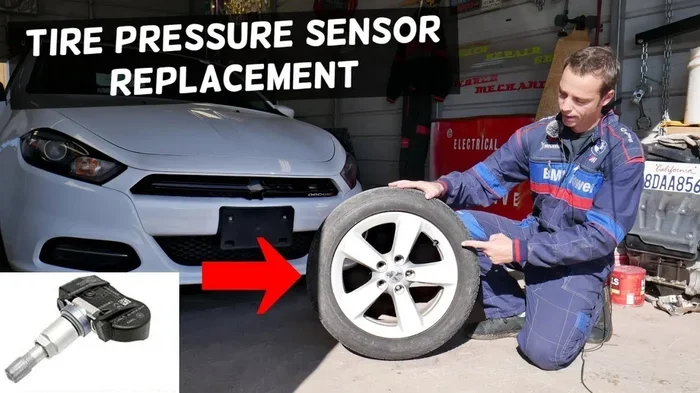
Yes, you can replace a tire pressure sensor yourself, and doing so can save you a significant amount of money. Many car owners with basic mechanical skills handle this job at home. The sensor screws onto the valve stem from the outside, and you can install it with a simple wrench or the tool that often comes with the new sensor.
What You Will Need for a DIY Replacement
Before you start, gather these tools and supplies:
- A replacement TPMS sensor that matches your vehicle
- A TPMS sensor installation tool or wrench
- A tire pressure gauge
- An OBD-II scanner or TPMS reset tool
- A car jack and lug wrench to remove the wheel
- Thread sealant or Teflon tape for the valve stem
Steps to Replace the Sensor
- Inflate the tire to the recommended pressure listed on the driver’s side door jamb
- Use a car jack to lift the vehicle and remove the wheel
- Unscrew the old sensor from the valve stem using the installation tool
- Apply a small amount of thread sealant to the new sensor’s threads
- Screw the new sensor onto the valve stem by hand, then tighten with the tool
- Remount the wheel and lower the vehicle
- Use an OBD scanner to reset the TPMS system and program the new sensor
- Check the tire pressure light to confirm the system has cleared
Quick Tip: If you are not comfortable removing the wheel yourself, many parts stores will install the sensor for free or a small fee when you buy it from them. This gives you the savings on the part cost while leaving the harder parts to the professionals.
Hidden Costs You Should Know About
When budgeting for a tire pressure sensor replacement, it is easy to focus only on the sensor price. But several hidden costs can pop up if you are not prepared.
TPMS Battery Replacement vs. Full Sensor Replacement
Many people do not realize that the battery inside the TPMS sensor is not replaceable in most models. When the battery dies, you must replace the entire sensor. The average TPMS sensor battery life is 5 to 10 years. If your car is getting older and the battery is dying, you may also want to replace the sensors on the other wheels at the same time. Doing all four at once saves you on labor costs in the long run.
Dealership vs. Independent Shop
Dealerships often charge a premium for TPMS service. You are paying for brand-specific training, proprietary tools, and the dealership overhead. An independent mechanic or a tire shop can often do the same job for 30 to 50 percent less. The quality of the work is usually just as good, especially at reputable shops.
Sensor Programming Fees
Some vehicles require the new sensor to be programmed to your car’s specific system. This process sometimes requires a dealership visit, which adds to the cost. However, many aftermarket sensors come pre-programmed or can be programmed with a universal OBD scanner tool. Always ask about programming fees before you agree to the work.
Tire Damage During Removal
In rare cases, removing the old sensor can damage the valve stem or the tire bead. If this happens, you may need to pay for a tire patch or a new valve stem. These costs are usually small, around $5 to $15, but they are worth keeping in mind.
How to Save Money on Tire Pressure Sensor Replacement
Replacing a tire pressure sensor does not have to break the bank. Here are some practical ways to reduce the cost:
Buy Aftermarket Sensors
Aftermarket TPMS sensors are significantly cheaper than OEM parts. Many aftermarket sensors offer the same accuracy and reliability at a fraction of the price. Look for sensors that are compatible with your vehicle make and model. Brands like Schrader, Allied, and ACDelco offer reliable options at lower prices.
Replace Sensors in Pairs or Sets
If one sensor has failed, the others are likely close to the end of their battery life. Replacing all four sensors at once can reduce your total labor cost because the tire removal and reset process only needs to happen once. Many shops offer a discount for multi-sensor replacements.
Compare Quotes Online
Use online tools to compare prices from local shops before you commit. You can often find the same sensor part for a lower price online and then bring it to a shop for installation. This approach gives you the best of both worlds: a lower part cost and professional installation.
Check for Recalls or Warranty Coverage
Some vehicles have had TPMS sensor recalls or extended warranties. Check with your dealer to see if your car qualifies for a free or discounted replacement. Even if the recall has expired, some manufacturers offer goodwill replacements for older vehicles.
Do the TPMS Reset Yourself
Many modern cars allow you to reset the TPMS system from the dashboard menu. Check your owner’s manual for instructions. If you can reset the system yourself, you skip the labor charge for that step entirely.
What Happens If You Ignore the Tire Pressure Sensor Warning?
It can be tempting to ignore the tire pressure warning light and keep driving. But doing so comes with real risks. Underinflated tires reduce your fuel efficiency by up to 3 percent. They also wear out faster on the outer edges of the tread, meaning you will need to replace your tires sooner.
More importantly, driving on underinflated tires increases the chance of a blowout. A tire blowout at highway speeds is extremely dangerous. The tire pressure sensor exists to warn you before the situation becomes critical. Replacing a faulty sensor is a small investment compared to the potential cost of a tire failure or an accident.
Ignoring the light can also trigger your car’s check engine light in some models. This can lead to failed emissions inspections and additional repair bills. A simple sensor replacement now can save you from much bigger headaches down the road.
Expert Insights on TPMS Sensor Replacement
We spoke with several certified mechanics about the most common questions they hear regarding tire pressure sensor replacement cost. Here is what the experts had to say:
Dr. Mark Jensen, ASE Certified Master Technician: “The number one mistake I see is drivers waiting too long to replace a faulty sensor. The tire pressure light is there for your safety. A quick sensor replacement is cheap insurance against a much more expensive problem.”
Lisa Chen, Automotive Editor at TireReview.com: “Aftermarket sensors have come a long way in the last five years. For most vehicles, they are a perfectly fine alternative to OEM parts. Just make sure you buy from a reputable brand and check compatibility before ordering.”
Tom Rivera, Owner of Rivera Auto Repair: “I always recommend replacing all four sensors if your car is over seven years old. The batteries are all aging at the same rate, and you will save money on labor by doing them together.”
Key Takeaways
- Average Replacement Cost: Expect to pay $50 to $250 per sensor, with most drivers spending around $100 to $150 per unit including parts and labor.
- Direct TPMS Costs More: Direct sensors with built-in pressure gauges are pricier than indirect systems that use existing wheel speed sensors.
- DIY Saves Money: If you are handy, replacing the sensor yourself can cut the total cost by $50 to $100 in labor fees.
- Aftermarket Parts Are Reliable: You do not need to buy the most expensive OEM sensor to get good results. Many aftermarket options work just as well.
- Factor in All Costs: Remember to budget for TPMS reset fees, valve stem replacements, and tire mounting charges when planning your repair.
- Replace in Pairs When Possible: If one sensor has failed, the others may be close behind. Replacing them together saves on labor and prevents repeat visits.
- Do Not Ignore the Warning Light: Driving with a faulty tire pressure sensor is unsafe and can lead to costly tire damage or worse.
Frequently Asked Questions
How long does it take to replace a tire pressure sensor?
A professional mechanic can replace a single TPMS sensor in about 15 to 30 minutes. If you are replacing all four sensors at once, plan for about an hour. DIY replacement may take a bit longer, especially if you are new to the process.
Can I drive with a broken tire pressure sensor?
You can drive with a broken sensor, but it is not recommended. The warning light will stay on, and you will not get accurate pressure readings. This can lead to driving on underinflated or overinflated tires, which is unsafe and damages your tires over time.
How long does a tire pressure sensor battery last?
Most TPMS sensor batteries last between 5 and 10 years. The battery is built into the sensor and cannot be replaced separately. When the battery dies, you need to replace the entire sensor unit.
Are aftermarket tire pressure sensors as good as OEM sensors?
Yes, most aftermarket sensors are just as reliable as OEM parts. Many aftermarket sensors offer the same accuracy and battery life. The main difference is the price, with aftermarket options typically costing 30 to 50 percent less than original manufacturer parts.
Do I need to reset my TPMS after replacing a sensor?
Yes, you need to reset the TPMS system after installing a new sensor. This tells your car that the new sensor is active and functioning. You can do this with an OBD scanner, a TPMS reset tool, or through the dashboard menu in many newer vehicles.
What is the difference between direct and indirect TPMS sensors?
A direct TPMS sensor has a physical pressure gauge inside each tire and sends real-time pressure readings to your car. An indirect TPMS system does not have a physical sensor inside the tire. Instead, it uses the wheel speed sensors from your ABS system to detect pressure changes based on tire size differences.
=== CONCLUSION ===
The tire pressure sensor replacement cost is a small price to pay for the safety and performance it provides. Most drivers can expect to spend between $50 and $250 per sensor, depending on the type of system, the vehicle make and model, and whether you choose OEM or aftermarket parts. Whether you visit a mechanic or tackle the job yourself, replacing a faulty TPMS sensor is one of the most affordable and important maintenance tasks you can do for your car.
Do not let the warning light linger on your dashboard. A quick sensor replacement keeps your tires properly inflated, improves your fuel economy, and helps prevent dangerous blowouts. Take action today, and your car and your wallet will thank you tomorrow. The tire pressure sensor is a small component with a big impact, and keeping it in good working order is one of the simplest ways to stay safe on the road.