At What Speed Do Hybrid Cars Switch From Battery to Gas
Hybrid cars switch from battery to gas at different speeds depending on the type of hybrid system, driving conditions, and power demand. Most full hybrids make the transition between 25 and 45 mph, while mild hybrids rely on the gas engine more often. Understanding this switch helps you drive smarter, save fuel, and get the most out of your hybrid powertrain.
Have you ever wondered when your hybrid car decides to stop running on battery power and fire up the gas engine? It is a question that hybrid car owners ask all the time. The answer is not as simple as one magic number. Many factors come into play, and understanding them can actually help you save fuel and drive better.
The speed at which hybrid cars switch from battery to gas depends on your vehicle type, how hard you are pushing the accelerator, and what the car’s computer thinks you need. Most full hybrids make the switch somewhere between 25 and 45 miles per hour. But mild hybrids behave very differently. And plug-in hybrids add yet another layer to the equation.
In this guide, we will break down exactly how the switching process works. We will look at the different types of hybrid systems and what speeds trigger the change. You will also learn practical tips to stay in electric mode longer and get the most out of every charge. Let us dive in.
Key Takeaways
- Speed Matters: Most hybrid cars switch from battery to gas between 25 and 45 mph, but this varies by system type.
- System Type Is Key: Full hybrids, mild hybrids, and plug-in hybrids each have different switching behaviors.
- Power Demand Drives the Switch: Hard acceleration, hill climbing, and high speeds trigger the gas engine faster.
- You Can Influence the Switch: Smooth driving, regenerative braking, and EV mode help extend battery usage.
- The Switch Is Automatic: You do not need to do anything; the hybrid control unit manages the transition seamlessly.
- Electric-Only Driving Saves Fuel: Staying in battery mode as long as possible boosts fuel efficiency and reduces emissions.
- Know Your Car: Reading your owner’s manual helps you understand exactly how your specific hybrid model behaves.
📑 Table of Contents
- How Hybrid Cars Switch Between Battery and Gas
- The Speed Threshold: When Does the Switch Happen?
- Different Types of Hybrid Systems and Their Switching Behavior
- Factors That Affect When a Hybrid Switches to Gas
- Tips to Maximize Battery Usage and Delay the Gas Switch
- Common Myths About Hybrid Car Switching
- Conclusion
How Hybrid Cars Switch Between Battery and Gas
Understanding the hybrid powertrain starts with knowing the two main power sources. Every hybrid car has an electric motor and a gas engine. These two work together, but they do not always run at the same time. The car’s computer, often called the hybrid control unit, decides which power source to use and when.
The switching process is automatic. You do not need to press any button or flip any switch. The car monitors speed, battery charge level, accelerator input, and power demand. Based on all of this data, it decides whether to use the battery power, the combustion engine, or both at the same time.
The Role of the Power Split Device
Most hybrids use something called a power split device. This clever piece of machinery acts like a traffic controller for energy. It routes power from the electric motor, the gas engine, or both to the wheels. The power split device is what makes the transition between battery power and gas so smooth. You often do not even notice it happening.
When you are cruising at low speeds, the electric motor handles the work. The gas engine stays off, which saves fuel and cuts emissions. As soon as the car detects that you need more power, the gas engine kicks in. This might happen during a quick merge onto a highway or when you are climbing a steep hill.
Regenerative Braking and Battery Charging
One of the smartest features of any hybrid is regenerative braking. When you take your foot off the accelerator or hit the brakes, the electric motor reverses its role. It becomes a generator and captures energy that would normally be wasted. This energy flows back into the hybrid battery, keeping it charged.
Because of regenerative braking, your battery stays topped up during everyday driving. This means the car can stay in electric mode more often. The better your regenerative braking works, the less often the gas engine needs to start up.
The Speed Threshold: When Does the Switch Happen?
The most common question we get is: at what speed do hybrid cars switch from battery to gas? The short answer is that most full hybrids transition between 25 and 45 mph. But the real answer is more nuanced. The switch is not purely about speed. It is about the combination of speed and power demand.
Low-Speed Electric Driving
At very low speeds, most hybrids run entirely on electricity. This is why you can crawl through a parking lot in pure electric-only driving mode. The gas engine stays completely off. You might also notice this when pulling away from a stop sign or traffic light. The electric motor provides smooth, quiet acceleration up to about 15 to 25 mph.
Some plug-in hybrids can go even faster on battery alone. Certain models offer electric-only driving up to 50 or 55 mph. This is a huge advantage for short commutes around town. You use no gas at all during your daily drive.
The Mid-Range Transition Zone
The 25 to 45 mph range is where most hybrids start bringing in the gas engine. This is the transition zone. The car’s computer weighs several factors here:
- Current battery charge level – If the battery is low, the gas engine will kick in sooner.
- Accelerator position – A hard press triggers the gas engine faster than a gentle push.
- Road conditions – Hills and inclines demand more power, which brings in the gas engine.
- Temperature – Cold weather can reduce battery efficiency, causing an earlier switch.
If you are cruising gently at 30 mph, the car might stay on battery. But floor the accelerator at 30 mph, and the gas engine will likely engage immediately. It is all about the power demand at that moment.
High-Speed Gas Dominance
Once you hit highway speeds above 45 to 55 mph, most hybrids rely heavily on the gas engine. The electric motor simply cannot provide enough sustained power at those speeds without draining the battery too quickly. At this point, the gas engine takes over as the primary power source.
However, many modern hybrids still use the electric motor at high speeds. They use it to assist the gas engine, not replace it. This is called a blended power mode. Both the electric motor and the combustion engine work together to deliver smooth, efficient performance.
Different Types of Hybrid Systems and Their Switching Behavior
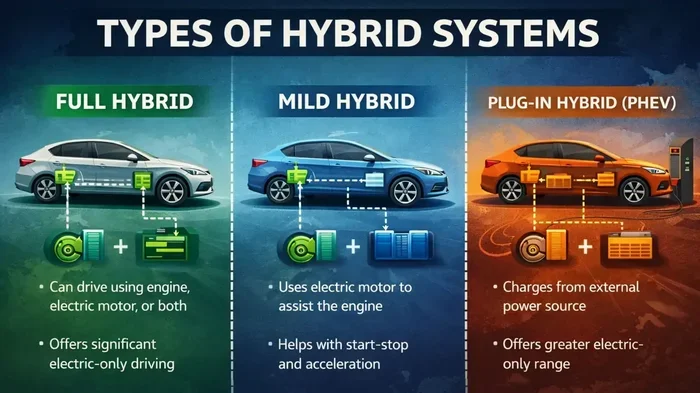
Not all hybrids are the same. The type of hybrid system your car uses has a big impact on when and how it switches between power sources. Let us look at the three main types.
Full Hybrids
Full hybrids, sometimes called strong hybrids, have larger batteries and more powerful electric motors. These cars can drive short distances on battery power alone. The speed threshold for switching to gas is usually between 25 and 45 mph. Full hybrids offer the best balance between electric driving and gas engine support.
Popular full hybrid models include the Toyota Prius and the Honda Accord Hybrid. These vehicles are known for excellent fuel efficiency and smooth transitions between power sources. Their hybrid battery systems are designed to handle frequent switching without wear.
Mild Hybrids
Mild hybrids are the simplest type of hybrid system. They have smaller batteries and less powerful electric motors. The electric motor cannot drive the car on its own. Instead, it assists the gas engine during acceleration and other high-demand moments.
With mild hybrids, the gas engine is almost always running. The battery power is used only to give the gas engine a boost. You will not experience a true electric-only driving mode. The switching is less noticeable because the gas engine never fully shuts off.
Plug-In Hybrids
Plug-in hybrids, or PHEVs, sit between full hybrids and fully electric cars. They have larger batteries that you charge by plugging them in. This gives them a much longer electric-only range than standard hybrids.
Most plug-in hybrids can travel 20 to 50 miles on battery power alone. The switch to gas happens when the battery is depleted or when you demand more power than the electric motor can provide. For short trips, you might never use gas at all. The car stays in EV mode the entire time.
| Hybrid Type | Electric-Only Range | Typical Switch Speed | Best For |
|---|---|---|---|
| Full Hybrid | 1-3 miles | 25-45 mph | City driving, fuel savings |
| Mild Hybrid | 0 miles | Always uses gas | Cost-effective fuel boost |
| Plug-In Hybrid | 20-50 miles | When battery depletes | Short commutes, EV driving |
Factors That Affect When a Hybrid Switches to Gas
Speed is important, but it is not the only factor. Several other elements influence when hybrid cars switch from battery to gas. Understanding these can help you become a more efficient driver.
Battery Charge Level
The single biggest factor is how much charge remains in your hybrid battery. If the battery is fully charged, the car will stay in electric mode longer. It will hold off switching to gas as long as possible. But if the battery is low, the gas engine will kick in earlier and more often.
This is why many hybrid drivers try to keep their battery topped up. They use regenerative braking and gentle driving to preserve charge. The more charge you have, the more electric driving you can enjoy.
Driving Style and Accelerator Input
How you drive has a direct impact on when the switch happens. If you are a gentle driver who accelerates smoothly, the car stays in battery mode longer. But if you tend to mash the accelerator, the gas engine will engage quickly to provide the extra power you demand.
Think of it this way. The car is always trying to be efficient. It wants to use the cheapest, cleanest power source available. But when you ask for more performance, it reaches for the gas engine without hesitation.
Temperature and Weather Conditions
Cold weather is the enemy of battery power. In winter, hybrid batteries lose some of their efficiency. The chemical reactions inside the battery slow down in low temperatures. This means the car may switch to gas more often during cold months.
Hot weather can also be a factor, though usually a less dramatic one. Extreme heat can cause the battery management system to limit charge levels for safety reasons. Either way, weather plays a role in how often the gas engine starts up.
Terrain and Road Conditions
Driving on flat highways is the easiest scenario for staying in electric mode. But hills and mountains change everything. Climbing a steep grade demands significant power, which quickly drains the battery. The gas engine will kick in to help.
Stop-and-go city traffic is actually great for hybrids. The frequent braking recharges the battery through regenerative braking. This creates a natural cycle of electric driving and brief gas engine use that keeps things efficient.
Tips to Maximize Battery Usage and Delay the Gas Switch
Want to stay in electric mode as long as possible? These practical tips can help you get the most out of your hybrid powertrain and reduce your fuel consumption.
Drive Smoothly and Predictably
The easiest way to extend your electric-only driving is to ease off the accelerator. Gentle acceleration keeps the power demand low. The car can stay on battery longer. Anticipate stops and slow down gradually. This gives the regenerative braking system more opportunities to recharge the battery.
Use EV Mode When Available
Many hybrids come with an EV mode button. When you activate it, the car forces itself to stay in electric-only driving as long as the battery allows. This is perfect for residential streets, parking lots, and low-speed situations. Just be aware that EV mode will drain the battery faster, and the gas engine will eventually take over.
Monitor Your Battery Gauge
Keep an eye on your battery charge indicator. If you see the charge dropping, ease off and let the regenerative braking recharge it. Some drivers even create a game out of this, trying to finish a trip with the same battery level they started with. It is a fun way to stay mindful of your fuel consumption.
Plan Your Routes
If you drive a plug-in hybrid, plan shorter routes that stay within your electric range. A 10-mile trip around town might use zero gas at all. But a 40-mile highway commute will likely drain the battery and bring the gas engine into play for most of the trip.
Keep Your Battery Healthy
A well-maintained battery switches more efficiently. Follow the manufacturer’s recommended maintenance schedule. Avoid letting the battery drain completely. And if you notice a significant drop in electric-only range, have the battery checked by a qualified technician.
Expert Insight
Most hybrid engineers agree that the best way to maximize electric driving is to think ahead. Look five to ten cars ahead, ease off the accelerator early, and let the car coast. This not only saves fuel but also reduces wear on your brakes and keeps the battery in the sweet spot for electric-only operation.
Common Myths About Hybrid Car Switching
There is a lot of misinformation out there about how hybrid cars work. Let us clear up some of the most common myths.
Myth 1: The Switch Is Jarring and Uncomfortable
Many people expect the transition from battery to gas to feel like a jolt. In reality, modern hybrids make the switch so smoothly that you barely notice it. The power split device and advanced computer controls ensure a seamless experience. You might hear a slight change in engine noise, but the ride stays calm and composed.
Myth 2: Hybrids Always Save Fuel
This is not always true. If you drive aggressively or consistently exceed the battery range, a hybrid can actually use more fuel than a comparable gas car. The fuel savings come from smart driving and taking advantage of electric-only mode whenever possible. Without that, you are just carrying extra battery weight around.
Myth 3: You Need to Plug In a Full Hybrid
Full hybrids do not need to be plugged in. Their hybrid battery charges itself through regenerative braking and the gas engine. Only plug-in hybrids need external charging. This is one of the biggest advantages of full hybrids. You never need to find a charging station.
Myth 4: The Battery Dies Quickly
Hybrid batteries are designed to last the lifetime of the vehicle. Most manufacturers warranty them for 8 to 10 years or 100,000 miles. While battery replacement is expensive, it is rarely needed before the car reaches the end of its useful life. Modern hybrid battery technology has come a long way in reliability.
Conclusion
The answer to at what speed hybrid cars switch from battery to gas is not a single number. It depends on your car type, driving conditions, battery charge, and how hard you are pushing the accelerator. Most full hybrids transition between 25 and 45 mph. Mild hybrids rarely offer a true electric-only mode at all. Plug-in hybrids can stay electric much longer, especially on short trips.
The good news is that you have more control over this process than you might think. Smooth driving, smart route planning, and using EV mode when appropriate can all help you stay on battery longer. The more you understand how your hybrid powertrain works, the better you can use it.
Take some time to get familiar with your car’s behavior. Pay attention to when the gas engine kicks in. Notice how your driving style affects the switch. Over time, you will develop a feel for maximizing electric-only driving. And that means better fuel economy, lower emissions, and a more enjoyable driving experience.
Ultimately, the beauty of a hybrid car is its flexibility. You get the quiet, efficient electric driving for city speeds and the reliable power of a gas engine when you need it most. Understanding the switching process helps you enjoy the best of both worlds.
Frequently Asked Questions
At what speed do most hybrid cars switch from battery to gas?
Most full hybrid cars switch from battery to gas between 25 and 45 mph. However, this depends on your driving style, battery charge level, and power demand. Gentle cruising at 30 mph may stay electric, while hard acceleration at the same speed will trigger the gas engine.
Can I force my hybrid car to stay in battery mode?
Many hybrids offer an EV mode that keeps the car in electric-only driving for as long as the battery allows. However, the gas engine will eventually take over when the battery gets low or when you demand more power. EV mode works best at low speeds in city driving.
Do mild hybrids switch from battery to gas?
Mild hybrids do not switch in the traditional sense. Their electric motor assists the gas engine but cannot drive the car alone. The gas engine runs almost continuously in mild hybrids, with the electric motor providing a boost during acceleration.
Why does my hybrid car switch to gas when I accelerate hard?
Hard acceleration increases power demand beyond what the electric motor can provide alone. The hybrid control unit responds by engaging the gas engine to deliver the extra power you need. This is by design and helps protect the battery from rapid depletion.
Does cold weather affect when hybrid cars switch from battery to gas?
Yes, cold weather reduces battery efficiency. In winter, hybrid batteries may switch to gas more frequently because they cannot hold or deliver charge as effectively. Keeping your hybrid garage in a moderate temperature can help minimize this effect.
How can I improve my hybrid car’s fuel efficiency?
Drive smoothly, use regenerative braking, keep your tires properly inflated, and use EV mode when possible. Avoid aggressive acceleration and maintain a steady speed. These habits help maximize battery usage and reduce reliance on the gas engine, improving your overall fuel efficiency.