a car of mass m starts from rest and accelerates explained
A car of mass m starts from rest and accelerates when a net force acts on it, following Newton’s second law of motion. This concept is the foundation of how every vehicle moves from a standstill and builds speed over time. Understanding the relationship between mass, force, and acceleration helps you make smarter decisions about car performance, safety, and fuel efficiency. Whether you are a student, a car enthusiast, or a curious driver, this guide breaks it all down in plain language.
Imagine you are sitting in a parked car at a red light. The engine hums quietly. The light turns green. You press the gas pedal, and the car surges forward. That simple moment — a car of mass m starts from rest and accelerates — is one of the most fundamental ideas in all of physics. It is also the reason your morning commute works at all.
You do not need to be a physicist to understand this. In fact, the core idea behind a car of mass m starts from rest and accelerates is surprisingly straightforward. A force gets applied. The car’s mass resists that push. And the result is acceleration — the car picks up speed. But the details behind this process are fascinating, and they matter more than most people realize. From choosing the right vehicle to understanding safety features, knowing how acceleration works gives you a real edge.
In this article, we will walk through everything you need to know. We will cover the basic physics, the role of mass and force, real-world factors that change how cars perform, and practical tips you can use today. Whether you are studying for a test, shopping for a car, or just curious about how things work, this guide has you covered.
Key Takeaways
- Force and mass work together: The heavier the car, the more force needed to achieve the same acceleration from rest.
- Starting from rest matters: Initial velocity is zero, which simplifies the math and makes acceleration easier to calculate.
- Real-world factors affect performance: Friction, air resistance, tire grip, and engine power all influence how fast a car accelerates.
- The formula is simple: Acceleration equals net force divided by mass (a = F/m), and this applies to every vehicle on the road.
- Kinetic energy builds with speed: As the car gains velocity, its kinetic energy increases with the square of the speed.
- Powertrain choices matter: Electric motors deliver instant torque, while combustion engines need revs to reach peak acceleration.
- Understanding this helps you buy smarter: Knowing the basics of acceleration helps you compare vehicles and set realistic expectations.
📑 Table of Contents
- What Happens When a Car of Mass m Starts from Rest and Accelerates
- Why Mass Matters So Much in Acceleration
- The Physics of Starting from Rest
- Real-World Factors That Change How Cars Accelerate
- Comparing Acceleration: What the Numbers Mean
- Practical Tips for Understanding and Improving Acceleration
- Common Mistakes People Make About Car Acceleration
- Why This Concept Matters Beyond the Physics Classroom
- Conclusion
What Happens When a Car of Mass m Starts from Rest and Accelerates
Let us start with the big picture. When we say a car starts from rest, we mean its initial velocity is zero. The car is not moving. Then something changes — the driver presses the accelerator, and the engine produces a force that pushes the car forward. That force overcomes the car’s inertia, which is its natural tendency to stay still. The result is acceleration.
The word acceleration simply means a change in velocity over time. If a car goes from zero to sixty miles per hour in six seconds, that is acceleration. The rate at which this happens depends on two main things: how much force the engine produces and how much mass the car has.
Newton’s second law of motion is the golden rule here. It states that force equals mass times acceleration, or F = ma. Rearranged, acceleration equals force divided by mass (a = F/m). This single equation explains why a lightweight sports car zooms ahead of a heavy truck when both hit the gas pedal. The same engine force produces more acceleration in the lighter vehicle.
The Formula in Plain English
Let us break down the formula without the scary math symbols. Imagine you push a shopping cart. If the cart is empty, a small push makes it speed up quickly. If the cart is loaded with heavy bags, the same push barely moves it. That is exactly what happens with a car.
Here is the key idea: a car of mass m starts from rest and accelerates based on the net force acting on it. Net force means the total forward force minus any opposing forces like friction and air resistance. So if an engine produces 5,000 newtons of force and friction takes away 1,000 newtons, the net force is 4,000 newtons. Divide that by the car’s mass, and you get the acceleration.
This is why vehicle engineers spend so much time trying to reduce mass while increasing force. Lighter cars with more powerful engines deliver the best acceleration. It is a simple trade-off that drives car design from compact hatchbacks to luxury sedans.
Why Mass Matters So Much in Acceleration
Mass is not just a number on a spec sheet. It is the single biggest factor in how a car accelerates from a dead stop. The more mass a vehicle has, the more force it needs to reach the same acceleration as a lighter car. This is why manufacturers obsess over weight reduction.
Think about it this way. A small car might weigh 2,500 pounds. A large SUV might weigh 5,500 pounds. If both engines produce the same amount of force, the small car will accelerate roughly twice as fast. The SUV has more than double the mass, so it needs more than double the force to match the small car’s performance.
Inertial Mass and Why It Slows You Down
Physicists call this property inertial mass. It is the measure of how much an object resists changes in its motion. A parked car has a lot of inertial mass. That is why it takes effort to get it moving. Once it is rolling, the same mass resists slowing down, which is why heavy cars tend to maintain speed better on highways.
For drivers, this means heavy vehicles feel sluggish off the line. They need more engine power to overcome their own inertia. This is one reason why a car of mass m starts from rest and accelerates more slowly when the mass is large. The engine has to work harder just to get the wheels turning.
Car makers use lightweight materials like aluminum, carbon fiber, and high-strength steel to cut mass without sacrificing safety. Every pound removed from the body or chassis improves acceleration, handling, and fuel economy. This is why modern cars are getting lighter even as they become more feature-packed.
Mass Distribution and Weight Transfer
It is not just total mass that matters. How that mass is distributed across the car also affects acceleration. When a car accelerates hard, weight shifts toward the rear wheels. This is called weight transfer. More weight on the rear tires means better traction, which means the tires can handle more engine force without spinning out.
Front-heavy cars often feel sluggish during acceleration because the front tires have less grip. Rear-wheel-drive sports cars are designed to put more weight over the driven wheels during acceleration, which is why they launch so effectively. Engineers carefully balance mass distribution to make a car of mass m starts from rest and accelerates as smoothly and quickly as possible.
The Physics of Starting from Rest
Starting from rest is a special case in physics because the initial velocity is zero. This makes the calculations much simpler. When a car is already moving, you have to account for its existing speed, direction, and momentum. Starting from rest means everything depends on the force applied from the very first instant.
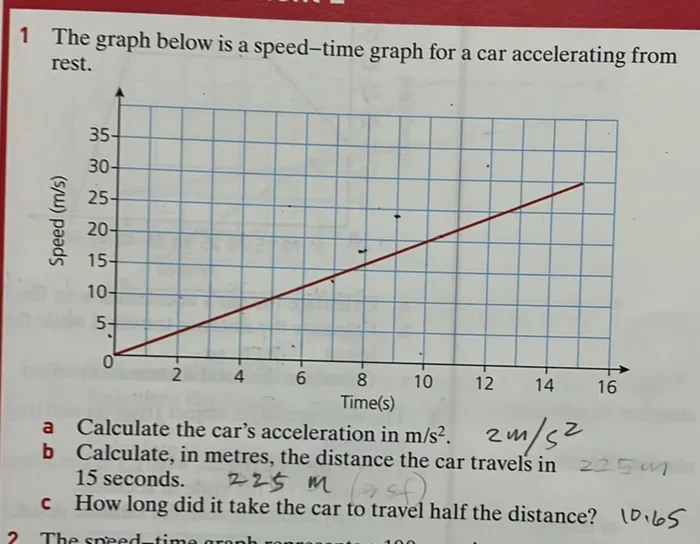
In uniformly accelerated motion, the car gains speed at a constant rate. If the acceleration is 3 meters per second squared, the car goes from 0 to 3 meters per second in the first second, 6 meters per second in the second second, and so on. This steady increase in speed continues as long as the net force stays the same.
Velocity and Displacement Over Time
As the car accelerates, two things change: velocity and displacement. Velocity is how fast the car is going. Displacement is how far it has traveled from the starting point. Both depend on the acceleration and the time spent accelerating.
Here is a simple way to think about it. After one second of acceleration, the car has some speed and has covered a short distance. After five seconds, it is moving much faster and has traveled a much longer distance. The relationship between time, acceleration, and distance follows predictable math patterns that engineers use every day.
For a car starting from rest, the distance traveled equals half the acceleration times the time squared. This means that doubling the acceleration quadruples the distance covered in the same time. This is why high-performance cars can cover a quarter mile so quickly — their acceleration rates are simply enormous compared to average vehicles.
Real-World Factors That Change How Cars Accelerate
The textbook formula works beautifully in a vacuum. But real roads are not perfect. Many factors change how a car of mass m starts from rest and accelerates in everyday driving. Understanding these factors helps you appreciate why different cars feel so different on the road.
Engine Force and Torque
The engine is the source of all the force that accelerates the car. But not all engines deliver force the same way. Torque is the twisting force that the engine produces, and it is what actually turns the wheels. Higher torque at low engine speeds means better launch acceleration.
Diesel engines are famous for producing massive torque at low RPMs. This is why trucks and heavy vehicles with diesel engines can accelerate loaded cargo from a standstill more effectively than you might expect. Gasoline engines tend to peak their torque at higher RPMs, which is why they need to rev higher for strong acceleration.
Electric motors are a game-changer here. They deliver maximum torque from zero RPM, which is why electric cars like the Tesla Model 3 can accelerate from rest faster than many sports cars. The instant availability of torque means a car of mass m starts from rest and accelerates with incredible immediacy.
Friction and Traction
Friction is a double-edged sword. Without it, the tires would just spin uselessly on the pavement, and the car would not move at all. With too much friction in the drivetrain, energy is wasted as heat instead of being used for acceleration.
Tire traction is critical. Wider tires with softer rubber compounds grip the road better, allowing more engine force to translate into actual acceleration. This is why performance cars use special tires and why drag racers use slicks — maximum grip means maximum acceleration off the line.
On wet or icy roads, traction drops dramatically. The same engine force that would normally launch the car forward now just spins the wheels. This is why winter tires and all-wheel-drive systems exist — they help maintain enough traction for the car to accelerate effectively even in poor conditions.
Air Resistance and Drag
As the car picks up speed, air resistance grows rapidly. At low speeds, air resistance is negligible. But as velocity increases, drag becomes a major opposing force. At highway speeds, air resistance can consume a huge portion of the engine’s power output.
Car designers use aerodynamic shapes to reduce drag. Sleek body lines, underbody panels, and active grille shutters all help the car cut through the air more efficiently. Less drag means more of the engine’s force goes toward acceleration rather than fighting the wind.
For a car starting from rest, air resistance is not a big deal at first. But as the car gains speed, it becomes increasingly important. This is why the top speed of a car is always lower than what the engine force alone would suggest — drag eventually balances out the driving force and acceleration drops to zero.
Rolling Resistance
Even before the car reaches high speeds, rolling resistance works against acceleration. This is the friction between the tires and the road surface as the tires deform with each rotation. Wider tires, heavier loads, and lower tire pressure all increase rolling resistance.
Modern tires are engineered to minimize rolling resistance without sacrificing grip. This is a key part of how manufacturers improve fuel economy and acceleration performance simultaneously. Low rolling resistance tires help a car of mass m starts from rest and accelerates more efficiently by wasting less energy as heat.
Comparing Acceleration: What the Numbers Mean
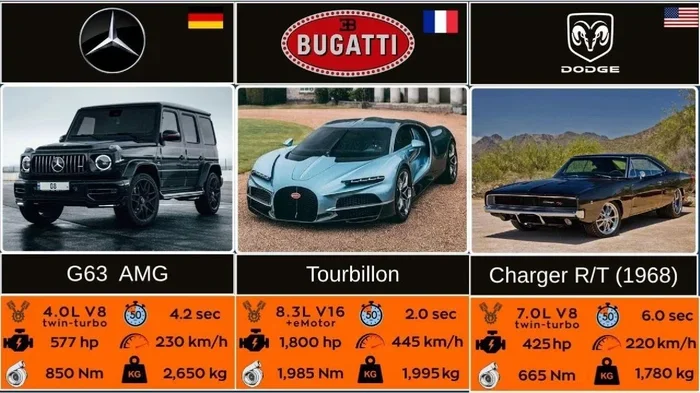
Car buyers often look at zero-to-sixty times as the ultimate measure of acceleration performance. But what do these numbers really tell you? A zero-to-sixty time of 3.5 seconds means the car reaches 60 mph in just 3.5 seconds from a standstill. That is extremely fast. A time of 8 seconds is considered average for a family sedan.
Let us compare a few real-world examples to see how mass and force work together.
| Vehicle | Approx. Mass (lbs) | Zero-to-Sixty (sec) | Engine Force (est. lbs) |
|---|---|---|---|
| Honda Civic | 3,000 | 7.0 | ~3,500 |
| BMW 3 Series | 3,500 | 5.5 | ~4,200 |
| Chevrolet Corvette | 3,400 | 2.9 | ~7,000 |
| Ford F-150 Truck | 5,500 | 5.8 | ~6,000 |
The Corvette accelerates the fastest because it produces a huge amount of engine force relative to its mass. The Honda Civic is light but has a smaller engine, so its acceleration is moderate. The F-150 truck has a powerful engine but its large mass holds it back. These numbers perfectly illustrate Newton’s second law in action.
When you see a car commercial boasting about acceleration, remember what is really happening. The manufacturer has either reduced mass, increased force, or both. The next time you hear that a car goes from zero to sixty in a blistering time, you will know exactly why.
Practical Tips for Understanding and Improving Acceleration
Whether you want to buy a faster car or simply understand your daily driver better, these practical tips will help you connect the physics to real life.
- Check the power-to-weight ratio: This number tells you how much engine power each pound of car weight has to work with. Higher ratios mean better acceleration.
- Keep your tires properly inflated: Correct tire pressure reduces rolling resistance and improves traction, both of which help acceleration.
- Reduce unnecessary weight: Remove heavy items from your trunk and back seat. Less mass means better acceleration and better fuel economy.
- Use the right gear: Manual transmission drivers should shift at the engine’s peak torque RPM for maximum launch acceleration.
- Maintain your engine: Clean air filters, fresh spark plugs, and proper oil levels ensure the engine produces its full rated force.
- Consider electric vehicles: EVs deliver instant torque, which means faster acceleration from rest compared to most combustion engines of similar power.
These simple steps can make a noticeable difference in how your car feels off the line. You do not need to modify your engine or buy a new car to improve acceleration. Sometimes the smallest changes produce the biggest results.
Common Mistakes People Make About Car Acceleration
There are several misconceptions about how cars accelerate that can lead to poor decisions. Let us clear up a few of the most common ones.
Bigger engine always means faster acceleration. Not true. A large engine in a heavy vehicle may accelerate slower than a small engine in a lightweight car. The power-to-weight ratio matters more than engine size alone.
Acceleration is only about speed. Wrong. Acceleration also affects safety, handling, and braking distance. A car that accelerates quickly also has better ability to merge onto highways and pass slower vehicles safely.
Electric cars are always faster than gas cars. Not necessarily. While EVs excel at low-speed launch acceleration, high-performance gas cars can still match or exceed them at very high speeds thanks to sustained power delivery.
Heavier cars are always safer. Mass does help in collisions by absorbing energy, but it also reduces acceleration, handling, and braking performance. Modern safety comes from engineering, not just weight.
Why This Concept Matters Beyond the Physics Classroom
The idea that a car of mass m starts from rest and accelerates is not just an academic exercise. It has real implications for how you drive, what you buy, and how you understand the world around you. Every time you merge onto a highway, pass another vehicle, or simply pull away from a stop sign, you are relying on the principles of acceleration and force.
For car shoppers, understanding acceleration helps you compare vehicles more effectively. A car with great acceleration does not just feel exciting — it can also be safer in emergency situations. Quick acceleration means quick evasive action, which can prevent accidents.
For students and educators, this concept provides a perfect real-world example of Newton’s laws in action. Instead of abstract textbook problems, you can point to the car in your driveway and see physics at work every single day.
For car enthusiasts and DIY mechanics, knowing how mass, force, and acceleration interact helps you make better modifications. Whether you are swapping in a lighter set of wheels, upgrading the exhaust for better flow, or tuning the engine for more torque, every change affects the acceleration equation.
The beauty of this concept is its simplicity. A force acts on a mass. The mass accelerates. That is the core idea. But the applications are endlessly rich, from the design of Formula 1 cars to the family minivan you drive to the grocery store.
Conclusion
Understanding what happens when a car of mass m starts from rest and accelerates opens up a whole new way of thinking about driving and vehicle performance. The core principle is simple: force divided by mass equals acceleration. But the real-world implications are deep and wide-ranging.
Mass matters. Force matters. Starting conditions matter. And the many real-world factors like friction, air resistance, and traction all shape how a car actually performs on the road. By grasping these basics, you become a more informed driver, a smarter car buyer, and a more curious observer of the physics that surrounds you every day.
Next time you press the gas pedal and feel the car surge forward, take a moment to appreciate what is happening. An engine is producing force. That force is overcoming inertia. The mass of the vehicle is being pushed forward. And you are accelerating. It is one of the most elegant and practical concepts in all of science, and it happens every time you drive.
Keep these ideas in mind when you shop for your next car, when you study physics, or when you simply want to understand the machine that takes you from point A to point B. The more you know about how acceleration works, the more you will appreciate the incredible engineering that goes into every vehicle on the road today.
Frequently Asked Questions
What does it mean when a car of mass m starts from rest and accelerates?
It means the car begins at zero velocity and gains speed over time because a net force is applied by the engine. The mass of the car determines how much acceleration results from that force, following Newton’s second law of motion. Heavier cars need more force to achieve the same acceleration as lighter cars.
How does mass affect the acceleration of a car starting from rest?
The greater the mass, the more force is needed to achieve the same acceleration. This is because mass represents inertia, which is the resistance to changes in motion. A lighter car will always accelerate faster than a heavier car if both produce the same engine force.
Why do electric cars accelerate faster from rest than gas cars?
Electric motors deliver maximum torque instantly from zero RPM, which means the full driving force is available the moment you press the pedal. Gasoline engines need time to build up RPM and reach their peak torque output. This instant torque delivery gives electric cars a significant advantage in launch acceleration.
What role does friction play when a car starts from rest?
Friction is essential for acceleration because it is the force that grips the road and allows the tires to push the car forward. Without sufficient friction, the wheels would simply spin and the car would not move. However, excessive friction in the drivetrain wastes energy and reduces acceleration efficiency.
Can a car of mass m accelerate from rest without changing its engine force?
Yes, but only if the net force changes. Reducing mass, lowering friction, or improving aerodynamics can all increase acceleration without adding more engine force. This is why lightweight modifications and drag reduction are popular among performance enthusiasts.
Is zero-to-sixty the best measure of how a car accelerates from rest?
It is one of the most common and useful measures, but it does not tell the whole story. Zero-to-sixty measures acceleration over a specific speed range and does not account for how a car performs at low speeds, how it handles during the acceleration, or how its mass and force interact throughout the entire speed range. It is a helpful benchmark but not the only one.