How Do I Check My Car Tire Pressure and Why It Matters
How Do I Check My Car Tire Pressure? is an essential topic that provides valuable insights.
Key Takeaways
- Understanding How Do I Check My Car Tire Pressure?: Provides essential knowledge
📑 Table of Contents
- Why Tire Pressure Matters More Than You Think
- Tools You Need to Check Tire Pressure
- How Do I Check My Car Tire Pressure: Step-by-Step Guide
- Common Tire Pressure Problems and How to Fix Them
- Comparison: Pencil vs. Dial vs. Digital Tire Pressure Gauges
- Expert Insights: What Mechanics Wish You Knew
- How Often Should You Check Tire Pressure?
- Common Mistakes People Make When Checking Tire Pressure
- Key Takeaways
- Conclusion
Why Tire Pressure Matters More Than You Think
Your tires are the only part of your car that touches the road. That means they affect almost everything — handling, braking, fuel use, and ride comfort. When tire pressure is off, all of those things suffer.
Underinflated tires create too much surface contact with the road. This leads to overheating, faster wear, and reduced fuel economy. Overinflated tires, on the other hand, ride harshly and wear out the center of the tread unevenly. Both situations are dangerous and expensive.
According to the National Highway Traffic Safety Administration, tire-related issues contribute to thousands of crashes every year. Maintaining the correct tire pressure levels is one of the easiest ways to reduce your risk.
How Tire Pressure Affects Fuel Economy
Did you know that underinflated tires can lower your gas mileage by up to three percent? That might not sound like much, but it adds up over time. When your tires do not have enough air, your engine works harder to keep the car moving. This means more trips to the gas station and more money spent.
Proper tire inflation keeps rolling resistance low. Your car glides more easily, which means better efficiency. Over a year, the savings can be significant — especially with fuel prices fluctuating.
The Safety Risks of Wrong Tire Pressure
Driving on underinflated tires increases the chance of a blowout. The sidewalls flex more than they should, which causes heat buildup. In hot weather or at highway speeds, this can lead to a sudden tire failure.
Overinflated tires are risky too. They have a smaller contact patch, which means less grip. Your braking distance increases, especially on wet roads. Cornering and turning feel unstable as well.
Both extremes compromise your ability to control the vehicle. This is why regular tire pressure check routines are so important.
Quick Tips
- Check your tire pressure at least once a month.
- Always check when the tires are cold — meaning the car has been parked for at least three hours.
- Do not forget the spare tire. Spare tire pressure matters too.
Tools You Need to Check Tire Pressure
Before you start, gather the right tools. You do not need anything fancy. A few basic items will get the job done quickly and accurately.
Tire Pressure Gauge
The most important tool is a tire pressure gauge. There are three main types:
- Pencil-style gauges — These are the most affordable and compact. They slide out of a plastic barrel and show the PSI reading on a stick. They work well but can be slightly less precise.
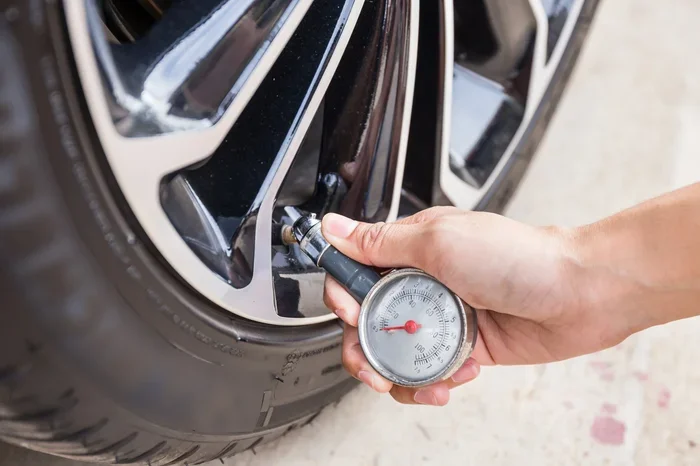
- Dial gauges — These have a round face with a needle that points to the pressure. They are more accurate and easier to read than pencil styles.
- Digital gauges — These give you a clear digital readout. They are the most accurate option and often include backlit screens for nighttime use.
Any of these will get the job done. A good tire pressure gauge costs between five and twenty-five dollars. Keep one in your glove box so you always have it handy.
Air Compressor or Inflation Station
If your tires are low, you need a way to add air. Many gas stations have free or paid air compressor machines. You can also buy a small portable compressor for home use. These plug into your car’s cigarette lighter or 12-volt port.
Some people use a bike pump with a car adapter, but this takes more effort. An electric air compressor is faster and more convenient.
Tire Pressure Monitoring System (TPMS)
Most modern cars come with a tire pressure monitoring system, commonly called TPMS. This system uses sensors inside each wheel to monitor tire pressure levels in real time. When pressure drops below a safe threshold, a warning light appears on your dashboard.
The TPMS light looks like a horseshoe shape with an exclamation point in the center. If you see this light, check your tire pressure right away. Keep in mind that TPMS is a backup system, not a replacement for regular manual checks.
How Do I Check My Car Tire Pressure: Step-by-Step Guide
Now that you have your tools, let us walk through the process. This is the core of how do I check my car tire pressure, broken down into simple steps.
Step 1: Find the Recommended Tire Pressure
Every vehicle has a specific recommended tire pressure. This number is not the same as the maximum pressure listed on the tire itself. The tire’s max PSI is the ceiling, not the target.
Look for the sticker on the driver’s side door jamb. It shows the ideal PSI for both front and rear tires. You can also find this information in your owner’s manual.
Write down the number or take a photo with your phone. This ensures you do not guess when you are at the air pump.
Step 2: Remove the Valve Stem Cap
Each tire has a small cap on the valve stem. Twist it counterclockwise to remove it. Set it aside in a safe place so it does not get lost.
The valve stem is the small metal or rubber protrusion on the wheel. This is where you attach the gauge and add air.
Step 3: Press the Gauge Firmly onto the Valve Stem
Press your tire pressure gauge straight onto the valve stem. You should hear a brief hiss of air escaping. This is normal. Push firmly to create a tight seal.
Wait a moment for the reading to stabilize. If you are using a pencil gauge, the stick will slide out and show the PSI number. Digital gauges display the number on a screen. Dial gauges use a needle on a face.
Read the number and compare it to the recommended PSI from the door jamb sticker.
Step 4: Add Air If Needed
If the reading is below the recommended level, you need to add air. Attach the air hose or compressor nozzle to the valve stem. Press down firmly to create a seal.
Add short bursts of air. Check the pressure after each burst with your gauge. This prevents overinflation, which is just as bad as underinflation.
If you add too much air, press the small pin inside the valve stem to release a little. Then recheck the pressure.
Step 5: Replace the Valve Stem Cap
Once the pressure matches the recommended level, put the valve stem cap back on. Twist it clockwise until it is snug. This small cap keeps dirt and moisture out of the valve, which helps prevent slow leaks.
Repeat this process for all four tires, including the spare if applicable.
Step 6: Record Your Readings
Some drivers find it helpful to log their tire pressure readings. A simple note on your phone or a small notebook in the glove box works. Tracking your readings helps you spot slow leaks early.
Quick Tips for Accurate Readings
- Always check tires when they are cold for the most accurate result.
- Do not bleed air from hot tires right after driving. The pressure rises with heat.
- Check the gauge on a flat, level surface.
- Repeat the reading twice to confirm accuracy.
Common Tire Pressure Problems and How to Fix Them
Even with regular checks, tire pressure problems can happen. Understanding the most common issues helps you address them quickly.
Slow Leaks
A slow leak is the most common cause of tire pressure loss. These can come from a small nail, a worn valve stem, or a poor seal between the tire and rim. If you notice your pressure dropping repeatedly, inspect the tire closely for punctures or damage.
You can test for leaks by mixing dish soap with water and spraying it on the tire and valve stem. Bubbles will form where air is escaping. This simple trick can save you a trip to the shop.
Temperature Changes
Air pressure inside tires changes with temperature. In cold weather, the air inside contracts, which lowers the PSI. In hot weather, the air expands and pressure rises.
This is why many drivers notice the tire pressure light coming on in winter. A ten-degree drop in temperature can reduce tire pressure by about one PSI. Adjust your expectations seasonally and check more frequently during weather changes.
TPMS Sensor Battery Failure
The sensors in your tire pressure monitoring system run on small batteries. These batteries typically last five to ten years. When they die, the TPMS light may come on even if your tire pressure levels are correct.
If you get a TPMS warning and your tires look fine, the sensor battery might need replacement. A mechanic can test and replace the sensor quickly.
Overinflation from Gas Station Air Pumps
Gas station air pumps can be tricky. Many of them do not display exact PSI readings clearly. It is easy to add too much air in a hurry.
Always use your own tire pressure gauge at the station. Do not rely solely on the pump’s built-in gauge. Check after every few seconds of air to stay in control.
Comparison: Pencil vs. Dial vs. Digital Tire Pressure Gauges
| Feature | Pencil Gauge | Dial Gauge | Digital Gauge |
|---|---|---|---|
| Price Range | $3 – $10 | $10 – $25 | $10 – $30 |
| Accuracy | Good | Very Good | Excellent |
| Ease of Reading | Moderate | Easy | Very Easy |
| Durability | High | High | Moderate |
| Battery Required | No | No | Yes |
| Best For | Basic use | Regular users | Precision and convenience |
For most drivers, a digital gauge offers the best balance of accuracy and ease of use. However, a pencil gauge works perfectly fine for occasional checks. The most important thing is to use a gauge regularly.
Expert Insights: What Mechanics Wish You Knew
We asked experienced auto technicians what they wish every driver understood about tire pressure. Here is what they shared.
“Check your pressure before long trips.” — A mechanic with over fifteen years of experience says that many roadside tire failures happen on road trips. A quick check the night before can prevent a dangerous situation miles from help.
“The door jamb sticker is your guide.” — The recommended PSI on the sticker is set by the car manufacturer based on the vehicle’s weight and handling design. It is not arbitrary. Follow it closely.
“Do not ignore the TPMS light.” — Even if your tires look fine, the light means the system has detected a problem. Have it checked. Ignoring it can lead to uneven tire wear and reduced safety.
“Rotate your tires regularly.” — Tire pressure affects wear patterns. If one tire wears faster than others, it may be a sign of a pressure issue or a alignment problem. Regular rotation helps distribute wear evenly.
How Often Should You Check Tire Pressure?
The general rule is to check your tire pressure at least once a month. You should also check before any long road trip and after significant temperature changes.
Some experts recommend checking every two weeks for the most diligent drivers. This is especially important in areas with extreme temperature swings between seasons.
Make it a habit. Link it to a regular event like filling up the gas tank or paying a monthly bill. Once it becomes routine, it takes less than ten minutes total.
Common Mistakes People Make When Checking Tire Pressure
Even with good intentions, drivers often make errors when checking tire pressure. Here are the most common mistakes and how to avoid them.
- Checking tires when they are hot. Air inside the tire expands after driving, giving a falsely high reading. Always wait at least three hours after driving for an accurate measurement.
- Confusing the tire’s max PSI with the recommended PSI. The number printed on the tire sidewall is the maximum, not the target. Use the number from the door jamb sticker.
- Forgetting the spare tire. Many people overlook the spare until they need it. Check its pressure at the same time as your other tires.
- Relying only on TPMS. The TPMS is a warning system, not a maintenance tool. It only alerts you when pressure is already dangerously low. Manual checks catch problems earlier.
- Not replacing valve stem caps. These small caps protect the valve from dirt and moisture. Losing them can lead to slow leaks over time.
- Guessing instead of measuring. You cannot tell if a tire is properly inflated just by looking at it. Always use a gauge.
Key Takeaways
- Check your tire pressure monthly: Regular checks prevent problems and keep you safe on the road.
- Use the right PSI: Always follow the recommended tire pressure from your door jamb sticker, not the tire sidewall.
- Keep a quality gauge in your car: A digital or dial gauge gives the most accurate readings.
- Check when tires are cold: This gives the most reliable PSI measurement.
- Do not ignore the TPMS light: It is an early warning system that deserves your attention.
- Inspect the spare tire too: A flat spare defeats the purpose of having one.
- Proper tire pressure saves money: Better fuel economy and longer tire life are direct benefits of correct inflation.
Conclusion
How do I check my car tire pressure? Now you know the complete answer. It starts with understanding why it matters and ends with building a simple monthly habit. The right tools, a few minutes of your time, and attention to detail make all the difference.
Proper tire pressure improves your safety, your fuel economy, and the lifespan of your tires. It is one of the easiest forms of vehicle maintenance you can do on your own. No appointments, no mechanic fees, no waiting.
Start today. Grab a tire pressure gauge from your local auto parts store or keep one in your glove box right now. Check all four tires and your spare. Compare the readings to the recommended tire pressure levels on your door jamb. Adjust as needed and make it a monthly routine.
Your tires are your connection to the road. Treat them well, and they will take care of you. A simple tire pressure check every month is a small action with big results.
Frequently Asked Questions
What is the recommended tire pressure for most cars?
Most passenger cars recommend a tire pressure between 30 and 35 PSI. However, the exact number varies by vehicle. Always check the sticker on your driver’s side door jamb or your owner’s manual for the specific recommended tire pressure. Never use the number printed on the tire sidewall, as that is the maximum pressure, not the target.
Can I check my tire pressure with the TPMS light off?
Yes, you can and should. The TPMS only activates when pressure drops to a dangerous level. Regular manual checks with a tire pressure gauge catch problems early, before the light comes on. Think of TPMS as a backup system, not a replacement for routine maintenance.
How often should I replace my tire pressure gauge?
A good quality gauge can last for many years with proper care. However, if you notice inconsistent readings or a damaged display, it is time for a replacement. Digital gauges may need battery changes every one to two years. Keeping a spare gauge in your car is a smart backup plan.
Is it safe to drive on a tire with low pressure?
Driving on an underinflated tire is risky. It causes overheating, reduces handling, and increases the chance of a blowout. If you notice low pressure, add air as soon as possible. If the tire is severely flat, do not drive on it. Call for roadside assistance to avoid further damage.
Why does my tire pressure keep dropping?
A slow leak is the most common reason for repeated tire pressure loss. This can be caused by a small puncture, a worn valve stem, or a poor seal between the tire and rim. If you notice your pressure dropping more than one PSI per month, inspect the tire closely or have a mechanic check for leaks.
Should I check my spare tire’s pressure?
Absolutely. Many people forget about the spare until they need it and find it flat. Check your spare tire pressure at the same time as your other tires. The recommended PSI for a spare is often higher than regular tires, so refer to your owner’s manual for the correct number.
=== END ===