How to Tell If Your Coolant Is Low Before It Causes Damage
Knowing how to tell if coolant is low can save you from expensive engine repairs and breakdowns. Coolant keeps your engine at the right temperature, and when it runs low, your car can overheat fast. This guide walks you through every warning sign, the best way to check your levels, and simple steps to prevent damage before it starts.
Your car’s engine works hard. It generates a lot of heat every time you turn the key. And without the right amount of coolant, that heat can cause serious problems fast. Coolant — also called antifreeze — is the fluid that keeps your engine from overheating. It flows through the cooling system, absorbing heat and carrying it away from the engine block.
But here is the thing many drivers miss. Low coolant does not always come with a loud alarm. Sometimes the signs are subtle. A small puddle under your car. A slightly warm temperature gauge. A faint coolant smell inside the cabin. These small clues can add up to big trouble if you ignore them. The good news is that learning how to tell if coolant is low is simple. You do not need to be a mechanic. You just need to know what to look for.
In this guide, we will walk you through every warning sign, the best way to check your coolant level, what causes levels to drop, and how to protect your engine from damage. Whether you are a new driver or have been behind the wheel for years, this information can save you time, money, and a lot of stress.
Key Takeaways
- Check your temperature gauge often: A rising needle is one of the first signs your coolant level is dropping.
- Look for steam or sweet smells: These are clear signals that your engine is running too hot due to low coolant.
- Inspect the coolant reservoir regularly: A quick visual check under the hood can catch problems early.
- Never ignore the coolant warning light: It exists for a reason and can prevent serious engine damage.
- Low coolant often means a leak: Finding and fixing leaks early keeps your cooling system working well.
- DIY checks are easy and fast: You can check your coolant level in just a few minutes with no special tools.
- Act fast when you notice symptoms: Driving with low coolant can cause head gasket failure and costly repairs.
📑 Table of Contents
What Coolant Does and Why It Matters
Before we dive into the warning signs, it helps to understand what coolant actually does. Coolant is a mixture of water and antifreeze chemicals. It circulates through your engine and radiator to manage heat. When your engine is running, it can reach temperatures over 200 degrees Fahrenheit. Without coolant, metal parts would warp, seize, or even crack.
Here is a simple way to think about it. Coolant is like sweat for your car. Just as sweat cools your body down, coolant pulls heat away from the engine. It then passes through the radiator, where the heat dissipates into the air. A water pump pushes the fluid through hoses and channels. A thermostat regulates the flow so the engine stays within the ideal temperature range.
When the coolant level drops too low, this whole system breaks down. The engine cannot cool itself properly. Heat builds up fast. And within minutes, you can go from a slightly warm engine to a seized engine that needs a full replacement.
How the Cooling System Works
Your cooling system has several key parts that work together:
- Radiator: Releases heat from the fluid into the air.
- Water pump: Circulates coolant through the engine block.
- Thermostat: Opens and closes to regulate fluid flow based on engine temperature.
- Coolant reservoir: Stores extra coolant and lets you check the level easily.
- Cooling fan: Helps pull air through the radiator when the car is moving slowly or idling.
- Hoses and clamps: Connect all the parts and keep fluid flowing in a closed loop.
When any part of this system fails or when the fluid level drops, the whole process suffers. That is why staying on top of your coolant level is so important.
Warning Signs Your Coolant Level Is Low
The sooner you catch low coolant, the better. Most warning signs are easy to spot if you know what to look for. Here are the most common signals that your coolant level has dropped.
Temperature Gauge Reading High
Your dashboard has a temperature gauge that shows how hot your engine is. When coolant is low, the gauge needle will start climbing toward the red zone. This is often the first and most obvious sign.
Do not ignore a needle that sits higher than normal. Even if it comes back down, a pattern of rising temperatures means something is wrong. The coolant may not be covering the engine block properly, causing hot spots that damage internal parts over time.
Quick Tip: Get in the habit of glancing at your temperature gauge every time you start the car. It takes two seconds and can catch problems early.
Steam or Vapor Coming From the Hood
Seeing steam or vapor rising from under the hood is a serious sign. It means the engine is overheating, and low coolant is a likely cause. The coolant boils without enough fluid in the system, creating steam that escapes through the radiator cap or overflow hose.
If you see steam, pull over safely as soon as possible. Turn off the engine and let it cool down. Do not open the radiator cap while the engine is hot. The pressure inside can cause hot fluid to spray and burn you.
Coolant Warning Light on the Dashboard
Many modern cars have a dedicated coolant warning light on the dashboard. It usually looks like a temperature gauge with wavy lines or a red thermometer symbol. When this light comes on, it means the engine temperature is too high, and low coolant is a common reason.
Some cars also have a low coolant level warning that is separate from the overheating light. This one often looks like a yellow or orange dashboard symbol. Either way, do not keep driving when these lights appear.
Sweet Smell Coming From the Engine or Cabin
Coolant has a sweet, syrupy smell that is quite distinct. If you notice this odor inside your car or near the engine, it could mean a coolant leak. The fluid might be dripping onto hot engine parts or seeping into the heater core, which blows warm air into the cabin.
This smell is a red flag. Coolant is toxic to humans and animals, so clean up any spills quickly and keep pets and children away from puddles.
Heater Not Working Properly
Here is a sign that surprises many drivers. If your car’s heater blows cold air even when the engine is warm, your coolant level might be low. The heater core relies on hot coolant flowing through it to produce warm air. Without enough fluid, the heater cannot do its job.
This is actually a helpful early warning. A heater that stops working often means the coolant level has dropped enough to affect the heating system but may not yet have caused engine overheating.
Puddles Under Your Car
Check the ground where you park. Coolant leaks often leave bright green, orange, or pink puddles. Unlike oil, which is dark brown or black, coolant has a distinctive color and a slippery, slightly sticky feel.
If you see these colored puddles regularly, you likely have a coolant leak somewhere in the system. Common leak points include the radiator, hoses, water pump, and heater core.
Visible Rust or Discoloration in the Coolant
When you do check your coolant reservoir, look at the color of the fluid. Fresh coolant is bright green, orange, or pink depending on the type. If the fluid looks rusty, brown, or muddy, it may be old and contaminated. Dirty coolant does not work as well and can lead to buildup inside the cooling system.
Common Reasons Coolant Gets Low
Understanding why coolant levels drop helps you prevent the problem from happening again. Here are the most common causes.
Leaks in the Cooling System
A coolant leak is the number one reason fluid levels drop. Leaks can happen in many places:
- Radiator: Rust or damage can create small holes.
- Hoses: Rubber hoses crack and weaken over time, especially in cold weather.
- Water pump: The seal around the pump can wear out and start leaking.
- Radiator cap: A faulty cap cannot hold proper pressure, causing fluid to escape.
- Heater core: A leaking heater core can cause fluid to leak inside the car.
- Head gasket: A blown head gasket can let coolant leak into the engine oil or combustion chamber.
Even a small leak can drain your coolant reservoir over time. The key is catching it early before it causes engine damage.
Evaporation Over Time
Some coolant loss is normal. Over months and years, a small amount of fluid evaporates through the overflow hose or tiny gaps in seals. This is usually not a concern unless the loss is rapid. If you find yourself topping off the coolant every few weeks, something else is going on.
Head Gasket Failure
A blown head gasket is one of the most serious causes of low coolant. The head gasket sits between the engine block and the cylinder head. When it fails, coolant can leak into the cylinders or oil passages. Signs of a head gasket problem include white smoke from the exhaust, a milky look to the oil, and persistent engine overheating.
If you suspect a head gasket issue, get your car to a mechanic right away. Driving with a blown head gasket can cause catastrophic engine damage.
How to Check Your Coolant Level the Right Way
Checking your coolant level is one of the easiest maintenance tasks you can do. It takes just a few minutes and requires no special tools. Here is exactly how to do it.
Step-by-Step Guide
- Park on a flat surface and turn off the engine. Wait at least 15 to 20 minutes for the engine to cool down completely.
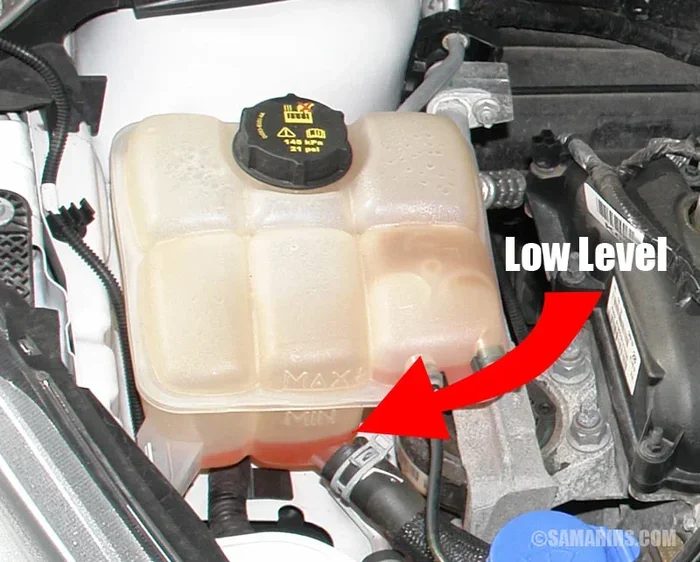
- Open the hood and locate the coolant reservoir. It is usually a translucent plastic tank near the radiator with MIN and MAX markings on the side.
- Look at the fluid level. The coolant should be between the MIN and MAX lines. If it is below the MIN line, your coolant level is low.
- Check the color. The fluid should be bright and clear. If it looks dark, rusty, or oily, it may be time for a coolant flush.
- Top off if needed. Use the type of coolant recommended in your owner’s manual. You can mix pre-mixed coolant or mix concentrated antifreeze with distilled water at a 50/50 ratio.
- Replace the cap on the reservoir securely and close the hood.
When to Check Your Coolant
Make it a habit to check your coolant level at least once a month. You should also check it:
- Before long road trips
- After noticing any warning signs like steam or a rising temperature gauge
- During seasonal changes, especially before summer when overheating risk increases
- After any cooling system repair or maintenance
What Happens When Coolant Runs Too Low
Driving with low coolant is risky. The engine depends on proper fluid levels to stay at a safe operating temperature. Without enough coolant, the consequences can escalate quickly.
Engine Overheating
The most immediate danger of low coolant is engine overheating. When there is not enough fluid to absorb and carry away heat, the engine temperature spikes. Prolonged overheating can warp cylinder heads, crack the engine block, and destroy internal components.
Head Gasket Damage
As the engine overheats, the metal parts expand beyond their normal tolerances. This can blow the head gasket, which is an expensive repair. A blown head gasket allows combustion gases to leak into the cooling system, which further drops the coolant level and creates a dangerous cycle.
Damaged Water Pump
The water pump relies on coolant flowing through it to stay lubricated and cool. When coolant levels are low, the pump can overheat and fail. A bad water pump means the coolant stops circulating entirely, which makes overheating even worse.
Cracked Radiator or Hoses
When the engine gets too hot, the radiator and hoses are under immense pressure. The radiator cap may fail to hold pressure, and hoses can burst. This leads to sudden and complete loss of coolant, which can leave you stranded on the side of the road.
| Early Warning Signs | Signs of Serious Damage |
|---|---|
| Slightly high temperature gauge | Engine overheating repeatedly |
| Small coolant puddle under car | White smoke from exhaust |
| Mild sweet smell from engine bay | Milky or frothy oil on dipstick |
| Heater blows cooler than usual | Steam or vapor from under the hood |
| Coolant light flashes briefly | Engine stalling or refusing to start |
The table above shows how symptoms progress from early warnings to serious damage. Catching the early signs gives you time to fix the problem before it becomes expensive.
Quick Tips to Keep Your Coolant System Healthy
Prevention is always better than repair. Here are some simple steps to keep your cooling system in great shape.
- Use the right coolant type. Check your owner’s manual for the recommended coolant specification. Mixing different types can cause chemical reactions that damage the system.
- Do a coolant flush on schedule. Most manufacturers recommend a coolant flush every 30,000 to 50,000 miles. Old coolant loses its effectiveness and can cause corrosion.
- Inspect hoses and clamps regularly. Look for cracks, swelling, or damp spots near connections. Replacing a worn hose costs very little compared to an engine repair.
- Check the radiator cap. A weak radiator cap cannot maintain proper system pressure. Replace it every few years as a low-cost preventive measure.
- Never open the radiator cap on a hot engine. The pressurized system can cause serious burns. Always wait for the engine to cool completely.
- Keep distilled water on hand. In an emergency, you can top off with distilled water temporarily. But get to a shop and have the system checked properly as soon as you can.
Common Mistakes to Avoid
Even well-meaning car owners make mistakes when it comes to coolant maintenance. Here are a few to watch out for:
- Topping off with plain water only. Water does not have the same heat protection and anti-corrosion properties as coolant. It is okay in a pinch, but do not make it a habit.
- Ignoring a slow leak. A small drip might not seem like a big deal, but it adds up fast. A slow coolant leak can leave you stranded on a hot day.
- Mixing different coolant colors without checking compatibility. Not all coolant types are compatible. Mixing them can create gel-like substances that clog the cooling system.
- Waiting for the temperature gauge to hit red before acting. By the time the gauge is in the red zone, damage may already be starting. React to early warning signs immediately.
Expert Insights: What Mechanics Wish You Knew
Experienced mechanics often see the same mistakes repeated. Here is what they want you to understand about coolant and overheating:
“The number one thing I tell customers is this: do not wait for the warning light. By the time it comes on, you may already be low on coolant and causing damage. A simple monthly check under the hood can prevent a $2,000 engine repair from becoming a $5,000 engine replacement,” says certified mechanic Tom Riley.
Another common insight from professionals is that coolant degrades over time. Even if there is no visible leak, old coolant loses its ability to protect the engine. Regular coolant flushes and fresh fluid keep the entire cooling system working at its best.
Conclusion
Learning how to tell if coolant is low is one of the simplest and most valuable skills any car owner can have. Your vehicle gives you plenty of warning signs — a rising temperature gauge, steam from the hood, a sweet smell, or a puddle under the car. None of these should be ignored. When you catch low coolant early, you protect your engine from overheating, head gasket failure, and costly repairs.
Make it a routine to check your coolant reservoir at least once a month. Know what healthy coolant looks like. Understand the common causes of coolant loss, from leaks to evaporation to head gasket problems. And take action the moment you notice something is off.
A few minutes of attention now can save you hours of downtime and hundreds — or even thousands — of dollars in repairs later. Your engine works hard for you. Keeping the coolant level right is one of the easiest ways to give it back.
Frequently Asked Questions
Can I drive my car if the coolant is low?
You should not drive with low coolant if you can avoid it. Even a short drive can cause the engine to overheat and sustain damage. If you must drive a short distance, keep an eye on the temperature gauge and pull over immediately if it starts climbing. Top off the coolant as soon as possible.
How often should I check my coolant level?
Check your coolant level at least once a month and before any long road trips. It is a quick visual check that takes less than two minutes and can catch problems before they become serious.
What color is healthy coolant?
Healthy coolant is typically bright green, orange, pink, or blue depending on the type. If the fluid looks rusty, brown, or cloudy, it may be old or contaminated and should be flushed and replaced.
Can low coolant cause the check engine light to come on?
Yes. When coolant is low and the engine overheats, the onboard diagnostics system may trigger the check engine light. This is a clear sign that you need to check your coolant level and cooling system right away.
Is it normal for coolant to get low over time?
A very small amount of coolant loss over time is normal due to evaporation and minor seepage. However, if you are frequently topping off, there is likely a coolant leak somewhere in the system that needs to be found and repaired.
What is the difference between coolant and antifreeze?
Antifreeze is the concentrated base fluid, while coolant is a pre-mixed solution of antifreeze and water. You can buy pre-mixed coolant or mix concentrated antifreeze with distilled water yourself at a 50/50 ratio for best protection.