How to Fix a Messed-Up Internal Clock – Simple Steps
A messed-up internal clock can wreck your sleep, energy, and mood. This guide shows you exactly how to fix a messed-up internal clock using simple, science-backed steps. You will learn to reset your body clock, build better sleep habits, and maintain a healthy sleep schedule for good.
Have you ever felt like your body is on a completely different schedule than the rest of the world? You are wide awake at 2 a.m. but exhausted by 2 p.m. Maybe you just got back from a trip and your body still thinks it is in another time zone. Or perhaps you have been staying up late for weeks and your sleep schedule is totally out of whack.
Whatever the reason, a messed-up internal clock is more than just an annoyance. It affects your energy, your mood, your focus, and even your health. The good news is that you can fix it. This guide walks you through simple, proven steps on how to fix a messed-up internal clock and get your body back on track.
You do not need fancy gadgets or expensive treatments. Most of the fixes are free and start working within days. Let us dive in and take back control of your sleep.
Key Takeaways
- Consistent wake-up times are the single most powerful way to reset your internal clock.
- Light exposure plays a huge role in regulating your circadian rhythm and sleep-wake cycle.
- Small daily habits like diet and screen use can either help or hurt your sleep quality.
- Light therapy and melatonin can be useful tools for persistent circadian misalignment.
- Seeing a doctor is important if sleep problems last longer than a few weeks.
- Maintaining good sleep hygiene prevents your internal clock from getting messed up again.
📑 Table of Contents
- What Is an Internal Clock and Why Does It Get Messed Up?
- Signs Your Internal Clock Is Off
- How to Fix a Messed-Up Internal Clock: Step-by-Step Guide
- Advanced Strategies for Persistent Sleep Problems
- Maintaining a Healthy Sleep Schedule Long-Term
- Common Mistakes That Keep Your Internal Clock Broken
- How Long Does It Take to Fix a Messed-Up Internal Clock?
- Conclusion
What Is an Internal Clock and Why Does It Get Messed Up?
Understanding Your Circadian Rhythm
Your body has a built-in timer called the circadian rhythm. Think of it as your internal body clock. It tells you when to feel awake and when to feel sleepy. This rhythm runs on roughly a 24-hour cycle and is controlled by a small part of your brain called the suprachiasmatic nucleus. It responds to light, darkness, and routine.
When your circadian rhythm is working well, you feel alert during the day and naturally sleepy at night. But when that rhythm gets thrown off, you experience what experts call circadian misalignment. Your body wants to sleep when you need to be awake, and vice versa.
Several things can disrupt this natural process. Shift work, travel across time zones, irregular sleep habits, and even too much screen time at night can all interfere. The result is poor sleep quality, daytime fatigue, and difficulty concentrating.
Common Causes of a Disrupted Internal Clock
Many everyday habits can mess with your body clock without you even realizing it. Here are the most common culprits:
- Irregular sleep times: Going to bed and waking up at different hours every day confuses your body.
- Jet lag: Traveling across multiple time zones shifts your internal clock faster than your body can adjust.
- Night shift work: Working when your body expects to sleep flips your entire sleep-wake cycle.
- Blue light exposure: Phones, laptops, and TVs emit light that tricks your brain into thinking it is still daytime.
- Caffeine and alcohol: Both can interfere with your ability to fall asleep and stay asleep.
- Napping too long: Long or late naps can make it harder to sleep at night.
- Inconsistent mealtimes: Eating at random hours sends mixed signals to your body clock.
Once you understand what caused the disruption, you can start fixing it. The next section covers the signs that your internal clock is off so you can identify the problem quickly.
Signs Your Internal Clock Is Off
Sometimes the symptoms of a disrupted body clock are obvious. Other times, they sneak up on you slowly. Here are the key signs to watch for.
Physical Symptoms
- Difficulty falling asleep at night even when you feel tired.
- Waking up too early or too late and not feeling rested.
- Daytime grogginess that does not go away no matter how much sleep you get.
- Digestive issues like bloating or loss of appetite at odd hours.
- Frequent headaches that seem tied to your sleep pattern.
Mental and Emotional Signs
- Brain fog and trouble focusing on simple tasks.
- Mood swings or feeling irritable without a clear reason.
- Low motivation to do things you normally enjoy.
- Increased anxiety or feelings of restlessness.
- Memory problems where you forget things more often than usual.
If you recognize several of these signs, your internal clock is likely out of sync. The good news is that resetting it is very doable. The next section gives you a clear action plan.
How to Fix a Messed-Up Internal Clock: Step-by-Step Guide
Fixing your internal clock is not about doing one big thing. It is about making a series of small, consistent changes. Each step builds on the last. Follow them in order for the best results.
Step 1: Set a Consistent Wake-Up Time
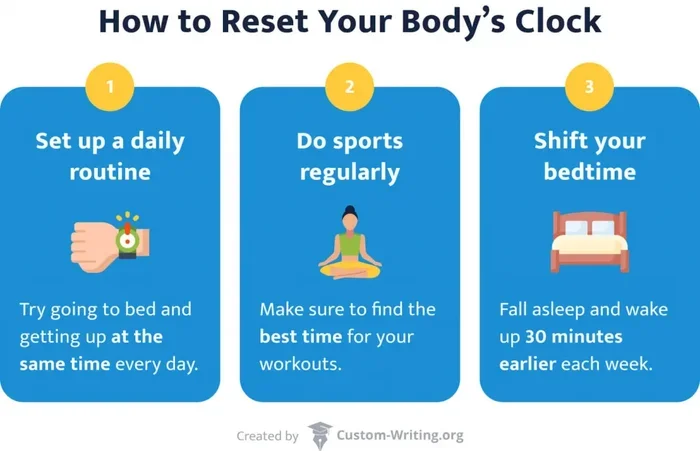
This is the most important step. Pick a wake-up time and stick to it every single day. Yes, even on weekends. Your body clock thrives on consistency.
When you wake up at the same time daily, your body starts producing alertness hormones at the right time. It also starts winding down for sleep at the right time each evening. Within a few days, you will notice your body naturally getting sleepy around your target bedtime.
Use an alarm if you need to. But once you are awake, get out of bed right away. Do not lie in bed scrolling through your phone. That just adds to the confusion your body clock is already dealing with.
Step 2: Build a Relaxing Bedtime Routine
Your brain needs a signal that it is time to wind down. A bedtime routine provides that signal. Start preparing for sleep 30 to 60 minutes before your target bedtime.
Here are some great things to include in your routine:
- Turn off all screens at least 30 minutes before bed.
- Dim the lights in your room to signal darkness.
- Do something calming like reading a book or stretching.
- Write down your thoughts in a journal to clear your mind.
- Keep your bedroom cool, dark, and quiet.
Over time, your brain will associate these actions with sleep. You will start feeling drowsy as soon as the routine begins. That is your internal clock responding positively.
Step 3: Control Your Light Exposure
Light is the strongest cue for your circadian rhythm. Getting light exposure at the right times can dramatically speed up the reset process.
In the morning, get bright light as soon as possible. Open the curtains, step outside, or use a light therapy box. This tells your brain that the day has started and suppresses melatonin, the sleep hormone.
In the evening, do the opposite. Reduce bright lights and avoid screens. Use dim lamps or warm-toned bulbs. This allows melatonin to rise naturally and prepares your body for restful sleep.
Daylight exposure during the day also matters. Try to spend at least 20 to 30 minutes outside in natural light. This strengthens your circadian rhythm and improves overall sleep quality.
Step 4: Watch What You Eat and Drink
Your mealtimes send signals to your body clock. Eating at inconsistent hours can confuse your internal system. Try to keep your meals on a regular schedule.
Here are some dietary tips to support your sleep routine:
- Avoid caffeine after 2 p.m. It can stay in your system for up to 8 hours.
- Limit alcohol in the evening. It may make you feel sleepy but disrupts deep sleep.
- Eat lighter meals at night. Heavy food close to bedtime can cause discomfort and restless sleep.
- Stay hydrated during the day but reduce fluids 1 to 2 hours before bed.
Small changes in what and when you eat can make a big difference in how well your internal clock functions.
Advanced Strategies for Persistent Sleep Problems
If the basic steps above do not fully fix your sleep issues, do not worry. There are more advanced approaches you can try. These are especially helpful for people dealing with long-term circadian misalignment or chronic sleep deprivation.
Light Therapy Boxes
A light therapy box mimics natural sunlight and is a powerful tool for resetting your body clock. You sit near the box for 20 to 30 minutes each morning. The bright light signals to your brain that it is time to be awake.
These boxes are especially useful for people who work night shifts or live in areas with very little daylight during winter. Look for a box that emits 10,000 lux of light and has UV filters for safety.
Melatonin Supplements
Melatonin is a natural hormone your body produces to regulate sleep. Taking a small dose in the evening can help nudge your internal clock in the right direction.
Start with a low dose, around 0.5 to 1 milligram. Take it 30 to 60 minutes before your target bedtime. Melatonin works best as a short-term aid while you build better sleep habits. It is not a magic pill but a helpful support tool.
Always talk to a healthcare provider before starting any supplement, especially if you take other medications.
When to See a Doctor
Most sleep schedule problems resolve with consistent effort. But sometimes, a disrupted internal clock points to a deeper issue. You should see a doctor if you experience any of the following:
- Sleep problems that last longer than three to four weeks.
- Extreme daytime sleepiness that affects your work or driving.
- Snoring loudly or gasping for air during sleep.
- Symptoms of a sleep disorder like insomnia or sleep apnea.
- Mood changes that feel severe or overwhelming.
A sleep specialist can run tests and rule out underlying conditions. They may also recommend cognitive behavioral therapy for insomnia, which is one of the most effective treatments for long-term sleep problems.
Maintaining a Healthy Sleep Schedule Long-Term
Resetting your internal clock is only half the battle. Keeping it on track requires ongoing effort. The good news is that maintenance becomes easier over time.
Building Good Sleep Habits
Good sleep habits, also known as sleep hygiene, are the foundation of a healthy sleep schedule. Here are habits worth building into your daily life:
- Keep the same sleep and wake times even on days off.
- Make your bedroom a sleep-only space. Avoid working or watching TV in bed.
- Exercise regularly but not too close to bedtime.
- Manage stress through meditation, breathing exercises, or gentle yoga.
- Limit naps to 20 minutes and never nap after 3 p.m.
These habits reinforce your circadian rhythm and make it much harder for your body clock to get messed up again.
Quick Tips for Ongoing Success
Here are some bonus tips to keep your sleep schedule strong over the long run:
- Track your sleep using a simple journal or app. Awareness helps you spot patterns.
- Gradually adjust your schedule if you need to shift your wake-up or bedtime by more than an hour.
- Avoid big schedule changes right before important days like work or school.
- Use blackout curtains to keep your room dark and support natural melatonin production.
- Stay consistent with your bedtime routine even when you feel fine. Prevention is easier than fixing a problem.
Think of your sleep schedule like brushing your teeth. A little daily effort goes a long way. Once these habits become second nature, you will not have to think twice about keeping your internal clock in sync.
Common Mistakes That Keep Your Internal Clock Broken
Even when people try to fix their sleep schedule, they often make mistakes that slow things down. Here are the pitfalls to avoid.
Sleeping in on weekends. This is the number one mistake. Sleeping in even by an hour or two on Saturday and Sunday can undo your progress during the week. Your body clock does not understand weekends. It only understands consistency.
Using your phone in bed. The blue light from screens suppresses melatonin production and tricks your brain into thinking it is still daytime. Make it a rule to charge your phone outside the bedroom.
Changing your wake-up time constantly. Waking up at 6 a.m. on Monday and 9 a.m. on Friday sends your body mixed signals. Pick one time and hold firm.
Relying on sleep aids long-term. Over-the-counter sleep aids can help occasionally, but they do not fix the root cause. They can also create dependency that makes the problem worse over time.
Ignoring the problem. A messed-up internal clock does not fix itself. The longer you ignore it, the harder it becomes to correct. Take action as soon as you notice the signs.
Avoiding these mistakes will save you time and frustration. It keeps you moving in the right direction instead of taking steps backward.
How Long Does It Take to Fix a Messed-Up Internal Clock?
This is one of the most common questions people ask. The answer depends on how long your body clock has been off and what caused the disruption.
For mild disruptions like a late weekend schedule, you can often reset within two to three days of consistent effort. For jet lag, most people adjust at a rate of about one day per time zone crossed.
For more serious cases involving shift work or chronic irregular sleep, it may take two to four weeks of steady routine changes. The key is patience and consistency. Your body wants to be on a healthy schedule. You just need to give it clear signals to get there.
Remember that progress is not always linear. You might have a bad night here and there. That is completely normal. Do not let one off night discourage you. Just get back on track the next morning with your consistent wake-up time.
Conclusion
A messed-up internal clock can affect every part of your life. From your energy levels to your mood to your overall health, the ripple effects are real. But the fix is within your reach. By setting a consistent wake-up time, building a relaxing bedtime routine, managing light exposure, watching your diet, and staying patient, you can reset your body clock and enjoy restful, restorative sleep again.
The steps in this guide are simple but powerful. You do not need to do everything at once. Start with one or two changes and build from there. Your body will thank you for it. Take control of your sleep today and experience what it feels like to wake up truly refreshed and ready for the day ahead.
Frequently Asked Questions
Can I fix my internal clock without medication?
Yes, absolutely. Most people can reset their body clock using lifestyle changes alone. Consistent wake-up times, light exposure management, and better sleep habits are often enough. Medication should only be considered for persistent cases under a doctor’s guidance.
How long does it take to reset your internal clock?
The timeline varies depending on the cause and severity of the disruption. Mild cases may resolve in two to three days. Jet lag typically takes one day per time zone crossed. Chronic sleep schedule problems may require two to four weeks of consistent effort to fully correct.
Does caffeine really affect my internal clock?
Yes, caffeine has a significant impact. It blocks adenosine, a chemical that promotes sleepiness, and can stay in your system for up to eight hours. Consuming caffeine after 2 p.m. can delay your sleep onset and reduce overall sleep quality, making it harder for your body clock to stay on track.
Is it better to wake up early or late for a healthy sleep schedule?
The timing matters less than the consistency. Whether you wake up at 6 a.m. or 8 a.m., what matters most is doing it at the same time every day. Consistency is the key factor that keeps your circadian rhythm stable and your internal clock functioning properly.
Can light therapy really help with sleep problems?
Yes, light therapy is a well-researched and effective method for resetting circadian rhythms. Bright light exposure in the morning suppresses melatonin and signals your brain to start the day. It is especially helpful for people with seasonal mood changes, shift workers, and those dealing with jet lag or delayed sleep phase disorder.
What is the difference between sleep deprivation and a messed-up internal clock?
Sleep deprivation means you are not getting enough sleep overall. A messed-up internal clock means your sleep timing is off even if you get enough hours. You might sleep for eight hours but at the wrong times, leaving you feeling exhausted during the day. Both conditions can coexist and often make each other worse.