How Do You Get a Stuck Automatic Window Up Without Stress
Dealing with a stuck automatic window is frustrating, but you can fix it yourself. This guide shows you exactly how to get a stuck automatic window up using simple reset methods, manual tricks, and basic tools. You will learn the common causes, step-by-step solutions, and expert tips to prevent future problems.
There is nothing more annoying than pressing your power window switch and hearing nothing but silence. Whether your window is stuck halfway up or completely frozen in the down position, it can ruin your entire day. A stuck automatic window is one of those car problems that seems small but makes a big difference in your daily drive.
The good news is that you do not need to be a mechanic to fix this issue. Most of the time, the problem has a simple solution that takes just a few minutes. In this guide, we will walk you through every method to get your power window working again. We will cover the causes, the fixes, and the steps to prevent this from happening again.
By the end of this article, you will know exactly what to do when your automatic window refuses to go up. Let us dive in and solve this problem together.
Key Takeaways
- Start with the reset procedure: Most stuck window issues are solved by recalibrating the window’s full travel limits through a simple reset sequence.
- Check the fuse first: A blown window fuse is the easiest and cheapest fix. Always inspect it before diving into complex repairs.
- Lubricate the tracks regularly: Silicone-based lubricant applied every 6 months prevents friction and keeps the window mechanism running smoothly.
- Know when to call a professional: Complex motor or regulator failures are best handled by a trained technician to avoid further damage.
- Avoid common mistakes: Do not force the switch, use the wrong lubricant, or skip the reset procedure. These errors make problems worse.
- Preventive maintenance saves money: Regular care and gentle use extend the life of your automatic window system significantly.
- DIY fixes work for most cases: You do not need advanced skills to handle the majority of stuck window problems at home.
📑 Table of Contents
- Why Does Your Automatic Window Get Stuck?
- How Do You Get a Stuck Automatic Window Up: Step-by-Step Fixes
- Tools and Supplies You Will Need
- Preventing Future Window Problems
- Comparison: DIY Fix vs Professional Repair
- Common Mistakes to Avoid When Fixing a Stuck Window
- Frequently Asked Questions About Stuck Automatic Windows
- Conclusion
Why Does Your Automatic Window Get Stuck?
Understanding the root cause helps you pick the right fix. A stuck car window does not happen randomly. There is always a reason behind it. Let us look at the most common culprits.
Common Causes of a Stuck Power Window
Several things can cause your window to stop working. Here are the top reasons:
- Window regulator failure: The regulator is the mechanism that moves the glass up and down. Over time, the cables can stretch or break, causing the window to jam.
- Faulty window motor: The motor powers the window movement. If it burns out or weakens, the window will not respond.
- Bad window switch: The switch sends the signal to the motor. A worn-out switch can fail to send that signal.
- Blown window fuse: A simple fuse blow cuts power to the entire window system. This is the easiest fix of all.
- Debris in the window track: Dirt, leaves, or small objects can block the window from moving smoothly.
- Frozen window in cold weather: Ice and snow can lock the window in place during winter months.
- Worn window seal: A damaged rubber seal creates friction that makes it hard for the window to move.
Signs Your Window Mechanism Is Failing
Before a window fully sticks, it often gives warning signs. Watch for these clues:
- The window moves slower than usual.
- It makes grinding or clicking noises.
- The window goes up but stops halfway.
- The switch feels loose or unresponsive.
- The window only works sometimes, not every time.
Catching these signs early can save you from a fully stuck automatic window. Regular car window maintenance goes a long way in preventing bigger problems.
How Do You Get a Stuck Automatic Window Up: Step-by-Step Fixes
Now let us get into the actual fixes. These methods work for most makes and models, including Ford, Toyota, Honda, Chevrolet, and many others. Start with the easiest fix and work your way down the list.
Method 1: The Quick Window Reset
Most modern vehicles have a window reset procedure. This is often the solution when the window control module loses its calibration. Here is how to do it:
- Turn the ignition to the “on” or “accessory” position. You do not need to start the engine.
- Press and hold the window switch down until the window goes all the way down. Wait for about 2 seconds after it reaches the bottom.
- Pull the switch up and hold it until the window goes all the way up. Hold for another 2 seconds at the top.
- Test the window by pressing the switch down and up. The auto-down feature should now work again.
This simple window reset procedure fixes the problem more often than people realize. It recalibrates the window’s full travel limits and clears any temporary error in the system.
Method 2: Check and Replace the Fuse
A blown fuse is the simplest reason for a non-working window. Here is what to do:
- Open your car owner’s manual and find the fuse box diagram.
- Locate the fuse labeled for the power windows.
- Remove the fuse and inspect it. A blown fuse will have a broken metal strip inside.
- Replace it with a new fuse of the same amperage rating.
If the new fuse blows again right away, you have a deeper electrical issue. In that case, it is time to see a professional for power window repair.
Method 3: Lubricate the Window Track
Dried-out tracks are a leading cause of window problems. Over time, the factory grease inside the window channel dries up and collects dust. This creates friction that can stall the window.
Here is how to lubricate your window track:
- Clean the window channel with a soft cloth to remove loose debris.
- Apply a silicone-based window track lubricant to both sides of the channel.
- Do not use WD-40 or petroleum-based products. These attract more dirt and can damage the rubber seal.
- Run the window up and down several times to spread the lubricant evenly.
This fix is cheap, easy, and often solves the problem immediately. Many car owners overlook this simple step during regular auto window troubleshooting.
Method 4: Manual Override Technique
If the motor is still working but the window will not move, you can try the manual override. This works when the regulator cable has slipped or the window glass has shifted off its track.
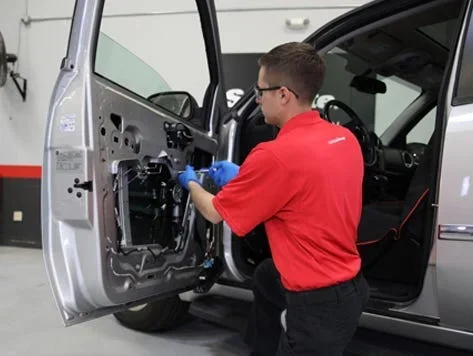
- Remove the door panel to access the window mechanism. The panel is usually held by screws and plastic clips.
- Locate the window glass and the regulator arm.
- Gently push the window up by hand while someone presses the switch.
- If the glass moves, the regulator may need adjustment or replacement.
Be careful during this process. The glass is heavy and fragile. Support it with both hands to avoid cracking or breaking it.
Method 5: Replace the Window Switch
A faulty switch is often the hidden villain behind a stuck automatic window. If the reset and fuse checks do not work, the switch itself might be the problem.
Replacing a window switch is straightforward:
- Remove the door panel to access the switch wiring.
- Unplug the switch connector.
- Remove the mounting screws and pull out the old switch.
- Install the new switch and reconnect the wiring.
- Test the window to confirm it works.
Replacement switches are affordable and widely available online or at auto parts stores. This is a great DIY car repair that saves you money on labor costs.
Method 6: Address a Faulty Window Motor
If none of the above methods work, the motor itself may have failed. A burned-out motor will produce a humming sound but will not move the window. Replacing a window motor requires more effort but is still doable at home with basic tools.
- Disconnect the negative battery terminal for safety.
- Remove the door panel and any trim pieces blocking access.
- Unplug the motor connector and remove the mounting bolts.
- Install the new motor and reconnect everything.
- Reconnect the battery and test the window.
If you are not comfortable with this repair, take your car to a trusted mechanic. Window motor replacement cost varies but typically ranges from $200 to $400 for parts and labor combined.
Tools and Supplies You Will Need
Having the right tools ready makes the repair process smooth and fast. Here is what you should have on hand before starting any power window repair project.
Essential Items for Window Repair
- Screwdriver set (Phillips and flathead)
- Socket wrench set
- Door panel removal tool (a plastic pry tool works great)
- Silicone-based window lubricant
- Replacement fuses (check your owner’s manual for the correct amperage)
- Multimeter for electrical testing
- Replacement window switch (if needed)
- Replacement window motor (if needed)
Keeping these items in your garage or trunk means you are always ready to tackle a stuck automatic window on the spot. Prevention and preparedness go hand in hand when it comes to car window maintenance.
Preventing Future Window Problems
Once you get your window working again, you want to keep it that way. A few simple habits can extend the life of your automatic window system by years.
Regular Maintenance Tips
- Lubricate the window tracks every 6 months with silicone spray.
- Clean the window channels regularly to remove dirt and debris.
- Do not force the window switch if the window is not moving. This can strain the motor.
- Check the rubber seals for cracks or gaps and replace them when needed.
- Run the window up and down fully once a month to keep the mechanism in good condition.
When to Call a Professional
Some problems are beyond a simple DIY fix. Call a professional if you notice any of the following:
- The window regulator cable has snapped and you cannot see the mechanism clearly.
- The window glass is cracked or shattered.
- Electrical testing shows a short circuit in the wiring harness.
- The window control module needs reprogramming.
- You have tried multiple fixes and the window still does not work.
Sometimes spending a little extra on professional help saves you from causing more damage. A skilled technician can diagnose complex window mechanism issues quickly and safely.
Comparison: DIY Fix vs Professional Repair
Not sure whether to fix the window yourself or pay a mechanic? Here is a side-by-side comparison to help you decide.
| Factor | DIY Fix | Professional Repair |
|---|---|---|
| Cost | Low (parts only, $20-$100) | Higher ($150-$400+) |
| Time | 30 minutes to 2 hours | 1-3 days (including wait time) |
| Skill Level Needed | Basic mechanical knowledge | None required |
| Tools Needed | Basic hand tools | Provided by the shop |
| Risk | Higher if done incorrectly | Low (warranty usually included) |
| Best For | Simple fixes like resets, fuses, switches | Complex motor or regulator failures |
For most stuck automatic window issues, starting with a DIY approach makes sense. If the simple methods do not work, then investing in professional repair is the smart next step.
Common Mistakes to Avoid When Fixing a Stuck Window
Even with the best intentions, people make mistakes that make the problem worse. Here are the most common errors and how to avoid them.
Mistakes That Make Things Worse
- Forcing the window switch repeatedly: This overheats the motor and can cause permanent damage. If the window does not move, stop and investigate the cause.
- Using the wrong lubricant: WD-40 and oil-based products attract dust and gum up the track. Always use silicone-based lubricants.
- Ignoring a blown fuse: Some people replace the fuse without checking why it blew. A recurring blown fuse signals a deeper electrical problem.
- Removing the door panel without disconnecting the battery: This can cause electrical shorts or airbag issues in some vehicles.
- Skipping the reset procedure: Many people jump straight to complex repairs when a simple reset would have solved the problem.
Expert Tips for Long-Lasting Results
Here is what seasoned auto repair professionals recommend:
- Always start with the simplest fix first. The reset procedure and fuse check solve the majority of cases.
- Keep a can of silicone lubricant in your car kit. A quick application every few months prevents most track-related issues.
- Pay attention to unusual sounds. A clicking or grinding noise is your early warning system before a full failure.
- Address window problems immediately. A small issue today can become an expensive repair tomorrow.
- Use genuine or OEM-quality replacement parts. Aftermarket parts vary widely in quality and durability.
These window troubleshooting tips come from years of hands-on experience. Following them keeps your automatic window running smoothly and reliably.
Frequently Asked Questions About Stuck Automatic Windows
Here are answers to the most common questions people ask about power window problems.
Can a dead key fob battery cause a stuck window?
No, the key fob battery only controls locking and unlocking. The power window system runs independently through the car’s electrical system. A dead fob battery will not affect your window operation.
How much does it cost to fix a stuck automatic window?
The cost depends on the cause. A fuse replacement costs around $5-$15. A switch replacement runs $50-$150 for parts. A motor replacement typically costs $200-$400. Labor charges vary by location and shop.
Can cold weather cause a window to get stuck?
Yes, absolutely. Ice buildup around the window seal can physically lock the glass in place. Warming the car up for a few minutes or gently applying heat to the seal can help free the window.
Is it safe to drive with a stuck window?
It is safe but not ideal. You will have limited ventilation and no protection from rain if the window is stuck open. Get it fixed as soon as possible for comfort and safety.
How long does a window motor last?
A quality window motor typically lasts 50,000 to 100,000 uses. That translates to roughly 5-10 years of normal daily use. Regular lubrication and gentle operation extend the motor’s lifespan significantly.
Can I fix a stuck window myself without any experience?
Yes, for most common issues like blown fuses, dirty tracks, or calibration resets, you do not need any prior experience. Start with the simplest methods and work your way up. Always disconnect the battery before working on electrical components.
Conclusion
Dealing with a stuck automatic window does not have to be a stressful experience. As we have covered, most window problems have straightforward solutions that you can handle at home. From the simple window reset to lubricating the track and replacing a faulty switch, these fixes save you time and money.
Remember to start with the easiest method and work your way through the list. Check the fuse first. Try the reset procedure. Lubricate the track. Replace the switch or motor if needed. Each step brings you closer to a fully functioning power window again.
Prevention is just as important as the fix. Regular maintenance, gentle operation, and prompt attention to warning signs keep your windows running smoothly for years. Do not ignore the early signs of a failing window mechanism.
Now that you know exactly how do you get a stuck automatic window up, you are prepared for whatever comes your way. Keep this guide saved for future reference, and share it with a friend who might need it. Your car, your wallet, and your peace of mind will all thank you.