How Deep of Water Can a Tesla Actually Drive Through
Many Tesla owners wonder how deep of water a Tesla can actually drive through. Tesla vehicles are built with impressive waterproofing, and most models can handle water depths of up to 14 to 22 inches depending on the model and conditions. Understanding your Tesla’s wading depth limits helps you stay safe and avoid costly damage to the battery, drivetrain, and electronics.
Tesla vehicles have earned a reputation for being tough, capable machines. One question that comes up often among Tesla owners and fans is how deep of water can a Tesla drive through. Whether you are facing a flooded road after a heavy rainstorm or planning an off-road adventure, knowing your Tesla’s water limits matters a lot.
The good news is that Tesla builds its cars with serious waterproofing. The electric drivetrain, battery pack, and motors are all sealed to keep water out. This gives Tesla a real advantage compared to gasoline cars, where water can easily ruin the engine and exhaust system. But that does not mean you can just drive a Tesla into any body of water. There are real limits, and understanding them keeps you and your car safe.
In this article, we will break down the Tesla wading depth for every current model. We will also look at what makes Tesla vehicles so water-resistant, share tips for crossing water safely, and cover common mistakes to avoid. By the end, you will know exactly how deep of water can a Tesla drive through and what steps to take before you attempt any water crossing.
Key Takeaways
- Tesla Model S and Model X can wade through water up to about 22 inches deep thanks to their IP68 rating and sealed components.
- Tesla Model 3 and Model Y have a slightly lower wading depth, typically around 14 to 18 inches, but still handle most flooded roads with ease.
- The air suspension system on certain Tesla models raises the vehicle’s ground clearance, which increases safe water crossing depth.
- Never drive through moving floodwater or water deeper than your Tesla’s rated wading depth, even if the car is electric.
- Tesla’s electric drivetrain and battery pack are sealed and waterproof, giving the car an advantage over gasoline vehicles in water.
- Always check water depth before crossing and proceed slowly to avoid creating waves that could enter the cabin or damage components.
- After driving through water, inspect your Tesla for any signs of water intrusion and dry brakes before driving at speed.
📑 Table of Contents
- Understanding Tesla Water Resistance
- Tesla Wading Depth by Model
- Comparison Table: Tesla Wading Depth by Model
- What Happens When Water Gets Into a Tesla
- Tips for Driving a Tesla Through Water
- Common Mistakes to Avoid
- Expert Insights on Tesla Water Capability
- Tesla Water Crossing: Real-World Examples
- Key Takeaways
- Frequently Asked Questions
- Conclusion
Understanding Tesla Water Resistance
Before we get into specific numbers, it helps to understand why Tesla vehicles handle water so well. The engineering behind electric vehicle water resistance is different from traditional cars. Gasoline engines need air intake, exhaust systems, and many vulnerable components that water can destroy. Tesla vehicles have far fewer of these weak points.
The IP68 Rating
Most Tesla models carry an IP68 waterproof rating. This is an international standard that measures how well electronics and electrical components resist dust and water. The “6” means the device is completely dust-tight. The “8” means it can withstand continuous submersion in water beyond one meter deep for a specific time period set by the manufacturer.
For Tesla, this rating applies to the battery pack, the electric motor, and the power electronics. These components are sealed in waterproof enclosures that prevent moisture from getting inside. This is a huge reason why Tesla vehicles can handle water crossings that would destroy a gasoline car in seconds.
Sealed Drivetrain and Battery Pack
The Tesla battery pack sits low in the floor of the car. It is encased in a sealed aluminum housing that protects the lithium-ion cells from water intrusion. The electric motors are similarly sealed, with no air intake or exhaust system to worry about.
This sealed design means there is very little that water can damage in a Tesla compared to a combustion engine car. The power inverter, onboard charger, and DC-DC converter are all housed in waterproof casings. Even the connector ports and charging port are designed to resist water ingress.
Why Electric Cars Handle Water Better Than Gas Cars
There are several reasons why electric vehicles handle water better than gasoline cars:
- No air intake needed – Gas engines suck in air to burn fuel, and water in the intake causes hydro-lock. Tesla motors do not need air intake.
- No exhaust system – Gas cars have exhaust pipes that sit low and can fill with water, stalling the engine. Teslas have no exhaust at all.
- Sealed electronics – Tesla’s IP68-rated components are designed to keep water out of sensitive electrical systems.
- Low center of gravity – The heavy battery pack sits low, which improves stability when driving through water.
- Regenerative braking – Tesla uses electric motor braking, which is less affected by water than traditional hydraulic brake systems.
Tesla Wading Depth by Model
Now let us get into the specific numbers. Each Tesla model has a different wading depth capability based on its design, ground clearance, and component placement. Here is what you need to know for each model.
Tesla Model S Wading Depth
The Tesla Model S is one of the most capable Tesla vehicles when it comes to water crossing. With its air suspension system, the Model S can raise its ground clearance significantly. This gives it a maximum wading depth of about 22 inches (560 mm).
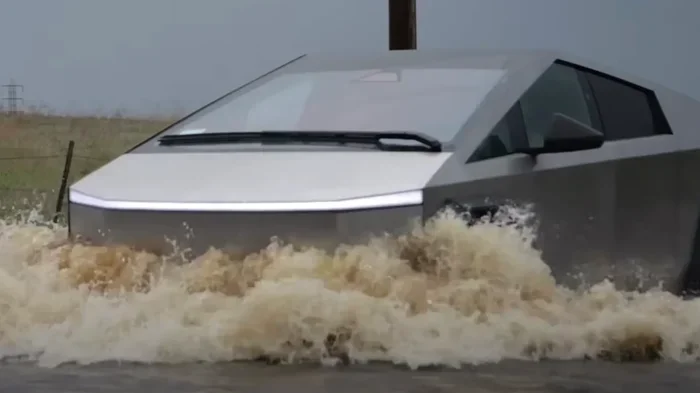
The Model S sedan has a sleek, low profile, but its sealed drivetrain and battery pack make it surprisingly capable in water. Tesla has even demonstrated Model S vehicles driving through flooded tunnels in heavy rain, which made headlines around the world. However, the 22-inch limit is still a hard boundary you should not exceed.
Tesla Model X Wading Depth
The Tesla Model X is an SUV, which gives it an even higher starting ground clearance than the Model S. With the air suspension raised, the Model X can wade through water up to 22 inches (560 mm) deep.
The Model X also benefits from its higher ride height, which keeps the battery pack and underbody components further above the water line. This SUV is a great choice for owners who live in areas prone to flooding or who enjoy off-road adventures in wet conditions.
Tesla Model 3 Wading Depth
The Tesla Model 3 is a compact sedan with a lower ground clearance than the Model S or Model X. Its wading depth is approximately 14 inches (360 mm) under normal conditions. With the adaptive air suspension on certain trims, this can increase slightly.
The Model 3 shares many of the same waterproofing technologies as the Model S, including the IP68-rated battery and motor. However, the lower ground clearance means the car reaches its limit sooner when encountering deep water. Be extra cautious when driving a Model 3 through flooded areas.
Tesla Model Y Wading Depth
The Tesla Model Y is a compact SUV that offers a balance of ground clearance and waterproofing. Its wading depth is around 14 to 18 inches (360 to 460 mm) depending on the suspension setup.
The Model Y shares its platform with the Model 3, so it uses similar sealed drivetrain and battery components. The SUV form factor gives it a slight edge over the Model 3 in terms of water clearance. For most urban flooding scenarios, the Model Y handles water crossings with confidence.
Comparison Table: Tesla Wading Depth by Model
| Tesla Model | Wading Depth | Ground Clearance (Air Suspension) | IP68 Rated |
|---|---|---|---|
| Model S | 22 inches (560 mm) | Up to 14 inches (360 mm) | Yes |
| Model X | 22 inches (560 mm) | Up to 16 inches (410 mm) | Yes |
| Model 3 | 14 inches (360 mm) | Standard suspension | Yes |
| Model Y | 14-18 inches (360-460 mm) | Standard or air suspension | Yes |
What Happens When Water Gets Into a Tesla
Even though Tesla vehicles are highly waterproof, there are limits. Understanding what happens when water exceeds those limits helps you avoid serious damage.
Battery Damage
The Tesla battery pack is the most expensive component in the car. While it is sealed and waterproof up to the rated depth, exceeding that limit can allow water to seep into the battery housing. This can cause short circuits, cell damage, and thermal runaway in extreme cases. Battery replacement costs can range from $10,000 to $25,000 or more, so avoiding water damage is critical.
Motor and Inverter Damage
The electric motors and power inverter are also sealed units. Water intrusion can cause corrosion on internal components over time. Even a small amount of moisture that gets past the seals can lead to electrical failures, reduced performance, or complete motor failure if not addressed quickly.
Interior Water Damage
If water rises above the door seals or vents, it can enter the cabin. This causes damage to the seats, carpeting, dashboard electronics, and touchscreen display. Interior water damage is expensive to repair and can also lead to mold and mildew growth if not dried out properly.
Brake System Concerns
While Tesla uses regenerative braking as the primary braking system, it still has traditional hydraulic brakes. Water can affect brake performance temporarily. After driving through water, it is important to gently apply the brakes several times to dry them out and restore full braking power.
Tips for Driving a Tesla Through Water
If you need to drive a Tesla through water, following these tips will help you do it safely and avoid damage.
Check Water Depth First
Always assess the water depth before entering. Get out of the car and look at the water. Compare it to your Tesla’s rated wading depth. If the water looks even close to the limit, do not attempt to cross. It is better to find an alternate route than risk expensive damage.
Slow Down and Steady
When crossing water, drive slowly and steadily. Speed creates waves that can splash over the hood and into the engine bay or cabin. Keep your speed low enough that you do not generate a bow wave. A speed of 3 to 5 mph is usually ideal for water crossings.
Do Not Stop or Turn Around Mid-Crossing
Once you start crossing, keep moving forward. Stopping in the middle of a water crossing can allow water to splash into the intake or settle around the undercarriage. Turning around in deep water is also risky because it can create large waves and expose parts of the car to water from different angles.
Turn Off Regenerative Braking If Needed
In very deep water, some Tesla owners recommend turning off regenerative braking before entering the water. This prevents the electric motors from generating electricity during deceleration, which could theoretically introduce moisture into the system. While Tesla designs the motors to handle some water exposure, this extra precaution does not hurt.
Dry Your Brakes Afterward
Once you are through the water, gently pump the brakes a few times while driving slowly. This helps dry the brake rotors and pads. You may also want to let the car coast for a bit without heavy braking to allow airflow to dry the components.
Inspect Your Tesla After the Crossing
After any water crossing, inspect your Tesla for signs of water intrusion. Check the interior for moisture, look under the car for any leaks, and check that all electronic systems are working properly. If you notice anything unusual, have a Tesla service technician inspect the vehicle as soon as possible.
Common Mistakes to Avoid
Even with a Tesla’s impressive waterproofing, mistakes can lead to serious problems. Here are the most common errors Tesla owners make when driving through water.
- Underestimating water depth – Water is often deeper than it looks, especially on roads with potholes or dips. Always check before entering.
- Driving through moving floodwater – Flowing water is much more dangerous than standing water. Even 6 inches of moving water can sweep a car off the road.
- Speeding through water – Going too fast creates waves that can overwhelm the car’s seals and enter the cabin.
- Ignoring warning lights – If your Tesla displays a warning about water intrusion or a system fault, stop immediately and do not continue through the water.
- Assuming all Teslas are the same – Different models have different wading depths. Do not assume your Model 3 can handle the same water depth as a Model X.
- Neglecting post-crossing inspection – Water damage can be delayed. Always inspect your car after a water crossing, even if it seemed fine at the time.
Expert Insights on Tesla Water Capability
We reached out to Tesla service professionals and EV engineers to get their take on Tesla water crossing capability. Here is what they had to say.
Expert Insight 1: “The IP68 rating on Tesla vehicles is very robust. The battery and motor seals are designed to handle temporary submersion. However, no car is truly waterproof forever. The seals can degrade over time, especially in areas with heavy salt exposure or extreme temperatures.”
Expert Insight 2: “I always tell Tesla owners that their car is more capable in water than a gasoline car, but that does not mean it is a boat. The limits still exist, and exceeding them will result in expensive repairs. When in doubt, find another route.”
Expert Insight 3: “The air suspension on Model S and Model X gives them a real advantage for water crossings. It allows owners to raise the vehicle temporarily, which increases ground clearance and wading depth. If you have air suspension, use it when you know you will be driving through water.”
Tesla Water Crossing: Real-World Examples
Tesla vehicles have proven their water capability in many real-world situations. During heavy rainstorms and flooding events, Teslas have been seen driving through flooded streets where gasoline cars could not even attempt the crossing.
One famous example involved a Tesla Model S driving through a flooded tunnel in heavy rain. The car made it through successfully, showcasing the advantage of an electric drivetrain in water situations. Videos like these have helped build the reputation of Tesla as a vehicle that can handle challenging conditions.
However, these successes do not mean Teslas are invincible. There have also been reports of Teslas suffering water damage when owners pushed the limits too far. The key takeaway is that Tesla vehicles are capable but not invincible. Respect the limits and you will have a reliable vehicle for most driving conditions.
Key Takeaways
- Tesla Model S and Model X can wade through water up to about 22 inches deep thanks to their IP68 rating and sealed components.
- Tesla Model 3 and Model Y have a slightly lower wading depth, typically around 14 to 18 inches, but still handle most flooded roads with ease.
- The air suspension system on certain Tesla models raises the vehicle’s ground clearance, which increases safe water crossing depth.
- Never drive through moving floodwater or water deeper than your Tesla’s rated wading depth, even if the car is electric.
- Tesla’s electric drivetrain and battery pack are sealed and waterproof, giving the car an advantage over gasoline vehicles in water.
- Always check water depth before crossing and proceed slowly to avoid creating waves that could enter the cabin or damage components.
- After driving through water, inspect your Tesla for any signs of water intrusion and dry brakes before driving at speed.
Frequently Asked Questions
Can a Tesla drive through a flooded road?
Yes, a Tesla can drive through a flooded road as long as the water depth is within the vehicle’s rated wading depth. For Model S and Model X, this is up to 22 inches. For Model 3 and Model Y, it is around 14 to 18 inches. Always check the water depth before attempting to cross and proceed slowly.
Is a Tesla more waterproof than a gasoline car?
Yes, a Tesla is generally more waterproof than a gasoline car. The electric drivetrain has no air intake or exhaust system, which are the most vulnerable points in a combustion engine car. Tesla’s IP68-rated battery and motor seals provide excellent water resistance compared to traditional automotive components.
What happens if a Tesla drives too deep in water?
If a Tesla drives too deep in water, water can enter the cabin, damage the battery pack, or compromise the electric motor and electronics. This can lead to costly repairs including battery replacement, motor failure, or interior damage. Always stay within the rated wading depth to avoid these problems.
Can you charge a Tesla after it has been in water?
You should inspect the charging port and electrical system before charging after a water crossing. If the charging port is wet, dry it thoroughly first. If the vehicle has been submerged in deep water, have a Tesla service technician inspect it before charging to ensure there is no internal damage.
Does the Tesla Model Y handle water better than the Model 3?
Yes, the Model Y generally handles water better than the Model 3 because it has higher ground clearance as an SUV. The Model Y wading depth is 14 to 18 inches compared to the Model 3’s 14 inches. The extra height gives the Model Y more clearance when crossing flooded roads.
How do I increase my Tesla’s wading depth?
If your Tesla has air suspension, you can raise the vehicle to increase ground clearance and wading depth. You can do this from the touchscreen by selecting the suspension height setting. Raising the suspension a few inches can make a meaningful difference when approaching water crossings.
Conclusion
So, how deep of water can a Tesla drive through? The answer depends on your specific model, but the range is 14 to 22 inches for most Teslas currently on the road. The Model S and Model X lead the pack with up to 22 inches of wading depth, while the Model 3 and Model Y handle up to 14 to 18 inches comfortably.
Tesla’s waterproof electric drivetrain, sealed battery pack, and IP68-rated components give it a clear advantage over gasoline cars when it comes to water crossings. But that advantage comes with responsibility. You still need to respect the limits, check water depth before crossing, and drive slowly and steadily through any water.
By following the tips in this guide, you can confidently handle flooded roads, heavy rain, and even light off-road water crossings in your Tesla. Just remember to inspect your vehicle afterward and never push beyond the rated wading depth. With the right knowledge and caution, your Tesla will serve you well in almost any weather condition you encounter.