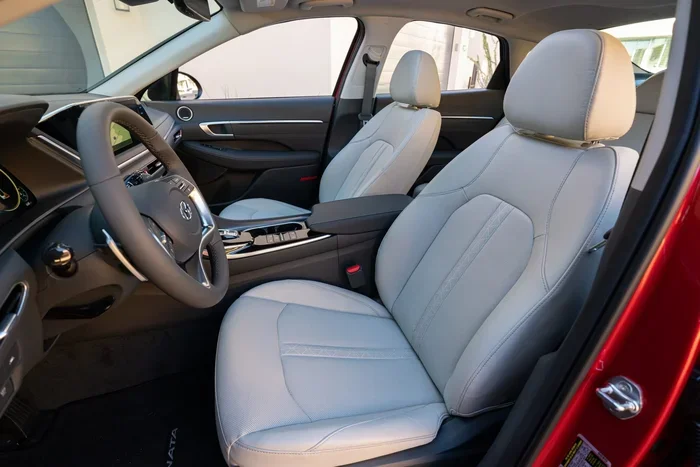
Does Hyundai Use Real Leather or Just Faux Leather
Hyundai uses both real leather and faux leather across different models and trim levels. Higher-end trims typically feature genuine leather, while base and mid-level trims often use synthetic leather or leatherette. You can check your owner’s manual or look for specific markings on the seat to identify the material.
Key Takeaways
- Hyundai uses both real leather and faux leather: The material depends on the model and trim level you choose.
- Higher trims feature genuine leather: Models like the Sonata Limited, Santa Fe, and Palisade often come with real leather seats.
- Faux leather is common in base trims: Many Hyundai models use synthetic leather or leatherette in lower trim levels.
- You can identify real leather easily: Check for natural texture, a distinct smell, and a tag on the seat.
- Care requirements differ by material: Real leather needs conditioning; faux leather needs simple wiping.
- Always check the trim specifications: Ask the dealer for the exact material breakdown before purchasing.
- Hyundai leather seats offer great value: They rival luxury brands at a fraction of the price.
📑 Table of Contents
What Kind of Leather Does Hyundai Use?
Hyundai is a major global automaker. They make cars for millions of people every year. One question that comes up often is about their seat materials. Does Hyundai use real leather in their vehicles? The short answer is: it depends.
Hyundai offers a range of interior options. These options vary by model and trim level. Some Hyundai vehicles come with genuine leather seats. Others use synthetic leather or what the industry calls leatherette. Understanding the difference helps you make a smart buying choice.
Real leather comes from animal hides. It is natural and breathable. Faux leather is made from polyurethane or PVC. It looks like real leather but is entirely man-made. Hyundai uses both types across their lineup. The key is knowing which one you are getting.
Many buyers care about leather quality when choosing a car. They want seats that feel luxurious and last a long time. Hyundai has worked hard to improve their interior materials over the years. Their higher-end trims now rival those from luxury brands.
Quick Tips: Checking Your Hyundai Seat Material
- Check the owner’s manual. It lists the exact seat material for your trim.
- Look for a tag on the seat. It often states the material type.
- Run your hand over the seat. Real leather feels warm and soft.
- Smell the seat. Genuine leather has a distinct natural smell.
- Check the VIN or trim code online through Hyundai’s website.
Hyundai Models With Real Leather Seats
Hyundai offers real leather seats in several of their popular models. These are usually found in higher trim levels. Let us look at some of the most common Hyundai vehicles that feature genuine leather.
The Hyundai Sonata is a midsize sedan. Higher trims like the Limited and Ultimate come with real leather seating. The Hyundai Tucson is a compact SUV. Its top trims offer leather-trimmed seats. The Hyundai Santa Fe is a midsize SUV that often features leather in its premium packages. The Hyundai Kona also offers leather options in certain trims.
The Hyundai Elantra is another model worth mentioning. Some trims include leather seat inserts. The Hyundai Palisade is a three-row SUV that often comes with full leather interiors. The Hyundai Ioniq 5 and Hyundai Ioniq 6 are electric vehicles that may offer leather or synthetic leather options depending on the trim.
Hyundai also has a performance line called Hyundai N. Some N models use leather seats to give a sporty feel. The Hyundai N leather upholstery is designed to be both stylish and durable.
Common Mistakes People Make When Choosing Seat Material
- Assuming all trims come with leather. Many base models use cloth or vinyl.
- Confusing leather-trimmed seats with full leather seats. Some models only have leather on the front seats.
- Not checking the specific trim code before buying.
- Thinking faux leather is always lower quality. Modern synthetic leather has improved a lot.
- Ignoring climate considerations. Real leather can get hot in summer and cold in winter.
Hyundai Models With Faux Leather or Leatherette
Not every Hyundai vehicle uses real leather. Many models use faux leather or leatherette instead. These materials are designed to look and feel like real leather. They offer several benefits that make them a popular choice.
Faux leather is also known as synthetic leather or vegan leather. It is made from polyurethane or PVC coatings on fabric. Hyundai uses this material in many of their popular models. The Hyundai Elantra base trims often come with synthetic leather. The Hyundai Kona base models may use faux leather as well.
The Hyundai Venue is a subcompact SUV. Most trims use cloth or faux leather. The Hyundai Accent (where still sold) typically uses cloth or vinyl seating. Even some higher trims in certain models may use synthetic leather to keep costs down.
One big advantage of faux leather is its affordability. It costs less to produce than genuine leather. This keeps the overall price of the car lower. Faux leather is also easier to clean and maintain in many cases.
Expert Insights: What Dealerships Don’t Always Tell You
Car dealerships sometimes use the term “leather-trimmed” loosely. This can be confusing for buyers. Leather-trimmed means the seats have some leather touches. It does not always mean the entire seat is leather. The seat base or sides might still be fabric.
Always ask your salesperson for the exact material breakdown. Request to see the trim specification sheet. This document lists every material used in the interior. It is your right as a buyer to know exactly what you are getting.
Another thing to keep in mind: some Hyundai models offer a choice between leather and synthetic leather at the same trim level. Always confirm which material comes with the specific vehicle you are buying.
How to Tell if Your Hyundai Has Real Leather
Figuring out if your Hyundai has real leather is easier than you think. There are several simple methods you can try at home. No special tools are needed.
First, look at the texture. Real leather has natural variations. You will see small pores and slight unevenness. Faux leather looks very uniform. It has a repetitive pattern that can look too perfect.
Second, touch the material. Real leather feels warm to the touch at first. It also feels soft and slightly tacky. Faux leather often feels cooler and smoother. It can feel plasticky or overly uniform.
Third, smell it. Genuine leather has a natural, earthy scent. Faux leather may smell like chemicals or plastic. This is one of the easiest ways to tell them apart.
Fourth, check the edges. Real leather has slightly rough, fibrous edges. Faux leather edges are often clean and sealed. They look almost like printed fabric edges.
Fifth, check the label. Look under the seat or on the door panel. There should be a tag that says what material the seat is made from.
Quick Tips for Identifying Leather
- Drop a small drop of water on the seat. Real leather absorbs it quickly.
- Look closely at the surface with a magnifying glass. Real leather has natural grain.
- Compare the seat to a known leather sample if possible.
- Ask the previous owner or check the original window sticker.
- Use the VIN to pull up the original factory specifications online.
Real Leather vs Faux Leather in Hyundai: A Comparison
Choosing between real leather and faux leather for your Hyundai comes down to personal preference. Both materials have pros and cons. Let us break them down side by side.
| Feature | Real Leather | Faux Leather |
|---|---|---|
| Material Source | Animal hide | Polyurethane or PVC |
| Durability | Long lasting with proper care | Good but may crack over time |
| Breathability | Excellent | Moderate to low |
| Comfort | Conforms to body over time | Consistent feel but less natural |
| Maintenance | Requires regular conditioning | Easy to wipe clean |
| Cost | Higher | Lower |
| Appearance | Natural look and feel | Looks realistic but less authentic |
| Allergen Friendly | Less suitable for some allergies | Hypoallergenic options available |
| Eco Impact | Animal-based production | Petroleum-based but no animal use |
| Lifespan | 10+ years with care | 5-8 years typically |
The table above gives you a clear picture of what to expect. Real leather lasts longer but needs more care. Faux leather is easier to maintain but may not age as gracefully. Your choice depends on your lifestyle and budget.
For many Hyundai owners, Hyundai leather vs fabric is also a consideration. Cloth seats are comfortable and come standard on most models. They are easy to replace and very affordable. Leather adds a premium feel but comes at a cost. Fabric is more forgiving with spills. Leather can stain if not treated properly.
Common Mistakes When Caring for Hyundai Leather Seats
- Using harsh household cleaners on leather seats.
- Skipping regular conditioning, which leads to cracking.
- Leaving leather seats in direct sunlight for long periods.
- Using silicone-based products that can damage the material.
- Assuming faux leather needs no maintenance at all.
How to Care for Hyundai Leather Seats
Taking care of your Hyundai leather seats keeps them looking great for years. Whether you have real leather or faux leather, proper maintenance matters.
For real leather seats, start with a gentle cleaner. Use a product made specifically for automotive leather. Wipe down the seats with a soft cloth every week or two. This removes dust and prevents buildup.
Condition the leather every three to four months. A good leather conditioner keeps the material supple. It prevents cracks and fading. Apply the conditioner in a thin, even layer. Let it absorb for a few minutes, then buff it off with a clean cloth.
For faux leather seats, the care routine is simpler. Wipe them down with a damp cloth. Use mild soap if needed. Avoid harsh chemicals that can break down the synthetic material. Faux leather does not need conditioning like real leather does.
Both types of leather benefit from avoiding direct sunlight. Park in the shade when possible. Use sunshades on your windshield. This prevents fading and cracking over time.
If you spill something on your seats, clean it up right away. Blot the spill with a clean cloth. Do not rub, as this can spread the stain. Use a leather-safe cleaner for real leather seats. For faux leather, a mild soap and water solution works well.
Quick Tips for Hyundai Leather Care
- Keep a microfiber cloth in your car for quick wipe-downs.
- Condition real leather seats at least twice a year.
- Avoid parking in direct sunlight for extended periods.
- Test any cleaner on a hidden spot before applying it everywhere.
- Use seat covers to protect seats from pet claws and spills.
- Vacuum seats regularly to remove dirt and debris.
Conclusion
So, does Hyundai use real leather? The answer is yes, but not across the board. Hyundai offers real leather in their higher trim levels on models like the Sonata, Tucson, Santa Fe, Palisade, and Kona. Lower trims and some models use faux leather or leatherette instead. Understanding the difference helps you make the right choice for your needs and budget.
Whether you prefer the natural feel of genuine leather or the easy maintenance of synthetic leather, Hyundai has options. Check the trim details before you buy. Look at the seat material carefully. And once you have your Hyundai, take good care of the seats to keep them looking great for years to come.
Knowing what goes into your car’s interior gives you confidence as a buyer. It also helps you get the most value out of your vehicle. The next time someone asks, “Does Hyundai use real leather?” you will have a clear and detailed answer ready.
Frequently Asked Questions
Does every Hyundai model come with leather seats?
No, not every Hyundai model comes with leather seats. Many base trims use cloth or vinyl upholstery. Higher trims in models like the Sonata, Tucson, and Santa Fe typically offer leather or leather-trimmed seats. Always check the specific trim details before purchasing.
Is Hyundai faux leather as good as real leather?
Hyundai faux leather has improved significantly in recent years. It looks realistic and is easier to maintain than real leather. However, real leather tends to last longer and feels more premium. The best choice depends on your lifestyle, budget, and personal preferences.
Can I upgrade my Hyundai seats to real leather?
Yes, you can upgrade your Hyundai seats to real leather after purchase. Many dealerships offer interior upgrade packages. You can also have a professional upholstery shop install custom leather seats. The cost varies depending on the model and the quality of leather chosen.
How do I know if my Hyundai has real leather or leatherette?
Check the owner’s manual or the seat tag for the material information. Real leather has a natural grain texture and a distinct smell. Faux leather or leatherette feels smoother and more uniform. You can also look up your VIN on Hyundai’s website for factory specifications.
Does Hyundai offer vegan leather options?
Yes, some Hyundai models offer vegan leather or synthetic leather options. These are made without animal products and are popular among eco-conscious buyers. The Hyundai Ioniq 5 and Ioniq 6 electric vehicles may include vegan leather seating options in certain trims.
How often should I condition my Hyundai leather seats?
You should condition real Hyundai leather seats every three to four months. Conditioning keeps the leather supple and prevents cracking. In harsh climates or with heavy daily use, you may need to condition more frequently. Faux leather seats do not require conditioning.