Can a Clogged Catalytic Converter Cause Your Car to Overheat
Yes, a clogged catalytic converter can absolutely cause your car to overheat. When exhaust gases can’t escape properly, back pressure builds up and traps heat inside the engine. This guide explains the connection, warning signs, and how to fix it before serious damage occurs.
Your car’s catalytic converter works quietly in the background. It cleans up harmful exhaust gases before they leave the tailpipe. But what happens when that vital part gets clogged? Can a clogged catalytic converter cause your car to overheat? The answer is a clear yes. In this guide, we’ll walk through exactly how a clogged converter leads to engine heat, what warning signs to watch for, and what you can do about it. You’ll learn simple steps to protect your engine and avoid expensive repairs.
Many drivers never think about their catalytic converter until something goes wrong. This small component handles a huge job. It transforms toxic carbon monoxide into less harmful carbon dioxide. When exhaust flow gets restricted, the whole system suffers. Heat builds up, engine performance drops, and you might face an overheating engine. Understanding this connection can save you time and money. Let’s dive into the details.
The exhaust system is a sealed loop. Gases flow from the engine through the exhaust manifold, into the catalytic converter, then out through the muffler and tailpipe. Any blockage in this loop creates pressure. That pressure is called exhaust back pressure. High back pressure forces the engine to work harder. It’s like trying to breathe through a straw. The engine struggles, heats up, and eventually overheats. A clogged catalytic converter is one of the most common causes of this dangerous pressure buildup.
Key Takeaways
- Exhaust blockage leads to heat: A clogged catalytic converter restricts exhaust flow, causing dangerous heat buildup under the hood.
- Overheating is a real risk: The trapped exhaust gases force the engine to work harder, raising its temperature significantly.
- Watch for early symptoms: Reduced power, rotten egg smell, and check engine light often signal a clogged converter before overheating starts.
- Ignoring it causes more damage: A clogged catalytic converter can lead to engine misfires, melted components, and costly repairs.
- Diagnosis is straightforward: A simple back pressure test or oxygen sensor reading can confirm the clog.
- Prevention is easy: Regular oil changes and using quality fuel help keep the catalytic converter flowing freely.
📑 Table of Contents
- What Does a Catalytic Converter Do?
- How a Clogged Catalytic Converter Can Cause Your Car to Overheat
- Comparison: Mild Clog vs Severe Clog Symptoms
- 5 Warning Signs of a Clogged Catalytic Converter
- Can a Clogged Catalytic Converter Trigger Other Engine Problems?
- Diagnosing and Fixing a Clogged Catalytic Converter
- Preventing Future Clogs: Simple Maintenance Tips
- Conclusion
What Does a Catalytic Converter Do?
The Role of the Converter in Your Exhaust System
Think of the catalytic converter as a filter for your car’s exhaust. It sits between the engine and the muffler. Hot exhaust gases flow through it on their way out. Inside the converter, a honeycomb structure coated with precious metals like platinum and palladium triggers chemical reactions. These reactions convert harmful pollutants into safer emissions. A healthy converter allows gases to pass through smoothly. When that flow gets blocked, trouble starts.
The exhaust system relies on a careful balance of pressure. Gases need to exit the engine quickly and efficiently. Any restriction in that path creates back pressure. Back pressure is the enemy of engine performance. It forces the engine to push harder just to breathe. Over time, this extra strain can cause the engine to run hot. A clogged catalytic converter is one of the most common causes of this back pressure problem. When the converter can’t do its job, the entire vehicle suffers.
How the Converter Prevents Overheating Normally
When working properly, the catalytic converter actually helps maintain steady exhaust flow. The smooth passage of gases keeps the engine running efficiently. The engine produces power without excessive heat buildup. The cooling system can easily manage the normal operating temperature. The thermostat opens and closes as needed. Coolant circulates through the engine block and radiator. Everything stays in balance. But when a clog develops, that balance is lost. The converter becomes a bottleneck. Exhaust gases linger, heat builds, and the engine starts to overheat.
How a Clogged Catalytic Converter Can Cause Your Car to Overheat
The Back Pressure Problem Explained
When a catalytic converter becomes clogged, exhaust gases cannot escape freely. They start to pool up in the exhaust system. This creates a bottleneck effect. The engine still tries to push out gases, but it meets resistance. That resistance is back pressure. High back pressure means the engine has to work much harder to complete each cycle.
As the engine works harder, it generates more heat. The cooling system struggles to keep up. Coolant temperatures rise. The thermostat may open, but it can’t release heat fast enough. Soon, the temperature gauge climbs into the danger zone. This is how a clogged catalytic converter causes your car to overheat. The trapped heat has nowhere to go. It radiates back into the engine compartment. The engine runs hotter than it was designed to run. The overheating engine warning signs become impossible to ignore.
Heat Soak and Engine Damage
Heat soak happens when excessive heat builds up and stays trapped. A clogged converter acts like a blanket around the exhaust. The heat soaks into surrounding components. The exhaust manifold gets scorching hot. The engine oil temperature rises too. Hot oil loses its ability to lubricate properly. This creates even more friction and heat. It’s a vicious cycle. The engine overheats, and the damage spreads.
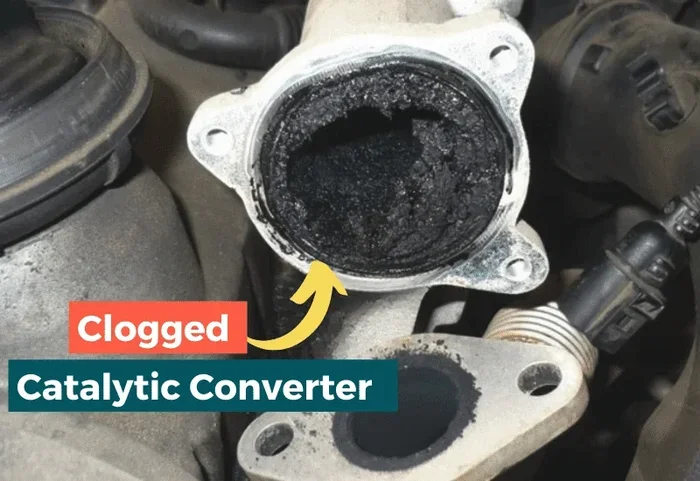
In severe cases, the catalytic converter itself can melt. The internal honeycomb structure can collapse under extreme heat. This creates a complete blockage. At that point, the engine might stall or refuse to start. An overheating engine can warp cylinder heads or blow head gaskets. These are expensive repairs. A simple clog could turn into a major engine failure if ignored. The catalytic converter failure can cascade into other serious engine problems.
Comparison: Mild Clog vs Severe Clog Symptoms
Understanding the severity of a clog helps you act quickly. Use this table to compare symptoms at different stages of blockage.
| Symptom | Mild Clog | Severe Clog |
|---|---|---|
| Engine Temperature | Slightly above normal | Consistently in the red zone |
| Back Pressure | 1.5–2.5 psi | Above 3.5 psi |
| Fuel Economy | Slight drop | Noticeable 10–20% decrease |
| Engine Power | Mild sluggishness | Significant loss, stalling |
| Check Engine Light | May be off | On, often flashing |
| Smell | Faint sulfur odor | Strong rotten egg smell |
| Overheating Risk | Low, only under load | High, even at idle |
This table shows how a clogged catalytic converter worsens over time. A mild clog might only cause slight overheating under heavy load. A severe clog can cause the engine to overheat even when sitting at a traffic light. Catching the problem early is crucial. The earlier you address it, the lower the repair cost and the less risk of engine damage.
5 Warning Signs of a Clogged Catalytic Converter
Symptom 1: The Check Engine Light Comes On
Your car’s computer monitors the exhaust system closely. The oxygen sensors measure how efficiently the catalytic converter works. When a clog develops, these sensors detect a problem. They trigger the check engine light. Don’t ignore this warning. A glowing check engine light often points to exhaust restriction. It’s one of the first signs that your converter might be clogged.
The engine control module stores a trouble code when it detects high back pressure. Common codes include P0420 for catalyst system efficiency and P0401 for insufficient EGR flow. These codes are direct indicators of exhaust system problems. A mechanic can read these codes with a simple scan tool. The check engine light is your car’s way of telling you something is wrong. Address it promptly to avoid an overheating engine.
Symptom 2: Reduced Engine Power and Acceleration
Have you ever pressed the gas pedal and felt like your car was sluggish? A clogged catalytic converter can cause exactly that. The engine can’t exhale properly, so it can’t inhale fresh air and fuel efficiently. You might notice a lack of power when climbing hills or merging onto highways. The car feels like it’s running out of breath. This loss of acceleration is a classic sign of exhaust blockage.
Drivers often mistake this for a transmission problem or a weak engine. But the root cause is usually exhaust restriction. The engine is literally choking on its own exhaust. When you rev the engine, the power lag becomes even more noticeable. The vehicle may hesitate or stumble. If you experience these symptoms alongside rising temperatures, suspect a clogged converter. It’s a clear sign that the exhaust system blockage is affecting engine performance.
Symptom 3: A Rotten Egg Smell from the Exhaust
A healthy catalytic converter turns hydrogen sulfide into sulfur dioxide. When it gets clogged, that conversion process breaks down. You’ll often smell a strong rotten egg odor coming from under the car. This smell is sulfur, a sign that unprocessed exhaust gases are leaking. It’s not just unpleasant. It also means the converter is failing to do its job. The smell often gets stronger when you rev the engine or sit in traffic.
The rotten egg smell is a direct indicator of catalytic converter failure. It means the converter is saturated and can no longer process exhaust properly. Sulfur smells are also harmful to breathe. Avoid running the engine in enclosed spaces if you notice this odor. Get the vehicle inspected immediately. This symptom often appears before severe overheating, giving you a chance to fix the problem early.
Symptom 4: Poor Fuel Economy
A clogged converter forces the engine to work harder. That extra effort burns more fuel. You might notice you’re filling up more often. The fuel efficiency drops without any obvious reason. If you’re visiting the gas station more than usual, check your exhaust system. The engine is essentially running rich because it can’t expel exhaust properly. This rich running condition wastes gasoline and increases emissions.
Poor fuel economy is a subtle but important warning sign. Many drivers overlook it or blame it on driving habits. But a sudden drop in miles per gallon is a red flag. The engine is compensating for the exhaust restriction by using more fuel. This extra fuel also contributes to carbon buildup, which worsens the clog. It’s a vicious cycle. Tracking your fuel economy can help you catch a clogged catalytic converter before it leads to overheating.
Symptom 5: The Engine Overheats
Of course, the main topic here is overheating. If your temperature gauge climbs into the red zone, a clogged converter could be the culprit. The overheating might happen during normal driving or when you’re stuck in traffic. You might see steam coming from under the hood. The cooling fans may kick in constantly. This is a serious warning sign. Pull over safely and let the engine cool down. Continuing to drive with an overheating engine can cause catastrophic damage.
Engine overheating from a clogged converter often happens at low speeds or idle. The lack of airflow at low speeds means the cooling system can’t dissipate the trapped heat effectively. When you’re on the highway, the airflow helps keep things cool. But stop-and-go traffic is the worst scenario. The engine heats up, the converter blocks exhaust, and the temperature soars. If you see the temperature gauge rising, don’t ignore it. Shut off the engine and seek help. An overheating engine can warp metal and destroy gaskets quickly.
Can a Clogged Catalytic Converter Trigger Other Engine Problems?
The Domino Effect on Engine Health
Yes, a clogged catalytic converter doesn’t just cause overheating. It can trigger a chain reaction of engine problems. The extra back pressure affects the entire combustion process. Fuel injectors might deliver too much fuel to compensate for the exhaust restriction. The engine runs rich. A rich running engine produces more carbon deposits. These deposits can clog fuel injectors and foul spark plugs.
The oxygen sensor also suffers. It tries to correct the fuel mixture based on inaccurate readings from the clogged converter. This can lead to incorrect fuel trim values. The engine control module constantly adjusts, trying to find the right balance. All this extra work stresses the engine. It can lead to engine misfires, rough idling, and even engine stalling. A clogged catalytic converter can turn a simple exhaust part into a major engine headache. The exhaust system blockage creates a ripple effect that touches every component.
Impact on the Oxygen Sensor and Fuel Trim
The oxygen sensor sits in the exhaust stream before the catalytic converter. It measures the amount of oxygen in the exhaust gases. When the converter is clogged, the exhaust flow changes. The sensor reads a lean or rich condition incorrectly. It sends wrong data to the engine computer. The computer then adjusts the fuel injection timing and amount. This constant adjustment can wear out the sensor faster. Replacing an oxygen sensor is much cheaper than replacing a melted catalytic converter.
A failing oxygen sensor can also cause the engine to run lean. A lean mixture burns hotter, which increases the risk of overheating. The sensor and the converter can fail together, creating a complex diagnosis. This is why it’s important to check both components when you notice overheating symptoms. A mechanic can test the sensor voltages and back pressure to pinpoint the exact cause. Don’t guess—get a proper diagnosis to avoid unnecessary part replacements.
Diagnosing and Fixing a Clogged Catalytic Converter
Step 1: Check for Back Pressure
Mechanics use a back pressure gauge to test for a clogged converter. They screw the gauge into the oxygen sensor port. The engine is started and held at a steady RPM. Normal back pressure should be low, usually under 1.5 psi. If the reading is high, the converter is likely restricted. A reading above 3 psi often indicates a severe clog. This test quickly confirms whether the converter is causing your overheating issues.
You can also check for back pressure without a gauge by looking at exhaust flow. Have a helper rev the engine while you watch the tailpipe. A healthy converter allows strong, steady exhaust pulses. A clogged converter produces weak, labored exhaust. You might even hear rattling inside the converter if the honeycomb is breaking apart. These visual and auditory clues can point to a problem before the gauge test.
Step 2: Inspect the Oxygen Sensors
Before replacing the converter, check the oxygen sensors. A failing sensor can mimic the symptoms of a clogged converter. The engine might run rich or lean based on bad sensor data. A simple scan tool can read the sensor voltages. If the sensors are working fine, the converter is the next suspect. Always rule out sensor problems first. This saves you from an unnecessary expensive part replacement.
The upstream oxygen sensor (before the converter) should show fluctuating voltages between 0.1 and 0.9 volts. A steady reading or a stuck reading indicates a problem. The downstream sensor (after the converter) should show a more stable voltage if the converter is working properly. If both sensors show similar fluctuating readings, the converter might be clogged and not doing its job. These sensor tests help confirm the diagnosis.
Step 3: Try a Catalytic Converter Cleaner
Not all clogs require a full replacement. Sometimes, carbon buildup can be dissolved. A high-quality catalytic converter cleaner additive can help. You add it to your fuel tank and drive normally. The cleaner works through the exhaust system to break up deposits. This method works best for mild clogs. It can restore some flow and reduce back pressure. It won’t fix a melted or physically damaged converter, but it’s worth a try.
Look for cleaners that contain acetone or proprietary solvents. Follow the instructions on the bottle. Typically, you add the entire bottle to a nearly empty tank and drive for a full tank. The cleaner needs time to work through the system. Some drivers report improved performance and reduced overheating after using a cleaner. It’s a low-cost first step before committing to a replacement. However, don’t rely on it as a permanent fix for a severely clogged converter.
Step 4: Replace the Catalytic Converter
If cleaning doesn’t work, replacement becomes necessary. A new catalytic converter can be expensive. The part itself ranges from a few hundred to over a thousand dollars. Labor adds more cost. However, driving with a clogged converter risks engine damage. The overheating can warp the cylinder head or blow the head gasket. Those repairs cost thousands. Replacing the converter is the safest and most permanent fix. Always use a quality part that meets OEM standards.
When replacing the converter, ask the mechanic to inspect the exhaust system for other blockages. Sometimes, the clog is not in the converter itself but in the exhaust pipe or muffler. A complete inspection ensures you fix the root cause. Also, check the oxygen sensors and spark plugs during replacement. Worn spark plugs can cause unburned fuel to enter the exhaust and damage the new converter. A holistic approach to repair protects your investment and prevents future overheating.
Preventing Future Clogs: Simple Maintenance Tips
Regular Oil Changes and Quality Fuel
You can take steps to keep your catalytic converter healthy. Regular maintenance goes a long way. Change your engine oil on schedule. Old oil can shed particles that contaminate the converter. Use high-quality fuel from reputable stations. Cheap fuel contains more impurities and contaminants. These can coat the converter’s internal honeycomb. Keep the engine tuned properly. A misfiring engine sends unburned fuel into the exhaust. That fuel can ignite inside the converter and melt it.
Follow these simple tips to avoid a clogged catalytic converter and the overheating problems it brings. Use the recommended oil weight for your engine. Check the owner’s manual for maintenance intervals. A little prevention saves a lot of money. It also keeps your engine running cool and efficient.
Address Engine Misfires Promptly
One of the biggest enemies of the catalytic converter is an engine misfire. When a cylinder misfires, unburned fuel enters the exhaust stream. That fuel can ignite inside the hot catalytic converter. The sudden heat can melt the internal structure. Even a single misfire can cause damage over time. If you notice a rough idle or a flashing check engine light, get it checked immediately.
Common causes of misfires include worn spark plugs, faulty ignition coils, and clogged fuel injectors. Replacing these parts is relatively inexpensive compared to a new catalytic converter. Keep the ignition system in top shape. It protects the converter and prevents the exhaust blockage that leads to overheating. A well-maintained engine runs clean and keeps the converter flowing freely.
Monitor Your Temperature Gauge
Make it a habit to glance at your temperature gauge while driving. Most drivers ignore it until the needle climbs into the red. By then, damage may already be starting. A healthy engine runs in the normal range, usually between 195 and 220 degrees Fahrenheit. If you notice the needle creeping higher than usual, investigate. A clogged catalytic converter can cause a slow, gradual rise in temperature. Catching it early gives you time to fix the problem before the engine overheats.
Also pay attention to the behavior of the cooling fans. If the fans run constantly, even when the engine is cool, there might be an underlying issue. The engine computer triggers the fans based on temperature sensor input. A clogged converter can trick the sensors into thinking the engine is hotter than it is. This constant fan operation is a sign that something is wrong. Don’t ignore it. Address the root cause to keep your engine cool and your converter clear.
Conclusion
Now you know the answer to the question: can a clogged catalytic converter cause your car to overheat? Yes, and it happens more often than many drivers realize. The exhaust system is a sealed loop. When something blocks it, the engine suffers. A clogged catalytic converter creates back pressure that traps heat. This heat leads to overheating, reduced power, and eventually costly repairs. The warning signs are there: the check engine light, the rotten egg smell, the sluggish acceleration, and the rising temperature gauge. Pay attention to them.
Don’t wait until the temperature gauge hits red. A little attention early on can save you from a major breakdown and a huge repair bill. Keep your catalytic converter clean, and your engine will thank you with cool, reliable performance. Regular maintenance, quality fuel, and prompt repairs are the keys to preventing a clogged converter. Your car will run better, last longer, and stay cool on every drive. Take action today if you suspect a clog. Your engine will stay healthy and your wallet will thank you later.
Frequently Asked Questions
Can a clogged catalytic converter cause engine overheating?
Yes, absolutely. A clogged catalytic converter restricts the flow of exhaust gases. This creates back pressure that traps heat in the engine. The engine has to work harder to push out exhaust, which generates extra heat. Over time, this heat buildup can cause the engine to overheat, especially during idling or low-speed driving.
What are the first signs of a clogged catalytic converter?
The first signs often include a check engine light, reduced engine power, and a rotten egg smell from the exhaust. You might also notice poor fuel economy and the engine running hotter than normal. These symptoms appear because the converter can’t process exhaust gases efficiently. Ignoring them can lead to more severe overheating and engine damage.
How much does it cost to replace a clogged catalytic converter?
The cost varies depending on your vehicle model and location. On average, parts and labor range from $500 to $2,500. The converter itself can be expensive because it contains precious metals. However, the cost of replacement is far less than repairing engine damage caused by prolonged overheating. Always get a diagnosis from a trusted mechanic before deciding on the repair.
Can you clean a clogged catalytic converter without replacing it?
In some cases, yes. A catalytic converter cleaner additive can dissolve carbon deposits that cause mild clogs. You add it to your gas tank and drive normally. This method works best for early-stage buildup. If the converter is melted or physically damaged, cleaning won’t help. You’ll need a full replacement to restore proper exhaust flow and prevent overheating.
What happens if you keep driving with a clogged catalytic converter?
Continuing to drive with a clogged converter puts extra strain on the engine. The back pressure causes the engine to run hot. This can lead to overheating, warped cylinder heads, and blown head gaskets. Unburned fuel can also enter the exhaust and ignite inside the converter, melting its internal structure. Eventually, the engine may stall or suffer catastrophic failure. It’s not worth the risk.
How can I prevent my catalytic converter from clogging?
Regular maintenance is the best prevention. Change your engine oil on time and use quality fuel. Fix engine misfires promptly, as unburned fuel can damage the converter. Keep the engine properly tuned to ensure complete combustion. These simple steps reduce carbon buildup and keep the exhaust system flowing freely. A well-maintained converter helps prevent overheating and extends the life of your engine.