North Carolina Window Tint Law Explained and Simplified
The North Carolina window tint law sets clear rules on how dark or reflective your car windows can be. Front side windows must allow at least 35% of light in, while rear windows can be darker. Understanding these rules helps you avoid fines and keep your car street legal.
Have you ever driven through a parking lot and noticed how some cars look sleek with dark windows? Maybe you have been thinking about getting window tint for your own vehicle. Before you do, you need to know the North Carolina window tint law. The rules might surprise you, and breaking them can cost you money and time.
North Carolina has specific regulations that control how dark or reflective your car windows can be. These rules are not just suggestions. They are enforceable laws backed by the North Carolina DMV and local law enforcement. Whether you are a first-time car owner or a tint enthusiast, understanding these rules is essential.
This guide breaks down everything you need to know. We will cover legal limits, tint percentages, medical exemptions, and what happens if you get caught with illegal tint film. By the end, you will feel confident about making the right choice for your car.
The North Carolina window tint law is designed to balance driver privacy with safety. Tinted windows can reduce glare and heat, but they can also make it harder for police to see inside your vehicle. That is why the state sets clear legal tint limits that everyone must follow.
Key Takeaways
- Front side windows must have a VLT of 35% or higher in North Carolina.
- Rear windows and rear windshield can be tinted darker than front windows.
- Windshield tint is only allowed on the top 5 inches, and it must be non-reflective.
- Medical exemptions are available for those who need darker tint for health reasons.
- Penalties for illegal tint can include fines and mandatory removal of the tint.
- Tint reflection must not exceed 20% on front and rear side windows.
- Side mirrors are required if rear windows are heavily tinted.
📑 Table of Contents
- What Is North Carolina’s Window Tint Law?
- Legal Tint Limits for Each Window
- VLT Percentage: What It Means for Your Car
- Medical Exemptions and Special Allowances
- Penalties for Illegal Tint in North Carolina
- Tips for Choosing Compliant Window Tint
- Common Mistakes People Make with Window Tinting
- Expert Insights on NC Window Tinting
- Conclusion
What Is North Carolina’s Window Tint Law?
The North Carolina window tint law governs how much light must pass through your car windows. It also controls how reflective the tint can be. These rules apply to passenger vehicles and are enforced across the state.
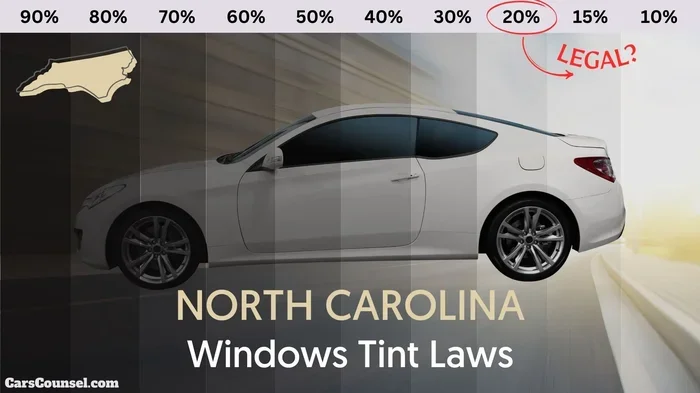
Understanding visible light transmission, or VLT, is the first step. VLT measures how much light passes through your window tint. A higher VLT means more light gets in. A lower VLT means darker tint. North Carolina sets specific VLT limits for each window on your car.
The law also addresses tint reflection. Reflective tint can mirror the outside world, which may distract other drivers. North Carolina limits how reflective your windows can be. This helps keep roads safe for everyone.
It is important to note that the North Carolina window tint law applies to the front windshield, front side windows, rear side windows, and rear windshield. Each window has its own rules. Let us break them down in detail.
Why Window Tint Laws Exist
You might wonder why states even have window tinting regulations. The answer is safety. Dark windows can reduce a driver’s ability to see pedestrians, other cars, and road hazards. They can also make it difficult for law enforcement to perform traffic stops safely.
Tint darkness law varies from state to state. Some states allow very dark tint on all windows. North Carolina takes a more moderate approach. The goal is to allow drivers to enjoy the benefits of tint while maintaining clear visibility.
Another reason for these rules is emergency response. Police officers and paramedics need to see inside vehicles during emergencies. Car window tinting that is too dark can slow down their response time. This is why every state has its own state tint laws that reflect local safety priorities.
Legal Tint Limits for Each Window
The North Carolina window tint law assigns different limits to different windows. Here is a clear breakdown of what is allowed on each window of your passenger vehicle.
Front Windshield Tint Rules
North Carolina allows tint on the front windshield, but only on the top 5 inches. This strip is often called the sunstrip or eyebrow tint. The tint on the windshield must be non-reflective. You cannot use mirrored or metallic tint here.
This rule is common across many states. The idea is to protect the driver’s line of sight while still offering some shade from the sun. If you want a tinted windshield, the 5-inch rule is your only option in North Carolina.
Front Side Window Tint Rules
The front side windows must allow at least 35% VLT. This means the tint must let at least 35% of visible light pass through. This is one of the stricter rules in the North Carolina window tint law.
Many car owners prefer lighter tint on the front doors. This keeps the driver and front passenger visible to others on the road. It also helps officers see inside during routine traffic stops. If you want a dark look, you will need to keep the front windows relatively light.
Rear Side Window and Rear Windshield Tint Rules
Here is where things get more flexible. The rear side windows and rear windshield can be tinted to any darkness. There is no minimum VLT requirement for these windows in North Carolina.
However, if your rear windows are tinted darker than 35% VLT, you must have dual side mirrors. This ensures you can still see behind your vehicle. Without side mirrors, heavily tinted rear windows can create dangerous blind spots.
This rule gives car owners more freedom for rear window tinting. You can go as dark as you want in the back, as long as you add mirrors to compensate for reduced visibility.
VLT Percentage: What It Means for Your Car
Visible light transmission, or VLT, is the percentage of light that passes through your window tint. It is the most important measurement in the North Carolina window tint law. The higher the VLT, the lighter the tint. The lower the VLT, the darker the tint.
For example, a 50% VLT tint lets in half of the available light. A 5% VLT tint, often called “limo tint,” lets in very little light. In North Carolina, your front side windows must be 35% VLT or higher.
Understanding VLT helps you choose the right tint film for your car. It also helps you avoid a tint ticket. If you are unsure about the VLT of your current tint, you can ask your tint installer to measure it with a VLT meter.
How VLT Is Measured
A VLT meter is a small device that measures the amount of light passing through glass. Tint shops use them to ensure your tint meets state requirements. You can also purchase a handheld VLT meter online for under $30.
When you get your car tinted, always ask for a VLT certificate. This document proves your tint is within legal limits. Keep it in your glove box. If you ever get pulled over, you can show it to the officer.
Common VLT Levels and Their Look
Here is a quick guide to how different VLT levels look on your car:
- 50% VLT – Light tint. Good for reducing glare and UV rays. Still very clear.
- 35% VLT – Medium tint. The legal minimum for front windows in North Carolina. Offers good privacy and heat rejection.
- 20% VLT – Dark tint. Popular for rear windows. Harder to see through from outside.
- 5% VLT – Very dark tint. Also called limo tint. Not allowed on front side windows in NC.
Medical Exemptions and Special Allowances
Not everyone can tolerate regular tint levels. Some people have medical conditions that make them sensitive to sunlight. The North Carolina window tint law does provide a medical exemption for these individuals.
To qualify, you need a written statement from a licensed physician. This statement must explain why you need darker tint than the standard legal limits. You then submit this to the North Carolina DMV for approval.
If your exemption is granted, you will receive a special permit. This permit must be displayed in your vehicle. It allows you to have darker tint than the standard legal tint limits. However, the exemption still requires that you maintain some level of visibility.
Who Qualifies for a Medical Exemption?
Several medical conditions may qualify for a tint exemption in North Carolina. These include:
- Lupus – An autoimmune disease that makes skin sensitive to sunlight.
- Melanoma – Skin cancer patients often need to limit sun exposure.
- Photosensitivity – A condition where skin reacts severely to UV light.
- Albinism – A genetic condition that reduces melanin and increases sun sensitivity.
- Chronic eczema – Severe skin conditions worsened by sun exposure.
Keep in mind that each case is reviewed individually. The North Carolina DMV decides whether the medical documentation is sufficient. Having a condition does not automatically guarantee approval. You must provide strong medical evidence.
Penalties for Illegal Tint in North Carolina
Getting caught with illegal tint film in North Carolina can lead to serious consequences. The state takes tint violations seriously because they relate to road safety.
The most common penalty is a fine. The amount can vary depending on the severity of the violation. In some cases, you may also be required to remove the illegal tint before your vehicle can pass inspection.
Repeated violations can lead to higher fines and more serious consequences. It is not worth the risk. Always make sure your aftermarket tint complies with the North Carolina window tint law.
What Happens During a Traffic Stop
If an officer pulls you over and suspects your tint is too dark, they may use a tint meter. This device measures the VLT of your windows on the spot. If your tint is below the legal limit, you will receive a citation.
You will typically be given a chance to fix the issue. This means you must remove the illegal tint or replace it with compliant window tinting. Failure to do so can result in additional fines or your vehicle failing inspection.
How to Avoid a Tint Ticket
The best way to avoid a tint ticket is to stay informed. Here are some quick tips:
- Always ask your tint installer about North Carolina regulations before tinting.
- Request a VLT certificate after installation.
- Keep your medical exemption paperwork in the car if applicable.
- Check your tint regularly for peeling or fading that may change VLT levels.
- Know the legal limits for each window on your vehicle.
Tips for Choosing Compliant Window Tint
Choosing the right tint film can be overwhelming. There are so many options available. But if you follow a few simple guidelines, you can stay compliant with the North Carolina window tint law and still enjoy great results.
Work with a Reputable Installer
Always choose a licensed and experienced tint installer. A professional will know the window tinting regulations in North Carolina. They can recommend the right tint darkness for each window. A good installer will also provide you with a VLT certificate and warranty.
Ask friends or family for recommendations. You can also read online reviews. Look for installers who have experience with NC tint laws. This ensures you get quality work that meets legal requirements.
Choose the Right Tint Material
There are several types of tint film available. Each has its own benefits:
- Dyed film – Affordable and basic. Offers good glare reduction but may fade over time.
- Metalized film – More durable and reflective. However, it may interfere with cell signals.
- Carbon film – Non-reflective and fade-resistant. A popular choice for compliant tinting.
- Ceramic film – The premium option. Offers excellent heat rejection without signal interference.
For North Carolina, carbon and ceramic films are excellent choices. They are non-reflective, which helps you stay within the 20% reflection limit. They also last longer and look great.
Get a Tint Inspection
After installation, consider getting a professional tint inspection. Many shops offer this service for free or a small fee. The inspector will measure the VLT of each window and confirm compliance with the North Carolina window tint law.
This is especially important if you have tinted your windows yourself. DIY tint kits are popular, but they can be tricky to install correctly. An inspection gives you peace of mind and protects you from surprise tickets.
Common Mistakes People Make with Window Tinting
Even well-meaning car owners can make mistakes when it comes to car window tinting. Here are some common errors to avoid.
Assuming All States Have the Same Rules
State tint laws vary widely. What is legal in Florida may be illegal in North Carolina. Always check the rules for your specific state before getting tinted. Do not rely on what your friend in another state told you.
Choosing the Darkest Tint Available
It is tempting to go with the darkest tint darkness possible. But in North Carolina, the darkest tint is not always the best choice. Front side windows must be at least 35% VLT. Choosing a darker shade will result in a violation.
Forgetting About Side Mirrors
If you tint your rear windows darker than 35% VLT, you must install dual side mirrors. Many people forget this requirement. Without proper mirrors, you create blind spots that can lead to accidents.
Ignoring Windshield Tint Rules
The front windshield has its own rules. Tint is only allowed on the top 5 inches. It must also be non-reflective. Using reflective or metallic tint on the windshield is a violation of the North Carolina window tint law.
Not Keeping Documentation
Always keep your VLT certificate and any medical exemption paperwork in your vehicle. If you get pulled over, having these documents can save you time and money. It shows the officer that you have taken steps to comply with the law.
Expert Insights on NC Window Tinting
We spoke with several automotive experts about the North Carolina window tint law. Here is what they had to say.
Mark D., a licensed auto body specialist in Raleigh: “I see a lot of cars with illegal tint every week. The most common issue is front windows that are too dark. My advice is simple, stick to 35% VLT or higher on the front, and you will be fine.”
Sarah L., a traffic safety educator: “Tint can be great for comfort and privacy. But it must not compromise visibility. The NC tint laws are there to protect everyone on the road. I encourage all car owners to learn the rules before tinting.”
James T., a tint shop owner in Charlotte: “The best thing you can do is work with a professional installer who knows the local regulations. They will guide you through the process and make sure you stay compliant. It is worth the investment.”
Conclusion
The North Carolina window tint law is clear and straightforward once you understand the basics. Front side windows must be at least 35% VLT. The front windshield can only have a 5-inch non-reflective tint strip. Rear windows can be any darkness, but dual side mirrors are required if the tint is darker than 35%. Tint reflection must stay under 20% for all side windows.
If you have a medical condition, a medical exemption can give you more flexibility. Just make sure you follow the proper application process through the North Carolina DMV. And if you ever get a tint ticket, address it quickly to avoid additional penalties.
Choosing the right tint film for your vehicle does not have to be stressful. Work with a reputable installer, keep your documentation handy, and stay informed about the latest window tinting regulations. With the right knowledge, you can enjoy the benefits of tinted windows while staying fully compliant with the law.
Take the time to understand the rules. Your wallet and your safety will thank you. The North Carolina window tint law is there to protect you and everyone else on the road. Respect it, and you will have nothing to worry about.
Frequently Asked Questions
What is the legal tint limit for front windows in North Carolina?
The front side windows must allow at least 35% of visible light to pass through. This means the VLT must be 35% or higher. Any tint darker than this on the front windows is considered illegal and can result in a fine.
Can I tint my rear windshield in North Carolina?
Yes, you can tint the rear windshield in North Carolina. There is no minimum VLT requirement for the rear windshield. However, if the tint is darker than 35% VLT, you must have dual side mirrors to maintain proper visibility.
Is reflective tint allowed on car windows in NC?
No, reflective tint is limited in North Carolina. The tint reflection must not exceed 20% on both front and rear side windows. Metallic or mirrored finishes that go beyond this limit are not legal and can result in a citation.
How do I get a medical exemption for window tint in North Carolina?
You need a written statement from a licensed physician explaining your medical condition and why darker tint is necessary. Submit this documentation to the North Carolina DMV for review. If approved, you will receive a permit that allows you to exceed the standard tint limits.
What happens if I get caught with illegal window tint in NC?
If you are caught with illegal tint, you will likely receive a fine. In most cases, you will also be required to remove the illegal tint before your vehicle can pass inspection. Repeated violations may lead to higher fines and additional penalties.
Can I tint my front windshield in North Carolina?
Yes, but only on the top 5 inches of the front windshield. The tint on this strip must be non-reflective. No tint is allowed below the 5-inch line on the windshield. This rule helps maintain the driver’s clear line of sight.