Is 28 PSI Too Low to Drive and What You Should Know
Is 28 PSI too low to drive? The answer depends on your vehicle and tire type. For most passenger cars, 28 PSI falls below the recommended range and can affect safety, fuel economy, and tire longevity. Understanding your tire pressure needs helps you stay safe on the road.
Is 28 PSI too low to drive? This is a question many car owners ask, especially when they notice their tire pressure light flickering on the dashboard. The short answer is that 28 PSI is often below the recommended range for most passenger vehicles. But the full answer requires a closer look at your specific car, tire type, and driving conditions.
Tire pressure plays a huge role in how your vehicle performs. It affects everything from fuel economy to road safety. When your tires do not have enough air, they cannot do their job properly. This guide breaks down what 28 PSI means for your tires, when it becomes a problem, and how to keep your tires in great shape.
Whether you are a new driver or someone who has been on the road for years, understanding tire pressure is essential. Let us dive into everything you need to know about driving at 28 PSI and why it matters.
Key Takeaways
- 28 PSI is often too low: Most passenger vehicles recommend tire pressure between 32 and 35 PSI, making 28 PSI below the safe range.
- Low pressure affects fuel economy: Underinflated tires create more rolling resistance, causing your engine to work harder and burn more gas.
- Safety risks increase with low PSI: Driving on underinflated tires raises the chance of blowouts, poor handling, and longer braking distances.
- Check your door jamb sticker: The recommended tire pressure for your vehicle is listed on the driver’s side door frame, not on the tire sidewall.
- Cold weather drops PSI: Tire pressure naturally decreases in cold temperatures, so seasonal checks are essential.
- TPMS alerts matter: Your tire pressure monitoring system is designed to warn you when pressure drops to unsafe levels.
- Regular checks save money: Maintaining proper air pressure extends tire life and prevents costly repairs.
📑 Table of Contents
- What Does 28 PSI Mean for Your Tires?
- Is 28 PSI Too Low? Understanding Recommended Pressure
- What Happens When You Drive on Low Tire Pressure
- How to Check and Maintain Proper Tire Pressure
- When 28 PSI Might Be Okay
- Expert Tips for Keeping Your Tires in Top Shape
- Common Mistakes Drivers Make with Tire Pressure
- Conclusion
What Does 28 PSI Mean for Your Tires?
Understanding PSI and Tire Pressure
PSI stands for pounds per square inch. It measures the amount of air pressure inside your tire. Every tire has a maximum PSI rating printed on the sidewall. That number tells you the highest pressure the tire can safely hold. But it does not tell you what pressure your specific vehicle needs.
Most passenger cars recommend tire pressure between 32 and 35 PSI. Some vehicles, especially trucks and SUVs, may require 35 to 45 PSI. When your tire pressure sits at 28 PSI, it is below the standard range for most cars. This is considered underinflated.
The recommended pressure for your vehicle is listed on a sticker inside the driver’s door frame. You can also find it in your owner’s manual. Always use that number as your guide, not the number on the tire sidewall.
Why Tire Pressure Matters
Tire pressure affects how your car interacts with the road. Proper air pressure ensures even contact between the tire and the pavement. This gives you the best grip, handling, and braking performance.
When pressure drops too low, the tire flattens out more than it should. The contact patch becomes larger, which creates more friction. More friction means more heat, more wear, and less efficiency. Over time, this adds up to serious problems.
Is 28 PSI Too Low? Understanding Recommended Pressure
How to Find Your Vehicle’s Recommended PSI
The best way to answer the question “is 28 PSI too low to drive” is to check your vehicle’s recommended tire pressure. Here is how you can find it:
- Driver’s door jamb sticker: Open your driver’s door and look for a sticker on the frame. It lists the recommended tire pressure for all four tires.
- Owner’s manual: Your vehicle manual has a section dedicated to tire specifications and inflation guidelines.
- Fuel door sticker: Some vehicles display the recommended PSI on a sticker inside the fuel door.
- Online resources: You can look up your vehicle make and model on the manufacturer’s website.
If your vehicle recommends 32 PSI or higher, then 28 PSI is too low. Even a few PSI below the recommended level can have a noticeable impact on performance.
The Difference Between Tire Sidewall PSI and Recommended PSI
A common mistake many drivers make is confusing the tire sidewall PSI with the recommended PSI. The number on the sidewall is the maximum pressure the tire can handle, not the ideal pressure for your car.
For example, if your tire sidewall says “Max PSI 44,” that does not mean you should always inflate to 44. Your vehicle manufacturer has already determined the ideal pressure based on the car’s weight, suspension, and handling needs.
Inflating to the sidewall maximum can actually make your ride harsher and reduce traction. Always follow the recommended pressure listed on the door jamb sticker.
What Happens When You Drive on Low Tire Pressure
Reduced Fuel Economy
One of the first things you will notice when driving on underinflated tires is a drop in fuel economy. Tires with low air pressure create more rolling resistance. Your engine has to work harder to keep the car moving, which burns more fuel.
Studies show that tires underinflated by just 10 PSI can reduce fuel efficiency by up to 3 percent. If you drive at 28 PSI when your car needs 35 PSI, you could see a noticeable increase in fuel costs over time. This is one of the most common reasons drivers ask about low tire pressure.
Uneven and Accelerated Tire Wear
Underinflated tires wear out faster on the outer edges of the tread. This happens because the tire flexes more than it should when it does not have enough air. The inner and outer shoulders of the tire bear the most load, causing them to wear down prematurely.
Replacing tires is expensive. Proper air pressure can extend the life of your tires by thousands of miles. If you want to avoid frequent tire replacements, keeping your PSI at the recommended level is one of the simplest steps you can take.
Poor Handling and Reduced Safety
Low tire pressure affects how your car handles on the road. Tires that are not fully inflated take longer to respond to steering inputs. You may notice your car feels sluggish or vague when you turn the wheel.
Braking distance also increases with underinflated tires. In an emergency stop, every foot matters. Tires with insufficient air pressure cannot grip the road as effectively, which puts you and your passengers at greater risk.
Risk of Tire Blowout
This is the most serious danger of driving on low tire pressure. When a tire does not have enough air, the sidewall flexes excessively. This creates heat buildup inside the tire. Over time, the heat weakens the tire’s internal structure.
A blowout can happen suddenly and without warning. At highway speeds, a blowout can cause a serious accident. If your TPMS light comes on and your pressure is low, address it immediately. Do not ignore the warning.
Impact on Tire Pressure Monitoring System (TPMS)
Most modern vehicles come equipped with a tire pressure monitoring system. The TPMS light on your dashboard activates when tire pressure drops below a safe threshold. For many cars, this threshold is around 25 percent below the recommended PSI.
If your recommended pressure is 35 PSI and your tires drop to 28 PSI, the TPMS light will likely turn on. This is your vehicle telling you something is wrong. Pay attention to this warning and check your tire pressure as soon as possible.
How to Check and Maintain Proper Tire Pressure
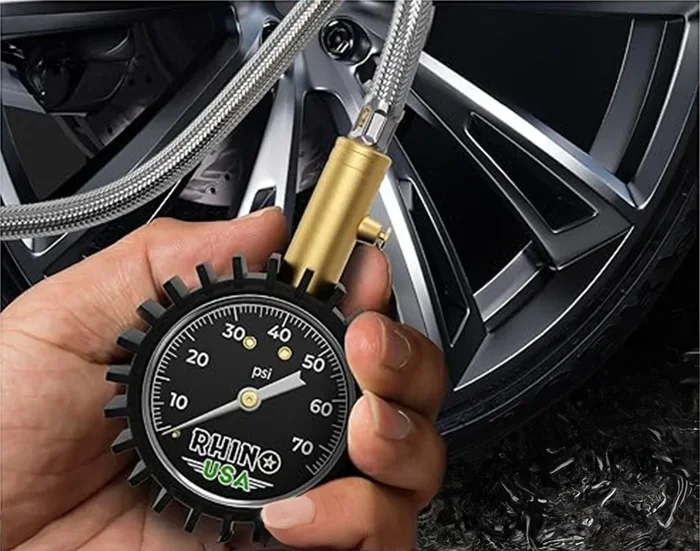
Using a Tire Pressure Gauge
Checking your tire pressure is easy and should be part of your regular car maintenance routine. Here is how to do it:
- Check your tires when they are cold. Driving heats up the air inside the tire, which raises the PSI reading.
- Remove the valve cap from the tire valve stem.
- Press the tire pressure gauge firmly onto the valve stem.
- Read the PSI number on the gauge.
- Compare the reading to your vehicle’s recommended PSI.
- Add air if the pressure is low. Let air out if it is too high.
- Replace the valve cap when you are done.
A good tire pressure gauge costs under fifteen dollars and lasts for years. Digital gauges are easy to read and highly accurate. Keep one in your glove box so you can check your tires anytime.
How Often Should You Check Your Tire Pressure?
Make it a habit to check your tire pressure at least once a month. Air slowly leaks out of tires over time, even without a puncture. Seasonal temperature changes also affect PSI levels. In cold weather, tire pressure can drop by 1 PSI for every 10 degree drop in temperature.
Also check your tire pressure before long road trips. Properly inflated tires improve safety and give you peace of mind on the highway.
Quick Tips for Maintaining Optimal Tire Pressure
- Check all four tires, including the spare, every month.
- Do not rely on visual inspection alone. A tire can look fine but still be underinflated.
- Use the same pressure gauge for consistent readings.
- Inflate tires at a gas station air pump, or use a portable tire inflator at home.
- Reset your TPMS after adjusting tire pressure, if your vehicle requires it.
- Keep a log of your tire pressure readings to track trends over time.
When 28 PSI Might Be Okay
Temporary Situations
There are rare situations where 28 PSI might be acceptable, at least temporarily. Some vehicles, particularly certain light trucks or specialty vehicles, may have lower recommended pressures. However, this is uncommon for standard passenger cars.
If you just got your tires filled at a gas station and the pressure reads 28 PSI, double-check the reading. Gas station air pumps are not always accurate. The gauge on the machine may be off, or the tire may still be warming up from driving.
Off-Road and Special Driving Conditions
Some off-road enthusiasts intentionally lower their tire pressure for better traction on sand, snow, or mud. Reducing PSI increases the tire’s contact area with the ground, which can improve grip on loose surfaces.
However, this is a deliberate and temporary adjustment. Drivers who lower their PSI for off-roading know to reinflate their tires before returning to paved roads. Driving at reduced pressure on highways for extended periods is not safe.
What If You Must Drive Short Distances at 28 PSI?
If you find yourself with 28 PSI and need to drive a short distance to a gas station or tire shop, it is generally okay to drive cautiously. Keep your speed low, avoid sharp turns, and stay on familiar roads.
However, this should not become a habit. Even short drives on underinflated tires cause damage over time. Get your tires to the proper PSI as soon as you can.
Expert Tips for Keeping Your Tires in Top Shape
Maintaining proper tire pressure is one of the simplest things you can do for your vehicle. Here are some expert tips to keep your tires healthy and your drives safe:
- Set a monthly reminder: Phone alarms work great for keeping up with regular tire pressure checks.
- Invest in a quality tire inflator: A portable 12-volt tire inflator for your car can save you in emergencies.
- Rotate your tires regularly: Tire rotation helps ensure even wear and extends the life of your set.
- Check for leaks: If you frequently lose air, inspect for slow leaks around the valve stem or bead area.
- Replace worn tires: Even with perfect air pressure, old tires with worn tread are a safety hazard. Know when to replace them.
- Keep a tire pressure log: Tracking your readings helps you spot slow leaks early before they become a bigger problem.
Taking care of your tires pays off in safety, comfort, and savings at the pump. A few minutes of attention each month can prevent costly repairs and keep you rolling smoothly.
Common Mistakes Drivers Make with Tire Pressure
Many drivers unknowingly make mistakes that compromise their tire health. Here are some common errors to avoid:
- Relying on visual checks: A tire can lose a significant amount of air and still look fine to the naked eye.
- Using the sidewall PSI as a guide: The number on the tire sidewall is the maximum, not the recommendation.
- Only checking tires when the TPMS light comes on: By the time the light activates, your pressure is already dangerously low.
- Overinflating tires: Too much air pressure is just as harmful as too little. Overinflated tires wear in the center of the tread and provide a harsh ride.
- Ignoring the spare tire: Your spare tire also loses air over time. Check it regularly so it is ready when you need it.
Avoiding these simple mistakes can save you time, money, and potentially prevent dangerous situations on the road.
Conclusion
So, is 28 PSI too low to drive? For most vehicles, the answer is yes. 28 PSI is generally below the recommended tire pressure for passenger cars, which typically falls between 32 and 35 PSI. Driving on underinflated tires affects your fuel economy, tire wear, handling, and most importantly, your safety on the road.
The good news is that maintaining proper tire pressure is easy and affordable. A simple tire pressure gauge, a monthly check, and a quick trip to the air pump can make a world of difference. Do not wait for the TPMS light to come on. Be proactive and check your tire pressure regularly.
Your tires are the only part of your car that touches the road. Treat them well, and they will keep you safe for miles to come. Keep that air pressure at the recommended level, and you will enjoy a smoother, safer, and more fuel-efficient ride every time you hit the road.
Frequently Asked Questions
Can I drive long distances with 28 PSI in my tires?
Driving long distances at 28 PSI is not recommended for most passenger vehicles. Low tire pressure causes excessive heat buildup, uneven wear, and increases the risk of a blowout. Always inflate your tires to the recommended PSI before any long trip.
Will 28 PSI ruin my tires quickly?
Driving consistently on underinflated tires accelerates wear on the outer edges of the tread. Over time, this can significantly shorten the lifespan of your tires. While one short drive at 28 PSI is unlikely to cause immediate damage, making it a habit will lead to premature tire replacement.
What is the recommended tire pressure for most cars?
Most passenger cars recommend a tire pressure between 32 and 35 PSI. However, the exact number varies by vehicle. Always check the sticker on your driver’s door jamb or your owner’s manual for the correct PSI rating for your specific car.
Does cold weather cause low tire pressure?
Yes, cold weather causes tire pressure to drop. For every 10 degree Fahrenheit drop in temperature, tire pressure can decrease by approximately 1 PSI. This is why many drivers notice their TPMS light coming on during winter months.
How do I know if my tire pressure monitoring system is working properly?
You can test your TPMS by starting your vehicle and checking if the warning light illuminates briefly during startup. If the light stays on or flashes, it may indicate a sensor issue or low tire pressure. Have a mechanic inspect the system if you are unsure.
Is it safe to drive on a tire with 28 PSI if I am going slowly?
Driving slowly at 28 PSI for a short distance is generally safe, but it is not ideal. Even at low speeds, underinflated tires have reduced grip and increased rolling resistance. Inflate your tires to the proper PSI before driving, even for short trips.