How Bugattis W16 Engine Contributes to Extreme Speed
The Bugatti W16 engine is a quad-turbocharged powerhouse that drives some of the fastest cars ever built. With over 1,500 horsepower on tap, this engine combines a unique W-shaped cylinder design, advanced fuel injection, and elite aerodynamics to push hypercars to mind-blowing top speeds. Understanding how the Bugatti W16 engine works reveals why it remains the gold standard in extreme performance engineering.
When you think about the fastest cars on Earth, one name almost always comes to mind. Bugatti has built some of the most incredible machines ever made. And at the heart of every supercar sits a remarkable piece of engineering. The Bugatti W16 engine is not just any engine. It is a masterpiece of modern design that pushes the limits of what a car can do.
So how does this engine actually create such extreme speed? The answer lies in a combination of raw power, smart design, and advanced technology. In this article, we will break down exactly how the Bugatti W16 engine contributes to the jaw-dropping performance these hypercars are known for. Whether you are a car enthusiast or just curious about speed, you will find plenty to explore here.
Let us start at the very beginning. What makes the W16 so special compared to other engines? The answer starts with its shape and size.
Key Takeaways
- Quad-Turbo Power: The Bugatti W16 engine uses four turbochargers to force massive amounts of air into the combustion chambers, creating extraordinary horsepower output.
- Unique W Configuration: The narrow W16 cylinder layout packs 16 cylinders into a compact space, improving engine architecture and balance.
- Advanced Cooling Systems: Specialized engine cooling keeps temperatures in check, even at extreme speeds and sustained high performance.
- Aerodynamics Matter: The hypercar body design works hand-in-hand with the engine to reduce drag and maximize top speed.
- Smart Transmission Delivery: A dual-clutch transmission system sends power to the wheels efficiently, ensuring every bit of torque reaches the road.
- Continuous Innovation: Bugatti keeps pushing boundaries with new fuel injection tech, materials, and engineering tweaks that make each generation faster than the last.
📑 Table of Contents
- What Makes the Bugatti W16 Engine So Special
- How the W16 Generates Massive Horsepower
- The Role of Aerodynamics in Achieving Top Speed
- Cooling and Thermal Management Systems
- Transmission and Power Delivery to the Wheels
- Engineering Innovations That Define the W16
- Common Mistakes People Make About the W16 Engine
- Expert Insights on the W16 Engine’s Future
- Conclusion
What Makes the Bugatti W16 Engine So Special
The Bugatti W16 engine stands out right away because of its unique cylinder layout. Most cars use a straight-six or V8 engine. But Bugatti chose a W configuration. This means the cylinders are arranged in two narrow rows, offset from each other. The result looks like a W when viewed from the front.
This cylinder configuration is key. It allows 16 cylinders to fit into a space that would normally only hold a V8. The engine architecture is incredibly compact for what it delivers. Bugatti engineers spent years perfecting this layout to ensure balance and smooth power delivery.
The W Configuration Explained
Think of it like two V engines stacked on top of each other. Each side has four cylinders. Together, they form the W shape. This design gives the Bugatti W16 engine several advantages. It is shorter than a traditional V16. It is also lighter than running two separate engines. The compact size helps lower the car’s center of gravity, which improves handling at high speeds.
The engine displacement of the W16 is 8.0 liters. That is a huge amount of space for air and fuel to mix. More displacement means more power. And the W16 makes a lot of it. We are talking about over 1,500 horsepower in the top variants. That is more power than most supercars dream of.
Why 16 Cylinders Matter for Speed
More cylinders mean more power strokes per revolution. In simple terms, the engine fires more often, creating smoother and more consistent power. The Bugatti W16 engine delivers torque across a wide range of RPMs. This means the car has strong pulling power from low speeds all the way to the top end. Drivers feel that instant surge of acceleration every time they press the pedal.
The combustion chamber design also plays a big role. Each chamber is engineered for maximum efficiency. Fuel and air mix perfectly before ignition. This leads to cleaner burns and more energy converted into motion. Every drop of fuel works hard to push the car forward.
How the W16 Generates Massive Horsepower
Raw numbers tell a compelling story. The Bugatti W16 engine produces around 1,578 horsepower in its latest form. That number is staggering. But how does the engine actually reach that level? It comes down to a few key systems working together in perfect harmony.
Quad-Turbocharging for Extreme Forced Induction
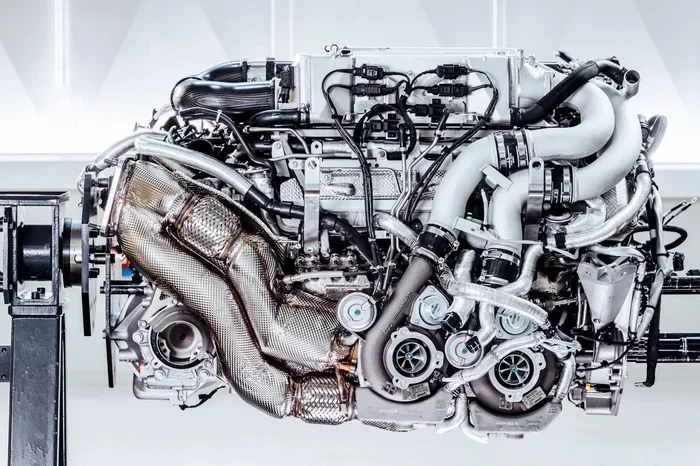
The quad-turbocharged setup is at the core of the W16’s power. Four turbochargers feed compressed air into the engine. Each turbocharger handles a specific set of cylinders. This reduces lag and ensures smooth, immediate power delivery. When you step on the accelerator, the response is instant.
Forced induction is the process of pushing more air into the combustion chambers than the engine could pull in on its own. More air means more fuel can be burned. More fuel burned means more power. The four turbochargers in the Bugatti W16 engine make this process incredibly efficient. They spin at extremely high speeds, sometimes over 100,000 revolutions per minute.
Each turbocharger is precision-engineered to work with the others. They are not generic parts. They are custom-built for the W16. This level of attention to detail is what separates a hypercar engine from a regular one.
Fuel Injection and Air Delivery
The fuel injection system in the W16 is equally impressive. It uses direct injection, which sprays fuel directly into each combustion chamber. This allows for precise control over the fuel-air mixture. The engine computer adjusts the injection timing thousands of times per second. The result is optimal combustion every single time.
Air intake is also carefully managed. The engine needs a constant supply of clean, cool air. Bugatti uses large air intake systems with advanced filters. These systems feed the turbochargers efficiently, even at extreme speeds. Without proper air delivery, the engine cannot produce its full horsepower output.
Torque and Power Delivery
Horsepower gets the headlines, but torque is what you feel in your seat. The Bugatti W16 engine produces over 1,180 pound-feet of torque. That is an enormous amount of twisting force. It is what launches the car from zero to 60 mph in under 2.5 seconds.
The torque is delivered smoothly across the entire RPM range. You do not need to rev the engine high to feel the push. Even at low speeds, the W16 has enough grunt to overwhelm the tires. This is why the transmission system plays such an important role in getting all that power to the ground.
The Role of Aerodynamics in Achieving Top Speed
An engine is only half the equation. To reach extreme top speed, a car must also cut through the air efficiently. The Bugatti W16 engine provides the raw power, but aerodynamics determine how much of that power actually translates into speed.
Reducing Drag at High Speeds
Air resistance increases exponentially as speed goes up. At 200 mph, the drag force is four times greater than at 100 mph. This means the car needs enormous power just to overcome the air. The hypercar body shape is designed to minimize this drag as much as possible.
Bugatti uses carbon fiber extensively in the body panels. This material is incredibly strong yet very light. A lighter car uses less power to move, which improves the power-to-weight ratio. The Chiron, for example, weighs around 4,400 pounds. With over 1,500 horsepower pushing it, that is an impressive ratio.
Downforce and Stability
Speed means nothing if the car cannot stay on the road. Aerodynamic downforce pushes the car down onto the pavement at high speeds. This improves tire grip and stability. The W16 engine makes so much power that without proper downforce, the car would simply lift off the ground.
Active aerodynamic features adjust based on driving conditions. Spoilers and diffusers change position automatically. This keeps the car balanced whether you are cruising on the highway or hitting top speed on a test track. The aerodynamics and the Bugatti W16 engine work as a team to achieve mind-blowing performance.
Cooling and Thermal Management Systems
When an engine produces over 1,500 horsepower, it generates an incredible amount of heat. Managing that heat is critical. Without proper engine cooling, the engine would overheat and fail within minutes. Bugatti has developed advanced thermal management systems to keep the W16 running at peak efficiency.
How the Cooling System Works
The Bugatti W16 engine uses a massive cooling system with multiple radiators. These radiators are much larger than those found in standard cars. They circulate coolant through the engine block and heads to absorb heat. The heated coolant then passes through the radiators, where airflow dissipates the heat into the atmosphere.
In addition to liquid cooling, the engine uses oil cooling. The oil absorbs heat from internal components like the pistons and crankshaft. This oil is then cooled through dedicated oil coolers. This dual cooling approach keeps temperatures stable even during sustained high-speed driving.
Why Thermal Management Matters for Speed
An overheated engine loses power. The combustion chambers become less efficient when temperatures spike. Fuel burns unevenly, and performance drops. By keeping the engine cool, Bugatti ensures the W16 maintains its full horsepower output even during extended hard driving.
This is especially important for top-speed runs. When a hypercar is pushed to its limit for several minutes, heat builds up fast. The cooling system must handle that heat without any drop in performance. Bugatti engineers test the cooling systems rigorously to ensure they can handle the worst conditions.
Transmission and Power Delivery to the Wheels
Having a powerful engine is only part of the equation. You also need a way to get that power to the road. The transmission system in a Bugatti hypercar is just as important as the Bugatti W16 engine itself.
The Dual-Clutch Transmission
Bugatti uses a dual-clutch automatic transmission in its hypercars. This type of transmission uses two separate clutches for odd and even gears. When you shift up, the next gear is already pre-selected. This makes shifts incredibly fast, often completing in just milliseconds.
Fast shifts mean no power interruption. The car does not lose momentum between gears. This is crucial when you are trying to reach extreme speeds. Every fraction of a second counts. The dual-clutch system ensures the Bugatti W16 engine stays in its power band, delivering maximum torque to the wheels at all times.
All-Wheel Drive for Traction
With over 1,500 horsepower, traction is a major concern. The Bugatti W16 engine sends power to all four wheels through the transmission. This all-wheel-drive system distributes power intelligently. It adjusts the amount sent to each wheel based on grip conditions.
At lower speeds, more power goes to the rear wheels for a sportier feel. At higher speeds, the system balances power evenly for stability. This smart power distribution helps the car accelerate hard without spinning the tires. It also makes the hypercar safer and more predictable at extreme speeds.
Engineering Innovations That Define the W16
Bugatti does not just build engines. They push the boundaries of what is possible. The Bugatti W16 engine is the result of decades of research, testing, and innovation. Each generation brings new improvements that make the engine faster, more efficient, and more reliable.
Materials and Construction
The engine block is made from high-grade aluminum alloy. This keeps the weight down while maintaining incredible strength. The pistons are forged from advanced materials that can withstand extreme pressures and temperatures. Every component is built to handle the immense forces generated by 16 cylinders firing at once.
Bugatti also uses precision machining for every part. Tolerances are incredibly tight. Parts fit together with minimal clearance, which improves efficiency and reduces wear. This level of craftsmanship is what makes the Bugatti W16 engine so reliable, despite the extreme conditions it operates under.
The Exhaust System and Sound
The exhaust system of the W16 is designed for both performance and sound. Active exhaust valves adjust based on driving mode. In sport mode, the valves open wider to release more exhaust gases. This reduces back pressure and allows the engine to breathe more freely. The result is a deeper, more aggressive sound and a slight boost in horsepower output.
In comfort mode, the valves stay partially closed. This keeps the cabin quieter and the ride more refined. The ability to switch between these modes is a testament to how advanced the Bugatti W16 engine truly is. It is not just about raw power. It is about delivering that power in a way that suits the driver.
The Hypercar Legacy
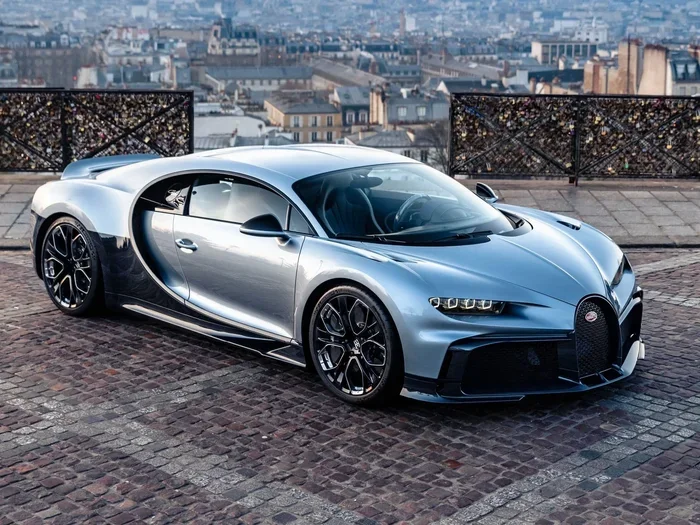
The Bugatti W16 engine has powered some of the most iconic hypercars ever made. The Veyron was the first to showcase its capabilities. The Chiron took the performance to a new level. And the latest models continue to push the envelope. Each generation proves that the W16 architecture has staying power.
These hypercars are not just fast. They are engineering statements. They show what is possible when brilliant minds apply themselves to a single goal. The Bugatti W16 engine represents the pinnacle of internal combustion engine design. Even as the auto industry moves toward electric power, the W16 remains a symbol of what gasoline engines can achieve at their absolute best.
Common Mistakes People Make About the W16 Engine
There are a few misconceptions about the Bugatti W16 engine that are worth clearing up. Understanding these helps you appreciate the engine even more.
- Mistake 1: Thinking the W16 is just a V16. The W configuration is fundamentally different. It packs cylinders more densely and improves balance.
- Mistake 2: Believing more horsepower always means more speed. Aerodynamics, weight, and transmission all play equal roles in achieving top speed.
- Mistake 3: Ignoring maintenance. Even the most advanced engine needs regular care. Oil changes, coolant flushes, and inspections keep the W16 running its best.
- Mistake 4: Overlooking the cooling system. The cooling setup is just as important as the engine itself. Neglecting it can lead to overheating and costly damage.
Avoiding these mistakes helps car owners get the most out of their hypercar. It also deepens your appreciation for what Bugatti has accomplished with the W16.
Expert Insights on the W16 Engine’s Future
So what does the future hold for the Bugatti W16 engine? The auto industry is shifting toward electrification. But Bugatti has shown that there is still life in the internal combustion engine. The W16 represents the absolute peak of gasoline engine technology.
Engineers at Bugatti continue to explore new ways to extract more performance. Advanced materials, improved fuel injection, and hybrid assist are all on the table. The goal is to make the W16 even more powerful while staying efficient. The hypercar market demands innovation, and Bugatti delivers.
Even if future models incorporate hybrid systems, the W16 will likely remain the core of Bugatti’s identity. No electric motor can replicate the sound, the feel, and the drama of a 16-cylinder engine screaming past 200 mph. The Bugatti W16 engine is more than a powerplant. It is a symbol of automotive passion and engineering excellence.
Conclusion
The Bugatti W16 engine is one of the greatest engineering achievements in automotive history. From its unique W-shaped cylinder layout to its quad-turbocharged power delivery, every aspect is designed for one purpose: extreme speed. The engine produces over 1,500 horsepower, generates massive torque, and does so with a sophistication that few engines can match.
But the engine alone does not make a hypercar fast. Aerodynamics, cooling, transmission, and materials all work together with the Bugatti W16 engine to create a machine that defies belief. Each system supports the others, forming a complete performance package that is greater than the sum of its parts.
If you are passionate about cars, take the time to understand what makes the W16 so special. Study its engineering. Appreciate its innovation. And remember that the Bugatti W16 engine represents the absolute best of what internal combustion technology can achieve. Whether you own a Bugatti or simply admire one from afar, the W16 is a reminder that human ingenuity can push speed to extraordinary limits.
Apply what you have learned here. Share your knowledge with fellow car enthusiasts. And keep exploring the incredible world of high-performance engineering. The Bugatti W16 engine is proof that the pursuit of speed is a journey with no final destination.
Frequently Asked Questions
What makes the Bugatti W16 engine different from a regular V8?
The Bugatti W16 engine uses a W-shaped cylinder configuration with 16 cylinders, while a V8 has only eight. The W16 also uses four turbochargers, which produces far more horsepower and torque than a standard V8 could ever achieve.
How much horsepower does the Bugatti W16 engine produce?
The latest versions of the Bugatti W16 engine produce around 1,578 horsepower. This enormous horsepower output is what allows Bugatti hypercars to reach top speeds over 260 mph.
Why does the W16 engine need four turbochargers?
Four turbochargers provide forced induction to all 16 cylinders efficiently. Each turbo handles a specific group of cylinders, which reduces lag and ensures smooth, immediate power delivery across the entire RPM range.
How does the Bugatti W16 engine stay cool at extreme speeds?
The Bugatti W16 engine uses a multi-radiator cooling system combined with dedicated oil coolers. This dual approach absorbs and dissipates heat effectively, keeping the engine at safe temperatures even during sustained high-speed runs.
Is the Bugatti W16 engine still relevant with the rise of electric cars?
Absolutely. The Bugatti W16 engine represents the pinnacle of internal combustion technology. While electrification is the future, the W16 remains a masterpiece of engineering that delivers a driving experience no electric motor can replicate in terms of sound, drama, and raw acceleration.
What hypercars use the Bugatti W16 engine?
The Bugatti W16 engine has powered the Veyron, the Chiron, and the latest Mistral. Each of these hypercar models showcases the engine’s ability to deliver extreme speed and luxury in a road-legal package.