Do I Need a Cargo Net for Safe and Secure Transport
Do I Need a Cargo Net? If you haul gear, gear up your truck, SUV, or car roof rack, the answer is likely yes. A cargo net keeps your load secure, prevents dangerous shifting on the road, and protects your belongings from damage. This guide covers everything from types and sizing to installation tips and common mistakes so you can make a confident choice.
Key Takeaways
- Load Security: A cargo net prevents shifting and falling items during transport, keeping your cargo and other drivers safe.
- Multiple Types: From roof cargo nets to truck bed cargo nets, there is a style for every vehicle and hauling need.
- Easy Installation: Most cargo nets install in minutes using hooks, loops, or straps with no special tools.
- Cost Savings: Using a cargo net avoids damage to your gear and prevents costly fines for unsecured loads.
- Versatility: Cargo nets work for outdoor adventures, daily errands, moving, and commercial transport alike.
- Safety First: Properly securing your load with a cargo net reduces road hazards and accident risks significantly.
📑 Table of Contents
- Do I Need a Cargo Net for Safe and Secure Transport?
- What Exactly Is a Cargo Net and Why Does It Matter?
- When Do You Actually Need a Cargo Net?
- Types of Cargo Nets You Can Choose From
- How to Choose the Right Cargo Net for Your Vehicle
- How to Install and Use a Cargo Net Properly
- Benefits of Using a Cargo Net Every Day
- Expert Insights: What Professionals Recommend
- Key Takeaways
- Conclusion
Do I Need a Cargo Net for Safe and Secure Transport?
You loaded up your car. You packed the trunk. You stacked gear on the roof. Then you hit the highway and watched a cooler lid pop open in the rearview mirror. Sound familiar? This is exactly the moment when people start asking themselves, do I need a cargo net. The short answer is yes, and here is why.
A cargo net is one of the simplest and most affordable safety upgrades you can make to any vehicle. Whether you drive a pickup truck, an SUV, a sedan with a roof rack, or a van, securing your load matters. Unsecured cargo causes thousands of accidents every year. It damages your belongings. And it can lead to expensive tickets. A good cargo net solves all of these problems in one simple package.
In this guide, we will walk through everything you need to know. We will cover when a cargo net is essential, the different types available, how to pick the right size, and how to install it properly. By the end, you will know exactly whether a cargo net belongs in your vehicle.
What Exactly Is a Cargo Net and Why Does It Matter?
A cargo net is a flexible mesh or fabric cover that stretches over your cargo. It attaches to anchor points on your vehicle using hooks, straps, bungee cords, or rings. The goal is simple: keep everything in place during driving, braking, turning, and sudden stops.
Think of a cargo net like a safety harness for your stuff. Just as a seatbelt holds you in your seat, a cargo net holds your gear in the truck bed, on the roof, or inside the car. Without it, physics takes over. A sudden brake at 60 miles per hour turns a 50-pound box into a projectile.
How Cargo Nets Work
Most cargo nets use elastic cords or woven straps that create tension across the cargo area. This tension keeps items from sliding, tipping, or flying out. The mesh design also allows air to flow through, which reduces drag and wind noise when the net is on a roof rack.
Different materials offer different levels of strength. Nylon nets are lightweight and flexible. Polypropylene nets resist moisture and UV damage. Heavy-duty cargo nets use reinforced stitching and thicker cords for tough jobs. The right material depends on what you are hauling and how far you are traveling.
Why Load Security Matters on the Road
Loose cargo is a serious road hazard. A study by the AAA Foundation for Traffic Safety found that unsecured loads cause over 50,000 crashes and 10,000 injuries each year in the United States alone. A cargo net is your first line of defense against becoming part of that statistic.
Beyond safety, there are practical reasons to secure your load. Items can get scratched, dented, or ruined by rain and dust. A cargo net shields your belongings from road debris, weather, and vibration. It also keeps things from sliding around inside your vehicle, which protects your interior from damage.
When Do You Actually Need a Cargo Net?
You might think cargo nets are only for construction workers or off-road enthusiasts. That is far from the truth. Plenty of everyday driving situations benefit from a cargo net. Let us look at the most common scenarios.
Hauling Gear for Outdoor Adventures
Camping, hiking, fishing, and cycling trips all involve gear that needs to stay put. Tent poles, coolers, backpacks, and bikes can shift dangerously in a truck bed or on a roof rack. A cargo net keeps your outdoor equipment organized and secure so you can focus on the adventure, not the load.
If you have ever arrived at a campsite only to find something fell out along the way, you know the frustration. A cargo net prevents that. It also makes loading and unloading faster because everything stays in place until you are ready to remove it.
Moving and Home Transport
Moving boxes, furniture, and appliances need restraint during transport. A cargo net works wonders in a pickup truck or SUV cargo area. It stops boxes from toppling over and keeps lighter items from blowing out the back window.
Even if you use moving blankets and straps, adding a cargo net adds an extra layer of security. It is especially helpful for irregularly shaped items that are hard to strap down individually.
Daily Errands and Grocery Runs
You do not need a big road trip to benefit from a cargo net. Even a simple grocery run can turn messy if bags slide around in the trunk. A small cargo net inside your car keeps bottles from rolling and produce from getting crushed. It is a small investment for a big daily convenience.
Commercial and Work Vehicle Use
If you use your vehicle for work, a cargo net is almost essential. Contractors, landscapers, delivery drivers, and tradespeople all transport tools and materials daily. A cargo net keeps tools from falling out, reduces liability, and helps you comply with load securement regulations.
Types of Cargo Nets You Can Choose From
Not all cargo nets are the same. Different designs serve different purposes. Understanding the options helps you pick the right one for your needs. Here are the most common types you will encounter.
Truck Bed Cargo Nets
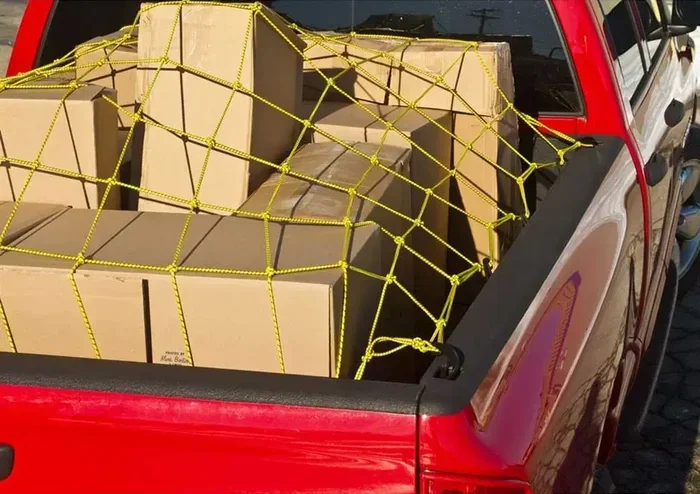
A truck bed cargo net stretches across the bed of a pickup truck. It attaches to the bed rails or stake pockets using hooks or loops. These nets are ideal for keeping loose items like tools, luggage, and camping gear from sliding around during transport.
Most truck bed cargo nets are made from durable nylon or polyester with heavy-duty elastic cords. They come in various sizes to fit short beds, standard beds, and long beds. Some models include reinforced edges for extra strength when hauling heavier loads.
Roof Rack Cargo Nets
A roof cargo net sits on top of your vehicle’s roof rack. It holds bulky or lightweight items like luggage, roof boxes, and camping gear in place. These nets are especially useful when your roof rack cargo exceeds the capacity of a single roof bag or cargo box.
Roof cargo nets typically use bungee cords or adjustable straps that connect to the rack crossbars. They allow airflow, which reduces drag compared to a solid cover. This means better fuel efficiency during highway driving.
SUV and Car Interior Cargo Nets
For cars and SUVs, interior cargo nets keep items organized in the trunk, back seat, or cargo area. These smaller nets attach to headrest posts, seat frames, or cargo anchors. They are perfect for groceries, pet supplies, sports equipment, and daily essentials.
Interior cargo nets are usually lightweight and foldable. You can roll them up and store them in the glove box when not in use. They are an underrated but highly practical accessory for any daily driver.
Heavy-Duty and Industrial Cargo Nets
When you need serious holding power, a heavy-duty cargo net is the way to go. These nets use thicker cords, reinforced stitching, and industrial-grade materials. They are designed for towing, hauling construction materials, and transporting heavy or oversized loads.
Heavy-duty cargo nets often meet specific safety standards and weight ratings. If you regularly haul large or heavy items, investing in a quality heavy-duty option is worth every penny. It protects your cargo, your vehicle, and everyone else on the road.
Elastic Bungee Cargo Nets
An elastic cargo net uses stretchy bungee cords for tension. These are the most common and affordable type. They work well for lighter loads and everyday use. Bungee nets are easy to stretch and install, making them a popular choice for casual hauling.
The downside is that bungee cords can lose elasticity over time, especially with sun exposure and heavy use. Check your elastic cargo net regularly and replace it when the cords start to sag or lose tension.
How to Choose the Right Cargo Net for Your Vehicle
Picking the right cargo net does not have to be complicated. A few key factors will guide your decision. Let us break them down so you can shop with confidence.
Consider Your Cargo Size and Weight
Measure the area where the net will go. For a truck bed, note the length and width. For a roof rack, measure the crossbar spacing. The net should be slightly larger than the cargo area so it can stretch and create proper tension.
Weight capacity matters too. Every cargo net has a maximum load rating. If you are hauling heavy items like bags of soil or construction materials, choose a net rated well above your actual load weight. A cargo net that is too weak for the job is worse than no net at all.
Check the Attachment System
How a cargo net connects to your vehicle is critical. Look for strong hooks, durable straps, and secure attachment points. The best nets use reinforced loops and rust-resistant hardware. Some models come with tie down straps built in for extra security.
Make sure the attachment points on your vehicle match the net’s design. Most modern trucks and SUVs have pre-installed anchor points for cargo nets. If your vehicle does not have them, you may need to install aftermarket anchor points or use a different attachment method.
Material and Weather Resistance
If you drive in rain, snow, or intense sun, choose a cargo net made from weather-resistant materials. UV-treated polypropylene and coated nylon hold up well over time. For year-round use, look for nets that resist mold, mildew, and fading.
Breathable mesh materials are better than solid covers for most applications. They allow moisture to escape, which prevents condensation buildup on your cargo. This is especially important for items like electronics, clothing, and food supplies.
Ease of Use and Storage
A good cargo net should be easy to put on and take off. If it takes 20 minutes to install, you will stop using it. Look for nets with quick-release clips, color-coded hooks, or simple stretch-to-fit designs.
Storage matters too. Many cargo nets fold into a small pouch or roll up compactly. This makes them easy to keep in your trunk or truck bed for whenever you need them. A net that stays in your vehicle is a net that actually gets used.
Budget and Value
Cargo nets range from under $10 to over $100. A basic elastic cargo net for a car trunk costs very little and works well for light loads. A heavy-duty truck bed cargo net with reinforced edges and industrial hardware will cost more but lasts much longer.
Think of a cargo net as insurance for your cargo. Spending a little more on quality upfront saves money on replacements and protects your belongings from damage. Look for brands with good reviews, solid warranties, and proven durability.
How to Install and Use a Cargo Net Properly
Installing a cargo net is straightforward, but doing it correctly makes all the difference. Follow these steps for a secure and reliable setup every time.
Step-by-Step Installation Guide
Start by clearing the cargo area. Remove any debris or sharp objects that could snag or damage the net. Then lay the net flat over the cargo or across the designated area.
Attach one side of the net first. Hook the corners or tie-down points to the anchor points on your vehicle. Then stretch the net to the opposite side and attach it. Work your way around, pulling the net snug but not overstretching it.
Check the tension by pressing down on the center of the net. It should feel firm and secure. If it sags or feels loose, adjust the attachment points or use additional tie down straps to tighten things up.
Quick Tips for Best Results
- Double-check all hooks and clips before driving. A loose connection can cause the whole net to fail.
- Distribute weight evenly across the cargo area. Heavy items go in the center and lighter items on the edges.
- Do not exceed the net’s weight rating. Overloading stretches the material beyond its limits and leads to failure.
- Inspect your cargo net regularly for wear, fraying, or stretched cords. Replace damaged nets immediately.
- Use additional straps for heavy or awkward loads. A cargo net works best when combined with other securement methods.
Common Mistakes People Make with Cargo Nets
One of the biggest mistakes is using a net that is too small. A tight net works; a loose net does not. Another common error is attaching the net to weak or non-existent anchor points. Always use designated tie-down points rated for your vehicle.
Some people forget to check their cargo net after the first few miles of driving. A quick stop to re-tighten can prevent a load shift later on. Also, never use a damaged or worn-out net. If the cords are stretched, the mesh is torn, or the hooks are bent, replace the net before your next trip.
Benefits of Using a Cargo Net Every Day
A cargo net is not just for big trips. Using one regularly offers benefits you might not have considered.
First, a cargo net keeps your vehicle organized. Instead of digging through a messy truck bed or shifting items around in the trunk, everything stays in place. This saves time and reduces stress every time you need something.
Second, a cargo net protects your investment. Your gear, your vehicle interior, and your cargo all benefit from the restraint a net provides. Scratches, dents, and water damage become far less common when items are properly secured.
Third, using a cargo net sets a good example. When other drivers see you securing your load properly, it promotes safe driving habits on the road. It is a small action that contributes to overall road safety.
Finally, a cargo net gives you peace of mind. You will not spend your drive worrying about whether something is going to fly out of your vehicle. That peace of mind is priceless, especially on long trips or in unfamiliar terrain.
Expert Insights: What Professionals Recommend
Automotive experts and safety organizations consistently recommend using proper load securement for every trip. The AAA, the National Safety Council, and the Department of Transportation all emphasize that unsecured cargo is a serious hazard.
Professional haulers and off-road enthusiasts also swear by cargo nets. They know that even the best tie down straps benefit from the added security of a mesh net. The combination creates a layered protection system that is far more reliable than any single method alone.
Experts also recommend matching your cargo net to the specific demands of your vehicle and cargo type. A roof cargo net for a roof rack serves a different purpose than a truck bed cargo net. Understanding these differences helps you build a complete and effective securement strategy.
One piece of advice that comes up again and again: always test your setup before hitting the highway. Do a short drive around the block and check that nothing has shifted. This simple habit catches problems before they become dangerous on the open road.
Key Takeaways
- Load Security: A cargo net prevents shifting and falling items during transport, keeping your cargo and other drivers safe.
- Multiple Types: From roof cargo nets to truck bed cargo nets, there is a style for every vehicle and hauling need.
- Easy Installation: Most cargo nets install in minutes using hooks, loops, or straps with no special tools.
- Cost Savings: Using a cargo net avoids damage to your gear and prevents costly fines for unsecured loads.
- Versatility: Cargo nets work for outdoor adventures, daily errands, moving, and commercial transport alike.
- Safety First: Properly securing your load with a cargo net reduces road hazards and accident risks significantly.
Conclusion
So, do I need a cargo net? If you regularly transport anything in or on your vehicle, the answer is a clear yes. A cargo net is a small investment that pays big dividends in safety, organization, and peace of mind. It keeps your gear secure, protects your vehicle, and helps you avoid the dangers of unsecured loads on the road.
Whether you choose a truck bed cargo net, a roof cargo net, or a simple interior organizer, the key is to use one consistently. Pick the right type for your vehicle and cargo, install it properly, and inspect it regularly. With the right cargo net in place, every trip becomes safer and more enjoyable.
Do not wait for a close call or a lost item to make the change. Grab a cargo net today and secure your load the smart way. Your gear, your vehicle, and everyone sharing the road will thank you.
Frequently Asked Questions
Can a cargo net replace tie down straps entirely?
A cargo net works best when used alongside tie down straps, not as a replacement. The net holds lighter items in place and prevents shifting, while straps provide the main securement force for heavier loads. Using both creates a layered safety system that is far more reliable than either one alone.
What size cargo net do I need for my truck bed?
Measure the length and width of your truck bed first. Most truck bed cargo nets come in standard sizes like 5-foot, 6-foot, and 8-foot bed lengths. Choose a net that is slightly larger than your bed dimensions so it can stretch and create proper tension across the full area.
Are cargo nets weatherproof?
Many cargo nets are made from weather-resistant materials like UV-treated polypropylene or coated nylon. They handle rain, sun, and light moisture well. However, no cargo net is fully waterproof. For items that must stay completely dry, use a waterproof cargo cover or roof bag in addition to the net.
Can I use a cargo net on a car without a roof rack?
Yes, you can use a cargo net inside your car trunk or back seat without a roof rack. Interior cargo nets attach to headrest posts or seat anchors and keep items organized and secure. For roof applications, a roof rack is required to support the net properly.
How do I clean and maintain my cargo net?
Clean your cargo net with mild soap and water. Let it air dry completely before storing it. Check the elastic cords, hooks, and stitching regularly for wear and tear. Replace any damaged parts or the entire net if the material shows signs of significant degradation. Proper maintenance extends the life of your cargo net by several years.
Is it illegal to transport unsecured cargo?
Yes, in most states and provinces, transporting unsecured cargo is illegal. Drivers can face fines, points on their license, and even liability if unsecured cargo causes an accident. Using a cargo net and other securement methods helps you comply with transport safety laws and avoids costly penalties. Always check your local regulations before hauling any load.