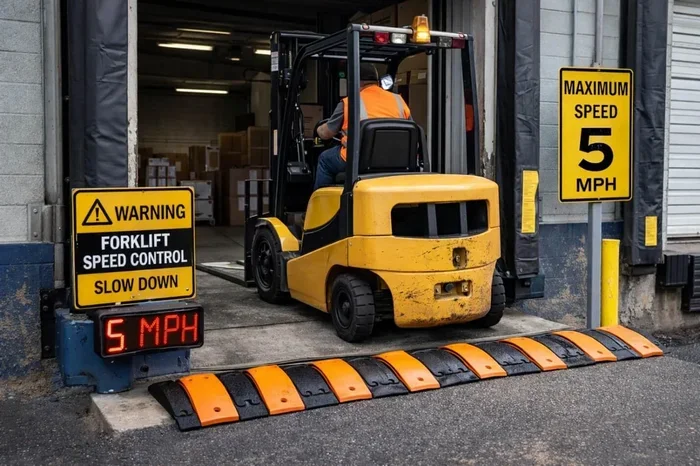
Can You Limit the Speed of a Forklift and Why It Matters
Yes, you can limit the speed of a forklift, and doing so is one of the most effective ways to protect workers and reduce accidents. Forklift speed control systems, speed governor devices, and operator training all play a role in keeping warehouse safety at a high level. Understanding forklift speed limits helps businesses stay compliant with OSHA forklift regulations and avoid expensive fines or injuries.
Every day, forklifts move through warehouses, construction sites, and loading docks across the country. They lift heavy loads, transport materials, and keep operations running smoothly. But with that power comes real risk. Forklift speed is one of the biggest factors in workplace safety, and many facility managers wonder whether it is possible to put a cap on how fast these machines can go.
The short answer is yes. You absolutely can limit the speed of a forklift, and many facilities do it every day. Whether through built-in governor systems, electronic controls, or aftermarket devices, forklift speed control is widely available and highly effective. But understanding how these systems work and why they matter is what separates a safe operation from a dangerous one.
In this article, we will walk through everything you need to know about limiting forklift speed. We will cover the different methods available, the safety benefits, the regulatory landscape, and practical tips you can apply right away. By the end, you will have a clear picture of how forklift speed limits protect people, reduce costs, and keep your facility running at its best.
Key Takeaways
- Forklift speed can be limited through built-in governors, electronic controls, and aftermarket speed limiter devices.
- OSHA forklift regulations recommend safe speeds but do not always set a single universal number, leaving room for site-specific policies.
- Warehouse safety improves dramatically when forklift speed control is enforced consistently across all shifts.
- Speed limiter devices and fleet management systems offer real-time data that helps managers monitor and adjust operations.
- Operator training is essential because even the best speed threshold settings mean nothing without a trained, aware driver.
- Forklift accident prevention relies on a combination of speed limits, clear signage, and well-maintained equipment.
📑 Table of Contents
What Is a Forklift Speed Limiter?
A forklift speed limiter is a device or system designed to restrict how fast a forklift can travel. Think of it like a speed governor on a vehicle, but built specifically for powered industrial trucks. These systems come in several forms, and they all serve the same basic purpose: keeping the machine moving at a safe, controlled pace.
How Do Speed Limiter Devices Work?
Most speed limiter devices connect to the forklift’s engine control unit or fuel system. They intercept signals that control acceleration and cap the maximum output. When the driver presses the throttle, the device ensures the forklift cannot exceed the preset speed threshold. Some advanced systems use GPS tracking and telematics to adjust speed limits automatically based on the forklift’s location inside a facility.
For example, a forklift might be allowed to travel at 8 miles per hour in open warehouse aisles but automatically slow to 3 miles per hour near pedestrian crossings or loading docks. This kind of smart speed reduction is becoming increasingly common in modern fleet management systems.
Types of Forklift Speed Control Systems
Not all forklift speed control systems are the same. Here are the most common types you will encounter:
- Mechanical Governors: These are physical devices connected to the engine. They use centrifugal force to limit fuel flow at higher speeds. They are simple, reliable, and common in older forklift models.
- Electronic Speed Controllers: These use sensors and microprocessors to manage acceleration. They offer more precise control and can often be programmed remotely by a manager.
- Aftermarket Speed Limiters: These are add-on devices that can be installed on existing forklifts. They are a cost-effective way to bring older machines up to modern safety standards.
- Integrated Fleet Management Software: These systems combine speed monitoring with data analytics. They track every forklift’s speed, location, and usage patterns in real time.
Why Limiting Forklift Speed Matters
The reason forklift speed limit enforcement matters so much comes down to physics and human safety. A forklift carrying a heavy load has a high center of gravity. When it moves too fast, the risk of tipping over increases dramatically. Even at relatively low speeds, a forklift can cause serious injury or death if it strikes a pedestrian or loses stability on a wet floor.
Reducing Forklift Accidents
Forklift accident prevention starts with controlling speed. According to the Bureau of Labor Statistics, forklift-related incidents account for dozens of fatalities and thousands of injuries every year in the United States. Many of these incidents involve excessive speed or failure to slow down in high-risk areas.
When you enforce forklift speed limits, you give operators more time to react to obstacles, pedestrians, and unexpected hazards. A forklift traveling at 5 miles per hour can stop much more quickly than one moving at 10 miles per hour. That extra stopping distance can mean the difference between a near-miss and a tragedy.
Protecting Pedestrians in the Workplace
Warehouses and industrial sites are shared spaces. Pedestrians walk through the same aisles where forklifts operate. Workplace safety measures must account for this overlap, and speed reduction is one of the most effective tools available.
When forklifts move slowly, pedestrians have more time to notice them and move out of the way. It also reduces the severity of any collision that does occur. Combined with anti-slip flooring, clear signage, and designated pedestrian zones, speed limits create a layered safety approach that protects everyone on the floor.
Lowering Equipment Damage and Maintenance Costs
Speeding forklifts do more than endanger people. They also cause more wear and tear on the equipment itself. Fast starts, hard braking, and high-speed turns strain the mast, tires, brakes, and hydraulic systems. Over time, this leads to higher maintenance costs and shorter equipment lifespans.
By limiting forklift speed, you reduce the mechanical stress on every component. This means fewer breakdowns, lower repair bills, and a longer useful life for each machine. In a busy warehouse, those savings add up quickly.
OSHA Regulations and Forklift Speed Limits
Many facility managers want a clear number: what is the forklift speed limit? The truth is that OSHA does not always specify an exact speed in miles per hour for every situation. Instead, OSHA forklift regulations focus on safe operation under the conditions present at each worksite.
What OSHA Actually Requires
OSHA’s general standard for powered industrial trucks (29 CFR 1910.178) requires operators to drive at a safe and prudent speed. The regulation states that forklifts must be operated slowly enough to allow for safe stopping under all conditions. This means the actual speed threshold can vary depending on:
- The type of flooring surface (smooth concrete vs. wet or uneven floors)
- The load being carried (loaded vs. unloaded)
- The presence of pedestrians or other vehicles
- Indoor vs. outdoor operating conditions
- Visibility and lighting conditions
While OSHA does not publish a single number, many industry guidelines and best practices suggest keeping forklifts under 5 to 8 miles per hour in general warehouse areas and under 3 miles per hour in pedestrian zones. Some facilities set even lower limits for specific areas like ramps, corners, or loading docks.
State and Local Regulations
Beyond federal OSHA rules, some states and local jurisdictions have their own forklift speed limit requirements. These can vary widely. It is important for facility managers to check with local safety authorities and stay updated on any changes to workplace safety measures in their area. Ignorance of local rules is not a valid defense in the event of an incident or inspection.
Methods to Limit Forklift Speed
Now that we understand why speed limits matter and what the regulations say, let us look at the practical methods you can use to limit forklift speed in your facility.
Built-In Speed Governors
Many modern forklifts come with built-in speed governors from the manufacturer. These are pre-programmed limits that the operator cannot override without special authorization. If you are purchasing new forklifts, this is one of the best features to look for. It gives you a baseline level of forklift speed control right out of the box.
Some manufacturers allow you to customize the governor settings during the ordering process. This means you can set different speed limits for different models based on where they will be used in your facility.
Aftermarket Speed Limiting Devices
If you are running older forklifts that do not have built-in governors, aftermarket speed limiter devices are an excellent option. These can be installed by a qualified technician and typically cost a fraction of what a new forklift would. They are a smart investment for any facility that wants to improve warehouse safety without a massive capital expenditure.
Popular aftermarket options include throttle limiters, speed alarm systems, and programmable electronic controllers. Some of these devices emit an audible warning when the forklift approaches the speed threshold, giving the operator a chance to slow down before the limiter kicks in.
Operator Training and Discipline
Technology alone cannot solve the forklift speed control challenge. Operator training is equally important. Every forklift operator should receive thorough training on safe driving practices, including speed management. Refresher courses should be conducted regularly to reinforce good habits.
Training should cover:
- The dangers of speeding with a forklift
- How to recognize high-risk areas that require slower speeds
- Proper techniques for smooth acceleration and braking
- The importance of respecting speed limits even when no one is watching
- How to report malfunctioning speed control systems
When operators understand why speed limits exist, they are far more likely to follow them consistently. Training transforms a rule from something imposed from above into something the driver owns personally.
Traffic Management and Signage
Traffic management plays a big role in reinforcing forklift speed limits. Clear, visible signage throughout the facility reminds operators of the current speed limit in each zone. Speed limit signs should be placed at entry points to high-risk areas, near intersections, and along pedestrian walkways.
Some facilities go a step further by using floor markings, speed bumps, and designated forklift lanes to naturally slow vehicles down. These physical cues complement electronic and mechanical speed control systems and create a culture of safety throughout the operation.
Monitoring and Enforcement Through Fleet Management
Modern fleet management systems offer powerful tools for monitoring and enforcing forklift speed limits. These systems use telematics, GPS, and sensors to track each forklift’s speed in real time. Managers can set alerts for when a forklift exceeds the speed threshold, and the data can be used to identify repeat offenders or problem areas.
Some advanced systems can even automatically slow a forklift down when it enters a designated pedestrian zone. This level of automation removes the human element from enforcement and ensures consistent speed reduction across the entire facility.
Common Mistakes Facilities Make with Forklift Speed
Even well-intentioned facilities sometimes make mistakes when it comes to managing forklift speed. Being aware of these pitfalls can help you avoid them.
Setting Speed Limits Too High
One common mistake is setting forklift speed limits too high because it seems more efficient. While faster travel times might look good on paper, the trade-off in safety risks, accident costs, and equipment damage is rarely worth it. Always prioritize safety over marginal gains in speed.
Ignoring Floor Conditions
A speed limit that is safe on a dry, smooth warehouse floor may be dangerously fast on a wet or uneven surface. Facilities should adjust speed thresholds based on current conditions, not just default to a single number posted on a sign.
Failing to Enforce Limits Consistently
Speed limits only work when they are enforced. If operators see that limits are routinely ignored, they will stop respecting them. Consistent enforcement through training, monitoring, and accountability is essential for long-term warehouse safety.
Neglecting Maintenance of Speed Control Systems
If you have invested in speed limiter devices or fleet management systems, do not let them fall into disrepair. Regular forklift maintenance should include checking that all speed control components are functioning correctly. A malfunctioning governor is worse than no governor at all because it gives operators a false sense of security.
Expert Insights on Forklift Speed Management
Safety experts agree that a multi-layered approach works best for forklift speed control. No single method is enough on its own. The most effective programs combine technology, training, enforcement, and a genuine culture of safety.
According to industry leaders, the facilities with the best safety records are those that treat forklift speed limits not as a restriction but as a core part of their operational identity. When every employee, from the CEO to the newest operator, understands that speed limits protect lives, compliance becomes second nature rather than a chore.
Experts also emphasize the importance of regular reviews. As operations change, as new equipment is introduced, and as floor layouts are modified, speed thresholds should be reassessed. A program that worked well two years ago may need adjustment today to remain effective.
Key Takeaways
- Forklift speed can be limited through built-in governors, electronic controls, and aftermarket speed limiter devices.
- OSHA forklift regulations require safe operation but allow flexibility for site-specific speed thresholds.
- Warehouse safety improves dramatically when forklift speed control is enforced consistently across all shifts.
- Speed limiter devices and fleet management systems offer real-time data that helps managers monitor and adjust operations.
- Operator training is essential because even the best speed threshold settings mean nothing without a trained, aware driver.
- Forklift accident prevention relies on a combination of speed limits, clear signage, and well-maintained equipment.
- Common mistakes include setting limits too high, ignoring floor conditions, and failing to enforce rules consistently.
Conclusion
The answer to Can You Limit the Speed of a Forklift is a resounding yes. From built-in governors to aftermarket devices, from operator training to fleet management software, there are more tools available today than ever before to enforce forklift speed limits. The real question is not whether you can limit speed, but whether you will make it a priority in your facility.
Forklift speed control is not just about compliance or avoiding fines. It is about protecting the people who work in your facility every day. It is about reducing the risk of forklift accidents, lowering maintenance costs, and building a culture where safety comes first. Every facility is different, and the right approach will depend on your specific operations, equipment, and workforce.
Start by assessing your current situation. Do your forklifts have speed governors? Are your operators trained on safe speed practices? Is your facility designed to support low-speed travel in high-risk areas? Once you understand where you stand, you can take targeted steps to improve. Even small changes, like adding signage or installing a speed limiter device on a few key machines, can make a meaningful difference.
The bottom line is clear. Limiting forklift speed is one of the simplest and most effective steps you can take to improve workplace safety. It protects your people, your equipment, and your bottom line. The time to act is now, not after an accident has already happened.
Frequently Asked Questions
What is the typical forklift speed limit in a warehouse?
Most warehouses set forklift speed limits between 5 and 8 miles per hour in general areas and 3 miles per hour or less in pedestrian zones, loading docks, and corners. The exact speed threshold depends on floor conditions, load type, and local regulations.
Can you install a speed limiter on an older forklift?
Yes, aftermarket speed limiter devices can be installed on older forklifts. These add-on systems are a cost-effective way to bring aging equipment up to modern safety standards without purchasing new machines.
Does OSHA set a specific forklift speed limit?
OSHA does not publish a single universal speed number. Instead, OSHA forklift regulations require operators to drive at a safe and prudent speed under all conditions. Facilities should set their own speed limits based on a thorough risk assessment.
How does a forklift speed governor work?
A forklift speed governor limits the engine’s fuel or power output so the machine cannot exceed a preset speed. Some governors are mechanical and use centrifugal force, while others are electronic and can be programmed remotely by a manager.
What role does operator training play in forklift speed control?
Operator training is essential because technology alone cannot enforce speed limits. Trained operators understand why speed control matters, recognize high-risk areas, and develop the discipline to drive safely even when no one is watching. Regular refresher courses help maintain these habits over time.
Are fleet management systems worth the investment for speed monitoring?
Yes, fleet management systems provide real-time data on each forklift’s speed, location, and usage patterns. They enable managers to set speed thresholds, receive instant alerts for violations, and identify trends that can inform safety improvements. The data-driven approach they offer makes them a valuable tool for any facility serious about warehouse safety.
=== META TITLE ===
Can You Limit the Speed of a Forklift? Safety Guide
=== URL SLUG ===
/limit-forklift-speed
=== SEO TITLE ===
Can You Limit the Speed of a Forklift and Why It Matters