Can BMW Rotors Be Resurfaced or Do You Need New Rotors
Can BMW Rotors Be Resurfaced? The answer depends on your rotor thickness, condition, and BMW model. Rotor resurfacing can save money if the rotors meet minimum specs, but severely worn or warped rotors need new rotors. This guide explains exactly when resurfacing makes sense and when you must replace them.
When your BMW’s brakes start making noise or vibrating, it’s natural to wonder about the rotors. Can BMW rotors be resurfaced? Many car owners face this exact question. The short answer is: it depends on the rotor thickness and overall condition. Resurfacing can extend the life of your brake rotors and save you money. But not all rotors are candidates for resurfacing. This guide will walk you through everything you need to know about BMW rotor resurfacing. You’ll learn when it’s safe, when you need new rotors, and how to spot the warning signs.
BMW brakes are engineered for precision and performance. The disc brake system uses two pads that squeeze a rotating rotor to slow the car. Over time, the rotor surface wears down. Heat, driving habits, and road conditions all affect rotor life. Some drivers assume any brake issue means a full rotor replacement. That’s not always true. Rotor resurfacing can restore a smooth, flat surface without removing much metal. The key is knowing whether your specific rotors can handle the process.
Key Takeaways
- Resurfacing is possible only if rotor thickness is above the minimum spec. Always check your owner’s manual for the exact limit.
- Warped, cracked, or thin rotors must be replaced. Resurfacing cannot fix structural damage.
- Rotor resurfacing costs less than new rotors. You can save 30–50% on parts alone.
- BMW rotors vary by model. A 3 Series rotor may have different specs than an X5 rotor.
- Proper brake pad mating is critical after resurfacing. New pads or a careful bedding-in process ensures even wear.
- Rotor runout and thickness variation cause vibration. Resurfacing fixes these issues if the metal is sufficient.
- Regular brake inspections prevent costly repairs. Catching wear early keeps your BMW braking safely.
📑 Table of Contents
Understanding BMW Rotors and Brake Performance
BMW uses disc brakes on all four wheels. The rotor is the metal disc attached to the wheel hub. When you press the brake pedal, calipers clamp pads onto the rotor. This friction converts kinetic energy into heat, slowing the car. Over thousands of miles, the rotor surface develops grooves, warps, or thin spots. These imperfections reduce braking efficiency. They can also cause vibration through the steering wheel or brake pedal.
BMW engineers design rotors with a specific thickness. This thickness ensures proper heat dissipation and structural integrity. Every rotor has a minimum thickness stamped or engraved on the hat or edge. If the rotor wears below this limit, it must be replaced. Resurfacing removes a tiny layer of metal to smooth the surface. It cannot add material. So the starting thickness matters more than anything else.
How BMW Disc Brakes Work
The brake system works in a simple loop. Brake fluid pressure moves the caliper pistons. The pads press against the rotor. The rotor slows the wheel. When you release the pedal, the pads retract slightly. This cycle repeats thousands of times. BMW uses floating calipers on most models. The caliper slides on pins to apply pressure evenly. Proper maintenance keeps the slides free and the pads wearing uniformly.
Why Rotor Condition Matters for Safety
Worn or damaged rotors compromise stopping power. A warped rotor creates a uneven surface. The pads cannot maintain consistent contact. This leads to longer stopping distances. It also causes brake fade under heavy use. BMW brake rotors are designed to handle high heat. But repeated hard braking can exceed their capacity. The rotor can develop hot spots. These spots cause the rotor to warp. Resurfacing can often correct this warping if the metal is thick enough.
Can BMW Rotors Be Resurfaced? The Definitive Answer
The direct answer to can BMW rotors be resurfaced is: yes, but only under the right conditions. A machine shop can use a lathe to shave a thin layer off the rotor face. This process restores a flat, parallel surface. It removes minor warping, scoring, and uneven wear. However, the rotor must have enough remaining metal to stay above the minimum thickness specification. If it’s too thin, resurfacing weakens the rotor. It can cause cracking or overheating during hard braking.
Not all BMW rotors are created equal. Some models come with solid rotors. Others use vented rotors with internal cooling fins. The resurfacing process works on both types, but the technician must be careful not to remove too much material. Vented rotors have an internal air gap that aids cooling. Resurfacing only affects the outer friction surface. The internal structure remains unchanged.
What Does Rotor Resurfacing Actually Involve?
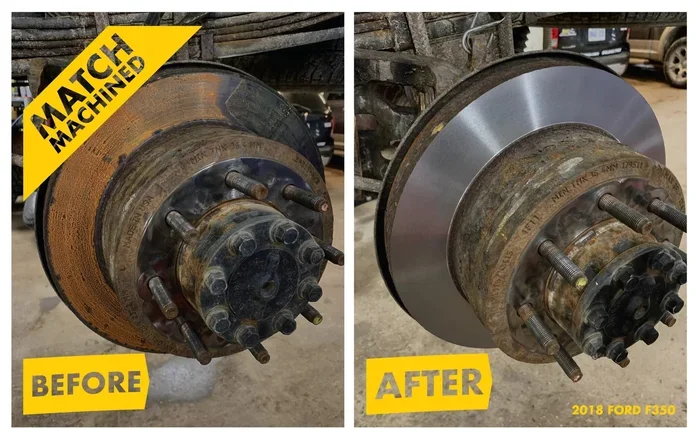
Rotor resurfacing, also called rotor turning or rotor shaving, uses a brake lathe. The lathe mounts the rotor and spins it. A cutting tool traces the surface, removing a uniform layer. The result is a perfectly flat disc. The process takes about 30 minutes per rotor. It’s a common service at tire shops and machine shops. Many places offer same-day rotor resurfacing. The cost is typically much lower than buying new rotors.
When Resurfacing Is Possible
Resurfacing works when the rotor meets several criteria. The thickness must be above the minimum spec. The rotor should not have deep cracks or severe scoring. There should be no signs of material separation. The rotor must not be bent beyond the capacity of the lathe. In most cases, a BMW with 40,000 to 70,000 miles can get away with resurfacing. The pads may have worn the rotor evenly, leaving enough metal for a second life.
When Resurfacing Is Not an Option
You cannot resurface a rotor that is below the minimum thickness. You also cannot resurface a cracked rotor. Cracks can be hairline and invisible to the eye. A technician will use a dye penetrant test to check for cracks. If the rotor is severely warped, the lathe may not be able to remove enough material without going below the safe limit. In these cases, replacement is the only safe choice. Always trust the technician’s measurement over assumptions.
When Rotor Resurfacing Makes Sense for Your BMW
Rotor resurfacing is a smart move when the rotors are still within the safe thickness range. It restores a smooth surface for new brake pads. This ensures even contact and maximum braking force. Many BMW owners choose resurfacing during a brake pad change. If the old pads caused minor scoring, resurfacing the rotors gives the new pads a clean surface to mate with. This extends the life of the entire brake system.
Signs Your Rotors Can Be Resurfaced
Look for these indicators that your BMW rotors may be candidates for resurfacing:
- Vibration in the brake pedal that goes away when you slow down. This often indicates minor warping.
- Squealing or grinding noise that isn’t caused by worn pads alone. Scoring on the rotor surface can create noise.
- Brake pads wearing unevenly on one side. This suggests the rotor surface is not flat.
- Visible grooves or scoring on the rotor face. Deep lines can be machined away.
- Brake pedal feels mushy or pulls to one side. These can stem from thickness variation between the two rotors.
Benefits of Resurfacing Over New Rotors
The biggest benefit is cost. Rotor resurfacing typically costs $15 to $25 per rotor. New BMW rotors can range from $150 to $400 each depending on the model. That’s a significant saving. Resurfacing also reduces waste. You’re reusing the existing rotor, which is better for the environment. Additionally, a quality resurfacing job can restore braking performance to like-new condition. The key is finding a shop with a good brake lathe and experienced technicians.
Quick Tip
Always ask the shop to measure the rotor thickness before and after resurfacing. Request the spec from your owner’s manual. If the post-resurfacing thickness is close to the minimum, consider replacing the rotors instead. Safety should always come first.
When You Must Replace BMW Rotors
There are clear situations where replacement is the only option. Ignoring these signs can lead to brake failure. BMW rotors are safety components. They should never be compromised. If your inspection reveals any of the following, skip resurfacing and install new rotors.
Minimum Rotor Thickness: The Critical Limit
Every BMW rotor has a minimum thickness stamped on the component. For example, a 2018 BMW 328i front rotor might have a minimum thickness of 24.0 mm. If the actual thickness measures 23.5 mm, resurfacing would remove even more metal. The rotor would fall below the safe limit. This creates a serious risk of overheating and cracking. The technician should measure the thickness with a micrometer before any decision is made.
Warped or Damaged Rotors
A rotor can warp from extreme heat. Towing a heavy trailer or driving down a steep mountain can overheat the brakes. The rotor can develop a cone shape. Resurfacing can fix a slight warp. But if the rotor has been severely overheated, it may develop a blue or purple discoloration. This indicates the metal has lost its temper. Such a rotor must be replaced. It cannot be safely resurfaced.
Cracked or Chipped Rotors
Any crack in a rotor is a dealbreaker. Cracks can propagate quickly under stress. A rotor that cracks once will likely crack again. Even small hairline cracks can grow into catastrophic failures. Chipping can occur if a rock or debris strikes the rotor. The chip creates a stress concentration point. Replacement is mandatory. Never attempt to resurface a cracked rotor.
The Resurfacing Process: What to Expect and How Much It Costs
If your BMW rotors pass the inspection, the next step is understanding the process. Knowing what happens at the machine shop helps you make informed decisions. It also sets realistic expectations for the outcome.
Step-by-Step: How Brake Rotors Are Resurfaced
- The technician removes the wheel and brake caliper.
- The rotor is unbolted from the hub and cleaned.
- The rotor is mounted on the brake lathe.
- The lathe spins the rotor at a controlled speed.
- A cutting tool traces the surface, removing a uniform layer of metal.
- The technician measures the thickness after cutting.
- The rotor is cleaned and reinstalled.
- New brake pads are usually installed at the same time.
This process typically takes 1 to 2 hours for all four rotors. The shop will often test the rotor on a lathe to check for runout. Runout measures how much the rotor wobbles as it spins. Excessive runout can cause vibration even after resurfacing. The technician can correct minor runout by adjusting the lathe offset.
Resurfacing Cost vs. New Rotor Cost
Cost is a major factor for many BMW owners. Here is a simple comparison of the two options for a typical BMW 3 Series:
| Option | Cost per Rotor | Total Cost (Front Pair) | Lifespan |
|---|---|---|---|
| Rotor Resurfacing | $20–$30 | $40–$60 | Until next pad change |
| New OEM Rotors | $150–$250 | $300–$500 | 50,000–70,000 miles |
| New Aftermarket Rotors | $80–$120 | $160–$240 | 40,000–60,000 miles |
Resurfacing clearly wins on upfront cost. However, it’s important to consider the total cost of ownership. If the resurfaced rotors wear out quickly, you might need new rotors sooner. Also, some BMW models use premium rotors with special coatings. Resurfacing removes these coatings. The new rotors will have the coating intact. This can affect initial brake pad bedding and noise levels.
Expert Insight
BMW master technicians often recommend replacing rotors on high-performance models. The X5 M or M3 use slotted or drilled rotors. Resurfacing can clog the slots or drill holes with debris. For these models, new rotors are usually the better choice. The cost difference is worth the performance and safety benefit.
Common Mistakes to Avoid
- Resurfacing rotors that are too thin. Always verify the thickness against the minimum spec first.
- Resurfacing without checking for cracks. A quick visual inspection is not enough. Use dye penetrant if in doubt.
- Mixing resurfaced and new rotors on the same axle. This creates uneven braking. Replace both rotors on the same axle together.
- Skipping new brake pads after resurfacing. Old pads will not seat properly on the new surface. Always install fresh pads.
- Ignoring rotor runout. Even a perfectly flat rotor can cause vibration if it has high runout. Measure runout before and after.
Final Verdict: Resurface or Replace Your BMW Rotors?
The decision comes down to three factors: thickness, condition, and model. If your BMW rotors are above the minimum thickness and show no cracks, resurfacing is a great option. It saves money and restores braking performance. If the rotors are thin, cracked, or severely warped, replacement is the only safe path. Never compromise on brake safety.
For most BMW owners, a brake pad change is the perfect time to evaluate the rotors. Ask the technician to measure the thickness. If it’s above the spec, request resurfacing. If it’s borderline, lean toward replacement. New rotors give you a full lifespan and peace of mind. For models like the BMW X5 or 5 Series, the cost difference is often worth the upgrade to new OEM-quality rotors.
Remember that rotor resurfacing is not a permanent fix. It buys you time until the next brake service. Proper maintenance, gentle braking habits, and regular inspections will keep your BMW stopping safely. Whether you resurface or replace, always use quality parts and follow the break-in procedure for new pads. A few hundred miles of gentle braking will seat the pads evenly and extend the life of your brake system.
In the end, the question can BMW rotors be resurfaced has a clear answer: yes, when the rotors are in the right condition. Trust your technician’s measurements. Listen to your car. A smooth, quiet brake pedal is the sign of a job done right.
Frequently Asked Questions
How much does it cost to resurface BMW rotors?
Rotor resurfacing typically costs between $15 and $30 per rotor at a machine shop. The total for all four rotors usually falls between $60 and $120. This is significantly cheaper than purchasing new OEM rotors. However, the final cost depends on your BMW model and local labor rates.
Can you resurface BMW rotors twice?
Yes, you can resurface BMW rotors twice if enough material remains. Each pass removes a thin layer of metal. After two resurfacings, the rotor may approach the minimum thickness limit. A technician must measure the rotor before each resurfacing to ensure it stays above the safe spec. Never resurface a rotor that is already close to the minimum thickness.
Do new brake pads need to be installed after resurfacing rotors?
Yes, you should always install new brake pads after resurfacing rotors. Resurfacing creates a fresh, flat surface. Old pads have worn to the previous rotor shape and will not seat properly. New pads bond evenly to the resurfaced rotor. This ensures optimal braking performance and reduces noise. The bedding-in process also works correctly with fresh pads.
What is the minimum rotor thickness for a BMW 3 Series?
The minimum rotor thickness varies by year and model. For example, a 2015 BMW 328i front rotor has a minimum thickness of about 24.0 mm. Check your owner’s manual or the rotor itself for the stamped specification. The technician will measure the actual thickness with a micrometer. If the measurement is below the minimum, replacement is required.
Is rotor resurfacing safe for BMW X5 models?
Rotor resurfacing is safe for BMW X5 models as long as the rotors meet the thickness requirement. The X5 often uses larger vented rotors that can handle resurfacing. However, if the X5 has high-mileage rotors or signs of overheating, replacement may be better. Always have a qualified technician inspect the rotors before deciding.
How long does rotor resurfacing take?
The actual resurfacing process takes about 30 to 60 minutes per rotor. A full set of four rotors can usually be completed in 1 to 2 hours. Add time for wheel removal and reinstallation. Most shops offer same-day service for rotor resurfacing. You can often wait in the lobby while the work is done.