Everything You Need to Know About Kansas Window Tint Law
Kansas window tint law sets specific rules for how dark or reflective your car windows can be. The state regulates visible light transmission (VLT) percentages for sedans, SUVs, and vans differently. Understanding these rules helps you avoid fines, stay safe, and enjoy the benefits of tinted windows. This guide covers every legal limit, exemption, and penalty you need to know.
Driving with tinted windows feels great. You get less glare, less heat, and more privacy. But in Kansas, there are strict rules about how dark your tint can be. The Kansas window tint law exists to balance driver comfort with safety on the road.
If you have just bought a car or are thinking about installing aftermarket tint, you need to know the rules. Getting it wrong can lead to a costly ticket or even a failed inspection. This guide breaks down everything you need to know about Kansas tint regulations in simple, clear terms.
We will cover legal tint darkness for different vehicle types, reflective tint rules, exemptions, and what happens if you get caught with illegal tint. By the end, you will know exactly what is legal and how to stay compliant.
Key Takeaways
- Kansas allows a non-reflective tint strip on the windshield above the manufacturer’s AS-1 line.
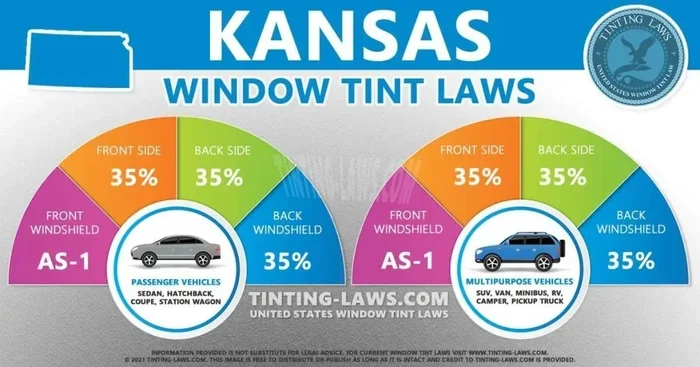
- Sedans must have front side windows above 35% VLT and rear windows can be any darkness.
- SUVs and vans have more flexibility with rear window tint darkness rules.
- Reflective tint is not allowed on front side windows for any vehicle type.
- Medical exemptions are available for those with specific skin or eye conditions.
- Tint violations can result in fines and mandatory removal of illegal tint.
- Always choose certified tint film and verify compliance before installation.
📑 Table of Contents
- What Is Kansas Window Tint Law?
- Legal Tint Limits for Different Vehicle Types
- Reflective Tint and Special Restrictions
- Exceptions and Exemptions
- Tint Certification and Labeling Requirements
- Penalties for Illegal Window Tint
- Tips for Choosing Compliant Tint Film
- Common Mistakes People Make with Window Tint
- How to Remove or Replace Illegal Tint
- Conclusion
What Is Kansas Window Tint Law?
The Kansas window tint law is a set of rules that governs how much tint you can apply to your vehicle’s windows. These rules are based on visible light transmission, or VLT. VLT measures how much light passes through your window film. The lower the VLT percentage, the darker the tint.
Kansas law applies to all passenger vehicles, including sedans, SUVs, and vans. The state also regulates tint reflectivity, color, and placement. These rules are designed to ensure drivers have enough visibility, especially at night or in poor weather.
It is important to note that Kansas tint regulations differ from state to state. What is legal in Kansas may not be legal in Missouri or Nebraska. So if you travel frequently, keep this in mind.
Why Does Tint Law Exist?
Window tint serves a real purpose. It blocks harmful UV rays, reduces sun glare, and keeps your car cooler. But too much tint can be dangerous. Dark windows make it harder for drivers to see pedestrians, other cars, and road signs. They also make it difficult for law enforcement to see inside your vehicle during a traffic stop.
This is why states like Kansas set clear limits. The goal is not to ruin your comfort. It is to keep everyone on the road safe.
Legal Tint Limits for Different Vehicle Types
The Kansas window tint law treats sedans differently from SUVs and vans. Let us break it down by vehicle type so you know exactly what is allowed.
Tint Rules for Sedans
Sedans have some of the strictest limits in Kansas. Here is what you need to know:
- Windshield: You may apply a non-reflective tint strip on the top of the windshield. It must be above the manufacturer’s AS-1 line. This strip cannot extend more than five inches down from the top.
- Front Side Windows: These windows must allow more than 35% of light to pass through. In other words, your VLT must be above 35%.
- Back Side Windows: There is no limit on darkness. You can tint these windows as dark as you want.
- Rear Window: No darkness restriction applies. You are free to choose any VLT level.
Tint Rules for SUVs and Vans
SUVs and vans enjoy a bit more flexibility under Kansas tint regulations. Here is the breakdown:
- Windshield: Same rule as sedans. A non-reflective tint strip above the AS-1 line is allowed.
- Front Side Windows: Must have a VLT greater than 35%. This matches the sedan requirement.
- Back Side Windows: No restriction on tint darkness. You can go as dark as you like.
- Rear Window: No restriction. Any level of darkness is permitted.
Quick Comparison Table
Here is a simple comparison of the legal tint limits for sedans and SUVs in Kansas.
| Vehicle Type | Windshield | Front Side Windows | Back Side Windows | Rear Window |
|---|---|---|---|---|
| Sedan | Non-reflective strip above AS-1 line | VLT above 35% | No restriction | No restriction |
| SUV/Van | Non-reflective strip above AS-1 line | VLT above 35% | No restriction | No restriction |
As you can see, the front side window rule is the same for all vehicle types. The big difference comes down to how much freedom you have with the rear windows.
Reflective Tint and Special Restrictions
Not all tint is created equal. Some films have a reflective coating that mirrors light. Kansas has specific rules about this type of aftermarket tint.
Can You Use Reflective Tint in Kansas?
The Kansas window tint law does not allow reflective tint on the front side windows of any vehicle. This includes both sedans and SUVs. Reflective tint can blind other drivers, especially when the sun hits it at certain angles.
For back side windows and rear windows, the rules are a bit more relaxed. However, even then, the reflectivity must not exceed what is standard for factory-tinted windows. If you are unsure about your film’s reflectivity, ask your installer for a spec sheet.
Tint Color Restrictions
Kansas does not restrict tint color. You can choose from shades of gray, bronze, charcoal, or even colored films. However, red and amber tints are often restricted in other states, so double-check if you plan to travel out of state.
Exceptions and Exemptions
The Kansas tint regulations do allow for some exceptions. Not everyone can tint their windows to the standard limits, and that is okay.
Medical Exemption for Window Tint
Some people have medical conditions that make them extremely sensitive to sunlight. Conditions like lupus, eczema, or certain eye disorders can make even normal sunlight painful or dangerous. In these cases, Kansas allows a window tint exemption.
To qualify, you need a written statement from a licensed physician. This statement must explain your condition and why darker tint is medically necessary. You should keep this document in your vehicle at all times. If you get pulled over, you can show it to the officer.
The exemption does not mean you can tint every window as dark as you want. It typically allows for darker front side window tint than the standard 35% VLT rule. But the exact allowance depends on the physician’s recommendation and local enforcement.
Other Exemptions
A few other vehicle types may qualify for exemptions:
- Law enforcement vehicles often have different tint rules for operational purposes.
- Vehicles transporting individuals with photosensitivity may qualify under medical exemption.
- Classic or antique cars may have different rules depending on the county.
Always check with your local Kansas DMV or county sheriff’s office if you think you qualify for an exemption.
Tint Certification and Labeling Requirements
Kansas does require that window tint film meet certain standards. This is where tint certification comes in.
What Is Tint Certification?
Tint certification is a document from the manufacturer that proves the film meets state standards. When you buy tint film for your car, the installer should be able to show you this certification. It confirms that the VLT level and reflectivity are within legal limits.
Does Kansas Require a Tint sticker?
Kansas law does not require a specific tint sticker on the vehicle. However, many installers will place a small label on the window to show the VLT level. This is a good practice. It helps you prove compliance if you ever get stopped.
If you buy a used car with tint already installed, ask the seller for proof of compliance. You do not want to inherit someone else’s illegal tint.
Penalties for Illegal Window Tint
Getting caught with illegal window tint in Kansas can cost you money and time. Here is what you need to know about the consequences.
Fines and Penalties
A tint ticket in Kansas typically results in a fine. The amount can vary depending on the county and how dark the tint is. In most cases, fines range from $50 to $100 for a first offense. Repeat violations can lead to higher fines.
In some cases, the officer may require you to remove the illegal tint before you can continue driving. This means an extra trip to the shop and additional cost.
What Happens During a Traffic Stop?
If a police officer pulls you over and notices your tint is too dark, they will likely issue a citation. You will receive a ticket that requires you to pay a fine or appear in court. Some officers may give you a warning on the first offense, but this is not guaranteed.
The safest approach is to ensure your tint is compliant from the start. It saves you money, stress, and the hassle of dealing with a tint violation.
Tips for Choosing Compliant Tint Film
Now that you know the rules, let us talk about how to choose the right tint film for your car. Staying compliant does not mean you cannot enjoy the benefits of window tint.
Check the VLT Before You Buy
Always ask your installer about the VLT of the film they use. A reputable shop will know the exact percentage and can confirm it meets Kansas tint regulations. Do not guess or assume. Get it in writing if possible.
Choose a Trusted Installer
Not all tint shops are the same. Look for installers who are familiar with local laws. A good installer will help you choose a film that looks great and stays legal. They should also offer a warranty on their work.
Consider the Benefits of Legal Tint
Compliant tint still offers real benefits. Here are a few reasons to tint your windows the right way:
- UV Protection: Quality tint blocks up to 99% of harmful UV rays. This protects your skin and keeps your interior from fading.
- Heat Rejection: Tint can reduce cabin temperature by up to 60%. Your car stays cooler in the summer.
- Glare Reduction: Less sun glare means safer driving, especially on long road trips.
- Privacy and Security: Tinted windows make it harder for people to see inside your car.
- Shatter Protection: Some tint films hold glass together if your window breaks.
Quick Tips for Staying Legal
Here are some quick tips to keep your tint within Kansas window tint law limits:
- Always check the VLT percentage before installation.
- Keep your windshield tint above the AS-1 line.
- Make sure front side windows allow more than 35% light transmission.
- Ask your installer for a certification document.
- Keep your medical exemption paperwork in the car if applicable.
- Re-check your tint if it fades over time. Old tint can become too light or too dark.
Common Mistakes People Make with Window Tint
Even well-meaning car owners make mistakes when it comes to window tint. Here are a few common ones to avoid.
Assuming All Tint Is the Same
Not all tint film is created equal. Some films look dark but actually allow more light through. Others look light but block a surprising amount of UV. Always ask for the VLT spec, not just the visual appearance.
Ignoring Local County Rules
While Kansas state law sets the baseline, some counties may have additional enforcement policies. For example, certain cities may be stricter about tint darkness during inspections. Always check with your local authorities.
Forgetting About Front Windshield Rules
The windshield rule trips up a lot of people. You cannot tint the entire windshield. Only the top strip above the AS-1 line is allowed. If your installer tints lower than that, you are looking at a violation.
Skipping the Exemption Process
If you have a medical condition, do not just tint your windows darker and hope for the best. Get the proper documentation from your doctor. Without it, you are still subject to a tint ticket.
How to Remove or Replace Illegal Tint
If you find out your current tint is illegal, do not panic. The fix is straightforward. You simply need to remove the non-compliant film and replace it with a legal one.
A professional tint shop can remove the old film and install a new one that meets Kansas tint regulations. The cost of removal and replacement is usually much less than the fine you would pay for a violation. Plus, you avoid the hassle of court dates and additional inspections.
If you are handy and want to do it yourself, you can buy removal tools and new film online. Just make sure the new film meets the legal VLT requirements for your vehicle type.
Conclusion
Understanding the Kansas window tint law is not complicated. The rules are clear and they make sense. Front side windows need to stay above 35% VLT for all vehicle types. The windshield can have a small non-reflective strip. Rear windows and back side windows have no darkness limits for sedans, SUVs, and vans.
Reflective tint is restricted on front windows, and medical exemptions are available for those who need them. If you follow these rules, you can enjoy the benefits of tinted windows without worrying about fines or tint tickets.
Always choose certified tint film, work with a reputable installer, and keep your documentation handy. A little research goes a long way in keeping you compliant and your car looking great. Stay informed, stay safe, and enjoy the ride.
Frequently Asked Questions
What is the legal VLT limit for front side windows in Kansas?
The legal VLT limit for front side windows on both sedans and SUVs in Kansas is above 35%. This means your front side windows must allow more than 35% of outside light to pass through the tint film. Any tint darker than this on the front side windows is considered illegal.
Can I tint my windshield in Kansas?
Yes, but only the top strip of the windshield. Kansas allows a non-reflective tint strip above the manufacturer’s AS-1 line. This strip cannot extend more than five inches down from the top of the windshield. Tinting below this line on the windshield is not permitted.
Do I need a medical exemption for darker tint in Kansas?
If you need front side window tint darker than the standard 35% VLT limit, you will need a medical exemption. This requires a written statement from a licensed physician explaining your condition and why darker tint is necessary. Keep this document in your vehicle at all times.
What happens if I get caught with illegal window tint in Kansas?
If you get caught with illegal tint, you will likely receive a citation and a fine. Fines typically range from $50 to $100 depending on the county. In some cases, you may be required to remove the illegal tint before you can continue driving. Repeat violations may result in higher fines.
Is reflective tint allowed on any windows in Kansas?
Reflective tint is not allowed on the front side windows of any vehicle in Kansas. For back side windows and rear windows, reflective tint is permitted as long as the reflectivity does not exceed standard factory tint levels. Always check with your installer about the reflectivity of your chosen film.
Does Kansas require a tint sticker or certification?
Kansas does not require a specific tint sticker on your vehicle. However, your installer should provide a tint certification document from the manufacturer. This document proves the film meets state VLT and reflectivity standards. Keeping this document in your car can help you prove compliance if questioned by law enforcement.