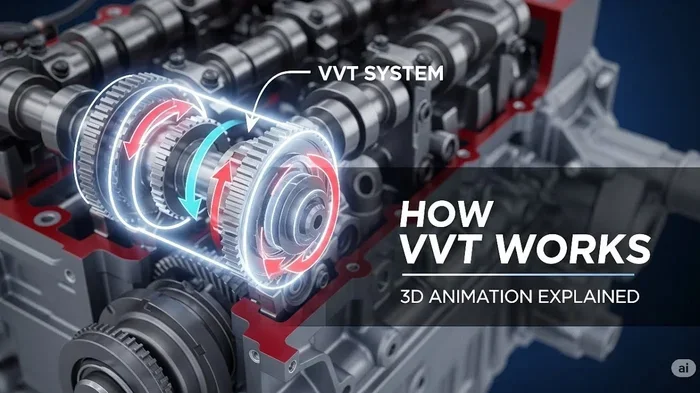
At What RPM Does VVT Work for Maximum Engine Performance
At What RPM Does VVT Work depends on your engine design, but most systems activate between 1,500 and 4,000 RPM. Variable valve timing adjusts intake and exhaust valve events to boost power, torque, and fuel efficiency at different engine speeds. Understanding this helps you get the most out of your vehicle every time you hit the road.
If you have ever wondered why some engines feel punchy at low speeds while others roar to life at high RPMs, the answer often comes down to one clever technology: variable valve timing, commonly known as VVT. This system changes how and when your engine’s valves open and close, and it does so based on how fast the engine is spinning. So, at what RPM does VVT work? The short answer is that it works across a broad range, but the specific RPM bands where it kicks in depend on your engine type, design, and the VVT system installed.
Understanding at what RPM VVT activates can transform the way you drive and maintain your vehicle. Whether you are a daily commuter, a weekend canyon carver, or someone who simply wants to know more about how their engine works, this guide covers everything you need to know. We will walk through the RPM ranges, the different VVT technologies, common problems, and practical tips to get the most out of your system.
The beauty of variable valve timing is that it makes your engine smarter. Instead of using fixed valve timing that works well at only one engine speed, VVT continuously adjusts to match your driving needs. This means better throttle response, improved fuel economy, and stronger power delivery across the entire rev range. Let us dive into the details.
Key Takeaways
- VVT activates at varying RPM ranges: Most systems begin working around 1,500 to 2,000 RPM and peak around 3,000 to 4,000 RPM depending on the engine.
- Low RPM VVT focus: At lower RPMs, VVT prioritizes torque, throttle response, and fuel efficiency for everyday driving comfort.
- High RPM VVT focus: At higher RPMs, the system maximizes airflow and valve overlap to unlock peak horsepower and engine power.
- Different VVT technologies behave differently: Honda VTEC, Toyota VVT-i, and dual VVT systems each have unique RPM activation profiles.
- Maintenance matters: Clean oil and functioning sensors keep your VVT system working properly at all RPM ranges.
- Driving habits affect VVT performance: Smooth acceleration and proper warm-up routines help the system deliver optimal results.
📑 Table of Contents
- What Is Variable Valve Timing and Why Does It Matter?
- At What RPM Does VVT Work? The Full Breakdown
- How VVT Systems Boost Engine Performance Across the RPM Range
- Different VVT Technologies and Their RPM Behavior
- Common VVT Problems That Affect RPM Performance
- Tips to Maximize VVT Performance at Any RPM
- Expert Insights on VVT and RPM Performance
- Key Takeaways
- Conclusion
What Is Variable Valve Timing and Why Does It Matter?
Variable valve timing, or VVT, is a technology that adjusts the timing of when your engine’s intake and exhaust valves open and close. In a traditional engine, the valve timing is fixed. It works well at one specific engine speed but falls short at others. VVT solves this problem by changing the valve events based on how fast the engine is spinning.
How VVT Changes the Game
Think of valve timing like a set of traffic lights for air and fuel entering and exiting your engine’s cylinders. If the lights are timed wrong, traffic slows down and things get messy. VVT adjusts those lights in real time so that airflow is optimized no matter what engine speed you are at. This leads to better combustion, more power, and fewer emissions.
The system uses an ECU (Engine Control Unit) to monitor engine speed, throttle position, and load. Based on this data, the ECU tells the VVT actuator to rotate the camshaft slightly. This rotation changes when the valves open relative to the piston position. The result is an engine that performs well at low RPM, mid-range RPM, and high RPM all at once.
Why RPM Matters for Valve Timing
RPM, or revolutions per minute, tells you how fast the crankshaft is spinning. At low RPMs, the engine needs strong low-end torque for crawling in traffic or climbing hills. At high RPMs, it needs maximum airflow to produce peak horsepower. VVT bridges the gap between these two needs by shifting valve timing as RPM changes.
For example, at low RPMs, VVT may advance the intake valve closing to improve torque. At high RPMs, it may delay valve closing to allow more air into the cylinder. This dynamic adjustment is what makes modern engines so versatile and efficient compared to older fixed-timing designs.
At What RPM Does VVT Work? The Full Breakdown
The answer to at what RPM does VVT work is not a single number. Most VVT systems begin adjusting valve timing somewhere between 1,200 and 2,000 RPM. The full effect of VVT is usually felt between 1,500 and 4,500 RPM, with peak performance occurring in different bands depending on the engine and driving condition.
Low RPM Range: Torque and Responsiveness
At low RPMs, typically between 1,000 and 2,500 RPM, VVT focuses on making the engine feel responsive and strong. The system advances the camshaft timing to close the intake valve earlier. This creates a stronger vacuum effect that pulls more air and fuel into the cylinder, boosting low-end torque.
This is the RPM range where most daily driving happens. City traffic, stop-and-go conditions, and gentle acceleration all fall here. VVT ensures your engine has enough pulling power without working too hard, which also helps improve fuel economy at these lower speeds.
Mid-Range RPM: The Sweet Spot
The mid-range RPM band, roughly 2,500 to 4,000 RPM, is where VVT really shines. This is the range where most drivers feel the strongest acceleration. The system balances valve overlap, lift, and timing to deliver a smooth blend of power and efficiency.
During highway cruising or moderate acceleration, VVT keeps the engine running in its most efficient zone. The camshaft phasing adjusts to reduce pumping losses and maximize combustion efficiency. This is why modern engines feel so effortless at highway speeds compared to older designs.
High RPM Range: Power and Maximum Flow
At high RPMs, above 4,000 RPM, VVT shifts its focus to maximizing airflow and horsepower. The system increases valve overlap, which is the brief period when both the intake and exhaust valves are open at the same time. This helps sweep exhaust gases out of the cylinder faster and pulls in a fresh charge of air and fuel.
Some performance-oriented VVT systems, like Honda’s VTEC, actually switch to a completely different cam profile at high RPMs. This gives the engine a sudden burst of extra power and a more aggressive exhaust note. At What RPM Does VVT Work in this high-power mode varies by system, but it typically engages between 4,500 and 6,500 RPM in sport-tuned engines.
How VVT Systems Boost Engine Performance Across the RPM Range
Now that you know the RPM ranges, let us look at exactly how VVT improves performance. The benefits go far beyond just making more power. A well-functioning VVT system enhances nearly every aspect of how your engine runs.
Valve Overlap and Combustion Efficiency
Valve overlap is one of the most important concepts in understanding VVT. It refers to the short window when both the intake and exhaust valves are open at the same time. At low RPMs, VVT minimizes overlap to prevent raw fuel from escaping out the exhaust. At high RPMs, it increases overlap to help flush out exhaust gases and fill the cylinder with fresh air.
This dynamic adjustment of overlap is what gives VVT-equipped engines their broad, flat torque curves. Instead of peaking at one narrow RPM band, these engines deliver strong power across a wide range. The combustion efficiency improves because the air-fuel mixture burns more completely when the valve events are properly timed.
Throttle Response and Power Delivery
One of the most noticeable benefits of VVT is improved throttle response. When you press the accelerator, the engine responds faster and more directly. This happens because VVT adjusts valve timing to match your immediate demand, rather than relying on a fixed camshaft profile.
Drivers often describe VVT engines as feeling “peppy” or “lively” because the power arrives right when they expect it. Whether you are merging onto a highway or overtaking on a two-lane road, the engine delivers torque more promptly. This responsiveness is a direct result of the VVT system working across the rev range to match valve events to driver input.
Different VVT Technologies and Their RPM Behavior
Not all VVT systems are the same. Different manufacturers have developed their own versions, and each one has a slightly different way of operating at various RPM ranges. Here is a look at the most common systems and how they behave.
Honda VTEC System
Honda’s VTEC, which stands for Variable Valve Timing and Lift Electronic Control, is one of the most famous VVT systems in the automotive world. VTEC operates with a unique approach: it uses two or three different cam profiles on a single camshaft.
At low and mid-range RPMs, the engine uses a mild cam profile for smooth, efficient operation. Then, at a specific RPM threshold, usually around 4,500 to 5,500 RPM, the system locks onto a more aggressive cam profile. This is the famous VTEC “kick” that enthusiasts love. At What RPM Does VVT Work in VTEC engines is very clear-cut because the system switches between distinct profiles at a defined RPM point.
Toyota VVT-i Technology
Toyota’s VVT-i, or Variable Valve Timing with intelligence, takes a more continuous approach. Instead of switching between fixed cam profiles, VVT-i smoothly adjusts the camshaft timing across the entire RPM range. The system uses a camshaft position sensor and the ECU to make precise, real-time adjustments.
VVT-i works effectively from about 1,500 RPM all the way up to the redline. The beauty of this system is its seamless nature. You do not feel a sudden switch or “kick” like with VTEC. Instead, the power delivery builds smoothly and consistently. This makes Toyota VVT-i engines excellent for both daily driving and spirited runs.
Dual VVT and Modern Advances
Modern engines often use dual VVT, which adjusts both the intake and exhaust camshafts independently. This provides even more precise control over valve timing at every RPM. Dual VVT systems can optimize valve overlap, reduce emissions, and improve thermal efficiency.
Some manufacturers have taken VVT even further with systems that also control valve lift in addition to timing. These advanced systems can change how far the valves open, not just when they open. The result is an incredibly adaptable engine that delivers strong performance at any RPM. Brands like BMW, Mercedes-Benz, and Mazda use variations of these advanced VVT technologies in their current engine lines.
| VVT System | RPM Activation Range | Primary Focus |
|---|---|---|
| Honda VTEC | Switches at ~4,500-5,500 RPM | High-RPM power and aggressive cam profiles |
| Toyota VVT-i | Continuous from ~1,500 RPM | Smooth torque across the full rev range |
| Dual VVT | Continuous across all RPMs | Precise control of both intake and exhaust timing |
| BMW Valvetronic | Continuous from idle to redline | Variable valve lift and timing for maximum efficiency |
Common VVT Problems That Affect RPM Performance
Even the best VVT systems can develop problems over time. When something goes wrong, you may notice rough idle, poor throttle response, or a loss of power at certain RPMs. Here are the most common issues that affect how VVT performs at different engine speeds.
Oil Quality and VVT Health
VVT systems rely heavily on clean engine oil to operate properly. The VVT actuator uses oil pressure to move the camshaft phaser. If your oil is dirty, degraded, or the wrong viscosity, the actuator may not respond quickly or accurately.
Over time, oil sludge can clog the small passages that feed oil to the VVT components. This leads to sluggish valve timing adjustments, especially at low RPM where the system needs precise control. Regular oil changes with the manufacturer-recommended oil grade are the simplest way to keep your VVT system healthy.
Sensor Failures and ECU Issues
The VVT system depends on several sensors to know when and how to adjust valve timing. The camshaft position sensor and crankshaft position sensor are critical for this process. If either sensor fails or sends inaccurate data, the ECU cannot properly control the VVT system.
Common symptoms of sensor-related VVT problems include rough idle, misfires, and a check engine light. The engine may feel sluggish at certain RPMs or lack the usual punch during acceleration. If you notice these issues, it is worth having a mechanic scan for trouble codes and inspect the VVT components.
Tips to Maximize VVT Performance at Any RPM
You do not need to be a mechanic to get the most out of your VVT system. A few simple habits and maintenance practices can keep your engine running smoothly and ensure VVT works as intended at every RPM.
Maintenance Habits That Help
- Change your oil regularly: Stick to the manufacturer’s recommended oil change interval. Clean oil keeps the VVT actuator and phaser working smoothly.
- Use the correct oil viscosity: Using the wrong weight oil can affect oil pressure and VVT operation. Check your owner’s manual for the recommended grade.
- Replace the camshaft position sensor when needed: A failing sensor can cause poor VVT performance and rough running at various RPMs.
- Address check engine lights promptly: VVT-related codes should be diagnosed early to prevent further damage to the system.
Driving Habits That Unlock VVT Benefits
How you drive also affects how well your VVT system performs. Here are a few tips to get the most out of your engine.
- Let the engine warm up before pushing it hard. Cold oil flows slowly and can delay VVT response. A brief warm-up period allows the system to operate at full capability.
- Avoid prolonged idling. Extended idling can cause oil buildup and carbon deposits around the VVT components.
- Use smooth, gradual throttle inputs. Abrupt, heavy throttle at low RPMs can confuse the VVT system and lead to poor combustion.
- Allow the engine to reach higher RPMs occasionally. Periodically taking the engine into the upper RPM range helps clear carbon deposits and keeps the VVT system moving freely.
Expert Insights on VVT and RPM Performance
Automotive engineers agree that VVT is one of the most impactful innovations in modern engine design. According to industry experts, the key to getting the most from any VVT system is understanding that it is a continuous process, not a single event. At What RPM Does VVT Work is not a fixed answer but rather a dynamic range that shifts based on driving conditions, engine load, and sensor inputs.
Experts also emphasize the importance of maintenance. A well-maintained VVT system can deliver noticeable improvements in both performance and fuel economy. Neglected systems, on the other hand, can cause the engine to run poorly and lose its efficiency advantages. Regular inspections and timely repairs go a long way in preserving the benefits of variable valve timing.
Another insight from engineers is the role of engine oil in VVT operation. Since most VVT actuators are oil-driven, the quality and condition of the oil directly impact performance. Using high-quality synthetic oil can improve VVT response and extend the life of the system components.
Key Takeaways
- VVT activates at varying RPM ranges: Most systems begin working around 1,500 to 2,000 RPM and peak around 3,000 to 4,000 RPM depending on the engine.
- Low RPM VVT focus: At lower RPMs, VVT prioritizes torque, throttle response, and fuel efficiency for everyday driving comfort.
- High RPM VVT focus: At higher RPMs, the system maximizes airflow and valve overlap to unlock peak horsepower and engine power.
- Different VVT technologies behave differently: Honda VTEC, Toyota VVT-i, and dual VVT systems each have unique RPM activation profiles.
- Maintenance matters: Clean oil and functioning sensors keep your VVT system working properly at all RPM ranges.
- Driving habits affect VVT performance: Smooth acceleration and proper warm-up routines help the system deliver optimal results.
- VVT is a continuous system: It does not simply turn on or off but constantly adjusts valve timing across the entire RPM spectrum.
Conclusion
At What RPM Does VVT Work is a question with a layered answer. The truth is, VVT works across a broad RPM spectrum, continuously adjusting valve timing to match your driving demands. From low-RPM torque for city driving to high-RPM power for spirited runs, the system keeps your engine performing at its best throughout the entire rev range.
Understanding how VVT operates helps you appreciate the engineering that goes into modern engines. It also empowers you to take better care of your vehicle through proper maintenance and smart driving habits. Whether your car uses Honda VTEC, Toyota VVT-i, or a sophisticated dual VVT system, the principles remain the same: adjust valve timing dynamically for the best possible performance at every engine speed.
Keep your oil fresh, your sensors in good shape, and your driving smooth, and your VVT system will reward you with strong power, excellent fuel economy, and a driving experience that feels effortless. The next time you feel your engine pull strongly through the RPM bands, you will know exactly why. Variable valve timing is working hard behind the scenes to make every drive better.
Frequently Asked Questions
Does VVT work at idle?
Yes, VVT systems make small adjustments even at idle to optimize combustion efficiency and reduce emissions. However, the major performance benefits of VVT are felt at higher RPMs where valve timing changes have a more noticeable impact on power and torque.
Can a broken VVT system cause rough idle?
Absolutely. A faulty VVT actuator or clogged oil passages can prevent the system from adjusting valve timing properly. This often results in rough idle, misfires, and poor throttle response, especially at low RPMs where precision matters most.
Is VVT the same as VTEC?
VTEC is Honda’s specific implementation of variable valve timing. While all VTEC systems are a form of VVT, not all VVT systems are VTEC. VTEC is unique because it switches between distinct cam profiles, whereas many other VVT systems make continuous adjustments to camshaft timing.
Does VVT improve fuel economy?
Yes, VVT can significantly improve fuel economy by optimizing valve timing for efficient combustion. At low and mid-range RPMs, the system reduces pumping losses and ensures the air-fuel mixture burns more completely, which means less wasted fuel and better mileage.
How often should VVT components be inspected?
VVT components should be inspected as part of your regular maintenance schedule, typically every 30,000 to 60,000 miles. Keeping your oil clean and using the correct viscosity are the best ways to extend the life of VVT actuators, phasers, and sensors.
Can I feel when VVT engages?
In most modern engines, VVT engagement is seamless and you will not feel a distinct shift. However, in systems like Honda VTEC, there is a noticeable change in engine sound and power delivery when the system switches to its aggressive cam profile at higher RPMs.