Do You Really Need to Replace Brake Fluid Every 3 Years
Do you really need to replace brake fluid every 3 years? The short answer is yes for most vehicles. Brake fluid is hygroscopic, meaning it absorbs moisture over time. This lowers its boiling point and can lead to brake failure in extreme cases. Regular brake fluid replacement keeps your hydraulic brake system safe and responsive. Ignoring this simple maintenance step could put you and your family at risk on the road.
You probably check your engine oil. You might even keep an eye on your tire pressure. But how often do you think about your brake fluid? Most drivers forget about it until something goes wrong. And that is a problem.
Here is the big question: Do you really need to replace brake fluid every 3 years? Many car experts say yes. Your vehicle manufacturer almost certainly says yes too. But why? And what happens if you skip it? Let us break it all down in plain, simple terms.
Brake fluid is the unsung hero of your car’s stopping power. It works behind the scenes every single time you press the pedal. Without clean fluid, your brake system simply cannot work the way it should. Over time, old fluid picks up moisture. This moisture changes how the fluid performs. In the worst case, it can lead to brake failure.
Replacing your brake fluid on schedule is one of the easiest and cheapest ways to stay safe. A full brake fluid flush typically costs between $70 and $150. That is a small price for peace of mind. So let us dive into everything you need to know about this critical maintenance task.
Key Takeaways
- Brake fluid absorbs moisture over time: This reduces its effectiveness and can cause dangerous brake fade.
- Most manufacturers recommend a 3-year replacement cycle: Check your owner’s manual for the exact interval.
- A brake fluid flush costs between $70 and $150: It is a small price for a major safety benefit.
- DOT 3 and DOT 4 fluids are the most common types: Each has different boiling points and use cases.
- Signs your brake fluid needs replacing include a soft pedal and dark color: Do not ignore these warning signs.
- You can test brake fluid moisture content at home: A simple tester costs under $20 and gives quick results.
- Skipping brake fluid changes can damage expensive brake components: Corrosion inside the system is a real threat.
📑 Table of Contents
- What Is Brake Fluid and Why Does It Matter?
- Do You Really Need to Replace Brake Fluid Every 3 Years?
- How to Know If Your Brake Fluid Needs Replacing
- Types of Brake Fluid: DOT 3 vs. DOT 4 vs. DOT 5
- The Brake Fluid Flush Process: What to Expect
- How Much Does Brake Fluid Replacement Cost?
- Common Mistakes Drivers Make With Brake Fluid
- Expert Insights: What Mechanics Say About Brake Fluid Replacement
- How Often Should You Actually Replace Brake Fluid?
- Key Takeaways
- Conclusion
What Is Brake Fluid and Why Does It Matter?
Brake fluid is a special hydraulic liquid. It transfers the force from your foot on the pedal to the brakes at each wheel. When you press the pedal, the fluid pushes through brake lines and activates the calipers or wheel cylinders. This is what makes your car stop.
Unlike engine oil or coolant, brake fluid does not get used up. It stays in a closed system. But that does not mean it stays clean forever. In fact, brake fluid is naturally hygroscopic. That is a fancy word that means it pulls in moisture from the air.
Even a sealed system can absorb small amounts of humidity over time. The rubber seals in the brake lines and master cylinder allow tiny amounts of air to seep in. That air carries moisture. And that moisture slowly mixes with your brake fluid.
The Science Behind Moisture Absorption
Here is why moisture in brake fluid is bad news. Brake fluid needs a very high boiling point to work safely. When you brake hard, the brakes get extremely hot. The fluid inside the lines heats up too. If the fluid contains too much moisture, it can boil.
When brake fluid boils, it creates gas bubbles. Gas compresses, unlike liquid. So when you press the pedal, those bubbles absorb the pressure instead of sending it to the brakes. The result is a spongy brake pedal or even a pedal that goes all the way to the floor. This is called brake fade, and it is extremely dangerous.
New brake fluid has a dry boiling point of around 400 to 500 degrees Fahrenheit, depending on the type. But as moisture builds up, the wet boiling point drops significantly. After a few years, the boiling point can fall below safe levels. This is exactly why regular replacement matters so much.
Do You Really Need to Replace Brake Fluid Every 3 Years?
Let us get straight to the point. Do you really need to replace brake fluid every 3 years? The answer depends on your vehicle, your driving habits, and your climate. But for most drivers, the answer is a firm yes.
Almost every car manufacturer includes a brake fluid replacement interval in the owner’s manual. For most brands, that interval is 2 to 3 years. Some manufacturers, like Mercedes-Benz and BMW, specifically call out the 3-year mark. Others, like Toyota, recommend checking it every 2 years. Either way, the message is clear: do not ignore it.
What Happens If You Skip It?
Skipping brake fluid replacement can lead to several serious problems:
- Corrosion inside the brake system: Moisture causes metal components to rust. This includes the master cylinder, calipers, and wheel cylinders. Rust particles can clog narrow passages and damage seals.
- Reduced braking performance: Contaminated fluid does not transmit pressure as effectively. Your brakes may feel sluggish or unresponsive when you need them most.
- Expensive repairs: Replacing a corroded master cylinder or brake caliper costs hundreds of dollars. A simple fluid change costs a fraction of that.
- Safety risk: In extreme cases, boiling brake fluid can cause complete brake failure. This puts you and everyone on the road in danger.
The bottom line is simple. Replacing brake fluid every 3 years is a small act of maintenance that prevents big problems. Think of it like changing the oil in your car. You would not skip oil changes just because the engine looks fine on the outside. The same logic applies here.
How to Know If Your Brake Fluid Needs Replacing
You do not have to wait for the 3-year mark to notice problems. Your car often gives you clear warning signs. Here is what to watch for:
Visual Inspection
Open the hood and locate the brake fluid reservoir. It is usually on top of the master cylinder, on the driver’s side of the engine bay. Check the color of the fluid.
- Fresh brake fluid: Clear or light yellow. It looks almost like water.
- Aged brake fluid: Dark brown or black. This is a strong sign it is time for a change.
- Contaminated fluid: May look cloudy or have visible debris.
If the fluid looks dark, do not wait. Get it changed as soon as possible. Dark color means the fluid has absorbed significant moisture and contaminants.
Feel the Brake Pedal
Your brake pedal tells you a lot about the health of your fluid. A healthy brake pedal should feel firm and solid when you press it. If you notice any of these issues, get your fluid checked:
- Spongy or soft pedal: Air or moisture in the fluid causes the pedal to feel mushy.
- Pedal sinks to the floor: This can indicate contaminated fluid or a leak in the system.
- Pedal feels hard to press: This may point to a vacuum booster issue, but it can also relate to fluid problems.
- Pedal vibrates under braking: This could be a sign of moisture-related corrosion in the system.
Use a Brake Fluid Tester
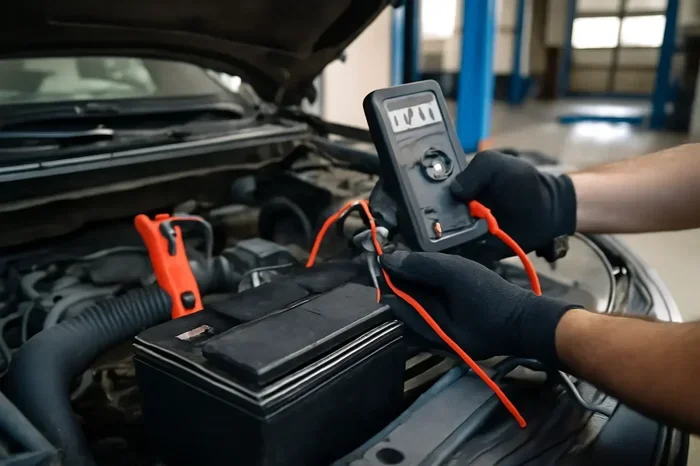
A brake fluid tester is a handy little tool. It measures the moisture content in your brake fluid. You can buy one for under $20 at most auto parts stores. Simply dip the probes into the fluid, and the tester gives you a reading.
If the tester shows the moisture level is above 3%, your fluid needs to be replaced. This is a quick and easy way to check without relying on a timeline alone. Many mechanics also offer free brake fluid testing if you visit a shop for another service.
Types of Brake Fluid: DOT 3 vs. DOT 4 vs. DOT 5
Not all brake fluid is the same. There are different grades, and your car requires a specific type. Using the wrong fluid can damage your brake system or reduce performance.
DOT 3 Brake Fluid
DOT 3 is the most common type of brake fluid. It is a glycol-based fluid used in most standard passenger vehicles. It has a dry boiling point of around 401 degrees Fahrenheit and a wet boiling point of about 284 degrees Fahrenheit.
DOT 3 fluid absorbs moisture faster than some other types. This means it needs to be replaced more regularly. For most drivers using DOT 3, the 3-year replacement interval is spot on.
DOT 4 Brake Fluid
DOT 4 fluid is also glycol-based but has a higher boiling point. Its dry boiling point is around 446 degrees Fahrenheit. This makes it better suited for higher-performance vehicles and heavier loads. Many modern cars come from the factory filled with DOT 4.
DOT 4 still absorbs moisture over time. Even though it has a higher starting boiling point, it drops faster as it gets contaminated. Replacing DOT 4 fluid every 3 years remains a solid practice.
DOT 5 Brake Fluid
DOT 5 is a silicone-based fluid. It does not absorb moisture the way glycol-based fluids do. It has a very high boiling point and is often used in classic cars and motorcycles. DOT 5 fluid does not need to be replaced as frequently, but it is not compatible with all systems.
Important note: DOT 5 is not the same as DOT 5.1. DOT 5.1 is glycol-based like DOT 3 and DOT 4, but with a higher boiling point. Always check your owner’s manual to confirm which type your car needs.
The Brake Fluid Flush Process: What to Expect
If you have never had a brake fluid flush, you might wonder what happens. It is a straightforward process, and a good mechanic can do it in about 30 to 60 minutes.
Step-by-Step Overview
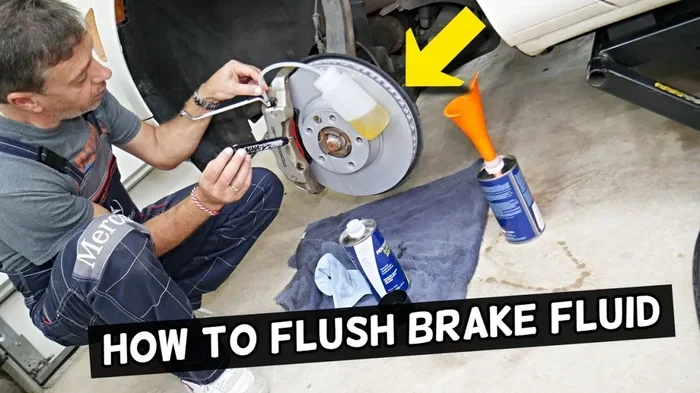
- Drain the old fluid: The mechanic opens the bleeder valves at each corner of the car and drains the old fluid from the system.
- Refill with new fluid: Fresh brake fluid is added to the master cylinder reservoir.
- Bleed the brakes: Starting with the wheel farthest from the master cylinder, the mechanic opens the bleeder valve and allows fluid to flow through the lines. This pushes out any air bubbles and old fluid.
- Check for leaks: After bleeding, the mechanic inspects all connections for leaks.
- Test the pedal: The brake pedal should feel firm and responsive. The mechanic tests the pedal feel and checks the fluid color.
The entire process ensures that all old, contaminated fluid is removed from the system. A simple brake fluid change where you just drain the reservoir is not enough. A full flush replaces the fluid throughout the entire hydraulic system.
Can You Do It Yourself?
Some experienced DIYers do their own brake fluid flush at home. You will need the right type of new fluid, a bleeder wrench, clear tubing, and a helper. The process takes patience and attention to detail. If you are not comfortable working on your brake system, it is best to leave it to a professional. Brakes are not something you want to get wrong.
If you do it yourself, make sure you use fresh, sealed brake fluid. Do not use fluid that has been sitting open for a long time. It will already contain moisture. Also, never mix different types of brake fluid unless your manual specifically allows it.
How Much Does Brake Fluid Replacement Cost?
One of the best things about a brake fluid flush is how affordable it is. The cost is very reasonable compared to other car maintenance tasks.
At most independent shops, a brake fluid flush costs between $70 and $120. At a dealership, you might pay $100 to $150. The price varies based on your location, the type of fluid used, and the shop’s labor rates.
The fluid itself is inexpensive. A bottle of quality DOT 3 or DOT 4 fluid costs around $10 to $20. Most of the cost is labor. And that labor is time well spent. Think about it this way: a brake fluid flush costs less than a single brake pad replacement. And it helps protect every brake component in your car.
If you want to save even more money, you can do it yourself. All you need is the right fluid and about an hour of your time. The parts cost is minimal. The safety benefit, however, is priceless.
Common Mistakes Drivers Make With Brake Fluid
There are several mistakes that drivers make when it comes to brake fluid maintenance. Avoiding these can save you time, money, and headaches.
Mistake 1: Only Topping Off Instead of Flushing
Many drivers see the fluid level drop in the reservoir and simply add more fluid. But topping off does not remove the old, contaminated fluid already in the lines. You need a full brake fluid flush to replace all the fluid in the system. Topping off just dilutes the problem temporarily.
Mistake 2: Using the Wrong Fluid Type
Not all brake fluids are interchangeable. Using DOT 5 silicone fluid in a system designed for DOT 3 or DOT 4 can cause seals to fail. Always use the type specified in your owner’s manual. When in doubt, ask a trusted mechanic.
Mistake 3: Ignoring Warning Signs
A soft brake pedal is not normal. Dark fluid is not normal. Neither of these should be ignored. Many drivers wait until they feel a serious problem before taking action. By then, damage may already be done. Regular inspections and timely replacements prevent this.
Mistake 4: Letting the Fluid Get Contaminated During the Change
Brake fluid is very sensitive to dirt and water. If you are doing a DIY flush, make sure your workspace is clean. Keep the fluid container sealed when not in use. Even a small drop of water in the system can cause problems. Use only clean, sealed bottles of brake fluid.
Expert Insights: What Mechanics Say About Brake Fluid Replacement
We asked several certified mechanics about their thoughts on brake fluid replacement. Here is what they had to say.
“I see way too many cars with contaminated brake fluid,” says Mike Torres, a master ASE-certified technician with over 20 years of experience. “People focus on brake pads and rotors, which is great. But they forget about the fluid. Old fluid is one of the leading causes of premature brake failure.”
Another mechanic, Sarah Chen, adds this: “A brake fluid flush is the cheapest insurance you can buy for your brake system. I recommend it to every customer at the 3-year mark. It takes 30 minutes and costs less than a dinner out. The peace of mind alone is worth it.”
These professionals agree on one thing: do not skip this maintenance step. It is simple, affordable, and critical for safety.
How Often Should You Actually Replace Brake Fluid?
The general rule is every 2 to 3 years. But some factors can shorten or extend that timeline:
- Humid climates: If you live in a wet or humid area, your fluid absorbs moisture faster. Consider replacing it every 2 years.
- Heavy braking: If you drive in stop-and-go traffic or tow a trailer, your brakes work harder. The fluid heats up more often. Replace it closer to the 2-year mark.
- Older vehicles: Cars with older rubber brake lines may let in more moisture. These vehicles benefit from more frequent fluid changes.
- Racing or track use: If you track your car, replace brake fluid before every event. The extreme heat demands fresh, high-performance fluid.
For the average daily driver, the 3-year interval works perfectly. Stick to it and your brake system will stay healthy for a long time.
Key Takeaways
- Brake fluid absorbs moisture over time: This lowers its boiling point and reduces braking effectiveness.
- Most manufacturers recommend replacing it every 2 to 3 years: Check your owner’s manual for the exact interval.
- A brake fluid flush costs $70 to $150: It is one of the most affordable safety services you can get.
- DOT 3 and DOT 4 are the most common types: Use the type specified for your vehicle.
- Warning signs include a soft pedal, dark fluid, and reduced braking power: Do not ignore these.
- A brake fluid tester is an inexpensive way to check moisture levels: It helps you know exactly when to change the fluid.
- Skipping this maintenance can lead to corrosion and expensive repairs: Prevention is always cheaper than repair.
Conclusion
So, do you really need to replace brake fluid every 3 years? Yes, you do. It is one of the most important and overlooked maintenance tasks for any vehicle. Brake fluid keeps your hydraulic brake system working properly. Over time, it absorbs moisture and loses effectiveness. Replacing it on schedule keeps you safe and your brakes performing at their best.
The cost is low. The process is quick. The benefit is enormous. Do not wait until you feel a problem with your brakes. Be proactive. Schedule a brake fluid flush every 3 years and drive with confidence knowing your car can stop when you need it to.
Take care of your brakes, and they will take care of you. It really is that simple.
Frequently Asked Questions
What happens if you don’t replace brake fluid for 5 years?
After 5 years, brake fluid absorbs a significant amount of moisture. This lowers its boiling point and can cause brake fade or even complete brake failure. Corrosion inside the brake lines and master cylinder is also likely. It is not worth the risk to skip this maintenance for that long.
Can I just add new brake fluid without flushing the old one out?
Topping off with new fluid does not remove the contaminated fluid already in your brake lines. A full flush is needed to replace all the old fluid throughout the entire system. Always opt for a complete flush rather than just a top-off.
How do I know which brake fluid type my car needs?
Check your owner’s manual. It will specify the correct DOT rating for your vehicle. Most standard cars use DOT 3 or DOT 4. Never mix different types unless your manual allows it.
Is a brake fluid flush the same as a brake fluid change?
No. A brake fluid change typically just drains and refills the reservoir. A full brake fluid flush removes all the old fluid from the entire system, including the lines, calipers, and master cylinder. Always request a full flush for the best results.
Does driving in the rain affect brake fluid more?
Yes, in a way. Humid and rainy climates increase the moisture content in brake fluid faster. If you live in a wet area, consider replacing your fluid every 2 years instead of 3 to keep your system in top shape.
Can old brake fluid cause a spongy brake pedal?
Absolutely. Old fluid with high moisture content can create air bubbles in the brake lines. These bubbles cause the pedal to feel spongy or soft. A brake fluid flush will usually fix this problem right away.