How Many Catalytic Converters Are in a Ford F150 Truck
A standard Ford F150 typically has two catalytic converters, though some models with dual exhaust systems may have up to four. The exact count depends on the engine type, model year, and exhaust configuration of your truck. Understanding your Ford F150’s converter setup helps with maintenance, troubleshooting, and protecting your investment from theft.
If you own a Ford F150 or are thinking about buying one, you might wonder about the catalytic converter setup. The question “how many catalytic converters are in a Ford F150” comes up a lot among truck owners and shoppers. The answer isn’t always simple because it depends on several factors like the engine type, model year, and exhaust configuration. Most Ford F150 trucks come with two catalytic converters, but some models have more. Let’s dive deep into this topic so you know exactly what to expect.
Understanding your truck’s catalytic converter setup is important for many reasons. It helps with maintenance planning, knowing when to watch for problems, and even protecting your investment from theft. Catalytic converters play a vital role in reducing harmful emissions from your engine. They clean up the exhaust gases before they leave the tailpipe. Without them, your Ford F150 wouldn’t pass emissions tests and would contribute more to air pollution. In this article, we’ll cover everything from converter counts to replacement costs and protection tips.
Whether you have a newer model or an older one, this guide will give you clear answers. We’ll look at different engine options, exhaust systems, and what each converter does. By the end, you’ll have a solid understanding of your Ford F150’s exhaust system and how the catalytic converters fit into it all. So let’s get started and break this down piece by piece.
Key Takeaways
- Two converters standard: Most Ford F150 trucks come with two catalytic converters as part of the exhaust system.
- Engine matters: The number of converters can change based on engine size and whether the truck uses a single or dual exhaust setup.
- Location matters: Converters sit at the front near the exhaust manifold and further back near the muffler area.
- Replacement costs vary: Expect to pay between $1,000 and $3,000 or more depending on OEM vs. aftermarket parts and labor.
- Theft is a real risk: Ford F150 catalytic converters are targeted by thieves due to precious metals inside.
- Watch for warning signs: Check engine lights, reduced fuel economy, and rattling sounds can all point to converter problems.
📑 Table of Contents
- How Many Catalytic Converters Does a Ford F150 Have?
- Why Does the Ford F150 Have Multiple Catalytic Converters?
- Where Are the Catalytic Converters Located on a Ford F150?
- Common Signs of a Failing Catalytic Converter
- Catalytic Converter Replacement Cost for Ford F150
- Tips to Protect Your Ford F150 Catalytic Converter
- Conclusion
How Many Catalytic Converters Does a Ford F150 Have?
The short answer is that most Ford F150 trucks have two catalytic converters. However, the exact number can vary depending on the engine and exhaust setup. Let’s look at the different configurations you might find.
Converter Count by Engine Type
Different Ford F150 engines come with different exhaust setups. The 3.3-liter V6 engine, which is the base engine in many F150 models, typically uses a single exhaust system with two catalytic converters. The 5.0-liter V8 engine also follows a similar pattern with two converters. However, the 3.5-liter EcoBoost V6 and the 5.2-liter V8 found in the Raptor model may use a different setup. These higher-performance engines often have more complex exhaust systems that include additional converters to handle increased exhaust flow.
Here is a quick breakdown of converter counts by popular Ford F150 engines:
- 3.3-liter V6: Two catalytic converters
- 5.0-liter V8: Two catalytic converters
- 3.5-liter EcoBoost V6: Two to four catalytic converters depending on the model year
- 5.2-liter V8 (Raptor): Four catalytic converters in some configurations
As you can see, the engine type plays a big role in determining how many converters your truck has. Always check your specific model year and engine combo to be sure. The Ford F150 has been around for decades, and the converter setup has evolved over the years alongside emission standards and engine technology.
Single vs. Dual Exhaust Systems
Another factor that affects the converter count is whether your Ford F150 has a single or dual exhaust system. Most standard F150 models use a single exhaust system that runs from the engine to the back of the truck. This setup typically includes two catalytic converters. One sits near the engine, close to the exhaust manifold, and the other sits further back in the exhaust system.
Dual exhaust systems are more common on higher-performance trims and the Raptor models. With a dual exhaust setup, each side of the engine has its own pipe and converter. This means a dual exhaust Ford F150 can have four catalytic converters. The extra converters help manage the increased exhaust volume from the more powerful engines. They also help the truck meet strict emission standards while delivering the performance drivers expect. If you’ve ever looked under a Raptor and noticed more exhaust pipes, that’s exactly why.
Quick Tip: If you’re unsure whether your truck has a single or dual exhaust, look at the back of the truck. Two exhaust tips usually mean a dual system, while one tip means a single system. This simple check can give you a good idea of your converter count before you look under the vehicle.
Why Does the Ford F150 Have Multiple Catalytic Converters?
You might wonder why a truck needs more than one catalytic converter. The answer comes down to how exhaust systems work and the emission standards that Ford must follow. Each converter plays a specific role in cleaning up the exhaust gases produced by the engine.
The Role of Each Converter
The first catalytic converter, often called the “front” or “pre-cat” converter, sits close to the engine. It handles the hottest and most concentrated exhaust gases right after they leave the combustion chambers. This front converter does the heavy lifting when it comes to breaking down harmful pollutants like carbon monoxide, nitrogen oxides, and unburned hydrocarbons.
The second converter, sometimes called the “rear” or “main” converter, further cleans the exhaust gases. By the time the gases reach this point, they have already been partially treated. The rear converter finishes the job, ensuring the exhaust that exits the tailpipe meets federal emission standards. In trucks with four converters, the additional units help manage the higher exhaust flow from more powerful engines. Each converter works as a team to keep emissions as clean as possible.
The internal structure of a catalytic converter is fascinating. Inside each unit is a honeycomb structure made of ceramic or metal. This honeycomb is coated with precious metals like platinum, palladium, and rhodium. These metals act as catalysts, meaning they speed up chemical reactions without being consumed. The exhaust gases flow through the honeycomb, and the precious metals convert harmful pollutants into less harmful substances like carbon dioxide and water vapor.
Emission Standards and Regulations
The United States has strict emission standards set by the Environmental Protection Agency, or EPA. These rules require all vehicles, including the Ford F150, to limit the amount of harmful pollutants released into the air. Ford designs its exhaust systems to meet or exceed these standards. Adding more catalytic converters is one way the manufacturer ensures compliance across different engine options and model years.
California has even stricter emission standards known as CARB regulations. Ford F150s sold in California often have additional emission control equipment, which can include extra catalytic converters. If you live in a state with tough emission rules, your truck might have more converters than a model sold in a state with federal standards only. This is why the answer to “how many catalytic converters are in a Ford F150” can differ based on where the truck was sold.
Common Mistake: Many owners assume all Ford F150s have the same number of converters regardless of where they were purchased. Always verify your specific truck’s configuration, especially if you bought it from another state or imported it.
Where Are the Catalytic Converters Located on a Ford F150?
Knowing where the catalytic converters sit on your Ford F150 is useful for maintenance and inspections. The location can vary slightly depending on the model year and engine, but there are general patterns most Ford trucks follow.
Front and Rear Converter Positions
In most Ford F150 models, the first catalytic converter is located near the engine, connected to the exhaust manifold. You can find it underneath the truck, close to the front. This converter is often part of the exhaust manifold assembly itself in some model years. It is exposed to extreme heat since it processes the hottest exhaust gases first.
The second catalytic converter sits further back in the exhaust system, usually underneath the middle or rear of the truck. It connects to the exhaust pipes that run along the underside of the vehicle. In dual exhaust setups, you will find one converter on each side of the truck near this rear position. The converters are mounted to the frame or body using brackets and rubber hangers to absorb vibration and road noise.
Visual Guide to Converter Placement
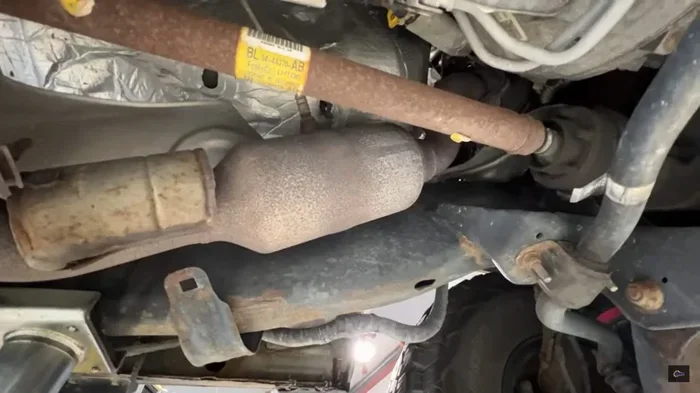
If you want to locate the converters on your Ford F150, start by looking underneath the truck near the front. The front converter will be close to the engine and exhaust manifold. Follow the exhaust pipes toward the back of the truck, and you will find the rear converter or converters. In a standard single exhaust setup, there are two converters total. In a dual exhaust setup, there are four converters, two on each side.
It is important to note that the converters look like large metal cans or muffler-shaped objects along the exhaust pipe. They are usually heavier than regular exhaust components because they contain precious metals inside the honeycomb structure. If you are ever unsure about the location, consult your Ford F150 owner’s manual or ask a trusted mechanic. The oxygen sensors located before and after each converter also help identify their positions, since these sensors are bolted directly into the converter housing or the pipes adjacent to it.
Expert Insight: When looking under your truck, the front converter is typically the one closest to the engine and attached to the exhaust manifold. It may be partially covered by a heat shield. The rear converter is usually more accessible and easier to inspect visually. Always let the truck cool down before crawling underneath to avoid burns.
Common Signs of a Failing Catalytic Converter
Catalytic converters do not last forever. Over time, they can become clogged, damaged, or worn out. Knowing the warning signs early can save you from expensive repairs and keep your Ford F150 running smoothly.
Warning Lights and Symptoms
The most common sign of a failing catalytic converter is the check engine light on your dashboard. When the converter is not working properly, the oxygen sensors in the exhaust system detect changes in gas levels. This triggers the check engine light and often stores a diagnostic trouble code related to the converter. Common codes include P0420 and P0430, which indicate catalyst efficiency below the threshold.
Another warning sign is a rotten egg smell coming from the exhaust. A healthy converter turns sulfur compounds in the exhaust into odorless sulfur dioxide. When the converter fails, it cannot process these compounds properly, leading to that unpleasant smell. You might also notice dark smoke or black exhaust fumes, which indicate unburned fuel is passing through the system without being properly treated.
Performance Issues to Watch For
A clogged or failing catalytic converter can significantly affect your Ford F150’s performance. You might notice reduced engine power, especially when accelerating. The truck may feel sluggish or hesitate when you press the gas pedal. This happens because the clogged converter restricts exhaust flow, creating back pressure that interferes with the engine’s ability to breathe properly.
Fuel economy is another area that suffers. When the converter is not working efficiently, the engine has to work harder to maintain performance. This means you will fill up the tank more often. Some owners also report a rattling noise coming from underneath the truck, especially when starting or idling. This rattling can be caused by broken pieces of the honeycomb structure inside the converter breaking loose and rattling around inside the housing.
Quick Tip: If your check engine light comes on and you notice any of these symptoms, get your truck diagnosed as soon as possible. Driving with a bad catalytic converter can lead to further damage to the engine and exhaust system. It can also cause your Ford F150 to fail emissions inspections.
Catalytic Converter Replacement Cost for Ford F150
If your Ford F150 needs a new catalytic converter, you are probably wondering about the cost. Replacement can be expensive, and the price varies based on several factors. Let us break down what you can expect.
OEM vs. Aftermarket Options
OEM parts are made by Ford or by the same supplier that provides parts to Ford. They are designed to match the exact specifications of your truck. OEM catalytic converters tend to cost more, but they offer the best fit, quality, and warranty coverage. For a Ford F150, an OEM converter can cost anywhere from $500 to $1,500 per unit, depending on the model and engine.
Aftermarket converters are made by third-party manufacturers. They are usually less expensive, with prices ranging from $200 to $800 per unit. However, the quality can vary widely between brands. Some aftermarket converters work just as well as OEM parts, while others may not last as long or meet emission standards. Always choose a reputable brand and check local laws to make sure aftermarket converters are legal in your area.
Comparison Table:
- OEM Converters: $500-$1,500 per unit, best fit and warranty, meets all emission standards
- Aftermarket Converters: $200-$800 per unit, varies in quality, may not meet all standards
- High-Flow Aftermarket: $400-$1,200 per unit, improved performance, check local legality
Labor Costs and Timeline
Labor costs for replacing a catalytic converter on a Ford F150 typically range from $100 to $300 per converter. The total job usually takes two to four hours, depending on how accessible the converters are on your specific model. If your truck has four converters, the labor time and cost will be higher.
Keep in mind that converter theft is a growing problem, and replacement costs have risen significantly in recent years. Some Ford F150 owners have reported paying over $3,000 for a full set of converter replacements. Insurance may cover the cost if you have comprehensive coverage, so check with your provider if your converters are stolen or damaged. The total cost for replacing two converters on a standard Ford F150 usually falls between $1,000 and $3,000 including parts and labor.
Tips to Protect Your Ford F150 Catalytic Converter
Catalytic converter theft has become a nationwide problem, and Ford F150 trucks are among the most targeted vehicles. The precious metals inside the converters make them valuable to thieves. Here are some practical steps you can take to protect your investment.
Anti-Theft Measures
One of the best ways to prevent theft is to install an anti-theft device. There are several options available on the market. Cat shields or converter guards are metal plates that you bolt over the converter to make it harder to cut. These shields are made from thick steel and can deter casual thieves effectively.
Another option is an alarm system that detects vibration or impact near the converter. Some advanced systems even send alerts to your phone if someone tries to tamper with your truck. You can also have your converters engraved with your vehicle identification number, or VIN. This makes them harder to sell and helps police recover stolen parts. Parking in well-lit areas and garages whenever possible also reduces your risk significantly.
Maintenance Best Practices
Regular maintenance is one of the best ways to extend the life of your catalytic converters. Keep your Ford F150’s engine tuned up properly. A misfiring engine sends unburned fuel into the exhaust system, which can overheat and damage the converter. Replace spark plugs and ignition coils on schedule to prevent this issue.
Use high-quality fuel and change your oil regularly. Contaminants in cheap fuel or old oil can clog the converter over time. If you notice any warning signs like the check engine light or reduced performance, address the problem quickly. Ignoring small issues can lead to bigger and more expensive damage to the catalytic converter and other exhaust components.
Expert Insight: Many mechanics recommend adding a catalytic converter cleaner to your fuel tank every few thousand miles. These additives help burn off deposits that can build up inside the converter and exhaust system. While they are not a substitute for proper maintenance, they can help keep your converters functioning at their best.
Final thought: Taking care of your Ford F150’s catalytic converters is not just about passing emissions tests. It is about keeping your truck running efficiently, protecting the environment, and avoiding costly repairs down the road. A well-maintained exhaust system is a happy exhaust system.
Conclusion
The number of catalytic converters in a Ford F150 depends on the engine, exhaust setup, and model year. Most Ford F150 trucks have two catalytic converters, but some models with dual exhaust systems can have four. Understanding your truck’s specific configuration helps with maintenance, troubleshooting, and protecting your investment from theft or damage.
Whether you are dealing with a failing converter, planning a replacement, or just want to learn more about your truck, the information in this guide should help. Regular maintenance, anti-theft measures, and paying attention to warning signs can keep your Ford F150 running strong for years to come. Take care of your truck, and it will take care of you.
Frequently Asked Questions
Can I drive my Ford F150 with a bad catalytic converter?
You can drive short distances, but it is not recommended. A bad converter can cause reduced performance, poor fuel economy, and eventually leave you stranded. It can also damage other parts of the exhaust system. Have it inspected and replaced as soon as possible.
How long do catalytic converters last on a Ford F150?
Most catalytic converters last between 100,000 and 150,000 miles. However, this can vary based on driving habits, fuel quality, and engine health. Regular maintenance and using quality fuel can help your converters last longer.
Are aftermarket catalytic converters legal for Ford F150s?
This depends on your state and local laws. Some aftermarket converters are EPA-approved and legal nationwide. Others may not meet emission standards. Always check with your local authorities and choose converters that carry the EPA certification label.
Why are Ford F150 catalytic converters targeted by thieves?
The precious metals inside catalytic converters, such as platinum, palladium, and rhodium, have high scrap value. Ford F150 trucks are easy to access underneath, making them a prime target. This is why installing anti-theft devices is highly recommended.
Can I replace just one catalytic converter instead of both?
In most cases, yes. If only one converter is failing, you can replace just that one. However, mechanics often recommend replacing both at the same time if the truck has high mileage. This ensures balanced performance and prevents the new converter from being overworked.
What is the difference between a catalytic converter and a muffler?
A catalytic converter reduces harmful emissions by converting pollutants into less harmful gases. A muffler reduces noise from the exhaust system. They serve completely different purposes, though both are essential parts of the Ford F150’s exhaust system.