How Do Self-Charging Hybrids Work The Simple Guide
Self-charging hybrids use a gasoline engine and electric motor working together to power your car. They recharge the battery automatically through regenerative braking and smart energy recovery. You get better fuel economy and lower emissions without ever plugging in.
Have you ever wondered how a car charges its own battery without ever being plugged in? It sounds like magic, but the truth is much simpler. Self-charging hybrids have been around for decades, and millions of drivers rely on them every single day.
The idea behind self-charging hybrid technology is actually brilliant in its simplicity. Your car uses two power sources: a gasoline engine and an electric motor. These work together to move the wheels, and the battery gets topped up automatically as you drive. No cables. No charging stations. No hassle.
In this guide, we will break down exactly how self-charging hybrids work. We will look at the key parts inside the car, explain the science behind energy recovery, and help you understand whether this type of vehicle makes sense for you. Whether you are shopping for a new car or just curious about hybrid technology, this guide has you covered.
The world of hybrid vehicles can feel confusing at first. There are so many terms thrown around. Full hybrid, mild hybrid, plug-in hybrid, self-charging hybrid. But once you understand the basics, everything clicks into place. Let us start from the very beginning.
Key Takeaways
- Self-charging hybrids never need a plug: The battery recharges itself while you drive through clever energy recovery systems.
- Regenerative braking is the star of the show: It captures energy usually lost during braking and stores it for later use.
- You save real money on fuel: Many drivers see significant improvements in fuel economy compared to conventional cars.
- They’re simpler than plug-in hybrids: No charging cables, no home charger installation, no range anxiety.
- Popular models exist from top brands: Toyota, Honda, and Ford all offer strong self-charging hybrid options today.
- Myths about self-charging hybrids are false: They are reliable, practical, and great for everyday driving.
📑 Table of Contents
What Are Self-Charging Hybrids?
A self-charging hybrid is a vehicle that combines a traditional gasoline engine with an electric motor and a small battery pack. The battery is much smaller than the one you would find in a fully electric car. But it is powerful enough to assist the gasoline engine and improve overall efficiency.
The key feature that sets self-charging hybrids apart is this: the battery recharges itself. You do not need to connect the car to an external power source. Instead, the car handles everything internally through smart engineering and energy recovery systems.
How Is This Different from a Regular Hybrid?
Good question. The term “self-charging hybrid” is really just a marketing name for what engineers call a “conventional hybrid.” Regular hybrids and self-charging hybrids are essentially the same thing. The only real difference is the branding. Toyota popularized the term “self-charging” to make the technology sound more appealing and easier to understand for everyday buyers.
Some people confuse self-charging hybrids with plug-in hybrids. But those are two very different things. A plug-in hybrid has a much larger battery and needs to be plugged in to charge. We will compare them in detail later in this guide.
Who Invented Self-Charging Hybrid Technology?
The roots of hybrid technology go back further than most people realize. Toyota launched the first mass-produced self-charging hybrid with the original Prius in 1997. Since then, the technology has evolved tremendously. Today, self-charging hybrids are available from Toyota, Honda, Ford, Hyundai, Kia, and many other automakers.
The Core Components That Make It Work
To understand how self-charging hybrids charge themselves, you need to know what is inside the car. There are a few key parts that work together as a team. Let us walk through each one.
The Gasoline Engine
The gasoline engine is the primary power source in most self-charging hybrids. It works just like the engine in a regular car. It burns fuel, creates energy, and sends power to the wheels. But in a hybrid, the engine is designed to be more efficient. It often uses a technique called the Atkinson cycle, which extracts more energy from each drop of fuel.
The Electric Motor
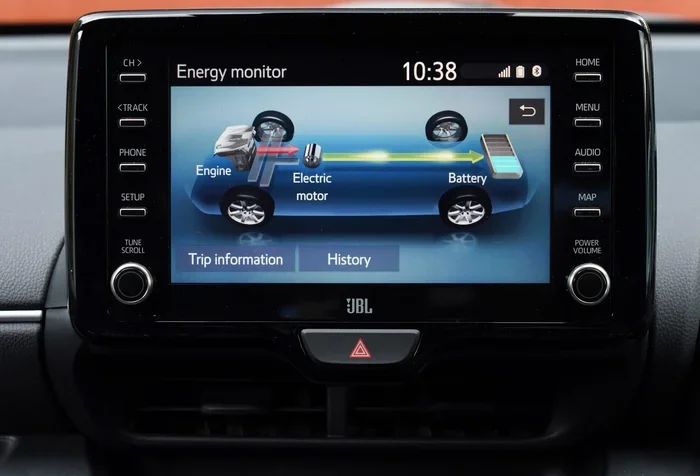
The electric motor is the second power source. It runs on electricity stored in the hybrid battery. The motor can work alone at low speeds, such as when pulling out of a parking space. At higher speeds, it works alongside the gasoline engine to provide extra power when you need it. This teamwork is what makes self-charging hybrids so efficient.
The Battery Pack
The battery in a self-charging hybrid is typically a nickel-metal hydride or lithium-ion pack. It stores electrical energy that the electric motor uses. The battery is much smaller than what you would find in a plug-in hybrid or a fully electric vehicle. But it is perfectly sized for the job it needs to do. Most self-charging hybrid batteries last the lifetime of the car with proper maintenance.
The Power Control Unit
This is the brain of the hybrid system. The power control unit decides when to use the gasoline engine, when to use the electric motor, and when to blend both together. It also manages the flow of electricity into and out of the battery. Think of it as the conductor of an orchestra, making sure every instrument plays at the right time.
The Transmission
Most self-charging hybrids use a continuously variable transmission, or CVT. This type of transmission smoothly adjusts the gear ratios for the best balance of power and efficiency. Some models use a traditional automatic or even a direct-drive system. The transmission works hand-in-hand with the hybrid system to deliver a seamless driving experience.
How Regenerative Braking Charges the Battery
Here is the most fascinating part of how self-charging hybrids work. The technology that makes them “self-charging” is called regenerative braking. It is one of the most important innovations in modern automotive engineering.
What Is Regenerative Braking?
In a regular car, when you hit the brakes, the kinetic energy from moving is turned into heat through the brake pads. That energy is simply wasted. It disappears into the air as heat. In a self-charging hybrid, things work very differently.
When you take your foot off the accelerator or press the brake pedal, the electric motor reverses its role. Instead of using electricity to spin the wheels, it acts as a generator. It captures the kinetic energy from the spinning wheels and converts it back into electrical energy. That electricity then flows into the battery, recharging it.
This process is called energy recovery, and it happens every time you slow down or brake. It is always working in the background, even when you do not realize it.
How Much Energy Can Regenerative Braking Recover?
The amount of energy recovered depends on several factors. Your driving speed, how often you brake, and the road conditions all play a role. In city driving with lots of stop-and-go traffic, regenerative braking is incredibly effective. You recover a significant amount of energy that would otherwise be wasted.
On the highway, the benefits are smaller because you are cruising at a steady speed and braking less often. But even then, the system still recovers some energy whenever you lift off the accelerator or slow down for traffic.
Quick Tips to Maximize Regenerative Braking
- Coast more, brake less: Lifting off the accelerator early lets the regenerative system do its work.
- Drive in stop-and-go traffic: City driving recovers the most energy through frequent braking.
- Use B mode on hilly roads: Many hybrids have a B mode that increases regenerative braking on descents.
Does Regenerative Braking Replace Normal Brakes?
No. Self-charging hybrids still have traditional brake pads and rotors. Regenerative braking handles most of your everyday slowing down, but you still need the physical brakes for full stops and emergency situations. Over time, regenerative braking actually reduces wear on your brake pads, which means fewer trips to the mechanic.
Self-Charging Hybrids vs Plug-In Hybrids
People often mix up self-charging hybrids and plug-in hybrids. They share some similarities, but they are built for different needs. Understanding the differences helps you make the right choice.
Key Differences at a Glance
| Feature | Self-Charging Hybrid | Plug-In Hybrid |
|---|---|---|
| Battery Size | Small (1-2 kWh) | Large (8-18 kWh) |
| Charging Method | Self-charging via driving | Must plug in to charge |
| Electric-Only Range | 1-2 miles | 20-50 miles |
| Home Charger Needed | No | Yes |
| Fuel Economy | Good (40-60 mpg) | Excellent (100+ mpg equivalent) |
| Purchase Price | Lower | Higher |
| Maintenance | Low | Moderate |
Which One Is Right for You?
If you want simplicity and do not want to deal with charging cables, a self-charging hybrid is the way to go. You drive it exactly like a regular car and it takes care of the rest. It is perfect for people who want better fuel economy without changing their routine.
If you have a short daily commute and can plug in at home or work, a plug-in hybrid might save you even more on fuel. But it comes with more complexity and a higher price tag. For most everyday drivers, self-charging hybrids offer the best balance of convenience, cost, and efficiency.
Real-World Benefits and Popular Models
Now that you understand how self-charging hybrids work, let us talk about why they matter in real life. What benefits can you actually expect when you drive one?
Better Fuel Economy
The biggest selling point of any self-charging hybrid is fuel savings. Because the electric motor assists the gasoline engine, the engine does not have to work as hard. This means less fuel burned and more miles per gallon. Many self-charging hybrid models deliver 45 to 60 miles per gallon in combined driving. That is a huge improvement over a comparable gasoline-only car.
Over the course of a year, these fuel savings can really add up. Depending on your driving habits and local gas prices, you could save several hundred dollars annually on fuel costs alone.
Lower Emissions
Because self-charging hybrids use less gasoline, they also produce fewer tailpipe emissions. The electric motor handles some of the work, which means the gasoline engine runs less often and more efficiently. This is great news for the environment and for air quality in your community.
Smooth and Quiet Driving
One thing many drivers notice right away is how smooth a self-charging hybrid feels. The electric motor provides instant torque, which means quick, seamless acceleration. At low speeds, the car can run purely on electric power, making it nearly silent. The transition between electric and gasoline power is so smooth that most drivers barely notice it happening.
Popular Self-Charging Hybrid Models
The market for self-charging hybrids has grown dramatically. Here are some of the most popular and well-reviewed models available today:
- Toyota Prius: The original and still one of the most efficient self-charging hybrids on the road. Known for its iconic design and impressive fuel economy.
- Toyota Corolla Hybrid: A practical and affordable hybrid sedan that delivers great value and reliability.
- Honda Civic Hybrid: Combines the fun-to-drive Civic experience with hybrid efficiency.
- Ford Escape Hybrid: A hybrid SUV that offers versatility, space, and strong fuel economy for families.
- Hyundai Tucson Hybrid: A stylish compact SUV with modern tech and competitive pricing.
- Kia Sportage Hybrid: Another excellent SUV option with a comfortable interior and smooth powertrain.
Expert Insight
Automotive experts consistently point out that self-charging hybrids are the sweet spot between fully gas-powered cars and fully electric vehicles. They offer meaningful fuel savings without the lifestyle changes that plug-in hybrids or electric vehicles require. For the average commuter and family driver, they hit the perfect balance.
Common Myths and Final Thoughts
Despite their popularity, there are still many myths surrounding self-charging hybrids. Let us clear up some of the most common misconceptions so you can make a confident decision.
Myth 1: Self-Charging Hybrids Need to Be Plugged In
This is the most common myth, and it is completely false. The entire point of a self-charging hybrid is that it charges itself while you drive. You never need to plug it into a wall outlet or charging station. The car handles everything automatically.
Myth 2: The Battery Needs Replacing Often
Modern self-charging hybrid batteries are built to last. Most manufacturers warranty the hybrid battery for 8 to 10 years or up to 100,000 miles. Many drivers go well beyond that without ever needing a battery replacement. The batteries in self-charging hybrids are designed for longevity and reliability.
Myth 3: Self-Charging Hybrids Are Slow
Some people assume that adding an electric motor means sacrificing performance. The opposite is true in most cases. The electric motor fills in the gaps where the gasoline engine is weakest. The result is often a car that feels quicker off the line than its gasoline-only counterpart.
Myth 4: Self-Charging Hybrids Are Just a Fad
Hybrid technology has been proven for over 25 years. Millions of self-charging hybrids are on the road worldwide today. Automakers continue to invest heavily in this technology because consumer demand remains strong. Self-charging hybrids are here to stay and will play a major role in the transition toward cleaner transportation.
Common Mistakes People Make with Self-Charging Hybrids
- Ignoring the manual: Every hybrid system is slightly different. Reading the owner manual helps you understand your specific car’s features and settings.
- Driving aggressively: Hard acceleration and speeding reduce the benefits of hybrid technology. Smooth, steady driving maximizes fuel savings.
- Neglecting maintenance: While hybrids require less maintenance than regular cars, they still need oil changes, tire rotations, and fluid checks on schedule.
- Expecting all-electric driving: A self-charging hybrid cannot drive long distances on electricity alone. It is designed to assist the gasoline engine, not replace it.
Should You Buy a Self-Charging Hybrid?
If you want better fuel economy, lower emissions, and a driving experience that feels modern and refined, then yes. Self-charging hybrids are a smart choice for a wide range of drivers. They work beautifully for daily commutes, family road trips, and everything in between. You get the benefits of hybrid technology without any of the charging headaches.
The technology is mature, the cars are reliable, and the savings on fuel are real. Whether you choose a compact sedan, a sporty hatchback, or a family SUV, there is likely a self-charging hybrid that fits your needs and budget. The future of driving is cleaner and smarter, and self-charging hybrids are leading the way.
Take some time to test drive a few models. Pay attention to how the car feels, how quiet it is, and how responsive the acceleration is. Once you experience a self-charging hybrid firsthand, the technology makes perfect sense. You will wonder why you ever drove anything else.
Frequently Asked Questions
Do self-charging hybrids need to be plugged in?
No. Self-charging hybrids charge their own battery while you drive using regenerative braking and the gasoline engine. You never need to connect the car to an external power source. This is what makes them so convenient compared to plug-in hybrids or fully electric vehicles.
How long do self-charging hybrid batteries last?
Most self-charging hybrid batteries are designed to last the lifetime of the vehicle. Manufacturers typically warranty them for 8 to 10 years or up to 100,000 miles. Many drivers report their hybrid batteries lasting well beyond 150,000 miles with no issues at all.
Are self-charging hybrids worth the extra cost?
In most cases, yes. The fuel savings over time can offset the higher purchase price, especially if you drive a lot or deal with stop-and-go traffic daily. Plus, many regions offer tax incentives or rebates for purchasing hybrid vehicles, which helps bring the cost down.
Can a self-charging hybrid run on electricity alone?
Only for very short distances, typically 1 to 2 miles at low speeds. The electric motor in a self-charging hybrid is designed to assist the gasoline engine, not replace it. For longer all-electric driving, you would need a plug-in hybrid or a fully electric vehicle.
Is maintenance more expensive for self-charging hybrids?
Actually, maintenance costs are often lower for self-charging hybrids. The regenerative braking system reduces wear on brake pads, and the gasoline engine runs less frequently, which means less wear overall. Routine maintenance like oil changes and tire rotations remains similar to a regular car.
What is the difference between a mild hybrid and a self-charging hybrid?
A mild hybrid uses a smaller electric motor that cannot power the car on its own. It mainly assists the gasoline engine. A full self-charging hybrid has a more powerful electric motor that can drive the car independently at low speeds and for short distances. Full hybrids deliver better fuel savings and a more seamless electric driving experience.