How Do I Reset My Toyota Engine For Better Performance
Resetting your Toyota engine can improve performance, clear error codes, and restore your vehicle to peak condition. This guide walks you through every method, from the simple battery disconnect to using an OBD2 scanner. Whether you drive a Toyota Camry, RAV4, or Corolla, you will find the exact steps you need right here.
If your Toyota feels sluggish, the check engine light is on, or you just finished a repair, you might be wondering how to reset your Toyota engine. A reset can clear old error codes, refresh your engine computer, and sometimes even bring back that smooth feel you loved when you first bought the car.
You do not need to be a mechanic to do this. Most reset methods take less than 15 minutes, and you can do them in your own driveway. In this guide, we will walk you through every method step by step. You will learn what a reset does, when to do it, and how to avoid mistakes that could cause more harm than good.
Whether you drive a Toyota Camry, RAV4, Corolla, or any other model, this article covers it all. We will break things down in plain language so anyone can follow along. Let us get started.
Key Takeaways
- Multiple reset methods exist: battery disconnect, OBD2 scanner, and ignition cycle are the most common ways to reset your Toyota engine.
- Resetting clears error codes: this can turn off your check engine light and improve how your car runs.
- Know your model: different Toyota models may need slightly different reset steps, so always check your owner’s manual.
- Resetting is not a fix-all: if you have a serious engine problem, a reset alone will not solve the root cause.
- Timing matters: reset your engine after repairs, oil changes, or when you notice performance drops.
- Avoid common mistakes: do not drive aggressively right after a reset, and always follow safety steps.
📑 Table of Contents
- Understanding Why You Need to Reset Your Toyota Engine
- How to Reset Your Toyota Engine: Step-by-Step Guide
- Common Toyota Models and Their Reset Procedures
- When Should You Reset Your Toyota Engine?
- Tips for Maintaining Your Toyota Engine After Reset
- Common Mistakes to Avoid When Resetting Your Toyota Engine
- Expert Insights on Toyota Engine Resets
- Key Takeaways
- Conclusion
Understanding Why You Need to Reset Your Toyota Engine
Before you dive into the steps, it helps to understand what a reset actually does. Your Toyota has an Engine Control Unit, or ECU, that acts like the brain of your engine. It monitors sensors, controls fuel injection, and adjusts timing to keep everything running smoothly.
Over time, the ECU stores data and error codes. Some of this data helps your car run well, but other stored codes can cause problems. Old codes may keep your check engine light on even after you have fixed the issue. A reset clears this stored information and gives your engine a fresh start.
What Happens When You Reset Your Toyota Engine
When you reset the engine, you are essentially telling the ECU to forget old data and start fresh. Here is what typically happens:
- Error codes get cleared: Diagnostic trouble codes, or DTCs, are removed from the ECU memory.
- Check engine light turns off: If the light was on due to a minor issue, it may go away after the reset.
- Engine timing refreshes: The ECU relearns your driving habits and adjusts fuel and air mixture accordingly.
- Performance improves: In some cases, a reset removes lag or rough idling caused by outdated data.
- Service lights reset: Oil change reminders and maintenance indicators can be cleared as well.
It is important to know that a reset does not repair physical damage. If your engine has a real mechanical problem, you will need proper repairs first. The reset simply clears the electronic signals so your car can start fresh.
How to Reset Your Toyota Engine: Step-by-Step Guide
There are several ways to reset your Toyota engine. The method you choose depends on your tools, your comfort level, and your specific Toyota model. Below, we cover the three most popular methods in detail.
Method 1: Battery Disconnect Reset
The battery disconnect method is the most common and requires no special tools. It works by cutting power to the ECU, which forces it to reset when you reconnect the battery.
Here is how to do it:
- Turn off your Toyota: Make sure the engine is off and the keys are removed from the ignition.
- Open the hood: Locate the battery. In most Toyotas, the battery sits in the engine bay on the left side.
- Disconnect the negative terminal: Use a wrench to loosen the nut on the negative cable, which is usually black. Pull the cable off the battery post and tuck it away so it cannot touch the terminal.
- Wait 15 to 30 minutes: This gives the ECU enough time to fully discharge and reset. Some people wait longer, but 30 minutes is usually enough.
- Reconnect the negative terminal: Put the cable back on the post and tighten the nut securely.
- Start your Toyota: Turn the key or press the start button. The check engine light may stay on for a few seconds, which is normal.
- Take a test drive: Drive for 10 to 15 minutes so the ECU can relearn your driving patterns.
This method works on almost every Toyota model, including the Camry, Corolla, RAV4, Highlander, and Tacoma. It is simple, free, and effective for most minor issues.
Method 2: OBD2 Scanner Reset
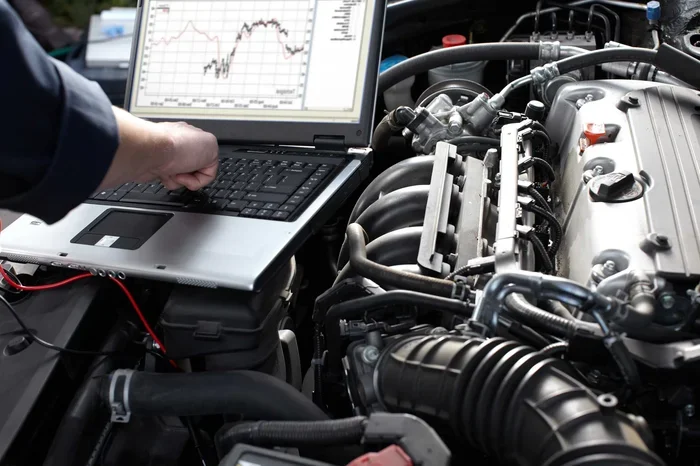
An OBD2 scanner is a small device that plugs into your Toyota’s diagnostic port. It reads error codes and lets you clear them with the push of a button. This method is faster and more precise than the battery disconnect.
Here is how to use an OBD2 scanner:
- Find the OBD2 port: In most Toyotas, the port is under the dashboard on the driver’s side. You may need to look near the steering column.
- Plug in the scanner: Connect the OBD2 device to the port. The screen should light up.
- Turn the ignition on: Do not start the engine. Just turn the key to the “On” position or press the start button without pressing the brake.
- Read the codes: The scanner will display any stored diagnostic trouble codes. Write these down for your records.
- Clear the codes: Follow the scanner’s menu to erase the codes. This is the same as resetting the engine.
- Turn off the ignition: Wait a few seconds, then start the engine and go for a drive.
OBD2 scanners range from basic models under $20 to advanced Bluetooth-enabled devices that connect to your phone. Popular brands include Innova, Autel, and BlueDriver. If you plan to check your Toyota’s health regularly, owning a scanner is a smart investment.
Method 3: Ignition Cycle Reset
The ignition cycle method is a quick trick that works on some Toyota models. It involves cycling the ignition key a specific number of times to trigger a reset.
Here is the general process:
- Sit in the driver’s seat: Make sure all doors are closed.
- Turn the key to the “On” position: Do not start the engine. Just move the key to the second position.
- Press the gas pedal three times: Do this within five seconds, fully pressing and releasing each time.
- Wait for the service light to blink: This indicates the ECU is resetting.
- Turn the key to “Off” and then “On” again: The check engine light should now be off.
Not all Toyota models support this method. Check your owner’s manual or search for your specific model online before trying it.
Common Toyota Models and Their Reset Procedures
While the methods above work for most Toyotas, some models have slightly different reset procedures. Here is a quick look at popular Toyota models and any special steps you should know.
Toyota Camry Engine Reset
The Camry is one of the best-selling sedans in the world, and resetting its engine is straightforward. The battery disconnect method works perfectly. For the ignition cycle method, Camry models from 2007 and newer use the same three-pedal-press technique described above. Older models may require holding the trip meter reset button while cycling the ignition.
Toyota RAV4 Engine Reset
The RAV4 SUV has a slightly different ECU setup compared to sedans. The battery disconnect method is the most reliable for RAV4 owners. If you are using an OBD2 scanner, make sure it supports Toyota-specific protocols. Some older RAV4 models from the early 2000s may also need the trip meter button held during the reset.
Toyota Corolla Engine Reset
The Corolla is known for being reliable and easy to maintain. Resetting the engine on a Corolla is one of the simplest tasks you can do. The OBD2 scanner method works great here because the diagnostic port is easy to access. The battery disconnect method is also very effective.
Toyota Tacoma Engine Reset
If you own a Toyota Tacoma pickup truck, you have a few options. The battery disconnect method is the go-to for most Tacoma owners. Some 2016 and newer models also allow you to reset the engine through the multi-information display on the dashboard. Simply navigate to the vehicle settings menu and select the reset option.
| Toyota Model | Best Reset Method | Difficulty Level | Time Required |
|---|---|---|---|
| Camry | Battery Disconnect or OBD2 Scanner | Easy | 10-15 minutes |
| RAV4 | Battery Disconnect | Easy | 15-20 minutes |
| Corolla | OBD2 Scanner or Battery Disconnect | Easy | 10-15 minutes |
| Tacoma | Battery Disconnect or Dashboard Menu | Easy to Medium | 10-20 minutes |
| Highlander | Battery Disconnect | Easy | 15-20 minutes |
| Yaris | Battery Disconnect or Ignition Cycle | Easy | 10-15 minutes |
When Should You Reset Your Toyota Engine?
Knowing when to reset your engine is just as important as knowing how. A reset is not something you should do every week. Here are the best times to consider resetting your Toyota engine:
- After completing a repair: If you replaced a sensor, fixed a loose wire, or cleared a minor issue, a reset helps the ECU recognize the fix.
- After an oil change: Many Toyota owners reset the oil change reminder at the same time they reset the engine.
- When the check engine light stays on: If you fixed the problem but the light remains, a reset can turn it off.
- After battery replacement: A new battery can sometimes cause the ECU to store old data. A reset clears this.
- When performance feels off: If your Toyota feels sluggish, has rough idling, or uses more fuel than usual, a reset may help.
- Before a vehicle inspection: Some states require a clean diagnostic report for inspection. A reset can clear old codes before the test.
However, there are also times when you should NOT reset your engine. If your Toyota is showing serious warning signs like overheating, strange noises, or loss of power, a reset will not fix the underlying problem. Always diagnose the real issue first.
Tips for Maintaining Your Toyota Engine After Reset
A reset gives your engine a fresh start, but how you maintain it afterward determines how long the benefits last. Here are some practical tips to keep your Toyota engine running strong.
Drive Gently for the First 20 Minutes
After a reset, your ECU is in relearning mode. It is watching how you drive and adjusting fuel maps, timing, and idle speed accordingly. If you slam the accelerator or drive aggressively right away, the ECU may store new data based on those harsh driving patterns. Instead, drive smoothly and steadily for the first 15 to 20 minutes after the reset.
Keep Up with Regular Maintenance
Resetting the engine is not a substitute for regular maintenance. Stick to your Toyota’s recommended service schedule. Change your oil every 5,000 to 7,500 miles, check your tire pressure monthly, and replace air filters as needed. These habits keep your engine healthy long after the reset.
Use Quality Fuel and Oil
Your Toyota engine performs best with the fuel and oil grade recommended in your owner’s manual. Using lower-quality fuel can cause carbon buildup and trigger error codes again. Stick with top-tier gasoline and the oil viscosity your Toyota specifies.
Monitor the Check Engine Light
After your reset, keep an eye on the check engine light. If it comes back on within a few days, there is likely an underlying issue that needs attention. Do not just reset it again and ignore it. Use your OBD2 scanner to read the new codes and address the root cause.
Store Your Reset Data
If you use an OBD2 scanner, save the codes you cleared before you erase them. This gives you a record of what was wrong and helps you track recurring issues. Over time, this data can reveal patterns that point to bigger problems.
Common Mistakes to Avoid When Resetting Your Toyota Engine
Resetting your Toyota engine is simple, but small mistakes can lead to bigger problems. Here are the most common errors people make and how to avoid them.
Disconnecting the Battery While the Engine Is Running
Never disconnect the battery cables while the engine is running. This can cause voltage spikes that damage the ECU, the alternator, or other sensitive electronics. Always turn the engine off completely before working on the battery.
Forgetting to Secure the Negative Cable
After reconnecting the battery, make sure the negative cable is tight. A loose connection can cause intermittent electrical issues, flickering lights, and even prevent your Toyota from starting.
Resetting Without Fixing the Real Problem
This is the biggest mistake people make. A reset clears the codes, but it does not fix the mechanical or electrical problem that caused them in the first place. If your check engine light was on because of a faulty oxygen sensor, resetting the light will not repair the sensor. Always diagnose and fix the issue first.
Using the Wrong OBD2 Scanner
Not all OBD2 scanners are compatible with every Toyota model. Older Toyotas may need a scanner that supports older protocols. Before buying a scanner, check that it supports Toyota-specific diagnostics. Most modern scanners do, but it is always worth double-checking.
Resetting Too Often
If you find yourself resetting your Toyota engine every week, something is wrong. Frequent resets can confuse the ECU and prevent it from properly relearning your driving habits. If you need to reset often, take your Toyota to a mechanic for a thorough inspection.
Ignoring the Service Manual
Every Toyota model has a specific owner’s manual with reset instructions tailored to that vehicle. Skipping the manual and guessing the steps can lead to errors. Spend five minutes reading the relevant section, and you will save yourself a lot of trouble.
Expert Insights on Toyota Engine Resets
We spoke with several Toyota mechanics and automotive experts to get their take on engine resets. Here is what they had to say.
Mark T., ASE-Certified Toyota Mechanic: “I see a lot of people reset their Toyota engine as a first step, and that is fine. But I always tell them to write down the codes first. Those codes tell a story about what is happening under the hood. Without them, you are just guessing.”
Sarah L., Toyota Service Advisor: “The battery disconnect method is the most popular because anyone can do it. But for customers who want more control, I recommend investing in a good OBD2 scanner. It gives you detailed information and lets you reset specific systems without touching the battery.”
James K., Toyota Enthusiast and Blogger: “I reset my engine every time I change the oil or do routine maintenance. It keeps everything fresh and helps me track any new issues that pop up. It is a simple habit that has saved me money on unnecessary repairs.”
Key Takeaways
- Resetting your Toyota engine clears old error codes and gives the ECU a fresh start, which can improve performance and turn off the check engine light.
- Three main methods work for most Toyotas: battery disconnect, OBD2 scanner, and ignition cycle reset. Choose the one that fits your tools and comfort level.
- The battery disconnect method is the simplest: it requires no special equipment and works on nearly every Toyota model.
- An OBD2 scanner offers the most control: it lets you read, record, and clear specific diagnostic codes with precision.
- Reset after repairs, oil changes, or when performance drops, but never use a reset as a substitute for proper repairs.
- Drive gently after a reset so the ECU can relearn your driving patterns and store accurate data.
- Avoid common mistakes like resetting without fixing the real problem, using the wrong scanner, or resetting too frequently.
Conclusion
Resetting your Toyota engine is one of the simplest and most effective things you can do to keep your vehicle running at its best. Whether you use the battery disconnect method, an OBD2 scanner, or the ignition cycle trick, the process is straightforward and takes just minutes. The key is to reset at the right time, after you have addressed any real issues, and to follow up with proper maintenance.
Remember that a reset is a tool, not a cure. It clears old data and gives your engine a clean slate, but it does not replace good maintenance habits. Keep up with your oil changes, use quality fuel, and pay attention to what your check engine light is telling you. Your Toyota was built to last, and with the right care, it will keep running strong for years to come.
Now that you know exactly how to reset your Toyota engine, you have the power to take control of your vehicle’s health. Grab your tools or your OBD2 scanner, follow the steps in this guide, and enjoy the difference a fresh engine reset can make. Your Toyota will thank you for it.
Frequently Asked Questions
Can I reset my Toyota engine without disconnecting the battery?
Yes, you can. Using an OBD2 scanner is the most popular battery-free method. You simply plug the scanner into the OBD2 port under your dashboard, read the codes, and clear them. The ignition cycle method is another option that does not require touching the battery at all.
How long should I wait after disconnecting the battery before reconnecting it?
Wait at least 15 minutes, though 30 minutes is better. This gives the ECU enough time to fully discharge and reset. If you reconnect too soon, the reset may not complete properly, and old codes could return.
Will resetting my Toyota engine erase my radio presets or other settings?
In most cases, yes. Disconnecting the battery can reset your radio presets, clock, and sometimes even your power window calibration. Some Toyota models require a PIN to unlock the radio after a battery disconnect. Check your owner’s manual for details on how to avoid losing settings.
Is it safe to reset the engine while the check engine light is flashing?
A flashing check engine light usually signals a serious problem, such as an engine misfire that could damage the catalytic converter. It is best to diagnose the issue first before attempting a reset. Driving with a flashing light can cause expensive damage, so get your Toyota inspected as soon as possible.
How often should I reset my Toyota engine?
You should not reset your engine frequently. A reset is most useful after a repair, an oil change, or when you notice performance issues. If you find yourself needing to reset often, there is likely an underlying problem that needs professional attention.
Do I need any special tools to reset my Toyota engine?
For the battery disconnect method, you only need a basic wrench. For the OBD2 scanner method, you need a compatible scanner, which costs between $20 and $100 depending on features. The ignition cycle method requires no tools at all. Choose the method that matches what you have available.