How Can I Get Better Gas Mileage in My Toyota Camry
Getting better gas mileage in your Toyota Camry is easier than you think. With a few simple maintenance changes and smarter driving habits, you can significantly improve fuel efficiency and save money at the pump. This guide covers everything from tire pressure checks to driving techniques that make a real difference.
Owning a Toyota Camry comes with many perks. It is reliable, comfortable, and built to last. But one thing every Camry owner thinks about is fuel economy. Whether you drive a sedan or an hybrid model, you want to get the most out of every gallon. The good news is that getting better gas mileage in your Toyota Camry does not require expensive tricks or mechanical genius. A few straightforward changes can make a big difference.
In this guide, we will walk you through every practical step you can take. From basic maintenance routines to smart driving habits, you will find tips that actually work. We will also cover common mistakes that silently waste fuel. By the end, you will know exactly how to improve your fuel efficiency and keep more money in your wallet.
Let us be real for a moment. Gas prices are never fun to deal with. But here is the encouraging part. Most fuel economy improvements come from simple, free, or low-cost actions. You do not need to buy a new car or overhaul your engine. You just need the right information and a little consistency. So let us dive in and explore how you can maximize the mileage your Toyota Camry delivers.
Key Takeaways
- Regular maintenance is the #1 way to improve fuel economy in your Toyota Camry.
- Proper tire pressure alone can boost your MPG by up to 3%.
- Smooth driving habits like avoiding rapid acceleration save significant fuel.
- Removing excess weight from your Camry helps the engine work less.
- Using cruise control on highways maintains steady speed and improves MPG.
- Simple upgrades like spark plugs and air filters pay for themselves quickly.
- Fuel-saving driving techniques work for both city and highway driving.
📑 Table of Contents
Understanding Your Toyota Camry Fuel Economy
Before we get into the tips, it helps to understand what affects your gas mileage in the first place. Your Toyota Camry is designed for strong fuel efficiency, but several factors influence how many miles you get per gallon. Knowing these factors puts you in control.
What Affects Gas Mileage in a Toyota Camry?
Many things impact your MPG (miles per gallon). Some are mechanical, and some are behavioral. Here are the main factors:
- Engine condition — A well-maintained engine burns fuel more efficiently.
- Driving habits — Aggressive driving wastes fuel fast.
- Vehicle weight — Extra weight forces the engine to work harder.
- Tire health — Underinflated tires create more rolling resistance.
- Aerodynamics — Roof racks and open windows create drag.
- Fuel quality — Using the right fuel type matters for performance.
Understanding these factors helps you focus on what matters most. You do not need to fix everything at once. Start with the easiest changes and build from there.
Simple Maintenance Tips to Improve MPG
Regular maintenance is the backbone of good fuel economy. A well-cared-for Toyota Camry runs smoother and uses less fuel. These maintenance tasks are easy to do and cost very little.
Keep Your Tires Properly Inflated
This is one of the simplest and most effective gas mileage tips you will ever follow. When your tires are underinflated, they create more friction with the road. Your engine has to burn more fuel to keep moving. Studies show that properly inflated tires can improve your fuel economy by up to 3 percent. That adds up over time.
Check your tire pressure at least once a month. Use the recommended PSI listed on the driver-side door jamb. Do not rely on the number printed on the tire itself. That number is the maximum pressure, not the ideal pressure for your Camry.
Change Your Air Filter Regularly
A dirty air filter restricts airflow to your engine. When your engine cannot breathe properly, it burns more fuel. Replacing a clogged air filter is inexpensive and takes just minutes. Most mechanics recommend changing it every 12,000 to 15,000 miles. If you drive in dusty areas, you may need to replace it more often.
A clean air filter also improves your engine performance overall. You will notice smoother acceleration and a more responsive ride. It is a small change with a big payoff.
Use the Right Oil and Change It on Schedule
Engine oil reduces friction between moving parts. But old or wrong-grade oil does the opposite. It creates more resistance, which means your engine works harder and uses more fuel. Always use the oil grade recommended in your Toyota Camry owner’s manual.
Stick to the manufacturer’s oil change schedule. For most Camry models, this means an oil change every 5,000 to 7,500 miles. Using synthetic oil can also help your fuel efficiency slightly, and it lasts longer between changes.
| Maintenance Task | Recommended Frequency | MPG Impact |
|---|---|---|
| Tire Pressure Check | Monthly | Up to 3% improvement |
| Air Filter Replacement | Every 12,000–15,000 miles | Up to 10% improvement |
| Oil Change | Every 5,000–7,500 miles | 1–2% improvement |
| Spark Plug Replacement | Every 30,000–60,000 miles | Up to 3% improvement |
| Oxygen Sensor Check | Every 30,000–60,000 miles | Up to 40% improvement if faulty |
| Fuel Injector Cleaning | Every 25,000–30,000 miles | Up to 4% improvement |
Driving Habits That Boost Fuel Efficiency
Your driving habits matter just as much as maintenance. How you operate your Toyota Camry directly affects how much fuel you burn. The best part? These changes cost nothing and start saving you money immediately.
Avoid Aggressive Driving
Rapid acceleration and hard braking are the enemies of fuel economy. When you slam the gas pedal, your engine floods with fuel. When you brake hard, you waste all the energy you just used to speed up. Smooth, gradual acceleration is the key to better MPG.
Try to anticipate traffic flow. If you see a red light ahead, ease off the gas early. Coasting saves fuel and reduces brake wear. This single habit can improve your fuel efficiency by 15 to 30 percent in city driving.
Use Cruise Control on Highways
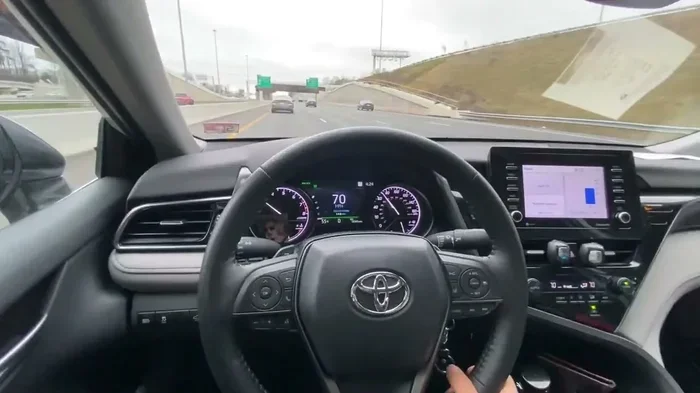
Maintaining a steady speed is one of the best ways to improve MPG. Cruise control keeps your speed consistent, which prevents unnecessary fuel spikes. On long highway drives, this feature is a game changer.
However, use cruise control wisely. On hilly terrain, the system may downshift and burn more fuel trying to maintain speed. On flat, open highways, cruise control works beautifully. It keeps your fuel consumption steady and takes the foot off the pedal for you.
Reduce Idling Time
Idling wastes fuel. If you are parked and waiting for more than 60 seconds, turn off the engine. Modern Toyota Camry engines use less fuel restarting than they do idling for extended periods. This is especially true for older models.
Common idling situations include waiting in drive-thru lines, sitting in a parked car with the AC on, and warming up the car in winter. Today’s Camry engines warm up faster when you drive gently. Skip the long warm-up and start saving fuel right away.
Vehicle Modifications and Upgrades
Some changes to your Toyota Camry can noticeably boost your fuel economy. These upgrades range from free adjustments to affordable parts replacements. Each one targets a specific area of fuel waste.
Remove Excess Weight
Your Camry does not need to carry extra weight you do not use. Every extra 100 pounds can reduce your MPG by 1 to 2 percent. Take out heavy items from your trunk. Remove unused roof racks or cargo carriers. If you only use a golf bag or sports equipment occasionally, leave it at home.
This is an easy win. You do not need any tools or mechanical knowledge. Just look at what you are carrying and ask yourself if you really need it for every trip. Weight reduction is one of the simplest ways to improve fuel efficiency.
Check Your Oxygen Sensor and Spark Plugs
A faulty oxygen sensor can slash your fuel economy by up to 40 percent. This sensor tells your engine how much fuel to inject based on exhaust data. When it malfunctions, the engine runs rich — meaning it burns too much fuel. Have this sensor checked during routine maintenance.
Worn spark plugs also hurt your gas mileage. They cause misfires that waste fuel and reduce engine power. Replacing old spark plugs is inexpensive and makes a noticeable difference. Most Toyota Camry models use iridium or platinum spark plugs that last 60,000 to 100,000 miles.
Clean Your Fuel Injectors
Dirty fuel injectors spray fuel unevenly into the combustion chamber. This leads to incomplete combustion and wasted fuel. A fuel injector cleaner additive can help in mild cases. For heavy buildup, a professional cleaning service works best.
Clean injectors deliver fuel more precisely. Your engine runs smoother, and you get better miles per gallon. Consider adding a quality fuel additive every few tankfuls as a preventive measure.
Common Mistakes That Kill Your Gas Mileage
Sometimes we unknowingly do things that hurt our fuel economy. Awareness is the first step to fixing these habits. Here are the most common mistakes Camry owners make.
Using the Wrong Fuel Type
Most Toyota Camry models run perfectly fine on regular unleaded gasoline. Premium fuel does not improve fuel economy or performance in standard Camry engines. Unless your owner’s manual specifically calls for premium, save your money and stick with regular.
Ignoring the Check Engine Light
A glowing check engine light often signals a problem that hurts your MPG. Loose fuel caps, faulty sensors, and emission system issues all reduce fuel efficiency. Do not ignore this warning. Get it checked as soon as possible.
Overusing the Air Conditioning
Running the AC at full blast puts extra load on the engine. At low speeds, opening the windows is actually more fuel-efficient. At highway speeds, the AC is better than open windows because open windows create more drag. The key is balance — use the AC wisely and set it to a comfortable level, not the coldest setting.
Skipping Routine Tune-Ups
A neglected engine wastes fuel. Old belts, clogged filters, and dirty systems all reduce your fuel economy. Staying on top of routine tune-ups keeps your Camry running at peak efficiency. The small cost of maintenance pays for itself many times over in fuel savings.
Long-Term Strategies for Better Fuel Economy
Beyond daily habits and maintenance, there are bigger-picture strategies that help you get better gas mileage over time. These approaches take more planning but deliver lasting results.
Plan Your Trips Wisely
Combining errands into one trip saves fuel. Cold starts use more gas than warm engines. When you map out your route efficiently, you reduce total driving distance and keep your engine in its optimal operating range. Trip planning is one of the most overlooked fuel-saving strategies.
Consider Your Commute Style
If you have a long commute, small adjustments make a big difference. Leaving earlier to avoid traffic, choosing less congested routes, and maintaining steady speeds all improve your fuel economy. Hybrid Camry models excel in stop-and-go traffic, so if you are in the market for a new car, this is worth considering.
Monitor Your Fuel Economy
Keep track of your MPG over time. Most Toyota Camry models have a trip computer that displays real-time fuel economy. Watching this number helps you notice when something is off. A sudden drop in fuel efficiency often signals a maintenance issue that needs attention.
Conclusion
Getting better gas mileage in your Toyota Camry is within your reach. You do not need expensive upgrades or a mechanic on speed dial. Start with the basics — check your tire pressure, change your air filter, and use the right oil. Then focus on your driving habits — accelerate smoothly, use cruise control, and avoid idling.
These small changes add up to significant savings over weeks and months. Your Toyota Camry is already a fuel-efficient vehicle. With a little care and attention, you can push that efficiency even further. The goal is not perfection. It is consistent, mindful improvement.
Pick two or three tips from this guide and start today. Once those become habits, add more. Before long, you will notice the difference at the pump. Your wallet will thank you, and so will the environment. Better fuel economy is not just a goal — it is a smart, achievable lifestyle change for every Camry owner.
Frequently Asked Questions
How can I improve gas mileage in my Toyota Camry?
Start with basic maintenance like checking tire pressure, replacing your air filter, and using the recommended oil. Combine these with smart driving habits such as smooth acceleration, using cruise control on highways, and reducing excess weight. These steps can improve your fuel efficiency by 10 to 30 percent depending on your current habits.
What is the best fuel type for a Toyota Camry?
Most Toyota Camry models run perfectly well on regular unleaded gasoline. Premium fuel does not improve fuel economy or engine performance in standard Camry engines. Always check your owner’s manual, but for the vast majority of Camry drivers, regular gas is the right and most cost-effective choice.
How often should I change my air filter for better fuel economy?
Replace your air filter every 12,000 to 15,000 miles for optimal fuel efficiency. If you drive in dusty or polluted areas, check it more frequently. A clean air filter allows proper airflow to the engine, which directly improves combustion efficiency and miles per gallon.
Does tire pressure really affect gas mileage?
Yes, absolutely. Underinflated tires create more rolling resistance, which forces your engine to work harder. Maintaining proper tire pressure can improve your MPG by up to 3 percent. It is one of the easiest and most overlooked fuel-saving tips for any vehicle.
Can driving habits really make a difference in fuel economy?
Driving habits have a huge impact on fuel economy. Aggressive acceleration, hard braking, and excessive idling can reduce your MPG by 15 to 30 percent in city driving. Smooth, anticipatory driving not only saves fuel but also reduces wear on your brakes and engine.
Are fuel-saving devices worth buying for a Toyota Camry?
Most aftermarket fuel-saving devices are not worth the money. Stick with proven methods like regular maintenance, proper tire inflation, and smart driving habits. These cost little to nothing and deliver real, measurable results. Save your money for quality fuel and routine Toyota Camry maintenance instead.
=== CONCLUSION ===
Getting better gas mileage in your Toyota Camry comes down to a combination of maintenance, driving habits, and smart choices. You have the power to make a real difference starting today. Focus on what you can control — tire pressure, air filters, oil changes, smooth driving, and trip planning. These are the building blocks of excellent fuel economy.
Remember, small consistent efforts lead to big results. You do not need to change everything at once. Pick a few tips, make them habits, and watch your fuel savings grow. Your Toyota Camry is a great vehicle. With the right care, it will reward you with strong performance and excellent mileage for years to come.