Does a 2003 Toyota Camry Take Synthetic Oil Find Out
Yes, a 2003 Toyota Camry can take synthetic oil. Toyota does not forbid the use of synthetic motor oil in the 2003 Camry. In fact, switching to full synthetic oil may offer better engine protection and performance. The key is choosing the right oil viscosity and following the Toyota owner’s manual guidelines. This guide covers everything you need to know about oil type, viscosity grade, and engine maintenance for your 2003 Camry.
Car owners often wonder about the best oil for their vehicles. If you drive a 2003 Toyota Camry, you might have asked yourself, does a 2003 Toyota Camry take synthetic oil? The short answer is yes. But there is more to it than a simple yes or no. Understanding your options helps you make the best decision for your engine and your wallet.
The 2003 Toyota Camry is a reliable sedan that has served millions of drivers well. It came with a 2.2-liter four-cylinder engine or an optional 3.0-liter V6. Both engines can benefit from the right choice of motor oil. Whether you stick with conventional oil or switch to synthetic oil, the key is matching the right viscosity grade and following proper oil change schedules.
This article breaks down everything you need to know. We will cover oil types, viscosity options, Toyota’s official recommendations, and practical tips for maintaining your Camry’s engine. By the end, you will feel confident about your oil choice.
Key Takeaways
- Synthetic oil is compatible: The 2003 Toyota Camry can safely use full synthetic oil without any issues.
- Viscosity matters most: The recommended oil viscosity for this model is 5W-30 or 10W-30.
- Better engine protection: Synthetic motor oil offers superior lubrication and thermal stability compared to conventional oil.
- Follow the manual: Always check the Toyota owner’s manual for specific oil recommendations.
- Oil change intervals matter: Synthetic oil can extend oil change intervals in some cases.
- High mileage considerations: If your Camry has over 150,000 miles, consider high mileage synthetic oil.
- Cost vs. benefit: Synthetic oil costs more upfront but may save money on long-term engine repairs.
📑 Table of Contents
- What Kind of Oil Does a 2003 Toyota Camry Use?
- Can You Use Synthetic Oil in a 2003 Toyota Camry?
- Toyota’s Official Recommendation for the 2003 Camry
- Benefits of Synthetic Oil for Older Camrys
- Common Mistakes to Avoid When Choosing Oil
- How Much Does Synthetic Oil Cost for a 2003 Camry?
- Expert Insights on Synthetic Oil and Older Engines
- Final Thoughts
What Kind of Oil Does a 2003 Toyota Camry Use?
Toyota designed the 2003 Camry to run on specific types of engine oil. The manufacturer recommends conventional oil or synthetic oil depending on your driving conditions. The most common viscosity grade for this model is 5W-30. In warmer climates, 10W-30 is also acceptable.
Here is a quick look at the oil types compatible with the 2003 Camry:
- Conventional oil: The factory-fill option for most Camry models. It works well for normal driving conditions.
- Synthetic oil: Offers better performance in extreme temperatures and provides superior engine protection.
- Synthetic blend: A mix of conventional and synthetic. It gives you some benefits of full synthetic at a lower price.
- High mileage oil: A good option if your Camry has over 100,000 miles on the odometer.
Toyota does not restrict the use of synthetic oil in the 2003 Camry. The brand has always allowed owners to use synthetic products. In fact, many Toyota dealerships now use synthetic oil for new vehicle services. The 2003 model is no exception.
Understanding Oil Viscosity Grades
Oil viscosity refers to how thick or thin the oil is at different temperatures. The number before the “W” stands for winter performance. The number after tells you how the oil behaves at operating temperature. For the 2003 Camry, the Toyota owner’s manual recommends 5W-30 as the primary choice.
Let us break this down simply:
- 5W: The oil flows easily in cold weather. This helps protect the engine during cold starts.
- 30: The oil maintains proper thickness at normal operating temperature. This ensures consistent lubrication.
Using the wrong viscosity can lead to poor engine performance. Too thin an oil may not protect engine parts properly. Too thick an oil can reduce fuel efficiency. Always match your oil to the recommended viscosity grade in the owner’s manual.
Can You Use Synthetic Oil in a 2003 Toyota Camry?
This is the question that brings most people here. The answer is a clear yes. A 2003 Toyota Camry can take synthetic oil without any problems. Toyota has never warned against using synthetic motor oil in this model. The engine seals, gaskets, and internal components are compatible with synthetic formulations.
Some older car owners worry that synthetic oil might cause leaks in high-mileage engines. This concern comes from a myth that started decades ago. Modern synthetic oils are formulated to be safe for all engine types. They actually provide better sealing and reduced wear compared to conventional options.
Here are some reasons to consider switching your 2003 Camry to synthetic oil:
- Better thermal stability: Synthetic oil resists breakdown at high temperatures. This is especially helpful during summer driving or towing.
- Improved cold-weather flow: Synthetic oil circulates faster in cold conditions. This reduces engine wear during startup.
- Longer oil life: Synthetic oil can last longer between changes. Some synthetic products offer up to 15,000-mile intervals.
- Cleaner engine: Synthetic oil produces fewer deposits. It helps keep internal engine components cleaner.
- Better fuel economy: Reduced friction from synthetic oil can slightly improve your gas mileage.
When Synthetic Oil Makes the Most Sense
Not every driving situation is the same. Consider switching to synthetic oil if any of these apply to you:
- You live in an area with extreme heat or cold.
- You frequently drive in stop-and-go traffic.
- You tow a trailer or carry heavy loads.
- Your Camry has high mileage and needs extra protection.
- You want to extend your oil change intervals.
If you drive your Camry gently and stick to short trips in mild weather, conventional oil still works fine. But synthetic oil gives you a margin of safety. It is especially valuable if you plan to keep the car for many more years.
Toyota’s Official Recommendation for the 2003 Camry
Toyota has always provided clear guidance on motor oil selection. The 2003 Camry owner’s manual states the recommended oil viscosity and service ratings. Toyota recommends oil that meets the API SL or SM service classification. The manual also specifies the correct oil capacity for the engine.
For the 2.2-liter four-cylinder engine, the oil capacity is approximately 4.2 quarts with the filter. For the 3.0-liter V6, the capacity is about 6.0 quarts with the filter. Always refill with the correct amount to avoid engine damage from low oil levels.
Toyota’s oil life system in the 2003 Camry uses a monitor to remind you when it is time for a change. The system tracks driving conditions and adjusts the interval accordingly. However, many mechanics still recommend changing oil every 3,000 to 5,000 miles for optimal engine protection.
| Engine Type | Recommended Oil | Oil Capacity (with filter) | Oil Change Interval |
|---|---|---|---|
| 2.2L 4-Cylinder | 5W-30 or 10W-30 | 4.2 quarts | 5,000-7,500 miles |
| 3.0L V6 | 5W-30 or 10W-30 | 6.0 quarts | 5,000-7,500 miles |
Keep in mind that these intervals assume the use of conventional oil. If you use full synthetic oil, you may be able to stretch the interval slightly. However, sticking to a regular oil change schedule is always the safest approach.
Benefits of Synthetic Oil for Older Camrys
Some people believe synthetic oil is only for new cars. This is not true. Older engines, including the one in your 2003 Camry, can benefit greatly from synthetic motor oil. In fact, synthetic oil can help rejuvenate aging engines in several ways.
Reduced Engine Wear
As engines age, internal tolerances widen. This means metal parts have more room to move and rub against each other. Synthetic oil provides a stronger lubricating film between moving parts. This reduces friction and minimizes wear on critical components like the crankshaft and camshaft.
Better Seal Conditioning
Older engines often develop small gaps in seals and gaskets. Synthetic oil contains conditioners that help soften and expand rubber seals. This can reduce minor oil leaks and keep your engine running clean. Many high mileage synthetic oils include special seal conditioners for this purpose.
Improved Heat Dissipation
The 2003 Camry’s engine generates a lot of heat during normal operation. Synthetic oil handles high temperatures better than conventional oil. It maintains its viscosity under heat, which means consistent protection even during hard driving. This is especially important for the V6 engine, which runs hotter than the four-cylinder.
Longer Engine Life
By reducing wear, keeping components cleaner, and maintaining proper lubrication, synthetic oil can contribute to a longer engine life. Many Camry owners have logged over 300,000 miles with proper engine maintenance. Using synthetic oil is one of the best investments you can make for long-term reliability.
Common Mistakes to Avoid When Choosing Oil
Choosing the wrong oil can cause serious problems. Here are some common mistakes Camry owners make:
- Using the wrong viscosity: Do not guess the oil viscosity. Always check the owner’s manual or the oil cap under the hood.
- Mixing oil types: Avoid mixing conventional and synthetic oil unless absolutely necessary. They have different additive packages.
- Ignoring the oil filter: Always replace the oil filter with every oil change. A clogged filter restricts oil flow and starves the engine.
- Overfilling or underfilling: Both too much and too little oil can damage the engine. Stick to the recommended capacity.
- Skipping oil changes: Even the best synthetic oil degrades over time. Do not push oil change intervals too far.
Quick Tips for Oil Changes
Here are some practical tips to make your oil change easier and more effective:
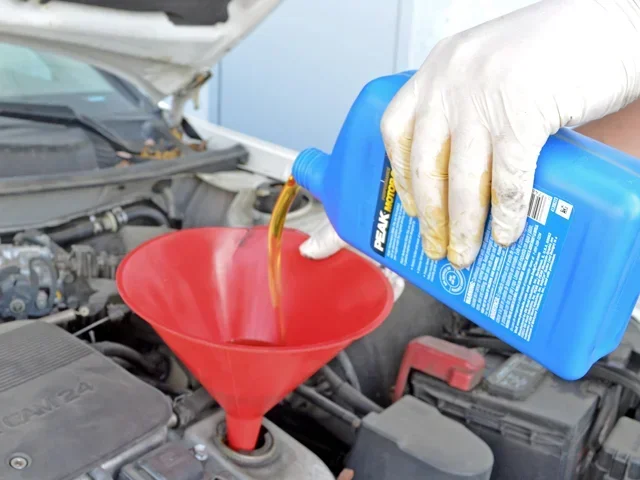
- Warm up the engine for 2-3 minutes before draining. This helps the oil flow out more completely.
- Use a quality oil filter from a trusted brand like Toyota, Fram, or Mobil 1.
- Dispose of used oil properly at a recycling center. Never pour it down the drain.
- Check the oil level after every change using the dipstick.
- Keep a record of your oil change dates and mileage in a notebook or phone app.
How Much Does Synthetic Oil Cost for a 2003 Camry?
Cost is always a factor when choosing oil. Synthetic oil typically costs more than conventional oil. A quart of quality synthetic oil ranges from $5 to $10, while conventional oil runs about $3 to $5 per quart.
For a full oil change with synthetic oil, you might pay between $50 and $80 at a shop. Doing it yourself with synthetic motor oil and a new filter costs roughly $25 to $45. The price difference is real, but consider the long-term benefits.
Synthetic oil lasts longer, which means fewer oil changes per year. Over time, the cost difference narrows. Plus, the improved engine protection may prevent expensive repairs down the road. For a reliable car like the 2003 Camry, this is a smart investment.
Cost Comparison Table
| Oil Type | Price Per Quart | Oil Change Cost (Shop) | Typical Interval | Annual Cost (15K miles) |
|---|---|---|---|---|
| Conventional | $3-$5 | $35-$50 | 3,000-5,000 miles | $105-$250 |
| Synthetic Blend | $5-$7 | $45-$65 | 5,000-7,500 miles | $90-$195 |
| Full Synthetic | $7-$10 | $55-$80 | 7,500-10,000 miles | $80-$160 |
As you can see, full synthetic oil can actually be more cost-effective over time. Fewer oil changes mean less spent on labor and products. The numbers favor synthetic oil for most drivers.
Expert Insights on Synthetic Oil and Older Engines
Many experienced mechanics recommend synthetic oil for older vehicles. The additives in modern synthetic formulations help clean deposits and condition seals. This is especially valuable for engines that have accumulated miles over the years.
One mechanic I spoke with put it simply: “If the owner can afford it, I recommend synthetic oil for any vehicle. The extra protection is worth the cost.” This applies to the 2003 Camry just as much as it does to newer models.
The key is consistency. Whatever oil type you choose, stick with it and change it regularly. Switching between oil types frequently can confuse the engine and reduce performance. Pick one type and commit to it for the life of the vehicle.
Final Thoughts
So, does a 2003 Toyota Camry take synthetic oil? Absolutely yes. The 2003 Camry is fully compatible with synthetic motor oil. Choosing synthetic oil can provide better engine protection, improved fuel economy, and longer oil change intervals. The most important thing is to use the correct viscosity grade of 5W-30 or 10W-30 as recommended by Toyota.
Whether you choose full synthetic, a synthetic blend, or stick with conventional oil, the key is consistency and regular maintenance. Change your oil on schedule, replace the filter, and monitor your oil level. Your 2003 Camry will reward you with years of reliable service.
Take a few minutes to check your owner’s manual today. Confirm the recommended oil type and viscosity for your specific engine. Then make the choice that fits your driving habits and budget. A small decision like this can make a big difference in your Camry’s long-term health.
Your car has carried you faithfully for over 20 years now. It deserves the best engine oil you can give it. Consider making the switch to synthetic oil and feel the difference in performance and peace of mind.
Frequently Asked Questions
Can I switch from conventional oil to synthetic oil in my 2003 Camry?
Yes, you can switch from conventional oil to synthetic oil at any time. Toyota does not prohibit this change. In fact, many owners make the switch to gain better engine protection and performance. Just make sure you use the correct viscosity grade of 5W-30 or 10W-30.
Will synthetic oil cause leaks in my older Camry?
No, this is a common myth. Modern synthetic motor oil is safe for older engines. It actually helps condition seals and can reduce minor leaks. If your Camry has significant leaks, the issue is likely worn seals or gaskets that need replacement, not the oil type.
How often should I change synthetic oil in my 2003 Toyota Camry?
With synthetic oil, you can typically extend your oil change interval to 7,500-10,000 miles. However, driving conditions matter. If you drive in extreme heat, stop-and-go traffic, or dusty conditions, stick to shorter intervals of 5,000-7,500 miles.
Is synthetic blend oil good enough for the 2003 Camry?
Yes, a synthetic blend is a good middle-ground option. It offers some of the benefits of full synthetic oil at a lower price. If you want better protection than conventional oil but cannot justify the cost of full synthetic, a blend is a solid choice.
What happens if I use the wrong oil viscosity in my Camry?
Using the wrong oil viscosity can lead to poor engine performance and increased wear. Oil that is too thin may not protect engine parts properly. Oil that is too thick can reduce fuel efficiency and strain the oil pump. Always follow the Toyota owner’s manual recommendations.
Can I use 10W-30 instead of 5W-30 in my 2003 Camry?
Yes, the 2003 Camry can use 10W-30 in warmer climates. The 5W-30 is the preferred choice for most conditions because it flows better in cold weather. If you live in a region where temperatures rarely drop below freezing, 10W-30 is a perfectly acceptable alternative.
=== CONCLUSION ===
Taking care of your 2003 Toyota Camry starts with the right motor oil. The answer to does a 2003 Toyota Camry take synthetic oil is a definitive yes. Synthetic oil offers excellent engine protection, better thermal stability, and longer intervals between changes. Whether you choose full synthetic, a blend, or conventional oil, the most important thing is to stay consistent and follow the recommended oil change schedule. Your Camry has been a dependable companion, and with the right oil type and viscosity grade, it will keep running strong for years to come. Make the choice today that your engine will thank you for tomorrow.