Car Speakers with Good Bass That Will Transform Your Drive
Car speakers with good bass turn an ordinary drive into a concert on wheels. They deliver deep, rich low frequencies that make music feel alive. This guide covers what to look for, top models, and simple installation tips so you can upgrade your sound system with confidence.
There is nothing quite like feeling the bass hit your chest while cruising down the highway. Good bass transforms a simple playlist into an immersive experience. If you have ever wondered why some car audio systems sound so much better than others, the answer often comes down to the speakers. Car speakers with good bass are the heart of any great sound system. They reproduce low frequencies accurately, giving you that rich, full sound you crave. In this guide, we will walk you through everything you need to know. You will learn what makes a speaker deliver deep bass, which types work best, and how to set them up for maximum impact.
Whether you are a casual listener or a bass enthusiast, choosing the right speakers can feel overwhelming. The market is packed with options, from budget-friendly coaxial speakers to high-end component sets. But do not worry. We will break it down into simple, actionable steps. By the end of this article, you will know exactly what to look for, which models stand out, and how to install them like a pro. Car speakers with good bass are within your reach, and the upgrade is easier than you think.
Key Takeaways
- Choose the right speaker type: Coaxial speakers are easy to install, while component speakers offer superior bass clarity.
- Check the RMS power and sensitivity: Higher numbers mean louder, clearer bass without distortion.
- Don’t forget the enclosure: A proper speaker box or sealed trunk space dramatically boosts bass response.
- Add a subwoofer if needed: For the deepest bass, a dedicated subwoofer paired with good car speakers creates a balanced sound.
- Install sound deadening material: It reduces road noise and lets the bass shine without vibration.
- Match your head unit and amplifier: A quality head unit and amp bring out the best in any speaker system.
📑 Table of Contents
- What Makes a Car Speaker Deliver Great Bass?
- How to Choose the Right Car Speakers with Good Bass for Your Vehicle
- Types of Car Speakers for Bass Lovers
- Top Car Speakers with Good Bass Compared
- Installation Tips to Maximize Your Bass
- Common Mistakes That Ruin Bass Performance
- Expert Insights: How to Tune Your Car Audio System for the Perfect Low End
What Makes a Car Speaker Deliver Great Bass?
Bass is all about low-frequency sound waves. A speaker that handles bass well reproduces those deep tones without crackling or distortion. Several technical specs determine how well a speaker performs. Understanding these numbers helps you make a smart choice.
RMS Power Handling
RMS stands for Root Mean Square. It measures the continuous power a speaker can handle. A higher RMS number means the speaker can play louder and cleaner bass for longer periods. Look for speakers with at least 50 watts RMS per channel for a solid bass foundation. Avoid peak power ratings, as they are misleading and do not reflect real-world performance.
Sensitivity Rating
Sensitivity measures how efficiently a speaker converts power into sound. It is expressed in decibels (dB). A speaker with a sensitivity of 90 dB or higher will produce more bass with less power. This is especially important if you have a factory head unit with limited output. High-sensitivity speakers make the most of every watt.
Frequency Response Range
This tells you the range of sounds the speaker can reproduce. For deep bass, look for a frequency response that dips down to 30 Hz or lower. The lower the number, the deeper the bass you will hear. A typical car speaker might go down to 50 Hz, while a dedicated subwoofer can reach 20 Hz or below. Pairing a good subwoofer with your main speakers creates a complete, balanced sound.
Speaker Size and Material
Larger speakers generally move more air, which means deeper bass. Common sizes include 6.5-inch, 6×9-inch, and 10-inch woofers. The cone material also matters. Polypropylene cones are lightweight and durable, offering good bass response. Cloth and rubber surrounds add flexibility, which helps the speaker cone move freely and produce clean low-end sound.
How to Choose the Right Car Speakers with Good Bass for Your Vehicle
Before you buy, consider your car, your listening habits, and your budget. The right speaker depends on several factors that are unique to your situation.
Assess Your Factory Audio System
Check the output of your current head unit. If it has a built-in amplifier with a high preamp output (5V or more), you have a strong signal to work with. If it is a basic factory unit, you may need an external amplifier to push your new speakers properly. A weak signal will never produce the deep bass you want, no matter how good the speakers are.
Think About Your Listening Preferences
Do you mostly listen to hip-hop, electronic music, or rock? Bass-heavy genres demand speakers that can handle low frequencies with authority. If you prefer vocals and acoustic music, you might prioritize clarity over raw bass. A well-rounded set of car speakers with good bass will handle all genres, but some are tuned specifically for thumping low end.
Set a Realistic Budget
Aftermarket speakers range from $50 to $500 per pair. You can find excellent bass performance in the $100 to $200 range. Spending more does not always mean better bass, but it often means better materials, higher sensitivity, and improved durability. Set a budget that includes any additional parts you may need, such as an amplifier or sound deadening.
Types of Car Speakers for Bass Lovers
Not all speakers are created equal. Different designs serve different needs. Here is a quick look at the most common types you will encounter when shopping for car speakers with good bass.
Coaxial Speakers (Full-Range)
Coaxial speakers are the most popular choice for everyday drivers. They combine a woofer and a tweeter in one unit, making installation simple. Most factory speakers are coaxial. Aftermarket coaxial speakers offer much better bass and clarity. They are affordable and easy to swap out. If you want a quick upgrade without major modifications, coaxial speakers are a great starting point.
Component Speaker Systems
Component systems separate the woofer and tweeter into different parts. They often include a crossover network that directs the right frequencies to each speaker. This setup delivers cleaner, more precise bass. The woofer can be mounted in an optimal location, such as the door panel, while the tweeter sits at ear level. Component speakers generally offer the best sound quality and deeper bass response than coaxial sets.
Subwoofers: The Bass Powerhouses
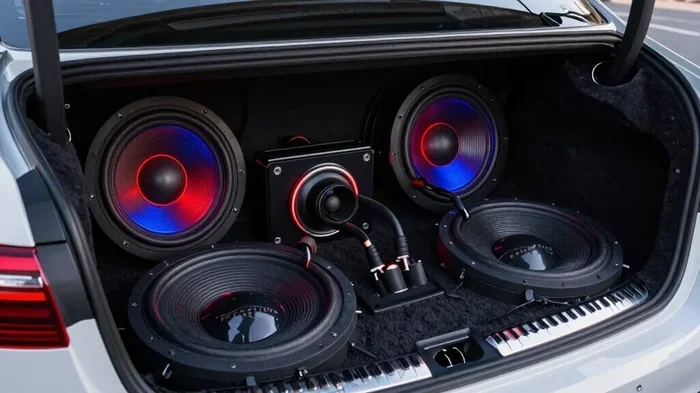
While not traditional car speakers, subwoofers are essential for true bass lovers. A subwoofer is dedicated to reproducing low frequencies. It works alongside your main speakers to fill in the deep end. You can choose from powered subwoofers, which have a built-in amplifier, or passive subwoofers that need an external amp. Adding a subwoofer transforms any car audio system into a thumping, room-filling experience.
Top Car Speakers with Good Bass Compared
To help you decide, we compared some of the best car speakers with good bass on the market. Each model offers a different balance of price, power, and sound quality.
| Speaker Model | Type | RMS Power (per pair) | Frequency Response | Best For |
|---|---|---|---|---|
| Boss CH6530 | Coaxial | 280W | 35Hz – 22kHz | Budget-friendly deep bass |
| JBL Stage A6000 | Component | 200W | 45Hz – 22kHz | Balanced, clear bass |
| Alpine SPS-610 | Component | 260W | 38Hz – 22kHz | Premium sound quality |
| Rockford Fosgate P300-12 | Subwoofer | 300W | 25Hz – 150Hz | Maximum thump and impact |
| Kicker 44CSS694 | Coaxial | 250W | 38Hz – 22kHz | All-around great bass |
This comparison shows a range of options. Coaxial speakers like the Boss CH6530 and Kicker 44CSS694 deliver impressive bass right out of the box. They are perfect for a simple upgrade. Component sets such as the JBL Stage A6000 and Alpine SPS-610 offer more refined sound staging and deeper, cleaner bass. If you want the absolute deepest punch, a dedicated subwoofer like the Rockford Fosgate P300-12 is the way to go. It handles the lowest frequencies that regular speakers cannot reach.
Installation Tips to Maximize Your Bass
Even the best car speakers with good bass will underperform if installed incorrectly. Proper installation ensures every note hits hard and clear. Follow these tips to get the most out of your new speakers.
Choose the Right Enclosure
If you are installing component speakers or a subwoofer, the enclosure matters a lot. A sealed enclosure provides tight, accurate bass. A ported enclosure boosts bass output at specific frequencies for more volume. For subwoofers, always use a box designed for that model. The right enclosure can double the bass impact compared to a loose speaker in a trunk.
Use Sound Deadening Material
Car doors and trunk panels can vibrate and distort bass. Applying sound deadening mats like Dynamat reduces this unwanted noise. The material absorbs vibrations and creates a solid mounting surface. This simple step makes a huge difference in sound clarity. You will hear tighter bass and less rattling from the road.
Wire Everything Properly
Use the correct gauge wire for your amplifier and speakers. Thicker wire (lower gauge number) carries more power with less resistance. Keep power wires away from speaker wires to avoid interference. A clean wiring setup ensures your amplifier delivers consistent power to the speakers, resulting in punchy, distortion-free bass.
Set the Crossover Correctly
A crossover splits the audio signal so each speaker handles only the frequencies it is designed for. Set the low-pass filter on your subwoofer to around 80 Hz for tight bass. For component speakers, adjust the crossover to send the mid and high frequencies to the tweeter and woofer. Proper crossover settings prevent distortion and protect your speakers from damage.
Quick Tips for Better Bass
- Tighten all mounting screws: Loose speakers buzz and rattle, killing your bass.
- Seal any gaps in the door: Air leaks reduce bass response and create noise.
- Use an inline capacitor: It stabilizes power to your amplifier and prevents bass fade at high volume.
- Tune your head unit EQ: Boost the low-frequency setting slightly, but avoid overdoing it.
Common Mistakes That Ruin Bass Performance
Even with great speakers, simple mistakes can ruin your bass experience. Avoid these common pitfalls to keep your sound system sounding its best.
Underpowering or Overpowering Your Speakers
Running speakers with too little power causes clipping, which distorts the bass and can damage the voice coil. On the other hand, overpowering them with too much clean power can also blow the speakers. Always match your amplifier’s RMS output to the speaker’s RMS rating. A slight overdrive is fine, but huge mismatches are not.
Ignoring Impedance Matching
Impedance is measured in ohms and affects how much power flows to the speaker. Most car speakers are 4-ohm or 2-ohm. If you wire speakers incorrectly, the impedance drops and the amplifier may overheat or shut down. Check your amplifier’s stable impedance range before wiring multiple speakers together.
Skipping the Crossover
Without a crossover, full-range audio hits the woofer, including high frequencies that it cannot reproduce well. This strains the speaker and muddies the bass. Always use a crossover to protect your speakers and ensure clean, accurate sound.
Neglecting the Head Unit
A cheap head unit with poor preamp output can starve your amplifier of a clean signal. This results in weak, noisy bass. Investing in a quality head unit with a built-in amplifier or a dedicated external amp makes a world of difference. Look for head units with high voltage preamp outputs (5V or more) for a strong, clean signal.
Expert Insights: How to Tune Your Car Audio System for the Perfect Low End
Tuning is the final step to unlocking the full potential of car speakers with good bass. Even the best gear sounds mediocre without proper tuning. Here are expert tips to dial in your system.
Start with a Flat EQ
Begin with all equalizer settings flat or at zero. Play a familiar track with deep bass and listen carefully. If the bass sounds boomy or muddy, reduce the low-frequency EQ slightly. If it lacks punch, add a small boost around 60-80 Hz. Small adjustments make a big difference. Avoid maxing out any single EQ band.
Use a Real-Time Analyzer (RTA) App
An RTA app on your phone measures the frequency response inside your car. Play a test tone or pink noise and observe the graph. You want a smooth curve with no major peaks or dips. If you see a big spike around 100 Hz, that is likely causing boomy bass. Use your head unit’s EQ to tame it and create a flatter response.
Set the Gain Properly
The gain control on your amplifier sets the input sensitivity. Turn it up slowly until you reach your desired volume without any distortion. If the gain is too high, the amplifier clips and distorts the bass. Too low, and you waste the amplifier’s potential. A proper gain setting ensures clean, powerful bass at any volume.
Let the System Burn In
New speakers need a break-in period. Play moderate bass for several hours to loosen the suspension. After burn-in, the speakers will sound looser and more responsive. This is a natural process that improves bass performance over time. Do not judge the sound on day one; give it a few hours of playtime.
Final Key Takeaway
Car speakers with good bass are the foundation of a great car audio experience. Choose the right type, match the specs, install properly, and tune with care. The result is a rich, immersive sound that makes every drive feel like a private concert.
Upgrading to car speakers with good bass is one of the most rewarding changes you can make to your vehicle. The right speakers bring music to life, filling the cabin with rich, deep sound that makes every trip more enjoyable. By understanding the key specs, choosing the right speaker type, and following proper installation and tuning steps, you will unlock a whole new level of audio quality. Remember to avoid common mistakes like mismatched power and poor wiring. With the right setup, your car will sound like a premium listening room on wheels. Start your upgrade today and feel the difference on your very next drive.
Frequently Asked Questions
What size car speakers are best for bass?
Larger speakers generally produce deeper bass because they move more air. 6×9-inch and 10-inch woofers are excellent choices for strong bass. However, a well-designed 6.5-inch component speaker with a good enclosure can also deliver impressive low-end sound.
Do I need a subwoofer if I already have good car speakers with good bass?
A subwoofer adds the deepest, most impactful bass that regular speakers cannot reach. While good car speakers handle mid-bass well, a subwoofer handles the lowest frequencies. For the fullest experience, pairing your speakers with a subwoofer is highly recommended.
Can I install car speakers with good bass myself?
Yes, many coaxial speakers are designed for easy bolt-on installation. Component speakers require a bit more effort, including crossover wiring and possibly minor dash modifications. If you are comfortable with basic tools and wiring, you can do it yourself and save on labor costs.
How much power do I need for deep bass?
For deep, clean bass, look for speakers with at least 50 watts RMS per pair. Pair them with an amplifier that matches or slightly exceeds that RMS rating. More power gives you headroom, which means cleaner bass at higher volumes without distortion.
What is the difference between RMS and peak power?
RMS power is the continuous power a speaker can handle without damage. Peak power is the maximum short burst of power. Always match RMS ratings between your speakers and amplifier. Relying on peak power ratings leads to blown speakers and poor sound quality.
How can I make my car speakers with good bass sound even better?
Add sound deadening material to reduce vibration, use a proper enclosure for subwoofers, set the crossover correctly, and tune your EQ. A quality amplifier and a good head unit also make a huge difference in overall bass clarity and punch.