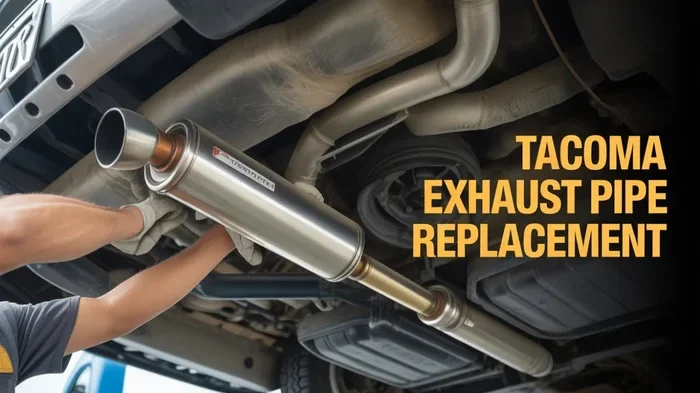
Can I Drive My Toyota Tacoma Without a Catalytic Converter
Yes, you can physically drive a Toyota Tacoma without a catalytic converter, but it is not a good idea. Removing or losing this component triggers a check engine light, hurts fuel efficiency, and releases harmful exhaust fumes into the air. In most U.S. states, it is illegal to drive without a functioning catalytic converter, and you could face steep fines during an emissions test or smog check. Understanding the risks helps you make the best decision for your truck and your wallet.
You are standing in your driveway, and something feels wrong with your Toyota Tacoma. The exhaust sounds louder than usual. The check engine light is blinking on your dashboard. Or maybe you looked under your truck and realized your catalytic converter is missing entirely.
Your mind races to one question: can I drive my Toyota Tacoma without a catalytic converter? The honest answer is yes, you can physically drive the truck. But should you? That is a completely different story. Driving without this essential component creates a chain of problems that affect your engine, your wallet, and your legal standing on the road.
This guide walks you through everything you need to know. We will cover what the catalytic converter actually does, what happens when it is gone, the legal risks, and the best steps to take next. Whether your converter was stolen by thieves or removed for a muffler delete, you are in the right place.
The Toyota Tacoma is one of the most popular trucks on the road. It is tough, reliable, and built to last. But its popularity also makes it a prime target for catalytic converter theft. Thieves love Tacomas because the converters contain valuable precious metals like platinum, palladium, and rhodium. If you are dealing with a missing or damaged converter, you are far from alone. Thousands of Tacoma owners face this problem every year.
Understanding your options starts with knowing what this part does and why it matters. Let us dive in.
Key Takeaways
- You can drive without it temporarily, but doing so causes engine problems, reduced fuel economy, and legal trouble.
- Catalytic converter theft from Toyota Tacomas is extremely common due to the valuable metals inside.
- Driving without a converter triggers error codes and damages your oxygen sensor over time.
- Replacement costs range from $1,000 to $3,500 depending on your model year and converter type.
- Federal law and state regulations require a working catalytic converter on all road-going vehicles.
- Aftermarket high-flow converters offer a legal performance upgrade without sacrificing emissions control.
- Fuel efficiency drops significantly when the converter is removed or damaged.
📑 Table of Contents
- What Does a Catalytic Converter Do in a Toyota Tacoma?
- Can You Drive a Toyota Tacoma Without a Catalytic Converter?
- What Happens When You Remove the Catalytic Converter?
- Why Catalytic Converters Get Stolen from Toyota Tacomas
- How to Replace a Catalytic Converter on a Toyota Tacoma
- Legal Consequences of Driving Without a Catalytic Converter
- Quick Tips for Tacoma Owners Dealing With Converter Issues
- Conclusion
What Does a Catalytic Converter Do in a Toyota Tacoma?
The catalytic converter function is simple but vital. It sits in your Toyota Tacoma exhaust system between the engine and the tailpipe. Its job is to clean up harmful gases before they exit the vehicle. Inside the converter, chemical reactions transform toxic compounds into less harmful ones.
Your engine produces exhaust fumes that contain carbon monoxide, nitrogen oxides, and hydrocarbons. These are dangerous pollutants. The catalytic converter converts them into carbon dioxide, nitrogen, and water vapor. This process keeps your Toyota truck running clean and legal.
The converter also works closely with your oxygen sensor. This sensor monitors the oxygen levels in the exhaust and sends data to your truck’s computer. Together, the converter and sensor keep your engine performance balanced and efficient.
Why the Catalytic Converter Matters for Emissions
Every Toyota Tacoma sold in the United States must meet strict vehicle emissions standards. These rules are set by the Environmental Protection Agency at the federal level. State agencies enforce them through regular testing. Without a working converter, your truck will fail an emissions test or smog check almost every time.
Here is what the converter handles on a daily basis:
- Carbon monoxide — a poisonous gas that can harm people and animals.
- Nitrogen oxides — a major contributor to smog and acid rain.
- Hydrocarbons — unburned fuel particles that create ground-level ozone.
The converter uses a ceramic honeycomb coated with precious metals like platinum and palladium. These metals act as catalysts that speed up the chemical reactions. Over time, the converter can clog or wear out. But removing it entirely is never the right fix.
Can You Drive a Toyota Tacoma Without a Catalytic Converter?
The direct answer to can I drive my Toyota Tacoma without a catalytic converter is technically yes. The truck will start. It will move. The wheels will turn. But “can” and “should” are two very different things.
Driving without a converter might feel fine for a few miles. You might not notice any immediate problems. But the damage starts building fast. Your truck’s computer system detects the missing converter through the oxygen sensor readings. This triggers a cascade of issues that get worse over time.
Think of it this way. Driving without a converter is like running your Toyota Tacoma with a blocked airway. It might keep going for a while. But eventually, the strain shows up in places you do not want it to.
What the Check Engine Light Tells You
As soon as the converter is removed, your check engine light will almost certainly turn on. This happens because the oxygen sensor detects incorrect exhaust gas levels. The truck’s OBD-II scanner will store error codes like P0420 or P0430. These codes specifically point to catalyst system efficiency problems.
Ignoring the check engine light is a common mistake. Some owners disconnect the battery to clear the code. But the light always comes back. And more importantly, the underlying problem does not go away. Your engine is still running rich or lean, depending on the sensor feedback.
Quick Tip: If your check engine light is on and you suspect a missing converter, do not just clear the code and ignore it. Get a proper diagnosis. Driving with the light on can mask bigger problems that cost more to fix later.
Common Mistakes Owners Make
Many Tacoma owners make the same errors when dealing with a missing or removed converter:
- Thinking a loud exhaust means better performance. A muffler delete might sound aggressive, but it does not replace what the converter does.
- Ignoring the check engine light. This is the fastest way to turn a small problem into an expensive repair bill.
- Using a straight pipe instead of a converter. This is illegal in most areas and will fail any emissions inspection.
- Delaying replacement. The longer you drive without a converter, the more damage you risk to your engine and exhaust system.
What Happens When You Remove the Catalytic Converter?
Removing the catalytic converter from your Toyota Tacoma changes how the truck runs. Some changes are easy to notice right away. Others develop slowly over weeks or months. Let us break down exactly what happens.
Impact on Fuel Efficiency
One of the first things you will notice is a drop in fuel efficiency. Without the converter, your engine does not receive the correct exhaust back-pressure. This disrupts the fuel-to-air ratio. Your truck burns more gasoline than it needs to.
Some owners report losing 5 to 15 percent of their fuel economy. For a truck like the Tacoma, that adds up fast at the pump. Over a year of daily driving, the extra fuel costs can easily outweigh any perceived performance gain.
Engine Performance Changes
You might think removing the converter makes your engine faster. In reality, the opposite often happens. The Toyota Tacoma exhaust system is engineered to work as a complete unit. The converter creates back-pressure that helps the engine run smoothly at certain RPM ranges.
Without that back-pressure, you may experience:
- Rough idling or stalling at stoplights.
- Reduced torque at low speeds.
- Engine surging or hesitation during acceleration.
- Increased strain on the oxygen sensor and catalytic converter sensors.
Expert Insight: Many people confuse a muffler delete with a converter removal. A muffler only reduces noise. The converter cleans exhaust gases. Removing the converter does not make your engine stronger. It just makes it dirtier and less efficient.
Exhaust Fumes and Health Risks
This is a serious point that many owners overlook. Without a working converter, your exhaust fumes contain much higher levels of carbon monoxide. This is a colorless, odorless gas that can be deadly in enclosed spaces.
Even driving with the windows down, you are breathing in more pollutants. Over time, exposure to these fumes can cause health problems. Headaches, dizziness, and respiratory issues are all linked to prolonged carbon monoxide exposure.
Common Mistakes: Never park your Toyota truck in an enclosed garage, even for a short time, if the catalytic converter is missing. The buildup of exhaust fumes in a closed space is extremely dangerous.
Why Catalytic Converters Get Stolen from Toyota Tacomas
Catalytic converter theft has exploded in recent years. And the Toyota Tacoma is one of the most targeted vehicles. Why? It comes down to two simple reasons: easy access and high value.
The Tacoma sits high off the ground. This means thieves do not need a jack to crawl underneath. A few seconds with a reciprocating saw is all it takes to cut the converter free. Then they sell it to scrap metal dealers for hundreds of dollars.
Inside the converter, the precious metals — platinum, palladium, and rhodium — are worth a fortune on the commodities market. A single Tacoma converter can contain enough metal to fetch $200 to $500 at a scrap yard. For thieves, it is a quick and profitable crime.
Quick Tips to Prevent Theft:
- Install a catalytic converter anti-theft cage or shield.
- Park in well-lit areas or locked garages whenever possible.
- Consider etching your vehicle identification number on the converter.
- Use a motion-activated security camera near your parking spot.
- Ask your dealer about factory-installed converter protection options.
If you wake up to a missing converter, you have two choices. You can drive without it temporarily while you arrange a replacement, or you can have the truck towed to a shop. The second option is always safer and smarter.
How to Replace a Catalytic Converter on a Toyota Tacoma
If your converter is stolen or damaged, replacement is the right move. But you have options. Understanding them helps you choose the best path for your budget and your truck.
OEM vs Aftermarket Options
When shopping for a new converter, you will see two main categories: Original Equipment Manufacturer (OEM) and aftermarket parts.
OEM converters are made by the same supplier that provided the part for your truck at the factory. They match the exact specifications and meet all emissions standards. The downside is the price. OEM converters typically cost more because they use higher-quality materials and carry a manufacturer warranty.
Aftermarket converters are made by third-party companies. They range widely in quality. Some aftermarket units perform just as well as OEM parts. Others use cheaper materials that degrade faster. The key is to buy from a reputable brand and check local state regulations before purchasing.
| Feature | OEM Converter | Aftermarket Converter |
|---|---|---|
| Price Range | $1,500 – $3,500 | $800 – $2,500 |
| Emissions Compliance | Fully compliant | Varies by brand |
| Durability | High | Moderate to high |
| Warranty | Typically 8 years | Varies (1-5 years) |
| Fit and Finish | Perfect match | May require minor adjustments |
| Availability | Dealer networks | Widely available online |
Average Catalytic Converter Replacement Cost
The catalytic converter replacement cost for a Toyota Tacoma depends on your model year and the type of converter you choose. On average, expect to pay between $1,000 and $3,500 for parts and labor combined.
Older model years (2005-2015) tend to have lower replacement costs. Newer models (2016 and up) use more advanced converters with additional precious metals. These cost more but also last longer and perform better.
Some owners consider a high-flow catalytic converter as an alternative. These aftermarket units are designed to reduce exhaust restriction while still cleaning emissions. They can improve engine performance slightly while keeping your truck street legal. However, not all high-flow converters meet federal law requirements, so check carefully before buying.
Can You Use an Aftermarket Exhaust Instead?
A popular question among Tacoma owners is whether a full aftermarket exhaust system can replace the converter. The answer is no. An aftermarket exhaust system includes the muffler and pipes. It does not replace the catalytic converter’s chemical cleaning function.
You can upgrade your exhaust for better sound and flow. But you must keep a functioning converter in place to meet state regulations and pass emissions testing. Removing the converter and installing a straight pipe is illegal for road use in most states.
Legal Consequences of Driving Without a Catalytic Converter
Driving without a catalytic converter is not just a mechanical problem. It is a legal one. Understanding the laws helps you avoid fines, failed inspections, and even vehicle impoundment.
Federal Law and EPA Regulations
At the federal level, the Environmental Protection Agency mandates that all vehicles sold in the United States must have a functioning catalytic converter. This rule has been in place since the 1970s. Removing or disabling the converter violates the Clean Air Act.
Penalties for violating federal emissions laws can include fines of up to $5,000 for individuals. While enforcement varies by state, the risk is real. If you are caught during a routine inspection or pulled over for another reason, a missing converter can lead to serious consequences.
State Emissions Testing and Smog Checks
Many states require regular smog checks and emissions testing. California, for example, has some of the strictest rules in the nation. If your Toyota Tacoma fails an emissions test because the converter is missing, you cannot legally register the vehicle.
Even in states without mandatory emissions testing, driving without a converter can still result in fines during routine inspections. Some states also have specific laws against modifying or removing emissions control devices. Always check your local state regulations before making any changes to your exhaust system.
Expert Insight: If you are planning to sell or trade in your Tacoma, a missing converter will significantly reduce its value. Buyers and dealers will factor in the cost of replacement before making an offer. Keeping your converter intact protects both your legal standing and your truck’s resale value.
Quick Tips for Tacoma Owners Dealing With Converter Issues
Whether your converter was stolen or has gone bad over time, here are some practical steps to follow:
- Do not drive long distances without a converter. Limit your trips to the nearest repair shop.
- Get a diagnostic scan done with an OBD-II scanner to confirm the error codes.
- Document the theft with local police if your converter was stolen. You will need a police report for insurance claims.
- Check your insurance coverage. Some comprehensive policies cover converter theft.
- Choose a reputable mechanic who specializes in Toyota trucks for the replacement.
- Ask about anti-theft devices when you get your new converter installed.
- Keep your receipts for the replacement. You may be able to claim deductions or insurance reimbursements.
Common Mistakes: Some owners try to bypass the converter entirely and use a straight pipe. This is illegal for street use and will cause your truck to fail any emissions inspection. Always replace the converter with a proper unit that meets emissions standards.
Another mistake is buying the cheapest aftermarket converter online. Low-quality units can fail within months. They may also not meet federal law requirements. Invest in a reputable brand that offers a warranty and emissions compliance certification.
Conclusion
So, can I drive my Toyota Tacoma without a catalytic converter? Technically, yes. But doing so opens the door to engine damage, poor fuel economy, failed emissions tests, and legal trouble. The catalytic converter is not an optional part. It is a critical component of your truck’s Toyota Tacoma exhaust system that protects your engine, your health, and the environment.
If your converter has been stolen or has failed, the best move is to replace it as soon as possible. Whether you choose an OEM unit or a quality aftermarket option, make sure it meets local state regulations and federal law. The investment protects your truck’s performance and keeps you on the right side of the law.
Take care of your Toyota truck, and it will take care of you. A working catalytic converter is a small part that makes a big difference. Do not ignore it, and do not drive without one longer than absolutely necessary.
Frequently Asked Questions
How far can I drive my Toyota Tacoma without a catalytic converter?
You can drive short distances, usually under 50 miles, without immediate damage. However, extended driving without a converter causes the check engine light to trigger and can lead to engine damage over time. Always get the converter replaced as soon as possible.
What is the average catalytic converter replacement cost for a Toyota Tacoma?
The catalytic converter replacement cost typically ranges from $1,000 to $3,500. This includes both parts and labor. The exact price depends on your model year, the type of converter, and your local labor rates.
Is it illegal to drive a Toyota Tacoma without a catalytic converter?
Yes, in most U.S. states it is illegal. Federal state regulations and the Clean Air Act require a functioning catalytic converter on all road-going vehicles. Driving without one can result in fines, failed inspections, and registration issues.
Can a missing catalytic converter damage my Toyota Tacoma engine?
Yes, it can. Without the converter, the oxygen sensor sends incorrect data to the engine computer. This disrupts the fuel-to-air mixture and can cause long-term engine damage. Rough idling, reduced power, and increased fuel consumption are common side effects.
How can I prevent catalytic converter theft on my Toyota Tacoma?
Install an anti-theft cage or shield around the converter. Park in well-lit or locked areas. Etch your vehicle identification number on the converter for identification. Some dealers also offer factory-installed theft deterrent systems for Tacomas.
Will my Toyota Tacoma pass an emissions test without a catalytic converter?
No, it will not. The truck will fail a smog check or emissions test without a functioning converter. The OBD-II scanner will detect missing catalyst codes and flag the vehicle as non-compliant. You must replace the converter before passing inspection.