How Far Can You Drive an Overheating Car Before Damage
Driving an overheating car is risky and can cause severe engine damage within minutes. Most experts say you should only drive less than a quarter mile, and ideally pull over immediately. The distance you can safely travel depends on your temperature gauge, the cause of the overheating, and how quickly you take action. This guide explains exactly what happens when your engine overheats and how to avoid costly repairs.
This is a comprehensive guide about How Far Can You Drive an Overheating Car.
Key Takeaways
- Drive only a short distance: Most overheating cars should not be driven more than a few hundred feet before stopping safely.
- Watch the temperature gauge: If it hits the red zone, stop immediately and turn off the engine.
- Steam or smoke is a red flag: These are clear signs your engine is too hot and needs urgent attention.
- Ignoring overheating leads to expensive repairs: A warped head gasket or seized engine can cost thousands to fix.
- Coolant and water pump health matter: Regular maintenance helps prevent overheating from happening in the first place.
- Never ignore the warning light: The temperature warning light exists for a reason and should never be dismissed.
[FEATURED_IMAGE_PLACEHOLDER]
Your car’s temperature gauge starts climbing. The needle moves past normal and creeps toward the red zone. You wonder, how far can you drive an overheating car before something breaks? This is a question every driver should know the answer to.
An overheating engine is one of the most stressful things you can experience behind the wheel. It can happen on a highway, in stop-and-go traffic, or on a quiet back road. No matter where it happens, the clock starts ticking the moment your engine temperature spikes.
The truth is, there is no safe distance to drive an overheating car. Every second you keep driving, you risk permanent damage. Some engines can handle a few minutes. Others fail almost instantly. The key is understanding what is happening under the hood and knowing when to stop.
In this article, we will cover everything you need to know about overheating car situations. We will look at warning signs, common causes, potential damage, and the steps you should take right away. Whether you are dealing with a minor temperature spike or a full-blown overheating emergency, this guide has you covered.
What Happens When Your Car Overheats
When your engine overheats, the internal temperature rises far beyond what it was designed to handle. Normal engine operating temperature sits between 195 and 220 degrees Fahrenheit. When it climbs past 230 degrees, trouble starts. Past 250 degrees, you are in the danger zone.
Here is what happens inside your engine as the heat builds:
- Coolant boils and turns to steam: This reduces the cooling system’s ability to remove heat from the engine block.
- Metal parts expand: The engine block, cylinder head, and pistons all expand under extreme heat. This creates extra friction and pressure.
- Oil breaks down: Engine oil loses its lubricating properties at high temperatures. This leads to increased wear on internal components.
- Gaskets and seals fail: The heat warps rubber and metal gaskets, causing leaks and loss of compression.
- Warped or cracked components: The cylinder head can warp, and in severe cases, the engine block can crack entirely.
The cooling system is designed to keep all of this from happening. When it fails, the engine has no way to cool itself down. That is why understanding overheating engine causes is so important.
The Role of Your Cooling System
Your car’s cooling system works hard to maintain a safe engine temperature. It relies on several key components working together. The radiator releases heat from the coolant. The water pump circulates coolant through the engine block. The thermostat regulates the flow of coolant based on temperature. The coolant hoses carry the fluid between the engine and the radiator.
If any one of these parts fails, the entire system is compromised. A coolant leak can drain the system dry. A broken water pump stops circulation entirely. A stuck thermostat can prevent coolant from reaching the radiator. Each of these failures can lead to rapid overheating and serious engine damage.
How Far Can You Really Drive an Overheating Car
The honest answer to how far can you drive an overheating car is not very far at all. The safe distance depends on several factors, including how hot the engine is, what caused the overheating, and how quickly you respond.
Here is a general breakdown of what to expect:
- Temperature just above normal (220-230F): You may be able to drive one to two miles safely. Pull over soon and let the engine cool.
- Temperature in the warning zone (230-240F): Drive only a few hundred feet at most. Stop and turn off the engine immediately.
- Temperature in the red zone (250F+): Stop the car right away. Do not continue driving. Shut off the engine and call for help.
Some drivers think they can push through a few more miles to reach a repair shop. This is a dangerous assumption. Even a short drive in the red zone can cause head gasket failure, a warped engine head, or complete engine seizure. The cost of towing a few blocks is nothing compared to a rebuilt or replaced engine.
Factors That Affect How Far You Can Drive
Not every overheating situation is the same. Several factors determine how much distance you have before damage occurs:
- Cause of overheating: A low coolant level gives you slightly more time than a broken water pump. A small leak may allow you to drive a short distance. A failed water pump means you need to stop immediately.
- Outside temperature: Driving on a hot summer day makes overheating worse. Your cooling system is already working harder in high heat.
- Traffic conditions: Stop-and-go traffic causes more overheating than highway driving. Idling without airflow through the radiator keeps heat trapped in the engine bay.
- Engine type and age: Older engines with more wear may fail faster under heat. Newer engines with aluminum components can also be more sensitive to high temperatures.
- How long the engine has been overheating: Even one minute in the red zone can cause damage. The longer you drive while overheating, the worse the outcome.
Warning Signs Your Engine Is Overheating
The best way to protect your engine is to catch overheating early. Most cars give you plenty of warning before the situation becomes critical. Knowing these overheating car symptoms can save you from a major repair bill.
Here are the most common warning signs to watch for:
- Temperature gauge climbing toward the red zone: This is the most obvious sign. Your dashboard temperature gauge should normally sit in the middle range. If it starts moving up, pay attention.
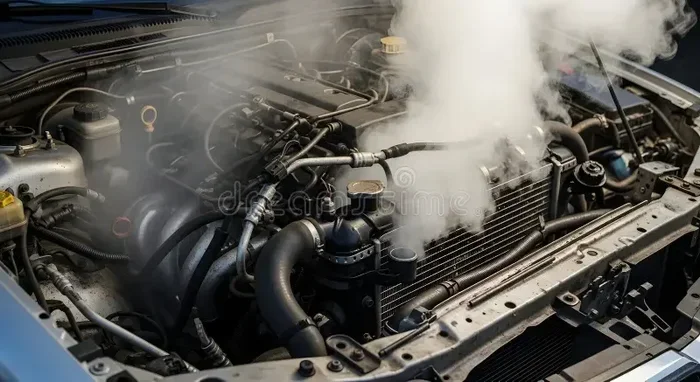
- Steam or smoke coming from the hood: This is a clear signal that coolant is boiling. Pull over safely and turn off the engine immediately.
- Strange smell from the engine bay: A sweet smell often means coolant is leaking. A burning smell could mean oil is overheating.
- Coolant warning light on the dashboard: This light looks like a thermometer or says “check coolant.” It should never be ignored.
- Engine running hotter than usual: You may feel heat coming from the cabin or notice the heater blowing very hot air.
- Thumping or knocking sounds from the engine: This can indicate that the engine is too hot and components are expanding abnormally.
If you notice any of these signs, do not keep driving. Find a safe place to pull over as quickly as possible. The sooner you address the issue, the less likely you are to face severe engine damage.
Common Causes of Engine Overheating
Understanding why your car overheats helps you prevent it from happening again. Here are the most common reasons your engine temperature can spike out of control.
Low Coolant Level
This is the number one cause of overheating. Coolant is the fluid that absorbs heat from the engine and carries it to the radiator. When the level drops too low, there is not enough fluid to do its job. A coolant leak in the radiator, hoses, water pump, or heater core can cause the level to drop gradually or suddenly.
Faulty Thermostat
The thermostat controls the flow of coolant through the engine. When it gets stuck closed, coolant cannot reach the radiator to release heat. This causes the engine to overheat quickly, even on short trips.
Broken Water Pump
The water pump circulates coolant through the engine block and hoses. If the pump fails, coolant stops moving. The engine heats up fast with no circulation. Water pump failure can happen from age, corrosion, or a broken drive belt.
Radiator Problems
A clogged or damaged radiator cannot release heat properly. Debris, rust, and old coolant can block the radiator fins. A failing radiator fan can also prevent proper cooling, especially when the car is idling or moving slowly.
Blown Head Gasket
A blown head gasket can cause overheating, and overheating can cause a blown head gasket. It is a vicious cycle. The gasket sits between the engine block and cylinder head. When it fails, coolant can leak into the cylinders or oil passages, reducing cooling efficiency.
Broken Drive Belt or Serpentine Belt
The drive belt powers the water pump and radiator fan. If the belt breaks or slips, these components stop working. Without the water pump and fan, the engine overheats rapidly.
What Damage Can an Overheating Engine Cause
Driving an overheating car for too long can result in serious and expensive damage. The extent of the damage depends on how long the engine stays hot and how hot it gets. Here are the most common types of damage caused by overheating.
Warped Cylinder Head
The cylinder head sits on top of the engine block and seals the combustion chambers. When it gets too hot, it can warp. A warped head gasket surface loses its seal, causing coolant leaks, compression loss, and poor engine performance. Repairing a warped head requires machining or replacement, which is costly.
Head Gasket Failure
The head gasket is one of the most important seals in your engine. When it fails, coolant can leak into the oil passages or combustion chambers. This leads to a milky appearance under the oil cap, white smoke from the exhaust, and overheating that keeps coming back. A head gasket replacement is one of the most expensive engine repairs.
Engine Seizure
When an engine gets extremely hot, the metal parts expand and can lock together. This is called engine seizure. A seized engine will not turn over. It requires either a full engine rebuild or a complete replacement. The cost can easily exceed the value of the vehicle.
Cracked Engine Block
In the worst cases, extreme heat can crack the engine block. Coolant leaks into the cylinders or oil passages. The engine loses compression and cannot run properly. A cracked block usually means the engine needs to be replaced entirely.
Damaged Catalytic Converter
Overheating can also damage the catalytic converter. When coolant leaks into the exhaust system, it can contaminate and clog the converter. Replacing a catalytic converter is expensive and often unnecessary if overheating is caught early.
What to Do When Your Car Starts Overheating
If you notice your car overheating while driving, follow these steps to minimize damage and stay safe.
- Turn off the air conditioning: The A/C puts extra load on the engine. Turning it off reduces heat generation immediately.
- Turn on the heater to full blast: This may feel uncomfortable, but it helps pull heat away from the engine. It acts as a secondary radiator.
- Find a safe place to pull over: Do not keep driving. Pull over as soon as it is safe to do so. Turn off the engine and let the car cool down.
- Do not open the radiator cap right away: The system is under pressure, and opening it while hot can cause scalding burns. Wait at least 15 to 30 minutes.
- Check the coolant level once it cools: If the coolant is low, you can add a mix of water and coolant to help bring the temperature down temporarily.
- Call for roadside assistance: Even if the temperature drops, you need a professional to inspect the cooling system and find the root cause.
Following these steps can help you avoid further damage and get back on the road safely. The most important thing is to stop driving as soon as you notice the engine is overheating.
How to Prevent Your Car from Overheating
Prevention is always better than repair. Regular maintenance can keep your cooling system in good shape and prevent overheating from happening in the first place.
- Check coolant levels regularly: Make it a habit to check the coolant reservoir at least once a month. Top it off as needed with the correct type of coolant.
- Flush and replace coolant on schedule: Old coolant loses its effectiveness over time. Follow your vehicle manufacturer’s recommended coolant flush interval.
- Inspect hoses and connections: Look for cracks, leaks, or loose clamps on the coolant hoses. Replace any worn hoses before they fail.
- Monitor the radiator fan: Make sure the radiator fan kicks on when the engine gets hot. A failing fan can cause overheating in traffic or at idle.
- Replace the thermostat periodically: A thermostat that is stuck or worn can cause temperature issues. Replacing it every 50,000 to 100,000 miles is a good preventive measure.
- Keep the radiator clean: Remove debris like leaves and bugs from the front of the radiator. Good airflow through the radiator is essential for cooling.
- Watch for warning signs: Do not ignore a rising temperature gauge or a check engine light. Early detection prevents major damage.
Taking these simple steps can save you from the stress and expense of dealing with an overheating engine. A few minutes of maintenance now can prevent thousands of dollars in repairs later.
How Much Does Overheating Damage Cost to Repair
The cost of repairing overheating car damage varies widely depending on what is broken. Here is a general idea of what you might expect to pay:
- Coolant flush and refill: $100 to $200
- Thermostat replacement: $150 to $300
- Water pump replacement: $300 to $750
- Radiator repair or replacement: $300 to $900
- Head gasket replacement: $1,000 to $2,500
- Engine rebuild or replacement: $3,000 to $7,000 or more
As you can see, the cost goes up dramatically the longer you ignore the problem. A simple coolant top-off costs very little. A seized engine can total your vehicle. This is exactly why you should never push an overheating car too far.
When to Call a Professional
Some overheating situations are beyond a DIY fix. You should call a professional mechanic if:
- The engine temperature keeps rising even after you add coolant.
- You see steam or smoke coming from under the hood.
- The car won’t start after it has overheated.
- You notice a white sweet-smelling exhaust, which indicates coolant in the combustion chamber.
- The check engine light is on along with the temperature warning.
A qualified mechanic can perform a full inspection of the cooling system and identify the root cause. They have the tools and expertise to fix the problem properly and help you avoid repeat overheating issues.
Key Takeaways
- Do not drive far when overheating: The general rule is to pull over within a few hundred feet if the temperature is in the warning zone.
- Stop immediately if the gauge hits red: Continuing to drive risks catastrophic engine failure.
- Know the warning signs: Steam, smoke, a rising temperature gauge, and strange smells all signal overheating.
- Regular maintenance prevents most problems: Check coolant levels, inspect hoses, and follow the manufacturer’s service schedule.
- Repair costs add up fast: A small cooling system fix costs a few hundred dollars. Ignoring it can lead to a $5,000+ engine replacement.
- When in doubt, call for help: Towing is always cheaper than a new engine. Do not take chances with an overheating car.
Frequently Asked Questions
Can I drive 10 minutes with an overheating car?
No, driving 10 minutes with an overheating engine is very risky. Even a few minutes in the red temperature zone can cause warping, gasket failure, or engine seizure. Pull over safely and turn off the engine as soon as you notice overheating.
What should I do if my car overheats on the highway?
Turn off the air conditioning, turn the heater to full blast, and pull over to the shoulder as soon as it is safe. Turn off the engine and wait at least 15 minutes for it to cool before checking anything. Call for roadside assistance if needed.
Can low coolant cause my car to overheat?
Yes, low coolant is the most common cause of engine overheating. Without enough coolant, the engine cannot absorb and release heat properly. Check for leaks and top off the coolant if the level is low.
Is it safe to drive after the engine cools down?
It may be safe to drive a very short distance after the engine cools, but only if the underlying issue has been fixed. If the cause of overheating has not been addressed, the problem will return quickly. Have a mechanic inspect the cooling system first.
How much does it cost to repair an overheated engine?
The cost depends on the damage. A simple coolant system repair might cost $100 to $300. A head gasket replacement can run $1,000 to $2,500. A seized or cracked engine may require a full replacement costing $3,000 or more.
Can overheating damage the transmission?
Yes, extreme heat can affect the transmission as well. Transmission fluid breaks down at high temperatures, leading to poor shifting and potential internal damage. Overheating that affects the engine can easily spread heat to the transmission system.
Conclusion
The answer to how far can you drive an overheating car before damage is simple: not very far, and ideally not at all. Every moment you drive while the engine is overheating, you risk serious and expensive damage. The temperature gauge, steam, and warning lights are all telling you to stop. Listen to them.
Understanding the causes, warning signs, and proper response to an overheating engine can save you time, money, and a lot of stress. Regular maintenance of your cooling system is the best defense against overheating. Check your coolant, inspect your hoses, and never ignore a rising temperature gauge.
If your car does overheat, pull over safely, turn off the engine, and get professional help. Do not try to push through to your destination. The short-term inconvenience of stopping is nothing compared to the long-term cost of a destroyed engine. Take care of your car, and it will take care of you on the road ahead.
Frequently Asked Questions
What is How Far Can You Drive an Overheating Car?
How Far Can You Drive an Overheating Car is an important topic with many practical applications.