Does Any Car Get 100 Miles Per Gallon In Real Life
So, does any car get 100 miles per gallon in real life? The honest answer is that no standard gasoline car consistently hits 100 MPG on the road today, but several ultra-efficient hybrids and electric vehicles come surprisingly close. Real-world fuel economy depends on driving habits, road conditions, and vehicle design. Hyper-efficient cars like the Toyota Prius Prime and BMW i3 can deliver outstanding MPG equivalents that challenge what we think is possible.
This is a comprehensive guide about Does Any Car Get 100 Miles Per Gallon?.
Key Takeaways
- No standard gasoline car hits 100 MPG in real-world driving, but plug-in hybrids and EVs come very close in MPGe.
- EPA ratings and real-world MPG often differ by 10-20%, so actual fuel economy varies based on driving style.
- Small, lightweight, and aerodynamic cars naturally achieve the best gas mileage on the market today.
- Hypermiling techniques can boost your fuel economy significantly, even in non-hybrid vehicles.
- The future of 100 MPG looks promising with advances in EV technology, hydrogen fuel cells, and next-gen hybrids.
- Diesel engines and manual transmissions historically offer better fuel consumption than their counterparts.
- Cost per mile drops dramatically when you switch to a high-efficiency or electric vehicle.
[FEATURED_IMAGE_PLACEHOLDER]
The Short Answer: Can a Car Really Hit 100 MPG?
Let us cut straight to the chase. Does any car get 100 miles per gallon in real life? The short answer is no, not in the traditional sense. No gasoline-powered car on sale today consistently delivers 100 MPG at the pump during everyday driving. However, the full story is more nuanced and exciting than a simple no.
When we talk about fuel economy in the modern automotive world, the conversation has shifted. Plug-in hybrids and electric vehicles measure their efficiency differently. They use a metric called MPGe, or miles per gallon equivalent. Some of these vehicles deliver the equivalent of over 100 MPGe in real-world conditions. So while no car burns exactly one gallon per 100 miles, several come remarkably close in energy terms.
This distinction matters. If you are shopping for a car and your goal is maximum fuel efficiency, you need to understand how different powertrains compare. A gasoline car, a hybrid, a plug-in hybrid, and a fully electric vehicle all measure efficiency in different ways. Let us break this down so you can make a smart decision.
What Cars Come Closest to 100 MPG?
Several vehicles on the market today deliver outstanding gas mileage or its electric equivalent. Let us look at the top contenders and see how they stack up.
Plug-In Hybrids Leading the Pack
The Toyota Prius Prime is one of the most well-known hyper-efficient vehicles on the road. It delivers around 127 MPGe combined. In electric-only mode, it can travel about 44 miles before the gas engine kicks in. That means short commutes might use zero gasoline at all.
The Hyundai Ioniq Plug-In is another strong contender. It achieves around 119 MPGe. The Kia Niro Plug-In follows closely at about 108 MPGe. These are not just numbers on paper. Real drivers report real-world MPG figures that are impressively close to these ratings.
Electric Vehicles With Incredible Efficiency
Fully electric vehicles do not use gasoline, so their fuel consumption is measured in kilowatt-hours per mile. But when converted to MPGe, the numbers are staggering. The Tesla Model 3 achieves around 132 MPGe. The Chevrolet Bolt EV delivers about 118 MPGe. The BMW i3 (with range extender) reaches around 108 MPGe.
These numbers mean that for every unit of energy consumed, these vehicles travel farther than any traditional gasoline car ever could. Electric driving is simply far more efficient at converting energy into motion.
Gasoline Cars With the Best MPG
If you want a pure gasoline car, the best options still fall well short of 100 MPG. The Toyota Corolla Hatchback delivers around 32 MPG combined. The Honda Civic achieves about 32 MPG as well. The Mitsubishi Mirage, a tiny and lightweight car, manages around 39 MPG combined. That is the best among non-hybrid gasoline vehicles.
So even the most fuel-efficient gasoline car gets less than half of 100 MPG. The gap between gasoline and hybrid/electric efficiency is massive.
| Vehicle | Type | MPG or MPGe | Real-World Estimate |
|---|---|---|---|
| Toyota Prius Prime | Plug-In Hybrid | 127 MPGe | 110-120 MPGe |
| Tesla Model 3 | Electric | 132 MPGe | 120-130 MPGe |
| Hyundai Ioniq Plug-In | Plug-In Hybrid | 119 MPGe | 105-115 MPGe |
| Mitsubishi Mirage | Gasoline | 39 MPG | 35-37 MPG |
| Toyota Corolla | Gasoline | 32 MPG | 29-31 MPG |
| BMW i3 (with extender) | Electric/Hybrid | 108 MPGe | 95-105 MPGe |
Quick Tip: When comparing vehicles, always look at the combined MPG or MPGe rating. City and highway numbers can be very different, and the combined figure gives you a more realistic picture of everyday driving.
How Real-World MPG Differs From EPA Ratings
Here is something most buyers do not realize. The EPA ratings on a new car window sticker are estimates. They come from controlled laboratory testing. Real-world driving almost always produces different numbers.
Studies show that real-world MPG is typically 10-20% lower than EPA estimates. Some drivers report even bigger gaps. Why does this happen?
Several factors play a role. Your driving style matters a lot. Aggressive acceleration and hard braking burn more fuel. Road conditions matter too. Stop-and-go city traffic uses more fuel than steady highway cruising. Weather affects efficiency as well. Cold temperatures reduce battery performance in hybrids and EVs, and increase warm-up time for gasoline engines.
Common Mistake: Many buyers assume the EPA number is what they will get every day. It is not. Treat EPA ratings as a baseline for comparison, not a guarantee. Your actual fuel economy will depend on how and where you drive.
Another factor is vehicle maintenance. Underinflated tires, dirty air filters, and old engine oil all reduce gas mileage. Keeping your car well-maintained helps you get closer to the rated numbers.
Why Hybrids Close the Gap Better
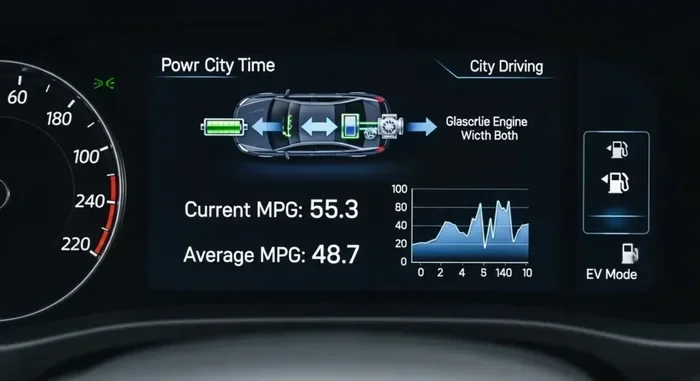
Hybrid cars tend to deliver real-world MPG closer to their EPA ratings than gasoline cars do. Why? Because the electric motor assists during acceleration, which is where gasoline cars waste the most fuel. Regenerative braking also recaptures energy that would otherwise be lost. This makes hybrids more consistent in real-world conditions.
For drivers in commuting situations, hybrids shine. Stop-and-go traffic is actually where hybrid systems perform best. The electric motor handles low-speed driving, and the gas engine only kicks in at higher speeds or under heavy load.
The Science Behind Ultra-High Fuel Economy
How do some vehicles achieve such incredible fuel efficiency? It comes down to engineering choices that prioritize miles per gallon above all else. Let us look at the key factors.
Aerodynamic Design
Air resistance is one of the biggest enemies of fuel economy. At highway speeds, a car spends a huge amount of energy pushing through the air. Vehicles designed for maximum fuel economy feature sleek, aerodynamic shapes. They have smooth underbodies, closed grilles, and carefully shaped mirrors. Every curve serves a purpose.
Cars like the Mercedes-Benz EQS have a drag coefficient as low as 0.20. That is incredibly slippery for a production car. Less drag means less energy needed to maintain speed, which directly improves miles per gallon.
Lightweight Construction
Weight is the other major factor. A lighter car needs less energy to accelerate and climb hills. Automakers use aluminum, carbon fiber, and high-strength steel to reduce mass without sacrificing safety. The Mitsubishi Mirage achieves great MPG partly because it weighs so little, around 2,000 pounds.
Smaller engines also help. A tiny displacement engine in a lightweight car does not need to work hard to keep the vehicle moving. This is the basic formula behind decades of fuel-efficient car design.
Engine Technology and Transmission
Modern engines use variable valve timing, direct injection, and cylinder deactivation to squeeze every bit of efficiency from each drop of fuel. Continuously variable transmissions (CVTs) keep the engine running at its most efficient RPM at all times. Together, these technologies make a big difference in fuel consumption.
Expert Insight: Engineers often say that the most efficient mile is the one you do not have to drive. This is why hybrid systems and regenerative braking are so valuable. They recover energy that would otherwise be wasted as heat during braking.
Driving Habits That Maximize MPG
You do not need a special car to improve your gas mileage. Your driving habits matter more than you might think. Hypermiling is a practice where drivers use specific techniques to maximize fuel economy.
Some popular hypermiling tips include:
- Accelerating gently and smoothly
- Maintaining a steady speed on highways
- Using cruise control on flat roads
- Anticipating stops to avoid hard braking
- Removing roof racks and cargo boxes when not in use
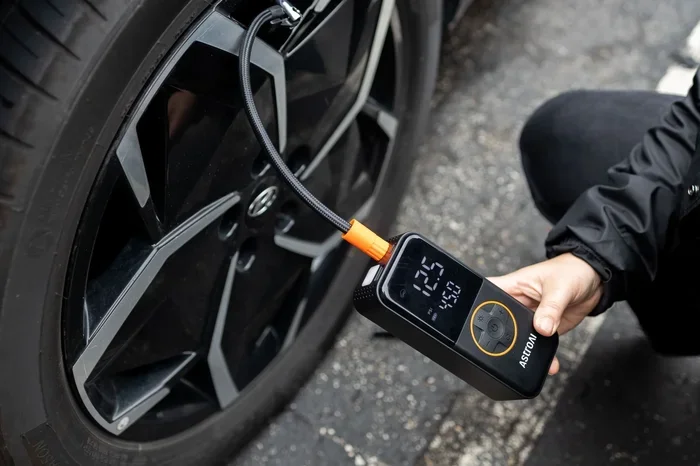
- Keeping tires properly inflated
- Avoiding excessive idling
These techniques can improve your real-world MPG by 10-30% depending on your current driving habits. They work in any car, not just hybrids.
Is a 100 MPG Car Practical for Daily Driving?
Let us address the elephant in the room. Even if a car could hit 100 MPG, would it make sense for your daily life? The answer depends on your needs and priorities.
Ultra-efficient vehicles often come with trade-offs. The Mitsubishi Mirage gets the best MPG among non-hybrids, but it is a very small car with limited features. The Toyota Prius is more practical, but its design is polarizing. Plug-in hybrids require plugging in, which means access to a charger.
For most people, the sweet spot is a hybrid car that delivers 40-60 MPG in real-world driving. That is not 100 MPG, but it is a massive improvement over a standard sedan getting 25-30 MPG. Over thousands of miles, the savings add up significantly.
Cost Per Mile Comparison
Let us look at what fuel efficiency means for your wallet. Assuming gas costs $3.50 per gallon:
- A car getting 25 MPG costs about $0.14 per mile
- A car getting 40 MPG costs about $0.09 per mile
- A car getting 60 MPG costs about $0.06 per mile
- A car getting 100 MPG would cost about $0.04 per mile
At 10,000 miles per year, the difference between a 25 MPG car and a 60 MPG car is about $800. The difference between 25 MPG and 100 MPG would be over $1,000 per year. These savings make a compelling case for high-efficiency vehicles.
Quick Tip: When calculating your true cost of driving, remember to include maintenance. Hybrids and EVs often have lower maintenance costs because they have fewer moving parts and regenerative braking reduces wear on brake pads.
The Future of 100 MPG Vehicles
Will we ever see a car that genuinely gets 100 MPG in real-world driving? The answer is evolving rapidly. Automotive technology is advancing at an incredible pace.
Electric vehicles are leading the charge toward ultra-efficient personal transportation. As battery technology improves, EVs will offer longer ranges and lower costs. The energy efficiency of electric motors is already far superior to any internal combustion engine. In MPGe terms, many EVs already exceed 100.
Hydrogen fuel cell vehicles are another promising direction. These cars convert hydrogen gas into electricity, with water as the only emission. Toyota and Hyundai already sell hydrogen fuel cell vehicles in select markets. Their efficiency in terms of energy per mile is competitive with battery EVs.
Next-generation hybrids are also getting better. Plug-in hybrid technology continues to improve battery capacity and electric-only range. Some upcoming models promise over 150 MPGe in combined operation. As battery costs fall and charging infrastructure expands, these vehicles will become more practical for a wider audience.
Automakers are also exploring mild hybrid systems that add a small electric motor to traditional powertrains. These systems improve fuel economy by 10-15% without the cost and complexity of full hybrids. They represent a practical stepping stone toward more efficient driving for millions of consumers.
The bottom line is that the concept of 100 MPG is becoming less about gasoline engines and more about total energy efficiency. Whether through electricity, hydrogen, or advanced hybrid systems, the future of personal transportation is heading toward incredible efficiency gains.
Common Mistakes That Ruin Your Fuel Economy
Even if you drive a highly efficient car, bad habits can erase your gains. Here are mistakes that hurt your MPG more than you might think.
- Ignoring tire pressure: Underinflated tires create rolling resistance. This alone can reduce your fuel economy by 3-5%.
- Carrying excess weight: Every extra 100 pounds in your trunk reduces MPG slightly. Over time, it adds up.
- Using the wrong oil: Using the manufacturer-recommended motor oil grade improves engine efficiency.
- Excessive idling: Idling gets zero MPG. Turn off your engine if you are stopped for more than 30 seconds.
- Ignoring maintenance: A poorly maintained engine runs less efficiently. Regular oil changes and air filter replacements matter.
- Roof cargo: Roof racks and boxes create drag that significantly reduces highway gas mileage.
Common Mistake: Many drivers assume that turning the car off and on repeatedly hurts the engine or wastes more fuel than idling. This is a myth. Modern engines start efficiently, and restarting saves fuel during any stop longer than about 10 seconds.
Key Takeaways
- No standard gasoline car hits 100 MPG in real-world driving, but plug-in hybrids and EVs come very close in MPGe.
- EPA ratings and real-world MPG often differ by 10-20%, so actual fuel economy varies based on driving style.
- Small, lightweight, and aerodynamic cars naturally achieve the best gas mileage on the market today.
- Hypermiling techniques can boost your fuel economy significantly, even in non-hybrid vehicles.
- The future of 100 MPG looks promising with advances in EV technology, hydrogen fuel cells, and next-gen hybrids.
- Diesel engines and manual transmissions historically offer better fuel consumption than their counterparts.
- Cost per mile drops dramatically when you switch to a high-efficiency or electric vehicle.
Conclusion
So, does any car get 100 miles per gallon in real life? The answer depends on how you define it. No gasoline car on the market today delivers 100 MPG consistently. But several plug-in hybrids and electric vehicles achieve the equivalent of over 100 MPGe, which is the modern way of measuring fuel efficiency.
For drivers looking to maximize their miles per gallon, the best options today are hybrid vehicles and electric cars. These vehicles offer dramatically lower fuel consumption and cost per mile than any gasoline-only car. Even the best fuel-efficient gasoline cars fall well short of the 100 MPG mark.
The automotive industry is moving fast. Battery technology is improving, charging networks are expanding, and new hybrid systems are pushing efficiency boundaries every year. The dream of a car that genuinely gets 100 MPG in all driving conditions is closer than ever before.
If you are looking to save money on fuel and reduce your environmental impact, now is a great time to explore high-efficiency vehicles. Whether you choose a plug-in hybrid, a fully electric vehicle, or simply adopt better driving habits, you can make a meaningful difference. The era of ultra-efficient driving is not coming. It is already here.
FAQs
Is there any car that actually gets 100 MPG?
No gasoline-powered car currently sells with a true 100 MPG rating. However, several plug-in hybrids and electric vehicles exceed 100 MPGe, which is the energy equivalent of 100 miles per gallon. These vehicles use electricity as their primary energy source, making them far more efficient than traditional cars.
What is the most fuel-efficient car available right now?
The most fuel-efficient car depends on the category. Among plug-in hybrids, the Toyota Prius Prime leads with 127 MPGe. Among fully electric vehicles, the Tesla Model 3 delivers around 132 MPGe. For pure gasoline cars, the Mitsubishi Mirage is the most efficient at 39 MPG combined.
Why do EPA ratings differ from real-world MPG?
EPA ratings come from controlled laboratory tests that do not perfectly replicate real driving conditions. Factors like aggressive driving, heavy traffic, extreme temperatures, and vehicle load all affect actual fuel economy. Most drivers see real-world MPG that is 10-20% lower than the EPA estimate.
Can hypermiling really improve your fuel economy?
Yes, hypermiling techniques can significantly boost your MPG. Gentle acceleration, steady speeds, proper tire inflation, and anticipating traffic flow can improve fuel economy by 10-30%. These techniques work in any vehicle, not just hybrids or electric cars.
Are electric vehicles more efficient than hybrids?
Generally, yes. Electric vehicles convert over 85% of electrical energy into motion, while gasoline engines only convert about 20-30% of fuel energy. Hybrids fall in between, using regenerative braking and electric assist to improve efficiency over conventional gasoline cars.
Will we ever see a 100 MPG gasoline car?
A true 100 MPG gasoline car is extremely unlikely with current technology. The laws of thermodynamics and the energy density of gasoline make it nearly impossible. However, the future of ultra-efficient driving lies in electric and hydrogen vehicles, which already exceed 100 MPGe in equivalent terms.
Frequently Asked Questions
What is Does Any Car Get 100 Miles Per Gallon??
Does Any Car Get 100 Miles Per Gallon? is an important topic with many practical applications.