How Do I Get My Garage Door Opener to Work in My Car
Getting your garage door opener to work in your car is easier than most people think. Whether you have a HomeLink system, a universal remote, or a car manufacturer’s built-in feature, this guide walks you through every method. You will learn how to program, troubleshoot, and maintain your garage door opener right from your vehicle.
There is nothing more frustrating than pulling into your driveway and realizing your garage door opener is not working with your car. You hop out, fumble with a separate remote, and hope for the best. The good news is that getting your garage door opener to work in your car is a straightforward process that most people can handle in under 15 minutes.
Whether your car has a built-in HomeLink system, a universal remote, or you need to troubleshoot a signal problem, this guide covers everything you need. We will walk you through each method step by step so you can open your garage door without ever leaving the driver’s seat. Let us get started.
Key Takeaways
- HomeLink is the most common built-in system: Most cars made after 2000 come with a HomeLink garage door opener integrated into the console.
- Universal remotes are a great backup option: They work with almost any garage door brand and are easy to install.
- Programming takes just a few minutes: The process is simple and does not require professional help in most cases.
- Signal interference and dead batteries cause most problems: These are easy fixes you can handle at home.
- Rolling code technology keeps your garage secure: Modern systems change the access code each time you use them.
- Multi-car setups are possible: You can program several remotes or HomeLink buttons for different garage doors.
📑 Table of Contents
- Why Your Garage Door Opener Should Work in Your Car
- How to Set Up Your Garage Door Opener in Your Car
- Troubleshooting Common Problems
- Maintaining Your Garage Door Opener System
- Comparing Garage Door Opener Options for Cars
- Expert Insights on Garage Door Opener Car Integration
- Key Takeaways
- Frequently Asked Questions
- Conclusion
Why Your Garage Door Opener Should Work in Your Car
Having your garage door opener integrated into your car is about convenience and safety. You do not need to dig through your pockets or worry about dropping a remote in the rain. A built-in system keeps everything streamlined and easy to use.
Modern vehicles come equipped with smart technology that syncs directly with your garage door opener. This means fewer remotes to manage, less clutter, and a smoother daily routine. Plus, most integrated systems use rolling code technology, which changes your access code every time you use it for better security.
Benefits of a Car-Integrated Garage Door Opener
- Convenience: Open your garage with the press of a button on your console or mirror.
- Safety: You do not have to leave your car in a dark or unfamiliar garage.
- Security: Rolling codes prevent unauthorized access to your home.
- Less clutter: One less remote to carry or lose.
- Multi-function capability: Some systems can control up to three different garage doors.
How to Set Up Your Garage Door Opener in Your Car
The setup process depends on what type of system your car has. The three most common methods are HomeLink, a universal garage door remote, and a car manufacturer’s proprietary system. Each one is simple to configure, and we will cover them all below.
Method 1: Using HomeLink
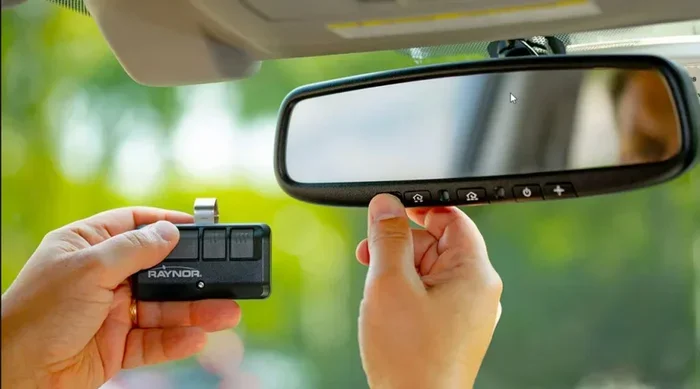
HomeLink is the most popular built-in garage door opener found in vehicles. It is a small system embedded in your car’s console, usually near the rearview mirror or on the overhead panel. Most cars from Ford, GM, Toyota, Honda, and others support HomeLink.
Here is how to program your garage door opener using HomeLink:
- Locate your HomeLink buttons in the car. They are usually three buttons grouped together near the mirror or on the console.
- Press and hold the button you want to use. The indicator light will start flashing.
- Go to your garage door motor unit. Press and hold the learn button on the motor. It is usually located on the back or side of the unit.
- Return to your car and press and hold the HomeLink button again for about two seconds.
- The indicator light will either stay solid or blink, confirming the pairing is complete.
- Test the button by standing in your driveway and pressing it.
If your garage door opener uses rolling code technology, you may need to follow a slightly different sequence. Check your garage door motor manual for rolling code instructions. The process usually involves pressing both the learn button and the HomeLink button at the same time.
Method 2: Using a Universal Garage Door Remote
Not all cars have HomeLink. That is where a universal garage door remote comes in handy. These small devices plug into your car’s cigarette lighter or attach to your keychain. They work with almost every garage door brand on the market.
Steps to set up a universal remote:
- Purchase a compatible universal remote from a hardware store or online.
- Plug it into your car’s power outlet or attach it to your keyring.
- Follow the instructions that come with the remote to sync it with your garage door motor.
- Test the remote from inside your car.
Popular universal remote brands include Linear, LiftMaster, and Chamberlain. These remotes typically cost between $25 and $50 and are a great budget-friendly option.
Method 3: Using Your Car Manufacturer’s Built-In System
Some car brands have their own integrated garage door systems. For example, certain BMW and Mercedes models come with a dedicated garage door control feature in the iDrive or COMAND system. Tesla vehicles can even control garage doors through the Tesla app.
Check your car’s owner manual for specific instructions. These proprietary systems usually involve navigating through the infotainment menu to find the garage door settings. The process is similar to HomeLink but may vary slightly depending on the brand.
Troubleshooting Common Problems
Even after following the setup steps, your garage door opener might not work right away. This is normal and usually easy to fix. Here are the most common issues and how to solve them.
Signal Interference
Signal interference is one of the top reasons a garage door opener fails to work from your car. Other electronic devices, neighboring garage door openers, or even large metal structures can disrupt the signal between your car and the garage door motor.
Try these fixes for signal interference:
- Move your car closer to the garage door motor unit.
- Turn off other electronic devices near the garage area.
- Check if a neighbor’s garage door opener is using the same frequency.
- Reposition your car so the antenna is closer to the garage door motor.
Dead or Weak Batteries
A dead battery in your garage door remote or HomeLink system is a surprisingly common culprit. If your opener stopped working suddenly, try replacing the batteries first. Most garage door remotes use CR2032 or AAA batteries, which are easy to find and inexpensive.
For HomeLink systems, the batteries inside the car’s overhead console may need replacement as well. Check your car manual for the correct battery type.
Garage Door Opener Needs a Reset
Sometimes the garage door motor itself needs a reset. This clears any old codes and allows your car to pair fresh. Locate the learn button on your garage door motor unit, press it for about 10 seconds, and then re-program your car’s HomeLink or remote.
Frequency Mismatch
Older garage door openers and newer car systems sometimes operate on different frequencies. Most modern systems use 315 MHz or 390 MHz, while older models may use 300 MHz or 310 MHz. Check the frequency on both your car system and garage door motor to make sure they match.
Maintaining Your Garage Door Opener System
Once your garage door opener is working in your car, a little maintenance goes a long way. Regular upkeep keeps the system running smoothly and extends its lifespan.
Quick Maintenance Tips
- Replace batteries every 6 to 12 months: This prevents unexpected failures.
- Clean the HomeLink buttons: Dust and grime can build up and affect signal strength.
- Test your opener monthly: Press the button from your car to make sure it still works.
- Keep the garage door motor clean: Wipe down the unit and check for loose wiring.
- Update your opener firmware: Some modern garage door openers have app-based updates that improve performance.
When to Call a Professional
Most garage door opener setups are DIY-friendly. However, if you have tried everything and your system still does not work, it may be time to call a professional. A garage door technician can diagnose electrical issues, replace faulty parts, and ensure your system is up to code.
Also, if your car is newer and has a complex infotainment system, the dealership service center can often help with programming. Many dealers will set up your garage door opener for free or at a minimal cost.
Comparing Garage Door Opener Options for Cars
Not sure which option is right for you? Here is a quick comparison of the most popular garage door opener solutions for cars.
| Option | Best For | Cost | Ease of Setup | Compatibility |
|---|---|---|---|---|
| HomeLink | Cars with built-in system | Free (built-in) | Easy | Most garage door brands |
| Universal Remote | Cars without HomeLink | $25 – $50 | Very Easy | Almost all brands |
| Car Manufacturer System | Luxury or newer vehicles | Free (built-in) | Moderate | Varies by brand |
| Smartphone App | Tech-savvy users | Free – $10/month | Easy | Smart garage door openers only |
As you can see, HomeLink is the most convenient option for most drivers. If your car does not have it, a universal remote is an affordable and reliable alternative. Smartphone apps are a newer option that works well if you have a smart garage door opener installed.
Expert Insights on Garage Door Opener Car Integration
Here are some expert tips to get the best results from your garage door opener in your car:
“Always pair your garage door opener during daylight hours,” says a certified garage door technician. “This lets you see whether the door actually opens or closes, which confirms the signal is working correctly.”
Another common tip from experts is to label your HomeLink buttons. If you have multiple garage doors or gates, labeling helps you remember which button controls which door. A small piece of tape with a quick note can save you a lot of confusion later.
Experts also recommend keeping your garage door motor manual in a safe place. If you ever need to reset the system or troubleshoot a problem, the manual has all the specific steps for your particular model.
Key Takeaways
- HomeLink is the most common built-in system: Most cars made after 2000 come with a HomeLink garage door opener integrated into the console.
- Universal remotes are a great backup option: They work with almost any garage door brand and are easy to install.
- Programming takes just a few minutes: The process is simple and does not require professional help in most cases.
- Signal interference and dead batteries cause most problems: These are easy fixes you can handle at home.
- Rolling code technology keeps your garage secure: Modern systems change the access code each time you use them.
- Multi-car setups are possible: You can program several remotes or HomeLink buttons for different garage doors.
Frequently Asked Questions
Can I program my garage door opener in my car without a HomeLink system?
Yes, you can. A universal garage door remote is the easiest alternative. These remotes plug into your car’s power outlet or attach to your keychain and work with almost all garage door brands. They cost between $25 and $50 and take just a few minutes to set up.
Why does my garage door opener work sometimes but not other times?
This is usually caused by signal interference or weak batteries. Other electronic devices, neighboring openers, or large metal objects can disrupt the signal. Try replacing the batteries first, and then move your car to a different position in the driveway to test for interference.
How do I know if my garage door opener uses rolling code technology?
Most garage door openers made after 2000 use rolling code technology. Check your garage door motor manual or look for a “learn” button on the motor unit. If your system uses rolling codes, you will need to follow a specific pairing sequence when programming your car’s HomeLink system.
Can I control more than one garage door from my car?
Yes. HomeLink systems typically have three buttons, and each one can be programmed to control a different garage door or gate. Universal remotes can also be set up for multiple doors. Just follow the programming steps for each door separately.
Is it safe to leave my garage door opener programmed in my car?
Yes, it is safe. Modern garage door openers use rolling code technology, which changes the access code every time you use it. This prevents unauthorized access. However, if you sell or lend your car, make sure to erase the garage door settings from the HomeLink system for security.
How long does it take to set up a garage door opener in my car?
In most cases, the setup takes between 5 and 15 minutes. HomeLink programming is the fastest method, while universal remotes may take a little longer depending on the brand. If you run into issues, troubleshooting usually adds only a few extra minutes.
Conclusion
Getting your garage door opener to work in your car is one of the simplest upgrades you can make to your daily routine. Whether you use HomeLink, a universal remote, or your car’s built-in system, the process is quick and does not require advanced technical skills. With the steps outlined in this guide, you should be able to program your opener in under 15 minutes.
Remember to troubleshoot common issues like signal interference, dead batteries, and frequency mismatches before calling a professional. A little regular maintenance keeps everything running smoothly for years to come. Now that you know how to get your garage door opener working in your car, you can enjoy the convenience of opening your garage without ever leaving the driver’s seat.
Take a few minutes today to set up or update your garage door opener. Your future self will thank you every time you pull into the driveway hands-free and ready to start your day.