Top Bicycle Rack for Car Options You Should Know About
Choosing the right bicycle rack for car can make bike trips simple and stress-free. Whether you drive a sedan, SUV, or truck, there is a rack that fits your needs and budget. This guide covers all the top types, key features, and expert tips to help you pick the best option for safe and secure bike transport.
Planning a weekend bike trip but not sure how to get your bikes to the trail? A bicycle rack for car solves that problem fast. Whether you own a sleek sedan or a spacious SUV, there is a rack designed to carry your bikes safely. The right carrier makes loading and unloading easy, keeps your bikes secure on the highway, and protects your car from damage.
But with so many options on the market, picking the best one can feel overwhelming. Roof racks, trunk mounts, hitch carriers, and spare tire racks all have their pros and cons. In this guide, we break down every type, share expert tips, and help you choose with confidence. By the end, you will know exactly which bicycle rack for car setup works best for you.
Let us dive in and explore the world of bike carriers. You will learn about each style, what features matter most, and how to install your rack like a pro. No guesswork, no confusion, just clear advice you can use right away.
Key Takeaways
- Multiple rack types exist: roof, trunk, hitch, and spare tire racks each offer unique benefits for different cars and riders.
- Your vehicle type matters: sedans, SUVs, and trucks all have specific rack options that work best with their design.
- Key features to consider: weight capacity, ease of installation, bike security, and compatibility with your car are all essential.
- Installation is straightforward: most racks can be set up in under 30 minutes with basic tools.
- Avoid common mistakes: overloading racks, skipping straps, and ignoring weight limits can lead to damage or accidents.
- Regular maintenance keeps your rack safe: cleaning and inspecting your rack extends its life and keeps your bikes secure.
📑 Table of Contents
Types of Bicycle Racks for Cars
Not all bike racks are the same. Each type attaches to a different part of your car and serves different needs. Understanding the main categories helps you narrow down your choices quickly. Let us look at the four most popular styles.
Roof Mounted Bike Racks
A roof mounted bike rack attaches to your car’s roof using crossbars. These racks carry bikes above the vehicle, leaving your trunk and tailgate free. They work well with sedans, hatchbacks, and SUVs alike.
One big advantage of a roof rack for bikes is that it does not block access to your rear door. You can still open your trunk and load gear easily. Most roof racks hold two to four bikes, depending on the model.
However, roof racks do have some downsides. They raise your vehicle’s center of gravity, which can affect handling. They also require you to lift bikes up high to load them, which can be tough for some riders. If you have a low-clearance garage, a roof rack might not fit.
Trunk Mounted Bike Racks
A trunk mounted bike rack straps directly onto your car’s rear hatch or trunk lid. These are the most affordable and portable option available. They attach using straps and sometimes a frame that hooks onto the trunk opening.
Trunk racks are perfect for occasional use. They install in minutes and remove easily when not needed. Most models hold two bikes and work with sedans, SUVs, and wagons.
The main trade-off is access. With a trunk rack attached, you cannot open your rear hatch fully. This can make loading large items tricky. Also, trunk racks place bikes close to the rear bumper, which could scratch your paint if not installed carefully.
Hitch Mounted Bike Racks
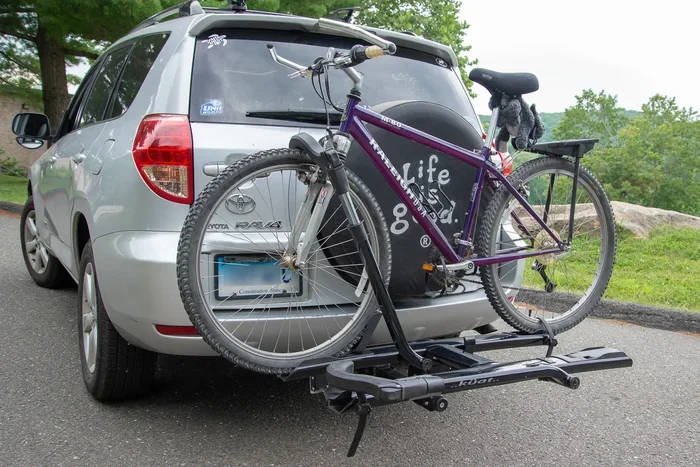
A hitch mounted bike carrier attaches to your car’s trailer hitch receiver. This is often considered the most stable and convenient option. Hitch racks swing away from the car, giving you full access to the rear door.
These carriers handle heavy loads well. Many models carry three to five bikes without straining your vehicle. They also make loading and unloading much easier since the bikes sit closer to ground level.
The downside is cost. Hitch racks tend to be more expensive than other types. You also need a compatible trailer hitch on your car. Not all vehicles come with one, though aftermarket hitches are widely available and easy to install.
Spare Tire Mounted Bike Racks
A spare tire rack attaches to the hitch receiver on your spare tire. This design is common among SUV and truck owners. The rack hangs below the spare tire and carries bikes close to the ground.
These racks are sturdy and can handle heavy electric bikes. They also keep bikes out of the way of your rear lights and license plate. Most spare tire racks hold two to four bikes.
One thing to watch for is ground clearance. If you drive through low-clearance areas, a spare tire rack could scrape the ground. Also, removing your spare tire means you lose that backup in an emergency, unless you buy a model that keeps the spare accessible.
How to Choose the Right Rack for Your Car
Now that you know the main types, how do you pick the best one? Several factors come into play. Let us walk through the key decisions step by step.
Consider Your Vehicle Type
Your car’s design heavily influences which rack works best. A bike rack for sedan often means a trunk mount or roof mount, since sedans lack a hitch receiver. SUVs and trucks have more options, including hitch and spare tire racks.
Think about your car’s shape too. A sporty coupe with a curved roofline may not fit a roof rack well. A wagon or hatchback gives you more flexibility with trunk mounts. Trucks with a bed can even use bed-mounted racks in some cases.
Think About How Many Bikes You Need
How many bikes do you need to carry? This is the first question to ask yourself. A couple who rides together needs a two-bike rack. A family with three or four bikes needs a larger carrier.
Keep in mind that more bikes mean more weight and more wind resistance. A bicycle rack for car that holds four bikes will affect your fuel economy more than a two-bike model. Always check your car’s towing capacity and the rack’s weight limit before buying.
Think About Your Riding Style
Do you ride road bikes, mountain bikes, or electric bikes? Heavy e-bikes need a rack with a high weight capacity per bike. Road bikes are lighter but may need special adapters to fit securely on certain rack types.
Some racks come with tool-free fitment systems. These make swapping bikes in and out fast. If you race or train frequently, this feature saves valuable time on race day.
Budget Matters
Bike racks range from around $100 to over $500. Trunk mounts are usually the most budget-friendly. Hitch carriers tend to cost more but offer the best convenience and stability.
Set a realistic budget before shopping. Remember that a quality rack protects your bikes from damage. Spending a bit more upfront can save you money on repairs later. Look for a bicycle rack for car that balances cost with durability and safety features.
Top Features to Look For
Not all bike racks are built the same. Certain features make a big difference in safety, convenience, and long-term value. Here are the key things to check before you buy.
Weight Capacity
Every rack has a maximum weight limit. This is one of the most important specs to check. Exceeding the weight limit can damage your car, your bikes, or both.
Most standard racks hold between 40 and 60 pounds per bike. Heavy-duty hitch carriers can handle even more. Always add up the total weight of your bikes and compare it to the rack’s rated capacity. When in doubt, choose a rack with a higher limit than you think you need.
Security Features
Your bikes are valuable, and you do not want them stolen at a rest stop. Look for racks that include locking mechanisms. Many models come with integrated locks that secure bikes to the rack and the rack to your car.
Some racks use a keyed lock system while others use a combination lock. Both work well. The important thing is that your bikes stay put, whether you are grabbing a quick snack or stopping for gas.
Ease of Installation
Nobody wants to spend hours figuring out how to put a rack together. The best bicycle rack for car options install in 15 to 30 minutes. Look for models with clear instructions and minimal tools required.
Trunk mounts are the easiest to install. Hitch carriers take a bit more effort but still do not require professional help. Roof racks depend on whether your car already has crossbars. If not, you will need to install those first.
Material and Build Quality
Racks come in aluminum, steel, and sometimes a mix of both. Aluminum racks are lighter and resist rust. Steel racks are stronger and more durable but heavier.
For most drivers, an aluminum bicycle rack for car offers the best balance of strength and weight. If you haul bikes frequently or carry heavy e-bikes, a steel frame may be a better choice. Look for powder-coated finishes that add an extra layer of protection against weather and road grime.
Compatibility with Accessories
A great rack works with more than just bikes. Look for models that can also carry kayaks, cargo boxes, or ski racks. This gives you more value from your investment.
Many hitch racks include adapter plates that let you switch between bikes and other gear. Roof rack systems often work with cargo boxes and ski carriers too. Thinking ahead saves you money and keeps your roof or hitch versatile.
Step-by-Step Installation Guide
Installing a bike rack does not have to be scary. Most people can do it in under 30 minutes. Here is a simple walkthrough for the most common setup.
Installing a Trunk Mounted Rack
- Open your rear hatch or trunk and clean the surface where the rack will sit.
- Place the rack against the car and attach the upper straps to the door frame or roof edge.
- Secure the lower straps tightly around the trunk or hatch.
- Check that the rack does not block your rear lights or license plate.
- Tug the rack firmly to test its stability before loading bikes.
Installing a Hitch Mounted Rack
- Ensure your hitch receiver is clean and free of debris.
- Slide the rack’s hitch head into the receiver and hand-tighten the pin.
- Use a wrench to fully secure the hitch pin or locking bolt.
- Swing the rack arm down and lock it in the closed position.
- Test the rack by applying pressure to the arms. It should feel solid and tight.
Installing a Roof Mounted Rack
- If your car does not have crossbars, install them first following the manufacturer’s guide.
- Place the bike rack base on the crossbars and center it.
- Tighten the clamps or straps that hold the rack to the crossbars.
- Attach the bike arms and secure them with the provided hardware.
- Load your bikes and double-check all straps and locks before driving.
No matter which type you choose, always recheck your installation after the first few drives. Vibration on the road can loosen bolts and straps over time. A five-minute check before each trip keeps everything safe and secure.
Common Mistakes to Avoid
Even experienced drivers make mistakes when using a bicycle rack for car. Knowing what to avoid saves you time, money, and frustration.
Overloading the Rack
It is tempting to squeeze in one more bike than the rack allows. Resist this urge. Overloading strains your car’s rear suspension, affects handling, and increases the risk of accidents. Always stay within the manufacturer’s stated bike and weight limits.
Skipping the Straps
Some racks come with wheel cradles that hold bikes by the frame. But every bike should also be secured with straps or clamps. Skipping this step means your bikes can shift or fall during transit. Always use every safety point the rack provides.
Ignoring Tire Clearance
Wide mountain bike tires can rub against your car’s body or the rack itself. Before a long trip, check that your tires have enough clearance on all sides. Adjust the bike positions on the rack if needed to prevent rubbing or scratches.
Forgetting to Check Your Lights
A rack that blocks your tail lights or license plate is a safety hazard and a traffic violation. Make sure all lights remain visible after installing the rack. If your rack blocks a light, consider adding LED light strips that attach to the rack frame.
Not Removing Bikes Before Parking
It sounds obvious, but many people forget to remove bikes before pulling into a garage or parking structure. A low garage ceiling can damage your bikes or rack. Always take bikes off before entering tight spaces.
Maintenance Tips for Long-Lasting Performance
A quality bike rack lasts for years with proper care. Regular maintenance keeps it working safely and looking good. Here is how to take care of your bicycle rack for car.
Clean After Every Trip
Road salt, dirt, and grime can corrode metal parts over time. After each trip, wipe down the rack with a damp cloth. Pay special attention to the clamps, straps, and any moving parts. A quick cleaning routine prevents rust and keeps everything operating smoothly.
Inspect Before Each Use
Before loading your bikes, give the rack a quick visual inspection. Look for loose bolts, frayed straps, or cracked plastic parts. Tighten any bolts that have loosened. Replace worn straps immediately. Catching small problems early prevents bigger issues on the road.
Store Properly When Not in Use
When the biking season ends, store your rack in a dry place. If you leave a trunk mount strapped to your car year-round, the constant pressure can damage your paint. Remove the rack and store it in a closet or garage. A cover or bag helps protect it from dust and moisture.
Lubricate Moving Parts
Hitch racks with folding arms or pivot points benefit from occasional lubrication. A spray of silicone or WD-40 on the joints keeps them operating smoothly. This small step extends the life of your rack and makes setup easier each time.
Following these simple maintenance tips means your rack will serve you reliably for many seasons. A well-maintained bicycle rack for car also keeps your bikes safer on every trip.
Comparison Table: Rack Types at a Glance
| Feature | Roof Rack | Trunk Rack | Hitch Rack | Spare Tire Rack |
|---|---|---|---|---|
| Avg. Price Range | $150 – $400 | $80 – $200 | $200 – $600 | $150 – $350 |
| Bikes Carried | 2 – 4 | 2 – 3 | 3 – 5 | 2 – 4 |
| Ease of Installation | Moderate | Easy | Moderate | Easy |
| Trunk Access | Full | Limited | Full | Full |
| Weight Capacity | Moderate | Low to Moderate | High | High |
| Best For | Frequent use, road trips | Occasional use, budget | Heavy use, multiple bikes | SUVs, trucks, heavy bikes |
Conclusion
Finding the right bicycle rack for car does not have to be a headache. With the right information, you can confidently choose a rack that fits your vehicle, your bikes, and your lifestyle. Roof racks, trunk mounts, hitch carriers, and spare tire racks all have their place. The key is matching the right type to your needs.
Remember to check weight limits, prioritize security features, and follow proper installation steps. Avoid the common mistakes that cause damage or accidents. And take care of your rack with regular cleaning and inspections.
Now that you have all the information you need, it is time to make a choice. Pick the bicycle rack for car that fits your life, load up your bikes, and hit the road with confidence. Happy cycling and safe travels.
Frequently Asked Questions
What is the easiest bicycle rack for car to install?
Trunk mounted racks are the easiest to install. They strap onto your rear hatch or trunk lid in minutes and require no special tools. Most people can set one up without any help.
Can I put a bicycle rack for car on a sedan?
Yes, sedans work well with both trunk mounts and roof racks. If your sedan has roof rails, a roof rack is a great option. If not, a trunk mount rack straps directly onto the hatch or trunk lid.
How many bikes can a bicycle rack for car hold?
It depends on the rack type. Trunk mounts typically hold two bikes. Hitch carriers can carry three to five bikes. Roof racks usually hold two to four bikes. Always check the manufacturer’s stated capacity before buying.
Is it safe to drive with a bicycle rack on my car?
Yes, it is safe as long as you follow the manufacturer’s guidelines. Stay within the weight limit, secure all straps, and check your installation before each trip. Also make sure your rear lights remain visible.
Do I need a trailer hitch for a hitch mounted bike rack?
Yes, a hitch mounted carrier requires a trailer hitch receiver on your vehicle. Most cars can have an aftermarket hitch installed by a local auto shop. Installation usually takes about an hour.
How do I prevent my bicycle rack from scratching my car?
Use rubber pads or foam protectors where the rack touches your car’s surface. Tighten all straps properly so the rack does not shift or vibrate. Check for contact points before each trip and add padding where needed.
=== CONCLUSION ===
Choosing the right bicycle rack for car opens up a world of cycling adventures. You can explore new trails, commute to work, or travel with your bike to distant destinations. The right rack makes every trip safer, easier, and more enjoyable.
Take the time to evaluate your needs, compare the options, and invest in a quality carrier. Your bikes and your car will thank you. Now get out there and ride.