AC Refrigerant Capacity All Cars R134a Filling Chart
Knowing your AC refrigerant capacity is the key to keeping your car cool all year round. This guide provides a complete R134a filling chart for virtually every vehicle on the road. You will learn how to find your car’s exact capacity, avoid common mistakes, and recharge your system like a pro.
Have you ever hopped into your car on a scorching summer day and turned on the AC, only to get a blast of warm air? That frustrating moment usually points to one culprit: low refrigerant. But here is the thing many car owners overlook. Every vehicle has a specific ac refrigerant capacity, and filling it incorrectly can lead to bigger problems than a warm cabin.
Whether you are a DIY enthusiast or someone who just wants to understand what the mechanic is talking about, this guide has you covered. We have put together a comprehensive ac refrigerant capacity all cars R134a filling chart that covers a wide range of vehicles. By the end of this article, you will know exactly how much refrigerant your car needs, how to check it, and how to fill it safely.
The R134a refrigerant has been the go-to choice for automotive AC systems since the mid-1990s. It replaced the older R12 refrigerant, which was found to be harmful to the ozone layer. Today, millions of cars rely on R134a to keep their cabins comfortable. Understanding how much refrigerant your system holds is the first step toward proper maintenance and repair.
Below, we will walk you through everything you need to know about car AC refrigerant capacity, from the basics of how the system works to a detailed filling chart. We will also cover common mistakes, expert tips, and frequently asked questions. Let us dive in and make sure your AC is ready for the next heatwave.
Key Takeaways
- R134a is the standard refrigerant used in most cars manufactured after 1995.
- AC refrigerant capacity varies by vehicle and depends on the model, engine size, and system design.
- Overfilling or underfilling your AC system can cause serious damage and poor cooling performance.
- Always check your owner’s manual or a trusted capacity chart before adding refrigerant.
- Common signs of low refrigerant include weak airflow, warm air from vents, and strange noises.
- Regular AC maintenance extends the life of your compressor and other components.
- Using the correct refrigerant type is essential for safety and optimal performance.
📑 Table of Contents
- Understanding AC Refrigerant Capacity in Cars
- R134a Refrigerant: What You Need to Know
- AC Refrigerant Capacity Chart for All Cars R134a
- How to Find Your Car’s AC Refrigerant Capacity
- Step-by-Step Guide to Filling R134a Refrigerant
- Common AC Refrigerant Problems and How to Fix Them
- Maintenance Tips for Your Car AC System
- Conclusion
Understanding AC Refrigerant Capacity in Cars
Before you look at any chart, it helps to understand what ac refrigerant capacity actually means. Simply put, it is the total amount of refrigerant your car’s AC system can hold when it is fully charged. This number is not the same for every vehicle. It depends on several factors, including the size of the system, the type of compressor, and the design of the condenser and evaporator.
Think of your car’s AC system like a closed loop. The refrigerant cycles through several components, changing from a gas to a liquid and back again. Each component plays a specific role in removing heat from your cabin. If the system has too little refrigerant, the compressor works harder and wears out faster. If it has too much, the system becomes inefficient and can even damage the compressor.
Why Exact Capacity Matters
Getting the refrigerant capacity right is not just about comfort. It is about protecting your entire AC system. When the system is properly charged, the compressor receives the right amount of refrigerant to lubricate its internal parts. The refrigerant also absorbs heat efficiently, which means your AC cools faster and uses less fuel.
Here are some key reasons why knowing your exact capacity matters:
- Prevents compressor damage. Too little refrigerant causes the compressor to overheat. Too much refrigerant creates excess pressure.
- Improves fuel efficiency. A properly charged AC system puts less strain on the engine, which means better gas mileage.
- Ensures consistent cooling. The right amount of refrigerant keeps the temperature inside your car comfortable on even the hottest days.
- Reduces wear on system components. The expansion valve, orifice tube, and other parts work best when the system is filled to the correct level.
- Prevents refrigerant leaks. Overfilling can cause seals and hoses to fail, leading to expensive repairs down the road.
How AC Refrigerant Capacity Is Measured
The capacity of an AC system is measured in grams or pounds of refrigerant. Most passenger cars use between 1.5 and 3.5 pounds of R134a. Compact cars tend to be on the lower end, while larger SUVs and trucks may require more. The vehicle ac refrigerant amount is determined by the manufacturer during the design phase, based on the size of the cabin and the cooling demand of the system.
When you look at a refrigerant capacity chart, you will often see the capacity listed alongside the recommended system pressure. This pressure, measured in PSI (pounds per square inch), helps you verify that the system is charged correctly. We will cover how to read these numbers in the sections below.
R134a Refrigerant: What You Need to Know
If your car was made after 1995, there is a very good chance it uses R134a refrigerant. This hydrofluorocarbon (HFC) refrigerant became the industry standard after the phase-out of R12 (also known as Freon). R134a is non-toxic, non-flammable, and safe for use in automotive AC systems. However, it is not something you should handle carelessly.
Properties of R134a
Understanding the basic properties of R134a helps you appreciate why filling the system correctly matters so much. Here are some important characteristics:
- Boiling point: R134a boils at around minus 15 degrees Fahrenheit at atmospheric pressure. This low boiling point is what allows it to absorb heat from your cabin so effectively.
- Operating pressure: A properly charged R134a system typically runs between 25 and 45 PSI on the low side and 200 to 250 PSI on the high side, depending on ambient temperature.
- Lubrication: R134a systems use PAG (polyalkylene glycol) oil or POE (polyolester) oil to lubricate the compressor. This oil circulates with the refrigerant and is essential for smooth operation.
- Environmental impact: While R134a is not as harmful to the ozone as R12, it is still a greenhouse gas. Always handle it responsibly and never vent it into the atmosphere.
R134a vs. Other Refrigerants
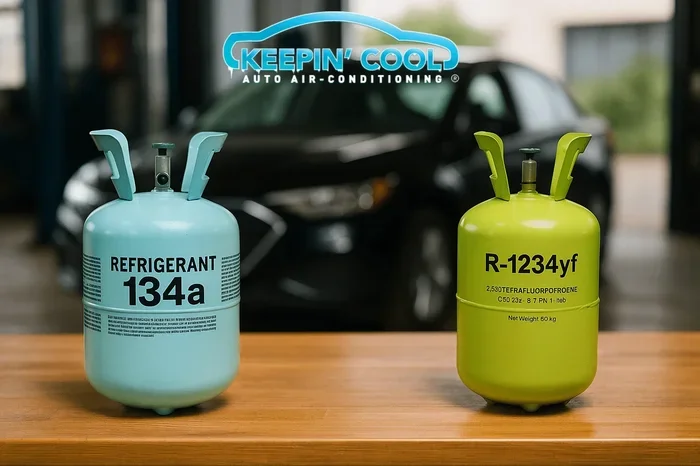
You may have heard about newer refrigerants like R1234yf, which is replacing R134a in many new vehicles. R1234yf has a lower global warming potential, making it more environmentally friendly. However, the vast majority of cars on the road today still use R134a. If you own a vehicle from the late 1990s through the mid-2010s, there is a very strong chance your system is designed for R134a.
Never mix refrigerants. Using R1234yf in a system designed for R134a (or vice versa) can cause serious damage and is also illegal in many places. Always confirm the refrigerant type before you add anything to your system.
AC Refrigerant Capacity Chart for All Cars R134a
This is the section you have been waiting for. The following AC refrigerant capacity filling chart covers a wide range of popular vehicles and their R134a requirements. Use this chart as a reference point, but always double-check with your owner’s manual for the most accurate information.
R134a Refrigerant Capacity by Vehicle Model
The table below provides a general overview of vehicle AC refrigerant capacity for common car models. Keep in mind that capacity can vary slightly based on trim level, engine size, and whether the vehicle has a rear AC system.
| Vehicle Model | System Capacity (lbs) | Low Side PSI | High Side PSI |
|---|---|---|---|
| Honda Civic (2010-2015) | 1.5 – 1.8 | 25 – 30 | 200 – 225 |
| Toyota Camry (2010-2015) | 2.0 – 2.5 | 25 – 35 | 200 – 250 |
| Ford F-150 (2010-2015) | 2.5 – 3.0 | 25 – 35 | 225 – 275 |
| Chevrolet Silverado (2010-2015) | 2.5 – 3.0 | 25 – 35 | 225 – 275 |
| BMW 3 Series (2010-2015) | 1.8 – 2.2 | 25 – 30 | 200 – 250 |
| Ford Focus (2012-2018) | 1.5 – 1.8 | 25 – 30 | 200 – 225 |
| Toyota RAV4 (2010-2015) | 2.0 – 2.5 | 25 – 35 | 200 – 250 |
| Chevrolet Equinox (2010-2015) | 2.0 – 2.5 | 25 – 30 | 200 – 240 |
| Honda Accord (2010-2015) | 1.8 – 2.2 | 25 – 30 | 200 – 250 |
| Jeep Wrangler (2010-2015) | 2.0 – 2.5 | 25 – 35 | 200 – 250 |
Note: The values in this R134a refrigerant capacity table are approximate. Always refer to your vehicle’s service manual for the exact specifications.
Quick Tips for Using the Capacity Chart
- Find your exact model year. Capacity can change between model years, even for the same car.
- Check for rear AC. Vehicles with rear climate control systems often hold more refrigerant.
- Consider the climate. If you live in a hot region, your system may be designed with a slightly larger capacity to handle the extra load.
- Use a digital gauge set. Manual gauges can be less accurate, which makes it harder to verify your fill level.
- Never guess. Even being a few ounces over or under can affect performance and system longevity.
How to Find Your Car’s AC Refrigerant Capacity
If your vehicle is not listed in the chart above, do not worry. There are several reliable ways to find your car’s exact ac refrigerant capacity. Let us walk through each method so you can get the right number every time.
Method 1: Check the Owner’s Manual
Your vehicle’s owner’s manual is the most authoritative source for car AC refrigerant amount information. Look in the maintenance section or the appendix. Many manufacturers include a table that lists the recommended refrigerant type and system capacity. If you have lost your manual, you can usually find a digital version on the manufacturer’s website by entering your VIN (Vehicle Identification Number).
Method 2: Look Under the Hood
Open the hood of your car and look for a sticker or label on the radiator support or the AC compressor. This label often lists the refrigerant type, system capacity, and recommended operating pressures. It is one of the quickest ways to find the information you need without digging through paperwork.
Method 3: Consult a Repair Database
Professional mechanics use databases like Mitchell, Alldata, or Identifix to look up vehicle specifications. Many of these databases are available to the public through subscription services or at auto parts stores. Simply enter your vehicle’s year, make, and model, and you will get the exact refrigerant capacity along with step-by-step service procedures.
Method 4: Ask a Trusted Mechanic
If you are not comfortable looking up the information yourself, a trusted mechanic can help. They have access to professional tools and databases. A quick phone call to your local dealership or independent shop can usually get you the answer in just a few minutes.
Step-by-Step Guide to Filling R134a Refrigerant
Now that you know your car’s ac refrigerant capacity, it is time to fill the system. If you have never done this before, do not worry. The process is straightforward as long as you follow the steps carefully. Here is a complete walkthrough.
What You Will Need
- R134a refrigerant canister (make sure it matches your system’s capacity)
- AC refrigerant gauge set (digital preferred for accuracy)
- AC recharge hose with trigger (if using a DIY kit)
- Safety glasses and gloves (refrigerant can cause frostbite on contact)
- Thermometer (to measure vent temperature before and after)
Step 1: Let the Engine Run and AC On
Start your car and turn the AC to the maximum cold setting. Set the fan to high speed. This ensures the compressor is running and the system is in its normal operating state. Let the engine idle for about five minutes before you begin.
Step 2: Connect the Gauge Set
Locate the low-side service port on your AC system. It is usually on the larger of the two AC lines near the firewall. Connect the low-side gauge hose to this port. The high-side port is smaller and should not be used for adding refrigerant in a DIY setup.
Step 3: Check Current Pressure
Read the pressure on your gauge. If the pressure is significantly below the normal range for your vehicle, you likely have a low refrigerant charge. Note the current reading so you can compare it after filling.
Step 4: Add Refrigerant Slowly
Turn the canister upside down and slowly add refrigerant through the recharge hose. Add small amounts and check the pressure frequently. Stop when the pressure reaches the recommended level for your vehicle. Remember, it is much easier to add more refrigerant than to remove excess.
Step 5: Check the Vent Temperature
Once the system is charged, measure the temperature at the center vent with your thermometer. You should feel a noticeable drop in temperature. If the air is still warm, you may need to add a small amount more refrigerant or check for leaks.
Common Mistakes to Avoid
- Overfilling the system. This is the most common mistake and can cause compressor failure.
- Adding refrigerant without checking for leaks. If your system has a leak, the new refrigerant will simply escape again.
- Using the wrong refrigerant type. Always confirm R134a before you purchase refrigerant.
- Ignoring the oil level. Refrigerant carries oil through the system. If your compressor is low on oil, adding refrigerant alone will not fix the problem.
- Filling with the engine off. The system needs to be running to properly circulate the refrigerant.
Common AC Refrigerant Problems and How to Fix Them
Even with the correct ac refrigerant capacity, AC systems can develop problems over time. Understanding these issues helps you troubleshoot effectively and avoid costly repairs.
Refrigerant Leaks
Leaks are the number one reason car AC systems lose refrigerant. Common leak points include the O-rings around service ports, the AC compressor shaft seal, and the connections between hoses. If you find that you need to recharge your system frequently, there is almost certainly a leak that needs to be repaired first.
To find a leak, you can use a UV dye kit (add dye to the system and scan with a UV light) or an electronic leak detector. Small leaks can often be sealed with a stop-leak additive, but larger leaks require replacing the faulty component.
Compressor Failure
The AC compressor is the heart of your cooling system. When it fails, the entire system stops working. Common causes of compressor failure include low refrigerant (which causes the compressor to overheat), lack of lubrication, and electrical faults. If you hear grinding or clicking noises from the compressor area, have it inspected immediately.
Clogged Expansion Valve or Orifice Tube
The expansion valve or orifice tube regulates the flow of refrigerant into the evaporator. When it becomes clogged with debris or moisture, the system cannot cool properly. Symptoms include poor airflow from the vents and frost forming on the AC lines. This usually requires flushing the system or replacing the valve.
Condenser Issues
The condenser is located in front of the radiator and is responsible for releasing heat from the refrigerant. If it becomes clogged with dirt, bugs, or debris, the system loses efficiency. A damaged condenser (from road debris or an accident) can cause refrigerant to leak out. Inspect your condenser regularly, especially after driving on rough roads.
Maintenance Tips for Your Car AC System
Keeping your AC system in top shape does not require a lot of effort. A little regular maintenance goes a long way toward preventing major repairs and ensuring your car AC system stays cool for years to come.
Run Your AC in Winter
This might sound counterintuitive, but running your AC for about 10 minutes each month during the winter keeps the seals and hoses lubricated. It also prevents the compressor seals from drying out and cracking, which is a common cause of refrigerant leaks.
Replace Cabin Air Filters
A clogged cabin air filter restricts airflow and makes your AC work harder. Check your owner’s manual for the replacement interval, and replace the filter at least once a year or more often if you drive in dusty conditions.
Inspect Hoses and Connections
Visually inspect the AC hoses and connections under the hood at least twice a year. Look for cracks, swelling, or signs of refrigerant oil leaking around the fittings. Catching a small leak early can save you from a much bigger repair bill later.
Have the System Professionally Serviced
Even if your AC seems to be working fine, it is a good idea to have a professional perform a full AC service every two to three years. This includes checking the system pressure, inspecting for leaks, and verifying the refrigerant charge. Many shops offer this as a low-cost service that can extend the life of your AC system significantly.
Expert Insight
According to ASE-certified technicians, most AC problems start small and get worse over time. A slight drop in cooling performance is often the first sign that something is wrong. Addressing the issue early, even if it seems minor, can prevent a costly compressor replacement later on.
Conclusion
Understanding your car’s ac refrigerant capacity is one of the simplest yet most valuable things you can do as a vehicle owner. With the R134a filling chart provided in this guide, you now have a solid reference for a wide range of vehicles. Whether you are topping off a slightly low system or performing a full recharge, knowing the correct capacity and pressures helps you do the job right the first time.
Remember, the key to a long-lasting AC system is proper maintenance. Check for leaks, use the right refrigerant, and never overfill. If you are ever unsure about your vehicle’s specifications, consult your owner’s manual or a trusted professional. Your AC system works hard for you, especially during the hottest months of the year, so give it the care it deserves.
Take the time to learn your car’s specific needs. Bookmark this guide for future reference, and share it with a friend who might benefit from it. A cool, comfortable cabin is just a little knowledge and the right tools away.
Frequently Asked Questions
How do I know if my car uses R134a refrigerant?
Most cars manufactured after 1995 use R134a refrigerant. You can confirm this by checking the label under the hood or in your owner’s manual. The label will clearly state the refrigerant type and system capacity. If your car was made before 1995, it may still use the older R12 refrigerant, which is now banned for new production.
Can I overfill my AC system with R134a refrigerant?
Yes, overfilling is one of the most common mistakes people make when recharging their AC. Too much refrigerant creates excess pressure in the system, which can damage the compressor and reduce cooling efficiency. Always use a gauge set and add refrigerant slowly, stopping when you reach the recommended pressure.
How often should I recharge my car AC with R134a?
A properly maintained AC system should not need frequent recharging. If you find yourself needing to recharge more than once a year, there is likely a leak that needs to be repaired. Regular AC inspections every two to three years can help catch small issues before they become big problems.
What is the difference between R134a and R1234yf refrigerant?
R134a has been the standard automotive refrigerant since the mid-1990s, while R1234yf is a newer, more environmentally friendly option with a lower global warming potential. They are not interchangeable. Using the wrong refrigerant can damage your system and is illegal in many jurisdictions. Always check which type your vehicle requires before purchasing refrigerant.
Do I need special tools to recharge my car AC?
Yes, you will need an AC refrigerant gauge set and a recharge hose compatible with R134a. A digital gauge set provides the most accurate readings. You will also want safety glasses and gloves, since refrigerant can cause frostbite on contact with skin. Most DIY recharge kits include the basic tools you need.
Why is my AC blowing warm air even after I added refrigerant?
If your AC still blows warm air after recharging, there could be several causes. The most common is a refrigerant leak that has not been repaired. Other possibilities include a clogged expansion valve, a failing compressor, or a blocked condenser. In these cases, adding more refrigerant will not fix the problem, and you should have the system inspected by a qualified technician.