How a Car Starting from Rest Accelerates and Why It Matters
A car starting from rest accelerates by converting engine power into forward motion through torque, traction, and gearing. Understanding how a car starting from rest accelerates helps drivers make smarter choices about performance, safety, and vehicle maintenance. Whether you are a car enthusiast or a curious beginner, this guide breaks down the science and practical steps behind every launch.
Have you ever watched a car launch from a standstill and wondered what makes it surge forward? It is a fascinating moment. A car starting from rest accelerates because of a chain reaction that starts deep inside the engine and ends at the rubber meeting the road. Understanding this process is not just for gearheads. It matters for everyday drivers, car buyers, and anyone who has ever pressed the gas pedal and felt the rush.
When a car starting from rest accelerates, several physical forces come into play at once. Engine torque spins the wheels. Tire grip keeps the car from slipping. Gravity, mass, and gearing all shape how quickly the vehicle reaches speed. In this article, we will break down every piece of that puzzle. You will learn the science, the key factors, and simple tips to get more out of every launch.
By the end, you will understand exactly why a car starting from rest accelerates the way it does. More importantly, you will know what you can do to make your own rides faster, safer, and more efficient. Let us dive in.
Key Takeaways
- Newton’s Second Law drives it all: Force equals mass times acceleration, which explains why a car starting from rest accelerates the way it does.
- Torque and horsepower are not the same: Torque gets the wheels turning, while horsepower determines how fast the work gets done.
- Tire grip and weight transfer matter a lot: A car starting from rest accelerates best when the tires have solid traction and the weight shifts rearward.
- Transmission gearing amplifies force: Lower gears multiply engine torque to give a strong initial push.
- Launch control and throttle modulation help: These features prevent wheel spin and improve your 0 to 60 times.
- Common mistakes kill acceleration: Over-revving, poor tire condition, and neglecting maintenance all slow your launch.
📑 Table of Contents
- What Happens When a Car Starting from Rest Accelerates
- The Physics Behind a Car Starting from Rest Accelerates
- How Engine Power and Torque Drive Acceleration
- Key Factors That Affect a Car Starting from Rest Accelerates
- Tips to Improve Your Car’s Launch and Acceleration
- Common Mistakes That Slow Down a Car Starting from Rest Accelerates
- Expert Insights on Acceleration and Launch Performance
- Why Understanding Acceleration Matters for Every Driver
- Conclusion
What Happens When a Car Starting from Rest Accelerates
The moment a car sits still and then begins to move, something powerful is happening. A car starting from rest accelerates because the engine produces rotational force, which travels through the drivetrain and reaches the wheels. The tires push against the road surface, and the road pushes back. That push is what moves the car forward.
But there is more to it than just pressing the gas pedal. Several components work together in a precise sequence. The engine burns fuel to create energy. The transmission selects the right gear ratio. The differential splits power between the wheels. And the tires translate all of that into forward motion. If any one of these parts underperforms, the whole acceleration process suffers.
The Role of Force and Motion
Every time a car starting from rest accelerates, Newton’s Second Law of Motion is at work. This law states that force equals mass times acceleration. In simple terms, the harder the engine pushes, the faster the car speeds up. But the heavier the car, the more force it takes to move it. This is why lightweight sports cars launch faster than heavy trucks. The same engine effort produces a bigger acceleration result when there is less mass to move.
Think of it like pushing a shopping cart. An empty cart shoots forward with a light push. A full cart needs much more effort to reach the same speed. A car works the same way. The engine provides the push, and the car’s weight determines how fast that push translates into motion.
From Zero to Speed: The Acceleration Phase
When we talk about acceleration, we usually mean the time it takes to go from a standstill to a certain speed. The most common benchmark is the 0 to 60 miles per hour test. A car starting from rest accelerates through this phase in a matter of seconds depending on its power, weight, and grip.
During the first instant of movement, the car has zero velocity. As the driver applies throttle, the wheels begin to spin. If the tires maintain grip, the car gains speed smoothly. If the tires lose grip, the wheels spin uselessly and the car wastes energy. This is why traction is so critical during the launch phase.
Most modern cars use electronic systems to manage this process. Launch control, traction control, and stability systems all help a car starting from rest accelerate without wasting power. These technologies have made even average family cars surprisingly quick off the line.
The Physics Behind a Car Starting from Rest Accelerates
The science behind a car starting from rest accelerates is both elegant and straightforward. Physics explains every aspect of how a stationary vehicle transforms fuel energy into forward motion. Understanding a few basic concepts gives you a deeper appreciation for what happens every time you step on the gas.
Newton’s Laws of Motion and Your Car
Isaac Newton gave us three laws of motion that directly apply to every car on the road. The first law, called the law of inertia, explains why a car sitting still stays still until a force acts on it. A car starting from rest accelerates only when the engine applies enough force to overcome the car’s inertia.
The second law connects force, mass, and acceleration. More force means more acceleration. More mass means less acceleration for the same force. This is the fundamental equation that governs every launch.
The third law states that for every action, there is an equal and opposite reaction. When the tire pushes backward on the road, the road pushes forward on the tire. That forward push is the actual force that accelerates the car. Without sufficient friction between the tires and the road, the wheels just spin and the car stays in place.
Kinetic Energy and Velocity
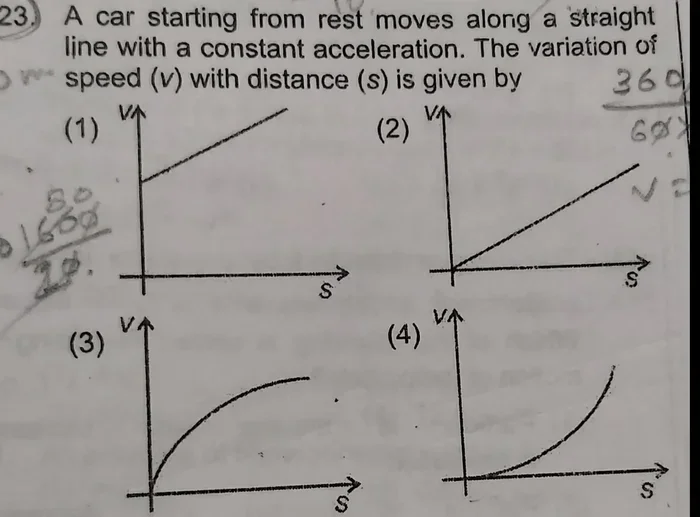
As a car starting from rest accelerates, it gains kinetic energy. Kinetic energy depends on both mass and the square of velocity. This means that doubling the speed requires four times the energy. That is why high-speed acceleration feels so intense and requires so much engine power.
Velocity is simply the speed of the car in a specific direction. When a car starts from rest, its initial velocity is zero. As it accelerates, velocity increases steadily. The rate of that increase depends on the net force acting on the car and the car’s total mass. This is the core relationship that defines every launch.
Friction: The Friend and Foe of Acceleration
Friction plays a dual role in acceleration. On one hand, friction between the tires and the road is essential. It is the force that actually propels the car forward. Without friction, the wheels would just spin in place, no matter how much power the engine produces.
On the other hand, too much friction in the drivetrain or bearings wastes energy. Engineers work hard to balance these competing forces. They want enough tire grip to launch the car powerfully, but they also want minimal internal friction to keep the drivetrain efficient. Getting this balance right is a key part of car design.
How Engine Power and Torque Drive Acceleration
Two terms come up every time people talk about a car starting from rest accelerates: torque and horsepower. These are related but different. Understanding the difference helps you make sense of acceleration figures and car specs.
What Is Torque?
Torque is a twisting force. It is the rotational force the engine produces as the crankshaft turns. When you feel yourself pushed back into your seat during a launch, that is torque at work. Torque is what gets the wheels turning from a dead stop.
A car starting from rest accelerates most aggressively when the engine delivers high torque at low RPM. This is why diesel trucks and electric vehicles can launch so powerfully. They produce strong torque right from idle. Gasoline engines often need to rev higher to reach peak torque, which is why they may feel slower off the line unless revved properly.
What Is Horsepower?
Horsepower measures how quickly work gets done. It is calculated from torque and engine speed. While torque gets the car moving, horsepower determines how fast the car keeps accelerating. A high-horsepower engine sustains strong acceleration through higher speeds.
Think of torque as the strength of your push and horsepower as how fast you can keep pushing. A car starting from rest accelerates quickly in first gear because torque is at its peak. But to keep accelerating through higher gears, the engine needs to produce enough horsepower to overcome increasing aerodynamic drag.
The Power Band and Gear Ratios
Every engine has a power band, which is the range of RPM where it produces the most torque and horsepower. Transmission gearing is designed to keep the engine operating within this power band during acceleration.
Lower gears have a higher ratio, which multiplies engine torque at the wheels. This is why first gear gives the strongest launch. As the car gains speed, the transmission shifts to higher gears, which reduces the torque multiplication but allows the engine to spin faster and produce more power. A well-designed drivetrain ensures that a car starting from rest accelerates smoothly and efficiently through each gear change.
Key Factors That Affect a Car Starting from Rest Accelerates
Not all cars launch the same way. Several factors determine how quickly a car starting from rest accelerates. Some of these factors are under your control. Others are built into the car from the factory.
Engine Power Output
The most obvious factor is how much power the engine produces. A higher-output engine generates more force to move the car. This is why sports cars and performance sedans typically achieve faster 0 to 60 times than economy cars. But power is only one piece of the puzzle.
Vehicle Weight
Heavier cars need more force to accelerate. This is why many automakers use lightweight materials like aluminum and carbon fiber in performance vehicles. Reducing weight improves acceleration without needing more engine power. Every pound removed from a car helps it launch faster.
Tire Grip and Traction
A car starting from rest accelerates only as well as its tires allow. Wide, sticky tires provide more grip and transfer engine power to the road more effectively. Worn tires, underinflated tires, or tires designed for wet conditions will all reduce launch performance. Tire quality is one of the easiest and most affordable ways to improve acceleration.
Drivetrain Type
Front-wheel drive, rear-wheel drive, and all-wheel drive systems each handle launch differently. Rear-wheel drive cars often launch harder because weight shifts to the rear during acceleration, increasing rear tire grip. Front-wheel drive cars can suffer from wheel spin under hard acceleration. All-wheel drive systems distribute power to all four wheels, providing excellent traction but adding weight.
Transmission and Gearing
The type of transmission also matters. Manual transmissions give the driver direct control over gear selection, which skilled drivers can use to optimize launches. Automatic transmissions with launch control can execute perfect starts consistently. Continuously variable transmissions (CVTs) provide an infinite range of gear ratios, which can keep the engine in its optimal power band at all times.
Environmental Conditions
Temperature, altitude, and road surface all influence acceleration. Cold engines produce less power until they reach operating temperature. High altitudes have thinner air, which reduces engine output. Wet or icy roads reduce tire grip dramatically. A car starting from rest accelerates best on a dry, flat surface with a warm engine and good tires.
| Factor | Impact on Acceleration | Can You Control It? |
|---|---|---|
| Engine Power | More power means faster acceleration | Partially, through upgrades |
| Vehicle Weight | Less weight means faster launch | Yes, by removing excess cargo |
| Tire Grip | Better grip improves traction and launch | Yes, with proper tire choice |
| Drivetrain Type | Affects how power reaches the wheels | No, determined by vehicle design |
| Transmission | Gearing affects torque delivery | Partially, through driving technique |
| Road Conditions | Dry surfaces provide better grip | No, but you can choose when to drive |
Tips to Improve Your Car’s Launch and Acceleration
Want to get more out of your car when it starts from a standstill? Several practical steps can help a car starting from rest accelerates faster and more efficiently. You do not need to be a mechanic to apply these tips.
Keep Your Tires in Great Shape
Tires are the only connection between your car and the road. Check your tire pressure regularly and replace worn tires promptly. Performance tires with a softer compound provide noticeably better grip during launches. Even a simple tire upgrade can shave meaningful time off your 0 to 60 sprint.
Use Launch Control If Available
Many modern cars come with launch control, a feature that manages engine power and wheel spin during a hard launch. It holds the engine at the optimal RPM and releases the clutch or torque converter in a controlled way. If your car has this feature, use it. It is designed to extract maximum acceleration from a standstill.
Reduce Unnecessary Weight
Take out heavy items from your trunk and back seat that you do not need. Every extra pound adds to the mass the engine has to move. A lighter car accelerates faster, handles better, and stops more quickly. This is one of the simplest and cheapest ways to improve performance.
Practice Smooth Throttle Application
Slamming the throttle all at once often causes wheel spin, which wastes energy and slows your launch. A smooth, progressive application of throttle keeps the tires gripping and the car moving forward efficiently. This is especially important on wet or loose surfaces.
Maintain Your Engine and Drivetrain
A well-maintained engine produces its full rated power. Regular oil changes, spark plug replacements, and air filter updates keep the engine running at its best. A dirty air filter or worn spark plugs can rob your engine of power and reduce acceleration noticeably.
Consider a Performance Upgrade
If you want serious gains, consider upgrades like a cold air intake, performance exhaust, or engine tuning. These modifications can increase both torque and horsepower, giving your car a stronger launch. Always make sure upgrades are compatible with your specific vehicle and do not void your warranty.
Common Mistakes That Slow Down a Car Starting from Rest Accelerates
Even the best cars can launch poorly if the driver makes avoidable mistakes. Learning what not to do is just as important as learning what to do.
Over-Revving the Engine
Some drivers think that spinning the engine to its redline before releasing the clutch will produce the best launch. In reality, over-revving wastes fuel and can cause the wheels to spin uncontrollably. The best launch comes from applying steady throttle at the engine’s torque peak, not its maximum RPM.
Neglecting Tire Maintenance
Worn or underinflated tires are the enemy of good acceleration. Many drivers ignore tire pressure and tread depth until it becomes a safety issue. By then, your launch performance has already suffered for months. Check your tires at least once a month.
Leaving the Car in the Wrong Gear
Starting in too high a gear robs the engine of leverage, resulting in a sluggish launch. Always start in first gear or the lowest available gear. This gives the engine the mechanical advantage it needs to overcome the car’s inertia from a standstill.
Ignoring the Throttle Response
Every engine has a unique throttle response curve. Some engines respond instantly to small throttle inputs, while others need more pedal travel to produce power. Learning your car’s throttle behavior helps you apply the right amount of gas at the right time for a clean, powerful launch.
Forgetting About Traction Control
Some drivers disable traction control to get faster launches, especially on tracks. While this can work in skilled hands, it often leads to wheel spin and slower times on the street. Traction control exists to help you accelerate without wasting energy. Use it wisely and only disable it if you know what you are doing.
Expert Insights on Acceleration and Launch Performance
Automotive engineers and racing professionals have spent decades studying how a car starting from rest accelerates. Their insights reveal some surprising truths about what really makes a car fast off the line.
One key insight is that acceleration is not just about raw power. The best launch results come from matching engine output to traction. A car with moderate power and excellent grip will often outperform a more powerful car with poor traction. This is why many drag racers invest heavily in tires and suspension rather than just engine upgrades.
Another expert tip is to focus on consistency. In racing, the fastest car is the one that repeats its performance lap after lap. Launch control, repeatable throttle inputs, and proper tire preparation all contribute to consistent results. For everyday driving, this means smooth, predictable acceleration that keeps you and your passengers comfortable.
Engineers also emphasize the importance of weight distribution. Cars with a near 50/50 weight balance tend to launch more predictably because both axles share the load. Front-heavy cars may experience understeer during hard acceleration, while rear-heavy cars can become light at the front and lose steering response. Understanding your car’s weight distribution helps you drive it more effectively.
Finally, experts agree that driver skill matters more than most people realize. A skilled driver in an average car can often outperform an unskilled driver in a high-performance vehicle. Learning how to modulate throttle, shift gears at the right moment, and read road conditions all contribute to better acceleration in real-world driving.
Why Understanding Acceleration Matters for Every Driver
You might think that how fast a car accelerates only matters to racing enthusiasts. But the truth is different. Understanding how a car starting from rest accelerates has real-world benefits for every driver on the road.
Safety is the biggest reason. Knowing how your car accelerates helps you make safe decisions in traffic. If you need to merge onto a highway quickly, you need to know how much power your car has and how to use it effectively. A car that accelerates confidently from a stop gives you more options and more control in emergency situations.
Fuel efficiency is another benefit. Smooth, controlled acceleration uses less fuel than aggressive, jerky launches. By understanding the mechanics of acceleration, you can develop driving habits that save gas and reduce wear on your engine and brakes. Over time, these habits add up to real savings at the pump and fewer trips to the repair shop.
Resale value also comes into play. Cars that accelerate well tend to hold their value better. Performance is one of the top factors buyers consider when shopping for a used vehicle. Understanding acceleration helps you make a smarter purchase decision and maintain your car’s value over time.
Finally, there is the simple joy of driving. A car that launches smoothly and accelerates confidently makes every trip more enjoyable. Whether you are commuting to work or taking a weekend road trip, knowing that your car responds to your input with purpose and precision adds a layer of satisfaction to every drive.
Conclusion
A car starting from rest accelerates through a beautiful interplay of engine power, torque, traction, and physics. From Newton’s laws to modern launch control systems, every element plays a role in how quickly and smoothly your car moves from a standstill to speed. Understanding these dynamics gives you greater confidence behind the wheel and helps you make smarter decisions about maintenance, upgrades, and driving technique.
The key factors are clear. Engine power and torque provide the force. Vehicle weight determines how much force is needed. Tire grip transfers that force to the road. And your driving technique determines how effectively all of these elements work together. By focusing on what you can control, you can improve your car’s acceleration and enjoy a better driving experience every day.
So the next time you press the gas pedal and feel your car surge forward from a stop, remember everything that is happening beneath you and behind the scenes. A car starting from rest accelerates because of engineering, physics, and smart design working in perfect harmony. Appreciate it. Learn from it. And enjoy every moment of the ride.
Frequently Asked Questions
What causes a car starting from rest accelerates forward?
A car starting from rest accelerates because the engine produces torque that spins the wheels. The tires push backward against the road surface, and the road pushes the car forward through friction. This forward force overcomes the car’s inertia and gets it moving.
How does a car starting from rest accelerates differ from accelerating at speed?
At a standstill, a car must overcome its own inertia and static friction. Once moving, the car already has momentum and faces mostly aerodynamic drag and rolling resistance. This is why the initial launch often feels the most dramatic and requires the most torque from the engine.
Does vehicle weight really affect how a car starting from rest accelerates?
Yes, weight has a huge impact. Heavier cars need more force to reach the same acceleration as lighter cars. This is why removing unnecessary cargo, using lightweight materials, and keeping the car lean all contribute to faster launches and better overall performance.
Can tire pressure change how a car starting from rest accelerates?
Absolutely. Underinflated tires have a smaller contact patch and less grip, which leads to wheel spin during a launch. Overinflated tires reduce the contact area as well. Proper tire pressure ensures maximum grip and the most efficient transfer of engine power to the road.
Is launch control worth using on a daily driver?
Yes, launch control is designed to optimize the launch by managing engine power and wheel spin. It helps a car starting from rest accelerates faster and more consistently. It also reduces stress on the drivetrain components, which can extend their lifespan over time.
Why do electric cars launch so quickly from a standstill?
Electric motors deliver maximum torque instantly from zero RPM. Unlike gasoline engines that need to build up RPM to reach peak torque, electric motors provide full pulling power the moment you press the pedal. This is why a car starting from rest accelerates so dramatically in many electric vehicles.
=== CONCLUSION ===
A car starting from rest accelerates through a combination of engine force, smart gearing, tire grip, and physics. Every element matters, and understanding how they work together helps you become a better, more informed driver. From the torque that gets the wheels turning to the traction that keeps the car planted, the launch is one of the most exciting moments in driving.
Use the tips in this guide to improve your own car’s performance. Check your tires, maintain your engine, and practice smooth throttle control. These simple steps will help you get more out of every launch. And remember, the best acceleration is the kind that is safe, controlled, and enjoyable. Drive smart, drive confidently, and always respect the power under your hood.