Can You Charge an Electric Car at Home While Sleeping
Yes, you absolutely can charge an electric car at home while sleeping. It is one of the easiest and most convenient ways to keep your EV ready for every trip. With a home charging station or even a standard outlet, your car gains range overnight without any effort. This guide covers everything you need to know about overnight charging, costs, setup, and safety.
Imagine this. You come home from work, plug in your car, and go to bed. When you wake up, your battery is fully charged. No gas station. No waiting. No hassle. This is the reality for millions of electric vehicle owners who charge at home every single night.
The idea of charging an electric car at home while sleeping might sound too good to be true. But it is real, it is simple, and it is changing the way people think about car ownership. Whether you drive a Tesla, a Nissan Leaf, or any other EV model, home charging can fit your life. In this guide, we will walk you through everything you need to know.
We will cover the types of chargers available, what it costs, how long it takes, and whether your home is ready. By the end, you will have a clear picture of what to expect. Let us dive in.
Key Takeaways
- Overnight Charging Is Easy: Plug in your car before bed and wake up to a full battery every morning.
- Level 2 Chargers Are the Sweet Spot: They offer fast, safe, and reliable home EV charging for most drivers.
- Costs Are Much Lower Than Gas: Charging at home costs just a few dollars per full charge.
- Safety Features Protect Your Home: Modern chargers include built-in safeguards against overheating and overload.
- No Special Electrical Panel Needed for Most Homes: Many setups work with a standard upgrade from your current panel.
- You Can Use a Portable Charger Too: A Level 1 charger works with any regular wall outlet.
📑 Table of Contents
- What Does It Mean to Charge an Electric Car at Home While Sleeping?
- Types of Home Chargers for Electric Cars
- Can Your Home Handle an Electric Car Charger?
- How Much Does It Cost to Charge an Electric Car at Home?
- Safety Tips for Overnight Charging
- Common Mistakes People Make with Home EV Charging
- Expert Insights on Home EV Charging
- Final Thoughts: Should You Charge Your Electric Car at Home While Sleeping?
What Does It Mean to Charge an Electric Car at Home While Sleeping?
Charging an electric car at home while sleeping means plugging your vehicle into a charger before you go to bed. While you rest, the charger adds energy to your battery. In the morning, you have a full tank of electricity ready to go.
This process is a lot like charging your phone overnight. You plug it in, set an alarm, and let it do its thing. The only difference is the size of the battery and the amount of energy involved. But the concept is the same. It is simple and automatic.
Most EV owners prefer this method because it fits seamlessly into daily life. You never have to make a special trip to a charging station. You never stand in line. You just plug in and move on with your evening.
How Overnight Charging Works
Here is how the process works in real life. You arrive home in the evening. You park your car in the garage or driveway. You connect the charging cable to your car and the home charging station. The charger begins pulling power from your electrical panel.
While you sleep, the charger delivers electricity to your battery at a steady, controlled rate. Modern chargers and cars communicate with each other. They adjust the power flow to match your home’s capacity and your battery’s needs. This keeps everything safe and efficient.
When you wake up, the charging session is usually complete. You unplug the cable and drive off with a full battery. The entire process requires no attention from you. That is the beauty of overnight charging.
Types of Home Chargers for Electric Cars
Not all chargers are the same. There are different levels of charging, and each one offers a different experience. Understanding these levels helps you choose the right setup for your home.
Level 1 Charging: The Basic Option
Level 1 charging uses a standard household outlet. Every electric car comes with a portable charger that plugs into a regular 120-volt outlet. This is the simplest option because you need no special equipment.
However, Level 1 charging is slow. It adds about 3 to 5 miles of range per hour. If you drive 30 miles a day, you would need to plug in for 6 to 10 hours. For many people, this works fine. If your daily commute is short, a Level 1 charger may be all you need.
The big advantage of Level 1 charging is convenience. You can use it anywhere there is an outlet. No electrician is required. No installation costs. Just plug in and charge.
Level 2 Charging: The Home Favorite
Level 2 charging is the most popular choice for home EV charging. It uses a 240-volt outlet, similar to what a clothes dryer or oven uses. A Level 2 charger adds about 25 to 30 miles of range per hour.
This means a full charge overnight is very realistic. Most cars can go from empty to full in 4 to 8 hours on a Level 2 charger. That is plenty of time while you sleep. A full battery in the morning, every morning.
Level 2 chargers require a dedicated circuit and a wall box charger unit. You will need an electrician to install it. But once it is set up, the experience is seamless. You plug in, walk away, and let the charger do the work.
Level 3 Charging: Not for Home Use
Level 3 charging, also called DC fast charging, is the fastest option available. It can add hundreds of miles of range in under an hour. However, Level 3 chargers are not designed for home use.
They require massive electrical infrastructure. The cost is extremely high. They are found at public charging stations along highways and in cities. For home charging, Level 2 is the best choice for nearly every driver.
Can Your Home Handle an Electric Car Charger?
One of the most common questions is whether a home can support an EV charging station. The short answer is yes, for most homes. But there are a few things to check before you install one.
Check Your Electrical Panel
Your home’s electrical panel is the heart of your power system. Most modern homes have a 200-amp panel, which is more than enough for a Level 2 charger. Older homes may have 100-amp panels, which can still work in many cases.
An electrician can assess your panel and tell you if an upgrade is needed. Panel upgrades usually cost between $1,000 and $3,000. But many homes do not need this step. It is always best to get a professional evaluation first.
Garage vs. Driveway Charging
Where you park matters for home charging. A garage is the most convenient location. The charger is close to your electrical panel, and the cable does not need to stretch far.
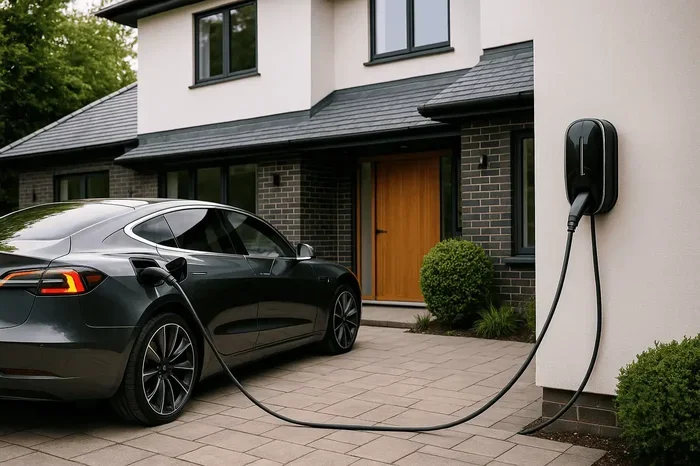
But what if you park on a driveway? You can still charge at home. You just need a longer cable or a charger mounted on an exterior wall. Many EVSE units come with cables that reach 16 to 25 feet. That covers most setups easily.
For apartment or condo owners, home charging is trickier. Shared parking lots may not have access to electrical outlets. In these cases, you might need to talk to your building management about installing shared charging stations.
How Much Does It Cost to Charge an Electric Car at Home?
Cost is a big factor when considering EV home charging. The good news is that charging at home is much cheaper than filling up a gas tank. Let us break down the numbers.
Understanding Electricity Rates
Electricity is measured in kilowatt-hours, or kWh. The average US household pays about $0.15 per kWh. But rates vary by state and time of day. Some areas offer lower rates at night, which is perfect for overnight charging.
Here is a simple example. If your car battery holds 60 kWh and your rate is $0.15 per kWh, a full charge costs about $9. That is roughly the equivalent of driving 200 miles for less than $10. Compare that to gas, and the savings add up fast.
Installation Costs for a Home Charger
A Level 2 charger unit costs between $400 and $800 on its own. Installation by a licensed electrician typically adds $500 to $1,500. So the total upfront cost ranges from $900 to $2,300.
But remember, these costs pay for themselves over time. The savings on fuel alone can offset the installation cost within one to two years. Plus, many states and utility companies offer rebates or tax credits for home charging station installation.
Charging Cost Comparison Table
- Level 1 (120V): No equipment cost. Uses existing outlet. Slow charging speed. Best for short commutes.
- Level 2 (240V): $900-$2,300 total cost. Fast and reliable. Best for daily home charging.
- Public Fast Charging: Pay per session. $0.25-$0.50 per kWh. Convenient for road trips but more expensive.
Safety Tips for Overnight Charging
Safety is important when you are charging a vehicle overnight in your home. The good news is that modern EV chargers are designed with multiple safety features. Still, it is smart to follow best practices.
Use a Certified Charger
Always choose a charger that is UL listed or certified by a recognized safety organization. These units have been tested for electrical safety, heat resistance, and durability. Avoid cheap, uncertified chargers from unknown brands.
Inspect Your Equipment Regularly
Check your charging cable and connector for wear and tear. Look for frayed wires, cracked insulation, or loose connections. If anything looks damaged, stop using it and replace it right away.
Keep the charging area clean and dry. Water and electricity do not mix. If you charge in a garage, make sure the outlet and charger are protected from moisture.
Set a Charging Timer
Many EVSE units and cars allow you to set a charging schedule. You can tell the charger to start at a specific time, such as 11 PM, and stop when the battery reaches 100%. This prevents overcharging and can also take advantage of lower nighttime electricity rates.
Some smart chargers connect to apps on your phone. You can monitor charging progress, adjust settings, and get alerts. These features add peace of mind and make the whole process even easier.
Common Mistakes People Make with Home EV Charging
Even though home charging is simple, some mistakes can cause problems. Here are a few to watch out for.
- Using an extension cord: This is a fire hazard. Always plug the charger directly into the outlet or circuit.
- Ignoring electrical capacity: Overloading a circuit can trip your breaker or cause damage. Have an electrician check your setup.
- Skipping routine maintenance: Dust and debris can build up on the charger port. Keep it clean for a good connection.
- Charging to 100% every night: For daily use, charging to 80 or 90% is often enough. It also helps extend battery life over time.
- Not checking your electricity rate plan: Time-of-use plans can save you a lot of money. Charging at night is often cheaper.
Expert Insights on Home EV Charging
We spoke with several EV owners and charging experts to gather their top tips for overnight charging.
Mark T., a Tesla Model 3 owner, shared this: “I just plug in every night when I get home. I never think about it. It is like charging my phone. In the morning, I have 300 miles of range. It is the best part of owning an EV.”
Sarah L., an electrician specializing in EV installations, recommends this: “Make sure your home’s electrical system is up to date before installing a charger. A small investment in an inspection can save you from bigger problems later.”
Dr. James Park, an EV researcher, adds: “The biggest advantage of home charging is consistency. You always start your day with a full battery. That changes the entire ownership experience.”
Final Thoughts: Should You Charge Your Electric Car at Home While Sleeping?
The answer is a clear yes. Charging an electric car at home while sleeping is convenient, affordable, and practical for most drivers. It fits into your daily routine without any extra effort. You wake up every morning with a full battery and zero stress.
The upfront cost of a home charging station is worth it over time. You save money on fuel, you never visit a gas station, and you always start your day ready to go. With a Level 2 charger, the experience is fast, safe, and seamless.
If you are considering an electric vehicle or already own one, home charging is a game-changer. It removes one of the biggest concerns people have about EVs: range anxiety. When you can charge at home every night, range stops being a worry.
Take the time to assess your home’s electrical setup. Talk to a licensed electrician. Choose the right charger for your needs. And then just plug in. Your future self, with a full battery every morning, will thank you.
Frequently Asked Questions
Is it safe to charge an electric car overnight?
Yes, it is completely safe. Modern EV chargers have built-in safety features that prevent overcharging, overheating, and electrical faults. You can set a timer to stop charging at a certain level if you want extra peace of mind.
How long does it take to charge an electric car at home overnight?
With a Level 2 charger, most cars are fully charged in 4 to 8 hours. A Level 1 charger takes longer, usually 10 to 20 hours. The exact time depends on your battery size and the charger’s power output.
Do I need a special outlet for a home EV charger?
For a Level 2 charger, yes. You need a 240-volt outlet, similar to what a dryer uses. A licensed electrician can install this outlet and the charger for you.
Can I charge my electric car in the rain?
Yes. All certified EVSE units are weatherproof and safe to use outdoors in rain or snow. Just make sure the connection between the cable and your car is clean and dry before plugging in.
Will charging my electric car at home increase my electricity bill?
Yes, but only slightly. A full home charge typically costs $5 to $15, depending on your electricity rate and battery size. This is still far less than filling a gas tank, which can cost $40 to $70 or more.
Can I use a portable charger for overnight charging?
Yes, a Level 1 portable charger works with any standard outlet. However, it charges much slower than a Level 2 home charger. It is best suited for short daily drives or as a backup option.