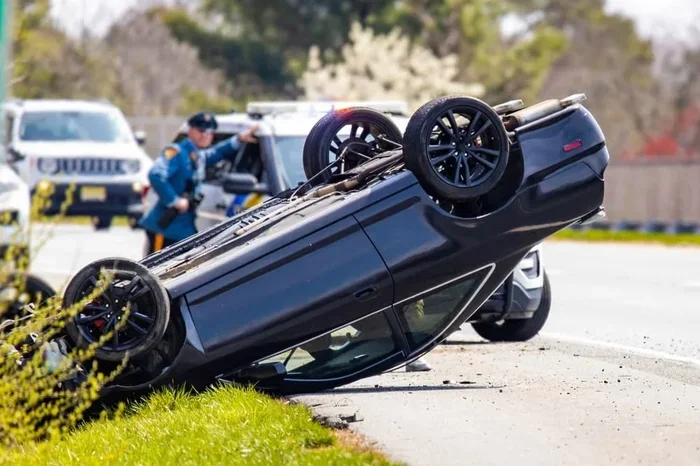
Which Car Is Most Likely to Tip Over and Why It Matters
The car most likely to tip over depends on its design, center of gravity, and how it is driven. SUVs, trucks, and tall sedans face the highest rollover risk due to their narrow base and heavy top. Understanding which car is most likely to tip over helps you make safer choices on the road.
Every year, thousands of drivers face a terrifying reality. A vehicle they trusted suddenly rolls over. The question is not just about accidents. It is about which car is most likely to tip over and why. Understanding this can save your life or the life of someone you love.
Rollover crashes are among the deadliest types of vehicle accidents. They account for a small percentage of total crashes. But they cause a much larger share of traffic fatalities. This makes the topic of vehicle rollover risk incredibly important for every driver.
In this article, we will explore the vehicles that carry the highest rollover risk. We will look at the science behind why cars tip over. And we will share practical tips to help you stay safe. Whether you drive an SUV, a sedan, or a pickup truck, this guide has something valuable for you.
Key Takeaways
- Tall, narrow vehicles pose the biggest rollover risk: SUVs and pickup trucks are the most prone to tipping over.
- Center of gravity is the main factor: The higher the center of gravity, the easier it is for a vehicle to lose balance.
- Speed and sharp turns increase danger: Most rollovers happen during fast turns or sudden maneuvers.
- Electronic stability control saves lives: This feature significantly reduces rollover risk in all vehicle types.
- Tire condition matters a lot: Underinflated or worn tires can trigger a rollover even in stable vehicles.
- Not all SUVs are equal: Some models have much better rollover resistance than others.
- Driver behavior is the biggest variable: Even the safest vehicle can tip over if driven recklessly.
📑 Table of Contents
- What Makes a Car Likely to Tip Over
- Which Vehicle Types Have the Highest Rollover Risk
- Comparing Rollover Risk Across Popular Models
- Why Rollover Crashes Are So Dangerous
- How Technology Helps Prevent Rollovers
- Common Mistakes That Increase Rollover Risk
- How to Choose a Vehicle With Lower Rollover Risk
- Key Takeaways
- Conclusion
What Makes a Car Likely to Tip Over
Before we name specific vehicles, let us understand the physics. A car tips over when its center of gravity shifts outside its base of support. Think of it like a tall glass standing on a table. Push it sideways gently, and it stays upright. Push it hard enough, and it falls. The same principle applies to vehicles.
Several factors determine how easily a vehicle can roll. Let us break them down.
Center of Gravity Height
The higher the center of gravity, the more likely a vehicle is to tip. Tall vehicles like SUVs and trucks have their weight stacked high above the wheels. This creates a longer lever arm for forces to act on during turns. Even a small shift in weight can cause a rollover.
Low-slung sports cars, on the other hand, have a center of gravity close to the ground. This makes them much more stable in most situations. But speed can change everything for any vehicle type.
Track Width and Vehicle Width
Track width refers to the distance between the left and right wheels. A wider track means a more stable base. Vehicles with narrow tracks relative to their height are more prone to rolling. This is why many tall, narrow vehicles score poorly in rollover stability tests.
Weight Distribution
How weight is spread across the vehicle matters too. A vehicle that carries heavy cargo on the roof becomes much more top-heavy. Even a roof rack loaded with luggage can raise the center of gravity enough to increase rollover risk. This is a common mistake many drivers make without realizing the danger.
Speed and Steering Input
Most rollovers do not happen on straight roads. They happen during sharp turns, sudden lane changes, or evasive maneuvers. At higher speeds, the lateral forces on a vehicle increase dramatically. A vehicle that feels stable at 30 mph can become unstable at 60 mph during a turn.
Which Vehicle Types Have the Highest Rollover Risk
Now let us get to the core question. Which vehicles are most likely to tip over? The answer is not as simple as one word. But certain vehicle categories consistently show higher rollover rates.
SUVs and Crossovers
SUVs and crossovers top the list of vehicles most likely to tip over. Their tall, boxy shape gives them a high center of gravity. Many models also have a relatively narrow track width. This combination creates a natural rollover vulnerability.
However, not all SUVs are created equal. Modern SUVs with electronic stability control and wider bases are much safer than older models. The rollover risk has decreased significantly in recent years thanks to better engineering. But the risk is still higher than in passenger cars.
Some of the most commonly reported rollover incidents involve midsize and full-size SUVs. Models with a taller profile and heavier roof load tend to be the most affected. This includes vehicles like the Ford Explorer, Chevrolet Tahoe, and similar large SUVs.
Pickup Trucks
Pickup trucks also carry significant rollover risk. Their high ride height and long hood create a long lever arm. When a truck hits a curb, a pothole, or soft ground at an angle, the rollover risk spikes.
Double-cab trucks with four full doors tend to be heavier at the top. This adds to the instability. Truck drivers who haul heavy loads in the bed without securing them properly also increase their rollover risk.
Vans and Commercial Vehicles
Passenger vans and commercial vehicles are another high-risk category. Their tall, boxy shape and large cargo capacity make them inherently less stable. Cargo vans with empty rear sections are especially dangerous because the weight distribution shifts rearward.
Fleet vehicles like delivery vans often travel long distances at highway speeds. This combination of height, speed, and frequent stopping and starting creates a dangerous mix.
Convertibles and Open-Top Vehicles
Convertibles might seem like an unlikely candidate for rollover risk. But their tall, narrow structure without a fixed roof can be unstable. The lack of a rigid roof structure reduces the overall body rigidity. This can make them more susceptible to rolling in a crash.
That said, modern convertibles are engineered with reinforced chassis structures. The rollover risk is much lower than it used to be. But it is still higher than in hardtop vehicles of similar size.
Comparing Rollover Risk Across Popular Models
Not all vehicles within a category carry the same risk. Some models are designed with stability in mind. Others are not. Here is a general comparison of popular vehicle types and their rollover tendencies.
- Full-Size SUVs: High rollover risk due to tall profile and heavy weight. Models with a higher ground clearance face more danger.
- Midsize Sedans: Low rollover risk. Their low center of gravity and wide base make them very stable.
- Compact Crossovers: Moderate rollover risk. They are taller than sedans but lighter than full-size SUVs.
- Pickup Trucks: High rollover risk, especially when unloaded or carrying uneven loads.
- Sports Cars: Low rollover risk in normal driving. But high speed and sharp maneuvers can change this quickly.
- Minivans: Low to moderate rollover risk. Their wide base helps, but their height still poses some danger.
The vehicle safety rating from organizations like the NHTSA can give you a clear picture. The NHTSA rollover resistance scale rates vehicles from one to five stars. A five-star rating means the lowest rollover risk. Always check this rating before buying a vehicle.
Quick Tip: Check the NHTSA Rating Before You Buy
Before purchasing any vehicle, visit the NHTSA website and look up its rollover resistance rating. This simple step can help you choose a safer vehicle. A difference of even one star can mean a significant reduction in rollover risk.
Why Rollover Crashes Are So Dangerous
Rollover crashes are uniquely dangerous for several reasons. Unlike a front-end collision, a rollover can happen in an instant. There is often very little time for the driver to react. And once the vehicle starts rolling, the physics are brutal.
During a rollover, the vehicle’s roof can crush significantly. This is especially true in vehicles with weak roof structures. The occupants inside have very little protection. Roof crush is one of the leading causes of traumatic brain injuries and fatalities in rollover accidents.
Ejection is another major concern. Passengers who are not wearing seatbelts are far more likely to be thrown from the vehicle during a rollover. In fact, ejection is the leading cause of death in rollover crashes. A simple seatbelt can reduce this risk dramatically.
According to the NHTSA, rollover crashes account for about 30 percent of all passenger vehicle fatalities. Yet they make up only about 2 percent of all crashes. This stark difference shows just how deadly rollovers can be.
Common Injuries in Rollover Accidents
- Traumatic brain injuries from roof crush
- Spinal cord injuries from violent twisting motion
- Broken bones from impact with the vehicle interior
- Internal injuries from seatbelt compression
- Lacerations from broken glass and debris
- Burns if the vehicle catches fire after the crash
How Technology Helps Prevent Rollovers
The good news is that modern technology has made vehicles much safer. Several features now work together to reduce the chance of a rollover.
Electronic Stability Control (ESC)
Electronic stability control is the single most important safety feature for rollover prevention. ESC uses sensors to detect when a vehicle is starting to slide or lose traction. It automatically applies brakes to individual wheels to help the driver maintain control. Studies show that ESC reduces fatal single-vehicle crashes by nearly 50 percent.
Since 2012, ESC has been required on all new passenger vehicles sold in the United States. This has contributed to a significant drop in rollover fatalities over the past decade.
Rollover Sensing and Airbags
Many modern vehicles now include rollover sensors. These detect when a rollover is imminent and deploy side-curtain airbags. The airbags deploy from the roof rail and protect the heads of occupants on both sides of the vehicle. This simple feature has saved countless lives in rollover crashes.
Tire Pressure Monitoring Systems (TPMS)
Underinflated tires are a hidden cause of rollover accidents. When tires are low on air, they flex more during turns. This can cause the tire to overheat and fail. A sudden tire blowout at highway speed can easily cause a rollover. TPMS alerts drivers when tire pressure drops below safe levels, helping prevent this dangerous scenario.
Rollover Prevention Systems
Some manufacturers now offer advanced rollover prevention systems. These go beyond standard ESC by monitoring vehicle dynamics in real time. They can adjust engine power and braking force to keep the vehicle stable. These systems are especially helpful in tall, heavy vehicles like SUVs and trucks.
Common Mistakes That Increase Rollover Risk
Even the safest vehicle can roll over if the driver makes poor choices. Here are the most common mistakes that increase rollover risk.
- Taking turns too fast: Speed is the number one factor in rollover crashes. Slow down before turns, especially in tall vehicles.
- Overloading the vehicle: Adding too much weight raises the center of gravity. Never exceed the vehicle’s maximum load capacity.
- Driving on soft or uneven ground: A wheel hitting a soft shoulder or a ditch can cause the vehicle to tip. This is especially dangerous for trucks and SUVs.
- Worn tires: Tires with little tread cannot grip the road properly. This increases the chance of a rollover during sudden maneuvers.
- Aggressive steering: Jerking the steering wheel at high speed can shift the weight suddenly and trigger a rollover.
- Ignoring vehicle warnings: If your ESC light comes on or your TPMS alerts you, do not ignore it. These systems are there to protect you.
Expert Insight: What Driving Instructors Say About Rollover Prevention
Experienced driving instructors consistently emphasize one key point. Smooth inputs save lives. Gentle steering, gradual braking, and consistent speed through turns are the foundations of safe driving. These habits are especially important in vehicles with a higher rollover risk.
Instructors also stress the importance of knowing your vehicle. Every vehicle handles differently. Spend time getting to know how your car or truck responds to different road conditions. This awareness can help you avoid dangerous situations before they escalate.
How to Choose a Vehicle With Lower Rollover Risk
If you are in the market for a new vehicle, there are steps you can take to reduce your rollover risk.
Look for Low Center of Gravity Designs
Vehicles with a lower profile are naturally more stable. Midsize sedans, wagons, and hatchbacks tend to have lower centers of gravity than SUVs and trucks. If rollover safety is a top priority, consider these vehicle types.
Check the Rollover Resistance Rating
The NHTSA provides rollover resistance ratings for virtually every vehicle on the market. Look for a five-star rating. This indicates the lowest rollover risk. You can find these ratings on the NHTSA website and on most vehicle specification pages.
Prioritize Electronic Stability Control
Never buy a vehicle without ESC. This feature is non-negotiable for rollover safety. It has been proven to reduce fatal crashes significantly. If you are buying a used vehicle, make sure it has ESC installed.
Consider Vehicle Width and Track Width
Wider vehicles with a broader track are inherently more stable. When comparing models, look at the vehicle width and track width specifications. A wider track means the wheels are further apart. This creates a more stable base and reduces rollover risk.
Read Consumer Reviews and Safety Reports
Before making a final decision, read consumer reviews and independent safety reports. These often include real-world data on vehicle stability and handling. They can reveal issues that official ratings might not capture.
Quick Tip: Test Drive With Purpose
During a test drive, pay attention to how the vehicle handles in turns. Does it feel stable? Does it lean excessively? A vehicle that feels shaky during normal driving is not a safe choice. Trust your instincts during the test drive.
Key Takeaways
- Tall, narrow vehicles pose the biggest rollover risk: SUVs and pickup trucks are the most prone to tipping over.
- Center of gravity is the main factor: The higher the center of gravity, the easier it is for a vehicle to lose balance.
- Speed and sharp turns increase danger: Most rollovers happen during fast turns or sudden maneuvers.
- Electronic stability control saves lives: This feature significantly reduces rollover risk in all vehicle types.
- Tire condition matters a lot: Underinflated or worn tires can trigger a rollover even in stable vehicles.
- Not all SUVs are equal: Some models have much better rollover resistance than others.
- Driver behavior is the biggest variable: Even the safest vehicle can tip over if driven recklessly.
Conclusion
The answer to which car is most likely to tip over comes down to a combination of design, weight, and driver behavior. Tall, narrow vehicles like SUVs and pickup trucks carry the highest rollover risk. But no vehicle is immune. Even a low-slung sedan can roll over under extreme circumstances.
What matters most is that you understand the risks and take steps to mitigate them. Choose a vehicle with a low center of gravity and a strong safety rating. Always use electronic stability control. Keep your tires properly inflated. And above all, drive smoothly and at safe speeds.
The knowledge you gain from understanding rollover risk is a powerful tool. It helps you make better decisions every time you get behind the wheel. Share this information with friends and family. The more people know about car tip over risks, the safer our roads become for everyone.
Stay informed. Stay cautious. And most importantly, stay safe on the road. Your life and the lives of your passengers depend on it.
Frequently Asked Questions
Which car type has the highest rollover risk?
SUVs and pickup trucks have the highest rollover risk due to their tall, narrow design and high center of gravity. Full-size models carry even more risk than compact versions. Always check the NHTSA rollover resistance rating for any vehicle you consider.
Can a sedan tip over?
Yes, but it is very rare. Sedans have a low center of gravity and wide base, making them naturally stable. However, extreme speed, aggressive steering, or a tire blowout can cause even a sedan to roll over in rare circumstances.
Does electronic stability control really prevent rollovers?
Yes, electronic stability control is one of the most effective rollover prevention technologies available. It reduces fatal single-vehicle crashes by nearly 50 percent. It works by automatically braking individual wheels to help the driver maintain control during sudden maneuvers.
Are newer vehicles safer against rollovers?
Generally, yes. Newer vehicles come equipped with electronic stability control, rollover sensors, and side-curtain airbags as standard features. These technologies have significantly reduced rollover fatalities over the past decade. However, vehicle design still plays a major role in rollover risk.
How does cargo loading affect rollover risk?
Loading heavy cargo on the roof raises the center of gravity significantly. This makes the vehicle much more prone to tipping over during sharp turns or sudden maneuvers. Always secure cargo properly and avoid exceeding the vehicle’s maximum load capacity.
What should I do if my vehicle starts to roll over?
Stay calm and grip the steering wheel firmly. Do not slam on the brakes. Ease off the accelerator and steer gently in the direction you want the vehicle to go. Once the vehicle stabilizes, move to a safe location and call for help. Always wear your seatbelt, as it dramatically reduces injury risk during a rollover.