What to Do When Your Trunk Wont Open and How to Fix It
A trunk won’t open for many reasons, from a broken trunk latch to electrical faults. This guide gives you simple, proven fixes you can try at home, including trunk release tricks, trunk cable replacements, and fuse checks. You will also learn when to call a professional and how to prevent future problems.
Key Takeaways
- Try the manual release first: Most cars have a hidden trunk release lever inside the vehicle that can bypass electrical problems.
- Check the fuse and wiring: A blown trunk fuse is one of the most common and easiest reasons your trunk won’t open.
- Lubricate the trunk latch regularly: Dry or corroded latches cause many trunk stuck situations and are easy to fix yourself.
- Know your trunk lock cylinder options: A damaged cylinder can be replaced without a full lock job.
- Don’t force it: Forcing the trunk can break the trunk hinge or damage the trunk seal, leading to costly repairs.
- Call a pro if the trunk actuator fails: Replacing an actuator is straightforward but requires some basic mechanical skill.
📑 Table of Contents
- Why Your Trunk Won’t Open: The Most Common Causes
- How to Fix a Stuck Trunk Latch
- Electrical and Remote Issues: When the Trunk Release Button Fails
- Mechanical Problems and Solutions for a Trunk That Stays Shut
- Preventive Maintenance Tips to Keep Your Trunk Working
- When to Call a Professional Mechanic
- Comparing Common Trunk Repair Costs
- Key Takeaways
- Conclusion
Why Your Trunk Won’t Open: The Most Common Causes
There is nothing worse than standing by your car with a trunk won’t open situation. You have bags in your hands, plans to get to, and zero clue what went wrong. Before you panic, take a breath. Most trunk problems come from a handful of common causes, and you can fix many of them yourself.
Understanding why your trunk is stuck is the first step to fixing it. The problem usually falls into one of three categories: mechanical, electrical, or physical obstruction. Let us look at each one closely.
Mechanical Failures
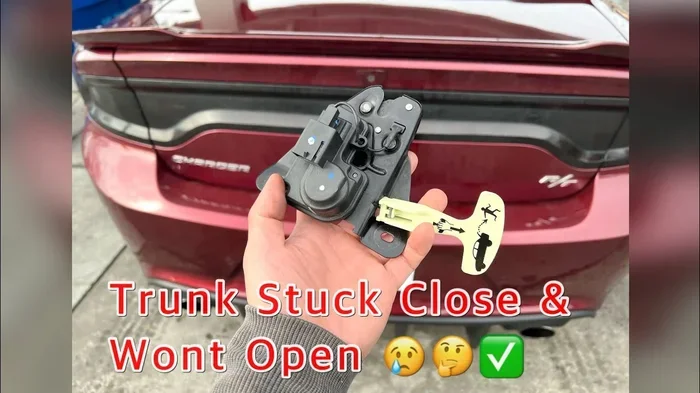
The trunk latch is the metal mechanism that holds your trunk shut. Over time, this part can wear out, rust, or get misaligned. A worn latch is one of the top reasons a trunk stuck problem happens. The latch might not catch properly, or it might not release when you press the button.
The trunk cable connects your interior release handle to the latch. If this cable stretches, frays, or breaks, you will press the handle inside the car and hear nothing. This is especially common in older vehicles or cars with high mileage. The cable can also seize up from lack of use or exposure to moisture.
The trunk hinge can also cause trouble. If the hinge is bent, rusted, or damaged, the trunk lid might not line up correctly. A misaligned trunk lid puts uneven pressure on the latch, making it harder to open. Sometimes the problem is not the latch at all but the hinge underneath.
Electrical Problems
Modern cars rely heavily on electricity to open the trunk. The trunk actuator is a small motor that does the heavy lifting when you press the trunk release button. If this motor dies, your remote and button will do nothing.
A blown trunk fuse is another frequent culprit. Fuses protect your car’s electrical system, and when too much current flows through, the fuse blows. This cuts power to the trunk release circuit entirely. Checking the fuse box is quick and easy, and it costs almost nothing.
The trunk solenoid is a small electromagnetic switch that activates the latch. If the solenoid fails, the signal from your remote or button never reaches the latch. This is a less common issue but still worth checking.
Physical Obstructions
Sometimes the problem is simple. Debris, dirt, or ice can build up around the trunk latch and prevent it from moving. In cold climates, ice around the latch is a very common reason a trunk won’t open in winter. A small amount of ice or a pebble stuck in the mechanism can be enough to jam everything.
The trunk seal can also cause issues. This rubber gasket runs around the edges of the trunk lid. If it deteriorates or gets stuck to the body of the car, the vacuum seal can hold the lid shut tightly. This is more common in older cars or vehicles that have been sitting for a long time.
How to Fix a Stuck Trunk Latch
Now that you know the common causes, let us get into the fixes. Most of these steps are simple enough for anyone to do at home with basic tools.
Step 1: Try the Manual Trunk Release
Almost every car made in the last 30 years has a manual trunk release inside the vehicle. This is your first line of defense. Look inside your car, near the driver’s seat, on the left side of the dashboard or on the driver’s door panel. There is usually a small lever or pull handle labeled “trunk” or with a trunk icon.
Pull this lever firmly. It connects directly to the latch mechanism through a cable. Even if your electrical system is completely dead, this manual release should work. If the trunk opens this way, the problem is electrical, not mechanical. That is good news because electrical fixes are often simpler.
Step 2: Check the Trunk Fuse
Open your car’s fuse box. The location varies by vehicle, but it is usually under the dashboard on the driver’s side or under the hood. Check your owner’s manual for the exact location of the trunk fuse.
Pull out the fuse and look at it closely. A blown fuse has a broken metal strip inside the glass tube. If the fuse looks fine, use a multimeter to test for continuity. Replace any blown fuse with one of the same amperage rating. This simple step fixes a surprising number of trunk won’t open problems.
Step 3: Lubricate the Trunk Latch
A dry or corroded trunk latch can stick and refuse to move. This is one of the easiest problems to fix. Get a spray lubricant like WD-40 or a silicone-based lubricant.
Spray the lubricant directly onto the latch mechanism. Work the latch back and forth by hand if you can reach it. Let the lubricant sit for a few minutes, then spray again. Repeat this process until the latch moves smoothly. Wipe away any excess lubricant with a clean cloth.
For the trunk hinge, apply the same lubricant. A well-lubricated hinge reduces stress on the latch and helps the trunk close properly. This is also a great trunk latch repair maintenance step you should do a few times a year.
Step 4: Replace the Trunk Cable
If pulling the interior release handle does nothing, the trunk cable might be broken or disconnected. This is a common issue in vehicles with over 80,000 miles.
To replace the cable, you will need to access the latch mechanism from inside the trunk. Remove the trunk liner panels to expose the latch. Disconnect the old cable from both the handle and the latch. Attach the new cable in the same position. Make sure the cable has proper tension when the handle is released.
This repair takes about 30 to 60 minutes and costs between $15 and $40 for the cable. It is one of the most satisfying DIY fixes you can do for a trunk stuck problem.
Step 5: Fix a Jammed Trunk Lock Cylinder
If you use a physical trunk key to open your trunk and it will not turn, the lock cylinder might be jammed. This happens when the cylinder gets worn out or when debris gets inside.
Try spraying a lock-specific lubricant into the keyhole. Do not use WD-40 for this, as it can attract dirt. Use a graphite-based lubricant instead. Insert your key and gently work it back and forth. If the key still will not turn, the cylinder may need to be replaced entirely.
Replacing a trunk lock cylinder is straightforward. Remove the trim panel around the lock, unscrew the cylinder housing, and install the new cylinder. Match the key code to get a replacement that works with your existing keys.
Electrical and Remote Issues: When the Trunk Release Button Fails
If your trunk release button on the key fob or the trunk lid does nothing, the problem is likely electrical. Here is how to diagnose and fix it.
Check the Key Fob Battery
This sounds too simple, but a dead key fob battery is one of the most overlooked reasons a trunk won’t open. Replace the battery in your key fob with a fresh one. Most fobs use a CR2032 battery, which costs about $2 at any store.
After replacing the battery, try the trunk release again. If it works, you just saved yourself a trip to the mechanic. If the trunk still does not respond, move on to the next step.
Test the Trunk Actuator
The trunk actuator is the small motor that physically moves the latch. To test it, have someone press the trunk release button while you listen near the trunk latch area. You should hear a clicking or humming sound.
If you hear nothing, the actuator may be dead. Use a multimeter to check for power at the actuator connector. If there is power but the actuator does not engage, the actuator needs to be replaced. This is a relatively inexpensive part, usually between $30 and $80, and the replacement process takes about 20 minutes.
Inspect the Wiring Harness
Corroded or damaged wiring can break the electrical connection between the release button and the actuator. Follow the wiring from the trunk lid to the body of the car. Look for frayed wires, green corrosion, or disconnected connectors.
Clean any corroded connectors with electrical contact cleaner. Repair damaged wires with electrical tape or by splicing in a new section of wire. This fix costs nothing but your time and can resolve many mysterious trunk stuck issues.
The Emergency Trunk Release
Every car has an emergency trunk release feature, usually a handle or lever located inside the trunk itself. This is a safety feature designed so that children or adults trapped inside the trunk can escape. Pull this handle, and the trunk latch should release manually.
If you are locked out of the trunk from the outside, this is your backup plan. Reach inside through the rear seats or fold down the back seat if your car allows it. Locate the emergency release and pull it firmly. The trunk should pop open.
Mechanical Problems and Solutions for a Trunk That Stays Shut
Some trunk problems require a bit more mechanical knowledge. Here are the most common mechanical issues and how to solve them.
Misaligned Trunk Lid
If your trunk lid does not sit flush with the body of the car, the latch might not engage properly. This misalignment can happen after an accident, from worn hinges, or simply from years of use.
To fix a misaligned trunk, start by checking the hinges. Tighten any loose hinge bolts. If the hinges are worn or bent, replace them. You can also adjust the striker plate on the body of the car. Move it slightly up, down, left, or right until the latch engages properly.
A properly aligned trunk lid reduces stress on the trunk latch mechanism and makes opening and closing much smoother.
Broken Trunk Spring or Strut
The gas strut or spring that holds your trunk open can weaken or break over time. When this happens, the trunk lid might not stay open or might slam shut with too much force. This can damage the latch over time.
Replacing a trunk strut is straightforward. Buy a replacement strut that matches your vehicle’s make and model. Remove the old strut from both mounting points and install the new one. This is a quick fix that costs between $20 and $60 for the part.
Damaged Trunk Seal
The trunk seal is the rubber gasket that runs around the trunk lid. Its job is to keep water, dust, and wind out of the trunk. When this seal gets damaged or stuck, it can create a vacuum that holds the lid shut.
Inspect the seal for cracks, tears, or flattening. Clean it with mild soap and water. Apply a rubber conditioner to keep it flexible. If the seal is badly damaged, replace it entirely. A new trunk seal costs between $15 and $40 and is easy to install with adhesive.
Preventive Maintenance Tips to Keep Your Trunk Working
The best way to deal with a trunk won’t open problem is to prevent it from happening in the first place. A little regular maintenance goes a long way.
Lubricate Regularly
Apply a silicone-based lubricant to your trunk latch, hinge, and cable every three to six months. This keeps everything moving smoothly and prevents rust and corrosion. It is a five-minute job that can save you hours of frustration.
Keep the Lock Cylinder Clean
Use a lock-specific lubricant in your trunk lock cylinder at least twice a year. This prevents the key from getting stuck and extends the life of the cylinder. Never use oil-based lubricants in locks, as they attract dust and grime.
Check the Fuse Box Periodically
Open your fuse box once or twice a year and visually inspect the fuses. Look for any that appear discolored or have a broken filament. Replace any suspect fuses before they cause a problem. This simple habit can prevent unexpected trunk stuck situations.
Avoid Overloading the Trunk
Excessive weight on the trunk lid puts extra stress on the hinges, struts, and latch. Try to stay within your vehicle’s recommended cargo weight limit. This protects all the trunk components and keeps your trunk opening and closing smoothly for years.
Address Small Problems Immediately
If you notice your trunk is getting harder to open, or the release button feels different, do not ignore it. Small problems like a slightly sticky latch or a faint clicking sound from the actuator can become major issues if left unaddressed. Fix them early, and you will save money and time.
When to Call a Professional Mechanic
Not every trunk problem is a DIY job. Here is when it is time to call in the experts.
Complex Electrical Issues
If you have checked the fuse, the actuator, and the wiring and the trunk still will not open, there may be a deeper electrical problem. This could involve the car’s central computer or a wiring issue that is hard to trace. A professional mechanic has the diagnostic tools to find and fix these problems quickly.
Physical Damage to the Trunk Body
If the trunk lid is bent, cracked, or damaged from an accident, you need professional help. Attempting to fix structural damage yourself can make things worse. A body shop can repair or replace the trunk lid properly.
Repeated Latch Failures
If you have replaced the latch, cable, and actuator but the trunk still gives you trouble, the problem might be with the trunk latch mechanism as a whole system. A mechanic can diagnose the root cause and recommend the right solution.
Warranty Considerations
If your car is still under warranty, check with your dealer before attempting repairs. Some DIY fixes can void your warranty. The dealer can often fix trunk issues at no cost to you if the problem is covered.
Comparing Common Trunk Repair Costs
Not sure how much a trunk repair might cost you? Here is a quick comparison of common fixes and their average costs.
- Fuse replacement: $1 to $5 for the fuse, plus no labor cost if you do it yourself.
- Trunk cable replacement: $15 to $40 for the part, plus about $50 to $100 if you hire a mechanic.
- Trunk actuator replacement: $30 to $80 for the part, plus $50 to $150 for labor.
- Trunk lock cylinder replacement: $40 to $100 for the part, plus $50 to $120 for labor.
- Trunk seal replacement: $15 to $40 for the part, plus $30 to $75 for labor.
- Full trunk latch replacement: $80 to $200 for the part, plus $100 to $250 for labor.
These costs vary depending on your vehicle make and model, your location, and whether you do the work yourself. In most cases, fixing a trunk won’t open problem is much cheaper than you might expect.
Key Takeaways
- Start with the manual release: Almost every car has a hidden trunk release lever inside the cabin that works even when the electrical system fails.
- A blown fuse is the easiest fix: Check the trunk fuse first. It takes two minutes and costs almost nothing.
- Lubrication prevents most problems: Regularly lubricating the trunk latch, hinge, and cable keeps everything working smoothly.
- Know your trunk actuator and solenoid: These electrical components are common failure points and are relatively easy to replace.
- Do not force the trunk open: Forcing it can damage the trunk hinge or break the trunk seal, leading to more expensive repairs.
- Call a professional for complex issues: If basic fixes do not work, a mechanic can diagnose deeper electrical or mechanical problems safely.
Conclusion
A trunk won’t open situation is never fun, but it is almost always fixable. The most important thing to remember is to stay calm and work through the possible causes one by one. Start with the simplest fixes, like checking the fuse or using the manual release, before moving on to more involved repairs.
Most trunk problems come down to a few common issues: a broken trunk cable, a faulty trunk actuator, a corroded trunk latch, or a dead key fob battery. With the right tools and a little patience, you can handle all of these yourself. And if the problem is beyond your comfort level, a professional mechanic can get your trunk open quickly and safely.
The best defense against future trunk troubles is regular maintenance. Lubricate the latch, check the fuses, and address small issues before they become big ones. Your trunk is one of the most used parts of your car, and taking care of it will save you time, money, and frustration for years to come.
Now that you know what to do when your trunk won’t open, you are ready to handle the problem confidently. Keep this guide handy, share it with friends, and never let a stuck trunk ruin your day again.
Frequently Asked Questions
Why does my trunk release button not work but the key does?
This usually means the electrical circuit for the button or remote is broken, but the mechanical lock cylinder still works. Check the trunk fuse first, then inspect the wiring and trunk actuator. The problem is likely a blown fuse or a faulty actuator rather than the lock itself.
Can cold weather cause a trunk not to open?
Yes, absolutely. Ice and frost can build up around the trunk latch and prevent it from moving. This is one of the most common reasons a trunk won’t open in winter. Use a de-icer spray or warm water to melt the ice, then lubricate the latch to prevent future freezing.
How do I open my trunk if the remote is dead?
Look for the manual trunk release lever inside your car, usually near the driver’s seat. Pull it firmly and the trunk should open. If that does not work, try the physical trunk key in the lock cylinder on the trunk lid itself.
Is it safe to drive with a trunk that won’t close properly?
No, it is not safe. A trunk that does not close properly can open while driving, creating a serious hazard. Cargo can fly out onto the road, and an open trunk can obstruct your rear visibility. Fix the trunk latch or trunk seal issue before driving the vehicle.
How much does it cost to fix a trunk that won’t open?
The cost depends on the cause. A fuse replacement costs under $5. A trunk cable replacement runs $15 to $40 for the part. An trunk actuator replacement costs $30 to $80 for the part. More complex repairs like a full trunk latch replacement can run $80 to $200 for parts alone.
What should I do if something is stuck inside the trunk and I cannot get it open?
Use the emergency trunk release handle located inside the trunk compartment. Pull it firmly to release the latch. If you cannot reach it, fold down the rear seats if your vehicle allows it. As a last resort, call a locksmith or roadside assistance for help.