How Many Catalytic Converters Does a 4-Cylinder Have
Most 4-cylinder cars have exactly one catalytic converter, but some setups use two. The number depends on your exhaust system design, local emissions laws, and whether the vehicle has a single or dual exhaust. In this article, you’ll learn how to identify the catalytic converter count on your specific engine, where they’re located, and what to do if one fails.
Key Takeaways
- Standard 4-cylinder cars typically have one catalytic converter: This is the most common setup for passenger vehicles with a single exhaust pipe.
- Dual exhaust systems can double the count: Some 4-cylinder engines with twin exhausts use two converters, one per side.
- Location matters for replacement: Converters sit either under the engine or further back near the muffler, depending on the design.
- Failing converters show clear symptoms: Watch for a check engine light, reduced fuel economy, and a rotten egg smell.
- Replacement cost varies widely: OEM converters cost more, but aftermarket units can save you hundreds if chosen wisely.
- Theft is a real risk: 4-cylinder converters contain precious metals and are often targeted; consider an anti-theft plate.
📑 Table of Contents
- How Many Catalytic Converters Does a 4-Cylinder Have? The Short Answer
- How Many Catalytic Converters Does a 4-Cylinder Have? The Real-World Breakdown
- Where Are the Converters Located on a 4-Cylinder Car?
- Why Would a 4-Cylinder Need More Than One Converter?
- Signs Your Catalytic Converter Is Failing
- Replacement Costs and How to Save Money
- Conclusion
How Many Catalytic Converters Does a 4-Cylinder Have? The Short Answer
If you drive a car with a 4-cylinder engine, you might wonder about your catalytic converter. The simple answer is that most 4-cylinder vehicles have one converter. But the full picture is a bit more nuanced. Some cars use two converters, and the reason comes down to exhaust layout and emissions rules.
Knowing how many converters your car has helps you understand its exhaust system. It also matters when you need repairs or an emissions test. This guide breaks it all down in plain language. You’ll walk away knowing exactly what to look for under your car.
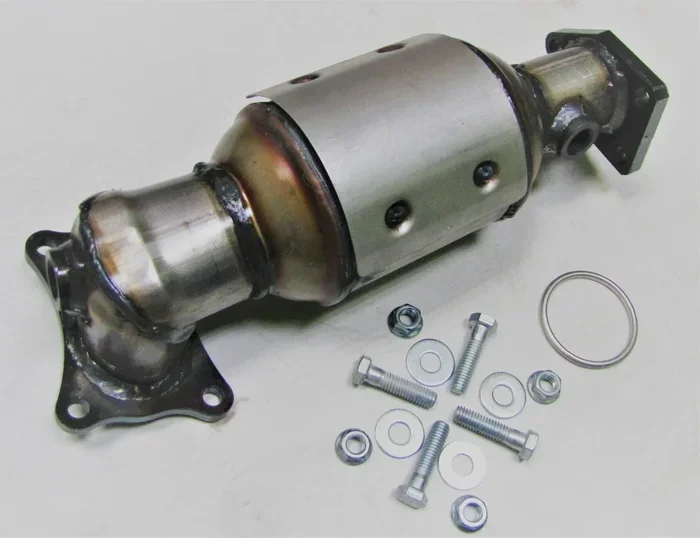
Let’s start with the basics. A catalytic converter is a metal box tucked into your exhaust path. It cleans up harmful gases before they leave the tailpipe. Inside, precious metals like platinum, palladium, and rhodium spark a chemical reaction. That reaction turns carbon monoxide and nitrogen oxides into less harmful carbon dioxide and nitrogen.
So, how many of these boxes does a 4-cylinder engine need? For the vast majority of cars, the answer is one. But keep reading, because the story gets interesting when you look at different exhaust setups.
How a 4-Cylinder Engine Produces Exhaust
A 4-cylinder engine has four pistons firing in sequence. Each piston pushes exhaust gases out through its exhaust port. Those ports merge into a single exhaust manifold. From there, the gases travel through one pipe to the catalytic converter. This is the most common layout for sedans, compacts, and small SUVs.
The single exhaust pipe makes the system simple. One converter handles all the gases from all four cylinders. This design keeps costs low and repairs straightforward. Most economy cars and family sedans follow this pattern. If your car has a single tailpipe, it almost certainly has one converter.
The Job of the Converter
The catalytic converter does three main jobs. First, it oxidizes carbon monoxide into carbon dioxide. Second, it converts unburned hydrocarbons into water and carbon dioxide. Third, it reduces nitrogen oxides into nitrogen and oxygen. This three-way cleaning process is why the device is often called a three-way catalyst.
Without a working converter, your car releases dirty exhaust. It will fail an emissions test. It may also run poorly. The converter is a vital part of your car’s exhaust system and overall engine health.
How Many Catalytic Converters Does a 4-Cylinder Have? The Real-World Breakdown
Now let’s look at the actual numbers. The answer depends on your vehicle’s exhaust design. Here is the breakdown you need to know.
The Standard Single-Converter Setup
Most 4-cylinder cars come with a single exhaust system. This means one pipe leaves the engine and connects to one catalytic converter. The converter sits somewhere under the car, often close to the engine. From there, the cleaned exhaust flows to the muffler and out the tailpipe.
This setup is found on the majority of 4-cylinder sedans, hatchbacks, and wagons. Think of common models like the Honda Civic, Toyota Corolla, or Ford Focus. These cars have a single exhaust pipe under the rear bumper. They have exactly one converter. If you have a single tailpipe, this is almost certainly your setup.
When a 4-Cylinder Gets Two Converters
Some 4-cylinder cars use a dual exhaust system. This means two separate exhaust pipes exit the engine. Each pipe has its own catalytic converter. So, the car ends up with two converters. This setup is common on performance-oriented 4-cylinder models or turbocharged engines.
For example, some sporty compact cars like the Volkswagen Golf GTI or certain trims of the Mazda3 use a twin exhaust. Each side of the engine has its own downpipe and converter. The two converters work in parallel. They reduce back pressure and let the engine breathe better. This improves engine performance and fuel efficiency at high RPMs.
Turbocharged 4-cylinder engines also sometimes use two converters. The turbo sits close to the engine, and each exhaust manifold feeds into its own converter. This design helps the turbo spool faster and keeps exhaust gases flowing smoothly.
Comparison Table: Single vs. Dual Converter Systems
| Feature | Single Converter (1) | Dual Converters (2) |
|---|---|---|
| Exhaust Pipes | One tailpipe | Two tailpipes (dual exhaust) |
| Typical Vehicles | Economy cars, sedans, compacts | Sporty compacts, turbocharged models |
| Converter Location | Underneath, near engine | One per side, near exhaust manifolds |
| Replacement Cost | Lower (one unit) | Higher (two units) |
| Emissions Performance | Meets standard regulations | Often exceeds strict regulations |
| Engine Performance | Good for daily driving | Better high-RPM flow, more power |
As you can see, the number of converters ties directly to the exhaust layout. A single tailpipe means one converter. Two tailpipes mean two converters. This is the easiest way to check your own car. Look under the rear bumper and count the pipes.
Where Are the Converters Located on a 4-Cylinder Car?
Knowing where your catalytic converter sits helps you understand the whole system. On most 4-cylinder cars, the converter is located underneath the vehicle, near the front or middle of the car. It connects to the exhaust manifold and then to the rest of the exhaust pipe.
Underneath the Vehicle: Front and Rear Positions
In a single-exhaust 4-cylinder car, the converter usually sits close to the engine. It is bolted to the exhaust manifold or just a few feet downstream. This location helps the converter heat up quickly. A warm converter works much better at cleaning exhaust gases.
Some cars place the converter further back, near the middle of the vehicle. This is more common in cars with a longitudinal engine or specific chassis designs. The rear position can save space under the engine but may slightly reduce efficiency during warm-up.
If your car has dual exhaust, each converter sits near its respective exhaust manifold. One is typically on the driver’s side, the other on the passenger side. They are both visible if you look underneath the car from the front.
Quick Tip: Finding Your Converters
Here is a simple way to find your converters. Park the car on a level surface and let it cool. Slide under the front of the car with a flashlight. Look for a metal box or oval canister connected to the exhaust pipe. You will usually see bolts or clamps holding it in place. If you see one box, you have one converter. If you see two boxes, you have a dual converter system.
Another clue is the oxygen sensors. These small plugs sit before and after the converter. They monitor the oxygen levels in the exhaust. If you see two oxygen sensors near one box, that box is likely your only converter. If you see sensors around two separate boxes, you have two converters.
Why Would a 4-Cylinder Need More Than One Converter?
You might wonder why any 4-cylinder engine would need two converters. The reasons are practical and tied to modern car engineering. Let’s explore them.
Stricter Emissions Regulations
Emissions laws have gotten tougher around the world. Places like California, Europe, and Japan enforce strict limits on pollutants. A single converter might not be enough to meet these standards on certain engines. Adding a second converter gives the car a better chance of passing emissions tests and reducing harmful output.
Some 4-cylinder engines produce a lot of exhaust volume, especially when turbocharged. One converter can become a bottleneck. The second converter reduces this restriction. It allows the engine to exhale more freely while still cleaning the gases effectively. This is a win for both emissions compliance and performance.
High-Performance Exhaust Flow
Car makers use dual exhaust systems on 4-cylinder engines that prioritize driving feel. A sporty 4-cylinder engine revs high and produces exhaust pulses in a specific pattern. Two converters can handle these pulses better than one. They reduce back pressure, which means the engine does not have to work as hard to push exhaust out.
Less back pressure equals better engine performance. The engine can make more power and respond faster to the throttle. This is why many turbocharged 4-cylinder cars and hot hatches use a twin converter setup. It is not just about cleaning exhaust. It is about letting the engine run at its best.
Expert Insight: Engine Tuning and Converter Count
Engine tuners often prefer dual converter setups. When you upgrade an intake, exhaust, or turbo, the exhaust flow changes. A single converter might create too much restriction. Adding a second converter keeps the exhaust velocity healthy. This is a common modification on 4-cylinder performance builds. It also helps the car pass emissions testing in states with strict rules.
If you are buying a used 4-cylinder car, check how many converters it has. A car with two converters may have been tuned for better performance or stricter emissions. This can affect its resale value and maintenance needs.
Signs Your Catalytic Converter Is Failing
A failing catalytic converter can cause a range of problems. The good news is that it gives you clear warning signs. Catching these early can save you from a costly breakdown.
Check Engine Light and Error Codes
The most common sign is the check engine light. The car’s computer monitors the oxygen sensors before and after the converter. If the converter is not working right, the oxygen sensor readings change. The computer stores a trouble code, often P0420 or P0430, which means catalyst efficiency is low.
You can read these codes with an OBD-II scanner. Many auto parts stores will read them for free. If you see a catalyst-related code, have the converter inspected soon. Ignoring it can lead to worse problems.
Reduced Fuel Economy and Power
A clogged or poisoned converter restricts exhaust flow. Your engine has to work harder to push gases out. This robs you of fuel economy. You might notice you need to fill up more often. You may also feel a loss of power, especially at highway speeds.
Some drivers describe a sensation of the car “bogging down” when they step on the gas. This happens because the exhaust cannot escape quickly enough. If you notice these symptoms, do not ignore them. A bad converter can also cause rough idling or stalling.
Common Mistakes: Ignoring Early Symptoms
Many people wait too long to address converter issues. They assume the check engine light is something minor. But a failing converter will only get worse. A partially clogged converter can overheat and damage the exhaust manifold. In rare cases, it can even start a fire under the car.
Another mistake is trying to clean a converter with additives. Products that claim to clean catalytic converters rarely work. Once the internal catalyst material is damaged, replacement is the only real fix. Do not waste money on quick fixes.
Replacement Costs and How to Save Money
Replacing a catalytic converter can be expensive. The good news is that you have options. Understanding the costs and choices helps you make smart decisions.
OEM vs. Aftermarket Converters
OEM converters are made by the car manufacturer. They fit perfectly and meet all emissions standards. They are also the most expensive. An OEM converter for a 4-cylinder car can cost anywhere from $500 to $2,000, depending on the vehicle and the precious metals inside.
Aftermarket converters are made by third-party companies. They cost less, often $200 to $800. Quality varies widely. Some aftermarket units work great and last for years. Others fail quickly or cause the check engine light to come on. Look for brands with good reviews and warranties. Also, make sure the aftermarket converter is CARB-compliant if you live in California or a state that follows California rules.
Here is a quick tip. Ask your mechanic to show you the old converter. If it looks melted or heavily corroded, the replacement is justified. If it looks fine, you might have an oxygen sensor issue instead. Always get a proper diagnosis before spending big money.
Step-by-Step: Replacing a 4-Cylinder Converter
If you are handy, you can replace a single converter yourself. Here is a simplified overview. First, lift the car safely with a jack and jack stands. Locate the converter and spray the bolts with penetrating oil. Let it sit for a few minutes. Then, unbolt the converter from the exhaust pipe. You may need a breaker bar and socket set. Remove the old unit and bolt on the new one. Tighten the bolts to the proper torque. Finally, start the car and check for exhaust leaks. A new converter should eliminate any check engine light related to catalyst efficiency.
If your car has two converters, the process is similar but takes more time. You will replace each unit one at a time. Always replace converters in pairs if both are old. A new converter next to an old one can cause uneven exhaust flow.
Key Takeaways: Protecting Your Converter
Your catalytic converter is not a maintenance-free part. It can last 100,000 miles or more, but it can also fail early. Here is how to protect it. Avoid running the engine on rich fuel mixtures. This puts unburned fuel into the converter and can melt the internals. Keep your engine tuned properly. A misfiring engine sends raw fuel into the exhaust, which damages the converter. Use good quality fuel. Contaminants in cheap fuel can poison the catalyst. And finally, consider an anti-theft plate. Converter theft is on the rise, and a 4-cylinder converter is a prime target because of its precious metal content.
By following these simple steps, you can extend the life of your converter and avoid unexpected repair bills.
Conclusion
So, how many catalytic converters does a 4-cylinder have? For most cars, the answer is one. But the real answer is it depends on your exhaust system. A single tailpipe means one converter. A dual exhaust means two converters. Both setups serve the same core purpose: cleaning up exhaust gases and protecting the environment.
Understanding your car’s catalytic converter count helps you make smarter repair decisions. It also helps you spot problems early. Whether your car has one converter or two, keeping it in good shape is essential. A healthy converter means better fuel economy, smoother engine operation, and a passing emissions test. Next time you look under your car, you will know exactly what those metal boxes are doing. Take care of them, and they will take care of your engine for miles to come.
Frequently Asked Questions
Can a 4-cylinder car have zero catalytic converters?
No. Every street-legal 4-cylinder car sold in the United States since the 1970s must have at least one catalytic converter. Removing it is illegal and will cause your car to fail emissions testing. Even older 4-cylinder models from the early 1970s typically had a simple converter installed.
How do I know if my 4-cylinder has one or two converters?
The easiest way is to count the tailpipes. One tailpipe usually means one converter. Two tailpipes usually mean two converters. You can also look underneath the car and count the metal canisters connected to the exhaust pipe. If you are unsure, a mechanic can quickly confirm the count during an inspection.
What happens if I drive with a bad catalytic converter on a 4-cylinder?
Driving with a bad converter can cause several issues. Your check engine light will likely stay on. You may notice reduced power, poor fuel economy, and a rotten egg smell from the exhaust. In severe cases, a clogged converter can overheat and damage the exhaust system. It will also cause your car to fail an emissions test.
Are catalytic converters on 4-cylinder cars expensive to replace?
The cost varies a lot. A single converter replacement for a 4-cylinder car typically ranges from $500 to $2,000. The price depends on whether you choose an OEM or aftermarket part and the labor cost in your area. Aftermarket converters are cheaper but may not last as long or may trigger a check engine light on some vehicles.
Can a 4-cylinder with a single converter pass a strict emissions test?
Yes, most 4-cylinder cars with a single converter pass emissions tests without issues. The converter is designed to meet federal and state standards for that engine size. However, if the converter is old or damaged, it may fail. Keeping your converter in good condition and fixing engine problems promptly is the best way to pass.
Is catalytic converter theft common on 4-cylinder cars?
Yes, 4-cylinder converters are often targeted by thieves. They contain small amounts of platinum, palladium, and rhodium. Thieves can remove them quickly with a saw and sell them for scrap. Cars with low ground clearance are especially vulnerable. You can deter theft by installing an anti-theft plate or having the converter welded to the frame.