Georgia Window Tint Law Explained and What You Need to Know
The Georgia window tint law sets clear rules on how dark or reflective your car windows can be. You must follow specific visible light transmission (VLT) percentages for the front windshield, front side windows, and rear windows. Breaking these rules can lead to fines, failed inspections, or even tint removal. This guide breaks down every legal limit, medical exemption, and penalty so you stay compliant and avoid trouble.
# What Is the Georgia Window Tint Law?
Georgia has specific rules for how dark you can tint your car windows. The law focuses on visible light transmission, or VLT. This is the amount of light that passes through the glass. Lower VLT means darker tint. The state also regulates how reflective the tint can be. These rules apply to sedans, SUVs, and vans. Understanding the Georgia window tint law helps you avoid fines and keep your car legal.
The Georgia window tint law is part of the state’s motor vehicle code. It sets limits for the front windshield, front side windows, rear side windows, and rear window. The rules differ based on the vehicle type. Sedans have stricter limits for front side windows than SUVs and vans. You must also follow reflectivity guidelines. Tint that is too dark or too reflective can get you pulled over. The Georgia window tint law aims to balance personal comfort with road safety.
### Why Does the Georgia Window Tint Law Exist?
The law exists for important safety reasons. Dark tint can reduce a driver’s ability to see at night or in bad weather. It also makes it harder for police to see inside the vehicle during a traffic stop. Reflective tint can blind other drivers with glare. The state balances personal comfort with public safety. Heat rejection and UV protection are still allowed, but within limits. The Georgia window tint law aims to keep roads safe for everyone. Drivers who follow the rules enjoy tinted windows without risk.
### A Brief History of Georgia’s Tint Laws
Window tinting became popular in the 1990s. Drivers wanted privacy and sun protection. However, dark tints caused accidents and made police work harder. Georgia responded with its first tint regulations in the early 2000s. The Georgia window tint law has been updated several times since then. Today, the law balances driver comfort with safety. Knowing this history helps you understand why the rules exist.
## Legal Tint Darkness Limits for Each Window
The darkness of your tint is measured by VLT percentage. This tells you how much light gets through. Georgia law sets different VLT limits for different windows. Here is a clear breakdown of the legal tint limits.
### Sedan Tint Rules
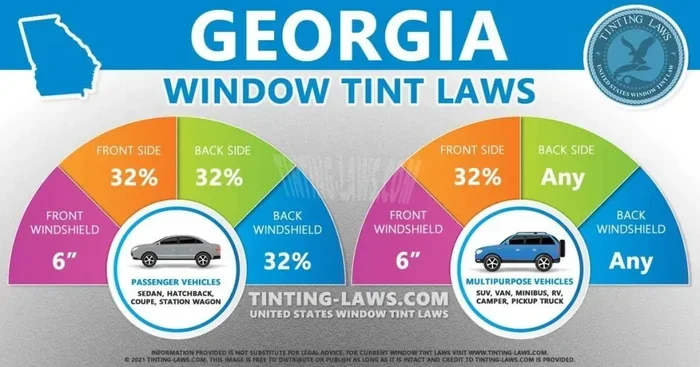
For a sedan, the front windshield must allow at least 32% VLT. You can tint the top 6 inches of the windshield with a non-reflective tint. The front side windows must also allow more than 32% VLT. This means you cannot tint the front doors very dark. The rear side windows and rear window can be any darkness. You have full freedom for the back seats. This is a key rule in the Georgia window tint law for passenger cars.
### SUV and Van Tint Rules
SUVs and vans have more flexibility. The front windshield and front side windows must still allow over 32% VLT. However, the rear side windows and rear window can be tinted as dark as you want. This makes SUVs and vans popular choices for darker tints. The Georgia window tint law treats these vehicles differently because they often carry passengers in the back. You can enjoy a sleek, dark look in the rear without breaking the law.
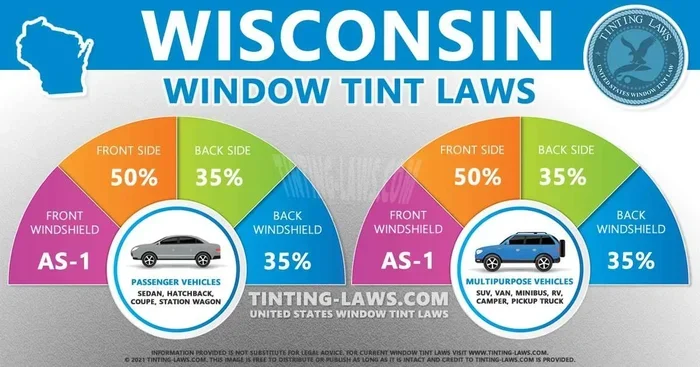
### Comparison Table: Georgia Tint Darkness Limits
| Vehicle Type | Front Windshield | Front Side Windows | Rear Side Windows | Rear Window |
|————–|——————|——————–|——————-|————-|
| Sedan | 32% VLT (top 6″ non-reflective) | Over 32% VLT | Any darkness | Any darkness |
| SUV/Van | 32% VLT (top 6″ non-reflective) | Over 32% VLT | Any darkness | Any darkness |
This table shows the legal limits clearly. Always check your specific vehicle type. The Georgia window tint law applies to all passenger vehicles. Use this table as a quick reference when choosing your tint.
### Quick Tips: Measuring Tint Darkness
– Use a VLT meter to test your tint before driving.
– Ask your tint shop for a certification sticker.
– Keep the sticker on the lower left corner of the windshield.
– If you buy a used car, verify the tint darkness matches the law.
– A simple flashlight test can give you a rough idea, but a meter is more accurate.
## Medical Exemptions and Special Cases
Not everyone can use standard tint limits. Georgia allows medical exemptions for people with skin or eye conditions. The Georgia window tint law includes provisions for darker tint on medical grounds.
### Who Qualifies for a Medical Exemption?
You may qualify if you have a condition that makes you sensitive to sunlight. Conditions like lupus, eczema, or photosensitivity disorder can qualify. You need a signed statement from a licensed physician. The statement must explain why darker tint is medically necessary. You then apply to the Georgia Department of Revenue for a special permit. This exemption is a vital part of the Georgia window tint law for those with health needs.
### How to Get a Medical Exemption
– Visit your doctor and get a detailed medical statement.
– Fill out the application form from the Georgia DMV website.
– Submit the form with your medical documentation.
– If approved, you will receive a permit sticker for your vehicle.
– The exemption allows darker tint on the front side windows and windshield.
### Common Mistakes with Medical Exemptions
Many people assume a doctor’s note is enough. It is not. You must have the state permit. Without the sticker, you can still get a ticket. Another mistake is using the exemption for the rear windows only. The exemption can apply to front windows if medically needed. Always carry the permit in your vehicle. The Georgia window tint law takes exemptions seriously.
## Tint Reflectivity and Metallic Tint Rules
Reflectivity is just as important as darkness. The Georgia window tint law limits how much light a tint can reflect. This prevents dangerous glare on the road.
### Reflectivity Limits for Sedans and SUVs
For sedans, the front side windows and rear side windows must not be more than 20% reflective. This means the tint cannot act like a mirror. SUVs and vans follow the same 20% reflectivity rule for all windows. Metallic or mirrored finishes are not allowed. You can choose matte or satin finishes, but they must stay under the reflectivity limit. These reflectivity rules are a core part of the Georgia window tint law.
### Why Reflectivity Matters
Highly reflective tint blinds other drivers. It creates a safety hazard, especially at night or in rain. The Georgia window tint law keeps reflectivity low to protect everyone. If your tint looks like a mirror from the outside, it is likely illegal. A simple test is to stand outside the car and see if you can see a clear reflection of your face. If you can, the tint is too reflective.
### Expert Insight: Choosing Non-Reflective Tint
“Many drivers love the look of metallic tint, but it’s illegal in Georgia,” says a certified tint installer. “Stick to ceramic or carbon tints. They reject heat without high reflectivity. These films are legal and still keep your car cool.”
## Penalties for Illegal Window Tint in Georgia
Breaking the Georgia window tint law comes with penalties. The state takes this seriously to maintain road safety.
### Fines and Points on Your License
A first offense for illegal tint can result in a fine of up to $1,000. You may also receive points on your driver’s license. These points can raise your insurance rates. Repeat offenses lead to higher fines and possible court appearances. The court may order you to remove the illegal tint immediately. A tint ticket is no joke, and it can cost you more than just money.
### Vehicle Inspection Failures
Illegal tint will cause your vehicle to fail inspection. Georgia requires all cars to pass an annual safety inspection. If your tint is too dark or too reflective, you will get a rejection notice. You must then remove or lighten the tint and re-inspect. This costs time and money. Many drivers are surprised to learn their tint is illegal only during inspection.
### How Long Does a Tint Ticket Stay on Your Record?
A tint ticket is a misdemeanor in Georgia. It usually stays on your driving record for a set period. The exact duration depends on the severity and your driving history. Points from a tint ticket can affect your insurance rates for up to three years. Paying the fine quickly can minimize the impact. However, ignoring the ticket leads to license suspension. The Georgia window tint law treats this offense seriously.
### Common Mistakes That Lead to Penalties
– Tinting the front side windows below 32% VLT.
– Using reflective or metallic tint.
– Not displaying the permit sticker for medical exemptions.
– Assuming the law is the same for all vehicle types.
– Buying tint from an unlicensed shop that guarantees “legal tint” but lies.
– Forgetting that aftermarket tint adds to the factory tint darkness.
### Quick Tips to Avoid Penalties
– Ask your tint installer to confirm the VLT percentage.
– Get a written warranty that states the tint meets Georgia law.
– Keep all permits and stickers in your glovebox.
– If you move to Georgia from another state, re-check your tint.
– Schedule a VLT test at a local tint shop before your inspection.
## How to Stay Compliant and Choose the Right Tint
Choosing the right tint is easy when you know the rules. The Georgia window tint law gives you clear guidelines. Follow these steps to stay compliant.
### Step 1: Know Your Vehicle Type
Sedans have stricter rules than SUVs and vans. Check your vehicle classification. This determines which VLT limits apply to your front side windows. The Georgia window tint law treats different vehicle types differently. Knowing your type saves you from costly mistakes.
### Step 2: Pick a Legal VLT Percentage
For sedans, choose a front side window tint with over 32% VLT. For rear windows, you can go as dark as you want. Many tint shops offer 20%, 15%, or 5% VLT films for the rear. These are legal for the back seats. You can enjoy privacy and heat rejection in the rear without worry.
### Step 3: Avoid Reflective and Metallic Finishes
Choose ceramic, carbon, or dyed tints. These are non-reflective and legal. They still block heat and UV rays effectively. Avoid any tint that looks mirror-like. The Georgia window tint law favors these safer options.
### Step 4: Get Professional Installation
A reputable tint shop will know the Georgia window tint law. They will apply the correct film and provide a certification sticker. DIY kits can be tricky. You might accidentally apply a film that is too dark. Professional installation ensures compliance and a bubble-free finish.
### Step 5: Keep Your Documentation Handy
If you have a medical exemption, carry the permit at all times. For standard tint, keep the receipt and warranty. These documents can help if you get pulled over. The Georgia window tint law expects you to prove compliance if asked.
### Georgia Window Tint Law and Insurance Implications
Your car insurance may be affected by illegal tint. If you get into an accident and your tint is illegal, your claim could be denied. Insurers view illegal modifications as increased risk. They may raise your premiums or even cancel your policy. Keeping your tint within the Georgia window tint law protects your coverage. Always inform your insurer if you change your tint.
### Key Takeaways for Georgia Drivers
– The Georgia window tint law sets a 32% VLT minimum for front side windows on sedans.
– SUVs and vans can have any darkness on rear windows.
– Reflectivity must stay below 20% for all windows.
– Medical exemptions require a state permit, not just a doctor’s note.
– Penalties include fines up to $1,000 and failed inspections.
– Always choose a licensed, reputable tint installer.
– Keep your certification sticker on the windshield.
## Georgia Window Tint Law: Aftermarket vs. Factory Tint
Many cars come with factory tint on the rear windows. This factory tint is different from aftermarket tint. The Georgia window tint law treats them differently.
### What Is Factory Tint?
Factory tint is the tint built into the glass during manufacturing. It usually has a VLT of around 15% to 26%. You cannot see through it easily. Factory tint is common on the rear side windows and rear windshield. It provides privacy and UV protection from the factory.
### How Aftermarket Tint Differs
Aftermarket tint is applied as a film on top of the glass. You choose the darkness and type. The Georgia window tint law measures the combined VLT of factory tint plus aftermarket tint. If you have factory tint and add aftermarket tint, the total VLT must still meet the legal limits. This is a crucial point many drivers miss.
### Does Factory Tint Count Toward the Legal Limit?
Yes. The Georgia window tint law requires that the total light transmission of the glass plus film meets the VLT minimum. If your factory tint is already at 20% VLT and you add a 5% VLT film, the total VLT drops below the legal limit. You must calculate the combined VLT. Ask your tint shop to measure the total VLT after installation. This ensures you stay on the right side of the Georgia window tint law.
## Windshield Tinting Rules in Georgia
The windshield has its own set of rules. You cannot tint the entire windshield dark. The Georgia window tint law allows only a specific strip at the top.
### The Non-Reflective Strip Rule
The front windshield can have a non-reflective tint strip. This strip must be on the top 6 inches of the windshield. It cannot be reflective. The strip helps reduce sun glare without blocking the driver’s view. This rule is the same for sedans, SUVs, and vans. The Georgia window tint law is clear: no dark tint below the AS-1 line on the windshield.
### Can You Tint Below the AS-1 Line?
The AS-1 line is the line marked by the manufacturer. It is usually where the windshield curvature begins. Tinting below this line on the front windshield is illegal. The Georgia window tint law prohibits any tint that blocks more than 32% of light below this line. This ensures the driver has a clear view of the road ahead.
## DIY Tinting vs. Professional Installation
Some drivers consider DIY tint kits to save money. While this seems appealing, it carries risks. The Georgia window tint law holds you responsible for compliance, regardless of who applied the tint.
### Risks of DIY Tint Kits
– Easy to apply a film that is too dark.
– Bubbles and wrinkles can obstruct vision.
– DIY kits often lack certification stickers.
– You may void your vehicle warranty.
– Incorrect application can lead to peeling and poor heat rejection.
### Benefits of Professional Installation
– Professionals know the Georgia window tint law and legal VLT levels.
– They provide a certification sticker and warranty.
– The film is applied bubble-free and durable.
– You get advice on the best legal tint for your car.
– Professional installation often comes with a compliance guarantee.
### Cost Considerations
Professional tinting costs more upfront. However, it saves you from fines and removal costs. A quality tint job can last 5 to 10 years. The Georgia window tint law encourages professional installation for safety and compliance.
## Recent Changes to Georgia Window Tint Law
Laws can change over time. It is important to stay updated on the Georgia window tint law. Recent updates have clarified some rules and increased penalties.
### What Changed in the Latest Update?
The state has increased enforcement of tint darkness limits. Police now use portable VLT meters during traffic stops. The fines for illegal tint have also risen. The Georgia window tint law now emphasizes the importance of certification stickers. Some municipalities have adopted stricter local ordinances on top of the state law.
### How This Affects Current Tint Jobs
If you tinted your car before the recent updates, you might still be compliant. However, if your tint is close to the limit, it may now fail inspection. Check your tint VLT regularly. The Georgia window tint law requires ongoing compliance, not just at the time of installation.
## Removing Illegal Tint: What to Do If You’re Caught
If you receive a tint ticket, you have options. The Georgia window tint law gives you a path to resolve the issue.
### Steps to Take After Receiving a Tint Ticket
– Do not ignore the ticket. It will not go away.
– Check the VLT of your tint with a certified meter.
– If the tint is illegal, you have 30 days to remove or lighten it.
– Keep the receipt from the removal or replacement job.
– Present the receipt to the court to reduce or dismiss the fine.
### How to Legally Remove or Lighten Tint
You can either remove the tint entirely or apply a lighter film. Professional removal ensures no damage to the glass. After removal, you can apply a legal VLT film. The Georgia window tint law allows you to re-tint as long as you meet the limits. Always get a new certification sticker after the work is done.
## Conclusion
The Georgia window tint law is clear once you know the basics. You must follow VLT limits for the front windshield and front side windows. Sedans have a 32% VLT minimum on the front sides. SUVs and vans have more flexibility for the rear. Reflectivity must stay low, and metallic tints are banned. Medical exemptions exist but require a state permit. Breaking the law can lead to fines, points on your license, and inspection failures. By choosing legal tint and working with a professional, you stay safe and compliant. The Georgia window tint law protects drivers and passengers. Follow it, and you can enjoy the benefits of tinted windows without worry.
Key Takeaways
- Know the 32% VLT rule: Sedans must keep front side windows above 32% visible light transmission.
- Rear windows are flexible: SUVs and vans can have any darkness on rear side and rear windows.
- Reflectivity matters: All tints must stay below 20% reflectivity to avoid glare issues.
- Medical exemptions need a state permit: A doctor’s note alone is not enough; you must carry the Georgia permit sticker.
- Penalties are steep: Illegal tint can result in fines up to $1,000, license points, and failed inspections.
- Professional installation helps: A licensed tint shop ensures your film meets Georgia window tint law requirements.
Frequently Asked Questions
What is the legal tint darkness for front side windows in Georgia?
For sedans, the front side windows must allow more than 32% visible light transmission (VLT). SUVs and vans follow the same rule for the front side windows. The Georgia window tint law sets this limit to ensure drivers can see clearly, especially at night.
Can I tint my rear windows as dark as I want in Georgia?
Yes, for SUVs and vans, the rear side windows and rear window can be any darkness. Sedans also have no restriction on rear window darkness. However, the front side windows must still meet the 32% VLT minimum. Always check the Georgia window tint law before applying dark film to any window.
Is reflective or metallic tint legal in Georgia?
No, reflective and metallic tints are illegal. The Georgia window tint law limits reflectivity to 20% or less for all windows. Tint that acts like a mirror can blind other drivers and create dangerous glare. Stick to ceramic, carbon, or dyed non-reflective films.
How do I get a medical exemption for darker window tint?
You need a signed statement from a licensed physician explaining your condition. Then apply to the Georgia Department of Revenue for a special permit. If approved, you will receive a permit sticker to display on your windshield. Remember, a doctor’s note alone does not satisfy the Georgia window tint law.
What happens if I get caught with illegal window tint?
You can receive a fine of up to $1,000 and points on your driver’s license. Your vehicle may fail its annual safety inspection. The court can also order immediate removal of the illegal tint. Repeated offenses lead to higher fines and potential court appearances.
Does factory tint count toward the legal VLT limit?
Yes. The Georgia window tint law measures the combined VLT of factory tint and any aftermarket film. If your factory tint is already at 20% VLT and you add a 5% VLT film, the total VLT drops below the legal limit. Always measure the total VLT after any tint application.