Does Toyota Use Metric or Standard Measurements Explained
Toyota uses the metric measurement system across all its vehicles and parts. This means bolt sizes, torque specs, and engine dimensions are all metric. Understanding this helps Toyota owners choose the right tools and parts for repair and maintenance.
When you own a Toyota, one question comes up more than you might expect. Does Toyota use metric or standard measurements? The answer is simple but important. Toyota uses the metric measurement system across every single vehicle and part. This affects everything from bolt sizes to torque specifications. If you are doing your own Toyota repair or just want to understand your vehicle better, this knowledge matters a lot.
Knowing whether your Toyota uses metric or standard measurements saves you time and money. It prevents costly mistakes when buying parts. It also keeps you safe when working on your vehicle. Many new Toyota owners assume their American-market cars use standard measurements. That is not the case. Toyota has used metric measurements since the early days of its global expansion. This guide covers everything you need to know about Toyota’s measurement system. We will look at why Toyota chose metric, how it affects your tools, and what it means for everyday maintenance.
Key Takeaways
- Toyota uses metric measurements exclusively: All Toyota vehicles use the metric system for parts, fasteners, and specifications.
- Metric bolts and standard bolts are not interchangeable: Using the wrong type can damage threads and compromise safety.
- A metric socket set is essential for Toyota owners: Standard sockets will not fit metric fasteners properly.
- Torque specs are always in metric units: You need a metric torque wrench for proper Toyota maintenance.
- Toyota’s global manufacturing uses the same metric standard: Whether built in Japan, the US, or elsewhere, Toyota sticks to metric.
- Older US-market Toyotas still use metric: Even vintage Toyotas sold in America use metric fasteners.
- Knowing the measurement system saves time and money: It prevents costly mistakes when buying parts or doing DIY repairs.
📑 Table of Contents
What Measurement System Does Toyota Use?
The Short Answer
Toyota uses the metric system for all its vehicles. Every Toyota car, truck, and SUV built around the world uses metric fasteners, metric dimensions, and metric specifications. This includes models sold in the United States, where standard or imperial measurements are common in domestic vehicles. Whether you own a Camry, a Tacoma, a Corolla, or a Highlander, your Toyota uses metric measurements.
This might surprise some owners. After all, Toyota sells millions of vehicles in the US every year. Many people associate American cars with standard measurements. But Toyota has always followed the metric system. This is true for both older models and brand-new vehicles. The metric system is the international standard for automotive manufacturing. Toyota follows this standard to maintain consistency across its global factories.
Why This Matters for Toyota Owners
Understanding that Toyota uses metric measurements has real-world benefits. It affects the tools you buy, the parts you order, and how you maintain your vehicle. If you show up at an auto parts store with a standard bolt, you will not find the right fit for your Toyota. If you grab a standard socket set, many bolts will not seat properly. This leads to frustration and potential damage.
For DIY mechanics, this knowledge is a game-changer. You will always know exactly what tools and parts to buy. For professional Toyota repair technicians, the metric standard is second nature. But for everyday owners, it is worth understanding. Even simple tasks like checking tire pressure or replacing a brake pad involve metric fasteners. Knowing the system helps you work confidently on your vehicle.
Understanding Metric vs Standard Measurements
What Are Metric Measurements?
The metric system is a decimal-based system of measurement. It originated in France and is now used worldwide. In the metric system, lengths are measured in millimeters and centimeters. Forces are measured in newtons. Torque is measured in newton-meters. These units are straightforward and based on multiples of ten.
For automotive applications, metric measurements mean bolt diameters are listed in millimeters. A metric bolt might be 10 millimeters, 12 millimeters, or 14 millimeters across the head. Thread pitch is also measured in millimeters. This is very different from the standard system, which uses inches and threads per inch.
Toyota vehicle specifications are written entirely in metric units. Your owner’s manual will list torque values in newton-meters. Parts catalogs show dimensions in millimeters. This makes the metric system the natural language of Toyota ownership.
What Are Standard Measurements?
The standard system, also called the imperial system, is primarily used in the United States. In this system, lengths are measured in inches, feet, and yards. Bolt diameters are listed in fractions of an inch. For example, a standard bolt might be 1/2 inch, 5/8 inch, or 3/4 inch across the head.
Standard measurements use threads per inch to define thread pitch. This is different from the metric approach of measuring pitch in millimeters. Many older American vehicles use standard fasteners. Domestic truck manufacturers like Ford and Chevrolet have historically used standard measurements for some components.
However, even in the US automotive market, the metric system has become dominant. Most modern vehicles, including those built by American manufacturers, use metric fasteners. Toyota has always been fully metric, even when competing with American brands that used standard measurements.
Key Differences Between the Two Systems
The differences between metric and standard measurements go beyond just the units. Here are the main distinctions that matter for Toyota owners:
>
- Units of measurement: Metric uses millimeters and newton-meters. Standard uses inches and foot-pounds.
- Bolt head sizes: Metric bolts use hex sizes in millimeters. Standard bolts use hex sizes in inches.
- Thread pitch: Metric threads are defined by pitch in millimeters. Standard threads are defined by threads per inch.
- Torque specifications: Toyota torque specs are in newton-meters. Standard-spec vehicles use foot-pounds.
- Tool compatibility: Metric wrenches and sockets do not fit standard bolts and vice versa.
These differences are not small. Using the wrong system can strip threads, round bolt heads, or cause parts to fail. This is why it is so important for Toyota owners to know their vehicle uses metric measurements exclusively.
Toyota’s Official Measurement Standard
How Toyota Decided on Metric
Toyota is a Japanese automaker. Japan uses the metric system as its official standard. From the very beginning, Toyota designed its vehicles using metric measurements. This was not a choice made later. It was built into the company’s engineering DNA from day one.
When Toyota began selling vehicles in the United States in the 1950s and 1960s, it kept its metric standard. Even though the US market was accustomed to standard measurements, Toyota did not switch. This was a deliberate decision. It ensured consistency across all Toyota vehicles worldwide. A Camry built in Japan uses the same metric fasteners as one built in Kentucky.
This global consistency is a huge advantage for Toyota owners. No matter where you buy your Toyota, the parts and specifications are the same. You do not need to worry about regional differences in measurement systems. The metric standard is universal across the Toyota lineup.
Toyota’s Global Manufacturing Approach
Toyota builds vehicles in factories around the world. These factories are in Japan, the United States, Thailand, India, Brazil, and many other countries. Despite the different locations, all Toyota factories follow the same metric standard.
This approach simplifies the supply chain. Parts can be manufactured in one country and assembled in another without any measurement conversion issues. It also means that Toyota OEM parts are always metric. When you order a genuine Toyota part, it will use metric dimensions and specifications.
The international standards that Toyota follows are well-established. The metric system is recognized as the global standard for engineering and manufacturing. By using metric measurements, Toyota aligns with international best practices. This benefits everyone from engineers to dealership technicians to DIY owners.
Common Toyota Parts and Their Measurements
Engine Components
Toyota engine parts are all metric. This includes bolts, nuts, gaskets, and engine mounts. Engine block bolts might be 12 millimeters or 14 millimeters. Head bolts often require specific torque specs listed in newton-meters. Spark plugs are also metric, with thread diameters measured in millimeters.
If you are doing a basic engine job like a spark plug replacement, you need metric spark plugs. The gap specifications are also in metric units. Using the wrong spark plug can cause engine damage. Always check your Toyota parts catalog for the correct metric specifications.
Engine internals like pistons, connecting rods, and camshafts are all designed with metric tolerances. Even something as simple as an oil drain plug uses a metric bolt. The typical Toyota oil drain plug is a 14-millimeter bolt. This is a great example of how deeply metric the Toyota system goes.
Suspension and Chassis Parts
The suspension system on a Toyota is fully metric. Control arm bolts, sway bar end links, and strut nuts all use metric fasteners. Suspension work requires a good set of metric sockets and wrenches.
Brake components are also metric. Brake caliper bolts, brake pad retaining clips, and rotor lug nuts all use standard metric sizes. A common Toyota brake caliper bolt is 14 millimeters or 17 millimeters. Using a standard socket on these bolts will not work and can damage the bolt head.
Chassis components like body mounts and bracket bolts are metric as well. Toyota suspension specifications are written in metric units throughout the service manual. This makes it easy to follow along with repair procedures if you understand the metric system.
Body and Exterior Parts
Even the body panels and exterior trim on a Toyota use metric fasteners. Hood bolts, trunk lid fasteners, and bumper mounting bolts are all metric. Door hinges and latches also use metric hardware.
Glass installation is another area where metric measurements matter. Windshield mounting bolts and trim clips follow metric specifications. Mirrors, lights, and weather stripping all use metric fasteners and dimensions.
Body repair work requires metric tools and metric OEM parts. If you are replacing a fender or a bumper, all the mounting hardware is metric. This is consistent across the entire Toyota lineup, from the smallest Yaris to the largest Tundra.
Tools You Need for Toyota Vehicles
Metric vs Standard Socket Sets
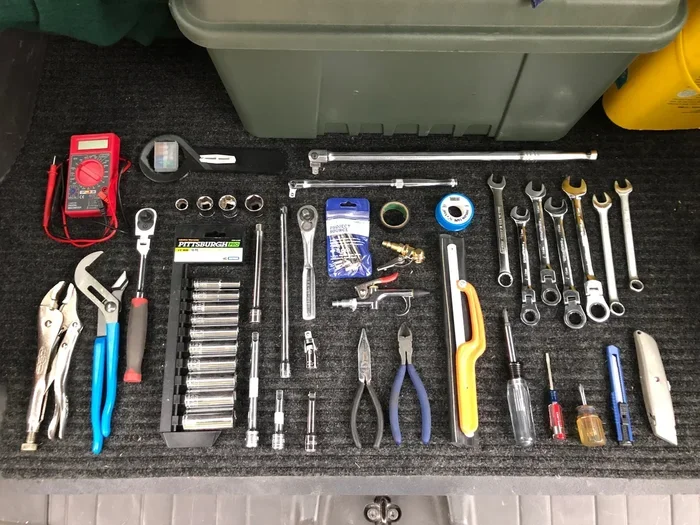
For working on a Toyota, you need a metric socket set. Standard sockets will not fit metric bolts. Trying to force a standard socket onto a metric bolt can round the bolt head and make removal much harder.
A quality metric socket set should include sizes from 4 millimeters up to 36 millimeters or larger. Common Toyota sizes include 8mm, 10mm, 12mm, 14mm, 17mm, 19mm, and 21mm. A 3/8-inch drive set is a great starting point for most Toyota repair jobs.
Many socket sets are labeled as “metric” right on the packaging. Look for this label when shopping. Brands like Snap-On, Craftsman, and Tekton offer excellent metric socket sets at various price points. A good metric set is one of the most important investments for any Toyota owner.
Torque Wrenches and Specifications
Toyota torque specifications are always in newton-meters. This means you need a metric torque wrench for proper Toyota maintenance. A standard torque wrench calibrated in foot-pounds will not give you the correct readings.
Torque is critical for many Toyota repair tasks. Over-tightening or under-tightening bolts can cause serious problems. Cylinder head bolts must be torqued to exact specifications. Lug nuts need proper torque for safe driving. Engine mounts, exhaust bolts, and suspension components all require precise torque values.
A digital or beam-style metric torque wrench is a smart purchase. You can find good options at affordable prices. Always refer to the Toyota service manual for the correct torque specs. This ensures your repairs are safe and long-lasting.
Quick Tips for Tool Selection
- Buy a dedicated metric tool set: Do not mix metric and standard tools for Toyota work.
- Check your socket set for metric markings: Most metric sockets have the size stamped on the drive end.
- Keep a metric torque wrench in your toolbox: It is essential for proper Toyota maintenance.
- Invest in quality tools: Cheap tools can strip metric bolts easily. Better tools last longer and work better.
- Store metric tools separately: This prevents accidental mixing with standard tools.
- Read the Toyota service manual: It lists all the metric specs you need for any repair job.
Tips for Toyota Owners and DIY Mechanics
How to Identify Measurement Types
If you are ever unsure whether a bolt is metric or standard, there is a simple way to check. A metric bolt will have markings on the head that indicate the size in millimeters. You can also measure the bolt diameter with a ruler or caliper. If the measurement is in millimeters, it is metric.
Standard bolts are measured in inches. You might see markings like 1/2 inch or 5/8 inch. If you measure a bolt and get a reading in inches, it is standard. For Toyota vehicles, almost every bolt you encounter will be metric.
This identification process is quick and easy. It only takes a few seconds per bolt. Over time, you will start to recognize metric sizes by feel. The hex head sizes on metric bolts follow a consistent pattern that becomes familiar with practice.
Common Mistakes to Avoid
The biggest mistake Toyota owners make is assuming their vehicle uses standard measurements. This leads to buying the wrong parts or using the wrong tools. Always double-check that your parts and tools are metric.
Another common mistake is forcing a standard socket onto a metric bolt. This damages both the bolt and the socket. If a socket does not fit snugly, do not force it. Stop and check the size. Using the wrong tool wastes time and can cause expensive damage.
Over-tightening is also a risk. Metric bolts have specific torque values. Guessing the torque can lead to broken bolts or damaged threads. Always use a torque wrench and follow the Toyota specifications in the service manual.
When to See a Professional
While many Toyota maintenance tasks are straightforward, some jobs are best left to professionals. Engine internal work, transmission repairs, and airbag system service require specialized knowledge and equipment. If you are not confident in your skills, visit a qualified Toyota technician.
Dealership technicians are trained on Toyota-specific systems. They have access to factory diagnostic tools and up-to-date service information. For complex repairs or safety-related work, professional help is always a smart choice.
That said, routine maintenance like oil changes, brake pad replacements, and filter swaps are perfect for DIYers. With the right metric tools and a little knowledge, you can handle these tasks confidently at home.
Key Takeaways
- Toyota uses metric measurements exclusively: All Toyota vehicles use the metric system for parts, fasteners, and specifications.
- Metric bolts and standard bolts are not interchangeable: Using the wrong type can damage threads and compromise safety.
- A metric socket set is essential for Toyota owners: Standard sockets will not fit metric fasteners properly.
- Torque specs are always in metric units: You need a metric torque wrench for proper Toyota maintenance.
- Toyota’s global manufacturing uses the same metric standard: Whether built in Japan, the US, or elsewhere, Toyota sticks to metric.
- Older US-market Toyotas still use metric: Even vintage Toyotas sold in America use metric fasteners.
- Knowing the measurement system saves time and money: It prevents costly mistakes when buying parts or doing DIY repairs.
Frequently Asked Questions
Are all Toyota vehicles metric?
Yes, every Toyota vehicle uses metric measurements. This includes cars, trucks, SUVs, and vans sold worldwide. Whether you own a Toyota built in Japan, the United States, or any other country, all fasteners and specifications are metric. There are no exceptions in the Toyota lineup.
Can I use standard tools on a Toyota?
You should not use standard tools on a Toyota. Metric bolts require metric sockets and wrenches. Standard tools will not fit properly and can damage bolt heads. Always use a metric tool set when working on any Toyota vehicle.
What torque unit does Toyota use?
Toyota uses newton-meters (Nm) for all torque specifications. This is the standard metric unit for torque. Your Toyota service manual will list every torque value in newton-meters. Make sure your torque wrench is calibrated in Nm for accurate readings.
Do Toyota parts come in standard sizes?
No, OEM Toyota parts are always metric. Genuine Toyota parts are manufactured to metric specifications. Aftermarket parts may also be metric, but always verify the measurements before purchasing. Using standard parts on a Toyota vehicle is not recommended.
Why does Toyota use metric instead of standard?
Toyota uses the metric system because it is the international standard for automotive manufacturing. As a Japanese company, Toyota follows the metric system by default. This ensures consistency across all global factories and makes parts compatible worldwide.
Will a metric socket set work for other brands too?
Many modern vehicles from different brands use metric fasteners. A metric socket set is useful for most cars and trucks sold today. However, some older American vehicles or specialty equipment may use standard measurements. Always check the fastener size before choosing your tools.
Conclusion
The answer to the question “Does Toyota Use Metric or Standard Measurements” is clear and definitive. Toyota uses the metric system across its entire vehicle lineup. From the smallest bolt to the largest engine component, everything follows metric specifications. This consistency is a strength of the Toyota brand and benefits owners everywhere.
Understanding this helps you make better decisions about tools, parts, and maintenance. You will never buy the wrong socket or torque wrench again. You will know exactly what your Toyota needs. This knowledge empowers you as an owner and makes every interaction with your vehicle smoother.
Whether you are a seasoned DIY mechanic or a first-time Toyota owner, embracing the metric system is essential. Keep a quality metric tool set in your garage. Refer to the Toyota service manual for specifications. And remember that every Toyota vehicle, no matter the model or year, follows the same metric standard. With this knowledge, you are ready to tackle any Toyota maintenance or repair job with confidence.