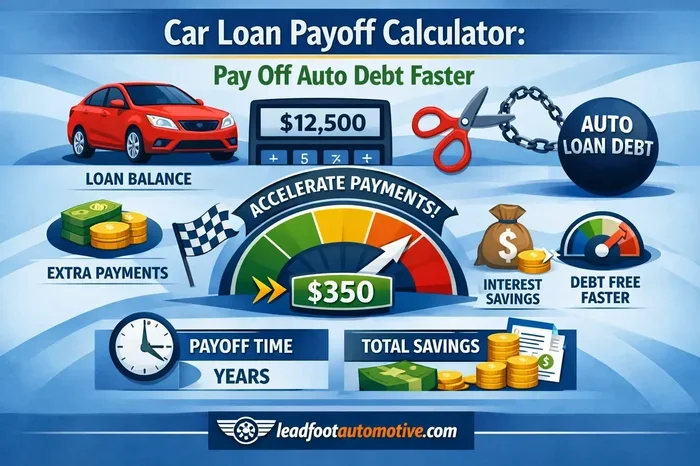
Can I Pay More on My Car Loan Everything You Should Know
Yes, you can pay more on your car loan, and doing so can save you hundreds or even thousands of dollars in interest. Making extra payments reduces your principal balance faster, shortens your loan term, and frees up your monthly budget sooner. Whether you choose biweekly payments, lump sum contributions, or a simple payment boost, paying more than your minimum car loan payment is one of the smartest financial moves you can make.
Have you ever looked at your car loan statement and thought, “I wish I could get rid of this debt faster”? You are not alone. Millions of car owners wonder whether they can pay more on their car loan each month. The good news is that most loans allow it. And the benefits can be huge.
Paying extra toward your car loan balance can save you real money. It can also give you peace of mind. But there are a few things you need to know first. Some lenders have rules. Some loans have fees. And the way you make extra payments matters more than you might think.
In this guide, we will walk you through everything you need to know about paying more on your car loan. We will cover how extra payments work, what to watch out for, and the best strategies to pay off your car loan faster. By the end, you will have a clear plan to save money and own your car outright sooner.
Key Takeaways
- Extra Payments Save Money: Paying more than your minimum reduces total interest and shortens your loan term significantly.
- Check for Prepayment Penalties: Some lenders charge fees for early payoff, so always read your loan agreement first.
- Biweekly Payments Work: Splitting your monthly payment in half and paying every two weeks adds up to one extra full payment per year.
- Lump Sum Payments Help Too: Even a single extra payment per year can make a big dent in your balance.
- Specify Principal-Only Payments: Tell your lender that extra money goes toward the principal, not the next month’s payment.
- Use a Loan Payoff Calculator: Online tools help you see exactly how much you’ll save with extra payments.
- Financial Freedom Comes Faster: Paying off your car loan early gives you more cash flow and less debt stress.
📑 Table of Contents
- Can I Pay More on My Car Loan?
- How to Pay Extra on Your Car Loan
- What to Watch Out For
- Does Paying More Actually Reduce Your Interest?
- Expert Tips for Maximizing Your Savings
- Common Mistakes People Make When Paying Extra
- Is Paying More on Your Car Loan Worth It?
- Final Thoughts on Paying More on Your Car Loan
Can I Pay More on My Car Loan?
The short answer is yes. Most car loans let you make extra payments. These payments go directly toward your loan principal. That means less interest builds up over time. And your loan gets paid off faster.
But “most” does not mean “all.” Your specific loan terms matter a lot. Before you start throwing extra money at your loan, you need to understand your agreement. Let us break down exactly how this works.
How Extra Payments Affect Your Loan
When you make a regular car payment, part of it goes to interest and part goes to the principal. In the early months, interest takes a bigger share. As you pay down the balance, more of each payment goes toward the principal.
When you make an extra payment, that money goes straight to the principal. This reduces the balance faster. Less balance means less interest charged each month. Over time, this creates a snowball effect. Your savings grow the longer you keep making extra payments.
Here is a simple example. Say you have a 5-year car loan for $25,000 at 6% interest. Your monthly payment is about $483. If you add just $100 extra each month, you could pay off the loan roughly 12 months early. You would save around $800 in interest. That is real money back in your pocket.
Why Paying More Makes Sense
There are several strong reasons to pay more than your minimum car payment. Let us look at the biggest benefits.
- Save on Interest: Every extra dollar you pay toward principal reduces the total interest you pay over the life of the loan.
- Own Your Car Sooner: Paying off your loan early means no more monthly car payments weighing on your budget.
- Improve Your Debt-to-Income Ratio: Less debt looks great to lenders if you plan to apply for a mortgage or other loan.
- Reduce Financial Stress: Knowing you are close to being debt-free feels amazing. It frees up mental space and cash flow.
- Build Better Financial Habits: Making extra payments trains you to think intentionally about money.
These benefits add up fast. Even small extra payments can make a noticeable difference over the life of your loan.
How to Pay Extra on Your Car Loan
There are several ways to pay more than your required monthly car payment. Each method has its own advantages. Let us explore the most popular options.
Biweekly Payments
One of the easiest strategies is switching to biweekly payments. Instead of paying your full monthly amount once a month, you pay half the amount every two weeks. This might sound small, but it adds up fast.
Since there are 52 weeks in a year, paying half your monthly payment every two weeks means you make 26 half-payments. That equals 13 full monthly payments instead of 12. You effectively make one extra full payment every year without even thinking about it.
Check with your lender before switching. Some lenders accept biweekly payments directly. Others might not offer this option. In that case, you can set up your own biweekly schedule by splitting your monthly payment into two automatic transfers.
Lump Sum Payments
A lump sum payment is a one-time extra payment toward your loan principal. Maybe you got a tax refund, a work bonus, or some cash from a side hustle. Instead of spending it all, you put a chunk of it toward your car loan.
Even one lump sum payment per year can shorten your loan term significantly. Let us say you owe $15,000 on your car loan with 18 months left. A single $2,000 lump sum payment could knock off several months and save you hundreds in interest.
The key is to make sure the extra money goes toward principal. We will talk more about that in a moment.
Increasing Your Monthly Payment
The simplest approach is just paying more each month. Maybe you can swing an extra $50 or $100 on top of your regular payment. It does not sound like much, but over a 5-year loan, those extra dollars add up to serious savings.
You do not need a huge income boost to make this work. Even rounding up your payment helps. If your regular payment is $437, try paying $450 or $500 instead. The small increase is barely noticeable in your budget, but it shaves months off your loan.
Using a Loan Payoff Calculator
Before you decide how much extra to pay, use a loan payoff calculator. These free online tools show you exactly how much you will save with different extra payment amounts. You can see your new payoff date, total interest saved, and the impact of each extra dollar.
Many financial websites offer these calculators for free. Just plug in your loan balance, interest rate, and remaining term. Then experiment with different extra payment amounts. The results will motivate you to take action.
What to Watch Out For
Paying more on your car loan is almost always a good idea. But there are a few pitfalls you need to avoid. Being aware of these issues protects your money and keeps your plan on track.
Prepayment Penalties
This is the biggest thing to check before making extra payments. Some lenders charge a prepayment penalty if you pay off your loan early. The idea is that lenders make money from the interest you pay over time. If you pay off the loan fast, they lose that income.
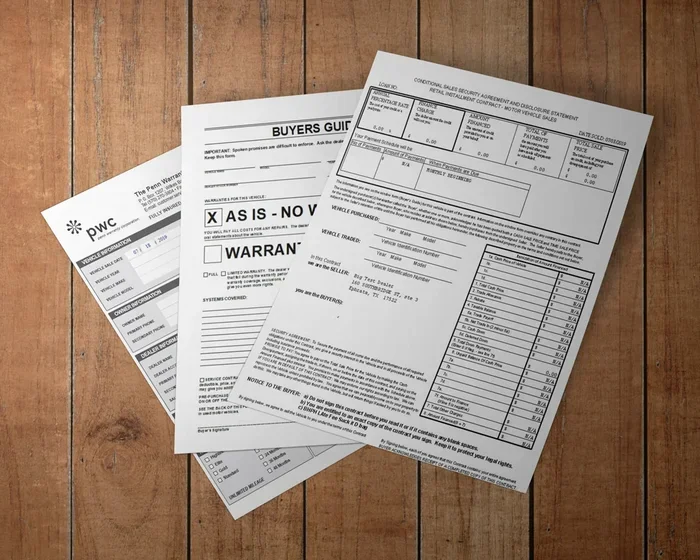
Not all loans have prepayment penalties. Many modern loans do not. But you need to check your original agreement. Look for language about early payoff or prepayment fees. If your loan does have a penalty, calculate whether the savings from early payoff still outweigh the fee.
If your loan does charge a prepayment penalty, you still have options. You might make extra payments up to a certain limit without triggering the fee. Or you might find that the penalty is small compared to the interest you save. Always do the math before deciding.
Escrow and Insurance Payments
Some car loans include an escrow account for insurance or taxes. If your loan has an escrow component, be careful about where your extra money goes. Making an extra payment does not always mean the extra money goes toward principal.
Some lenders apply extra payments to the next month’s payment automatically. This does not help you pay off the loan faster. You need to explicitly tell your lender that the extra money should go toward the principal balance.
Call your lender or check your online account settings. Look for an option to designate extra payments as principal-only. This one step makes a huge difference in how fast your loan gets paid off.
Automatic Payment Confusion
If you set up automatic payments, make sure the system is set up correctly. Some auto-pay systems apply extra payments as advance payments for future months. This means your loan term does not actually shorten.
To avoid this, manually submit extra payments each month or clearly label them as principal payments. Check your loan balance after each extra payment to confirm it went down as expected.
Missing Payments on Other Debts
While paying more on your car loan is smart, do not neglect other debts. If you have high-interest credit card debt, paying that off first usually makes more financial sense. Credit card interest rates are often much higher than car loan rates.
Focus on the highest-interest debt first while still making at least the minimum payment on your car loan. Once the expensive debt is gone, you can pour all that extra money into your car loan.
Does Paying More Actually Reduce Your Interest?
Yes, it absolutely does. And understanding why helps you stay motivated.
Car loans use simple interest. This means interest is calculated daily based on your remaining balance. When you pay down the principal, the daily interest charge goes down too. Less interest charged means more of your payment goes toward the actual loan balance.
Here is how it works in practice. Imagine you owe $10,000 on your car loan at 5% interest. Your monthly interest charge is about $41. If you make an extra $500 payment toward principal, your new balance is $9,500. Now your monthly interest charge drops to about $39. That $2 difference might seem small, but it compounds over time.
Month after month, the savings grow. The lower your balance, the less interest you pay. And the more of each payment goes toward actually owning your car. This is why paying extra early in the loan term is so powerful.
A Quick Comparison
Let us look at two scenarios to see the real impact of extra payments.
- Scenario A: You make only the minimum payment each month. Your 5-year, $20,000 loan at 6% interest costs you about $3,200 in total interest over the life of the loan.
- Scenario B: You pay an extra $100 each month. The same loan costs you about $1,900 in total interest. You pay off the loan roughly 14 months early.
That is a savings of over $1,300 just from paying $100 extra each month. The difference is remarkable.
Expert Tips for Maximizing Your Savings
Want to get the most out of your extra car loan payments? Follow these practical tips from financial experts.
Make Extra Payments Early
The earlier you start making extra payments, the more you save. Interest compounds over the life of the loan, so reducing your balance in the first few years has the biggest impact. If you are only a year or two into your loan, now is the perfect time to increase your payments.
Round Up Your Payments
One effortless trick is to round up your monthly payment. If your payment is $387, pay $400. If it is $512, pay $525. The small increase is easy to manage, and it adds up over time without feeling like a sacrifice.
Use Windfalls Wisely
Tax refunds, birthday money, work bonuses, and cash gifts are perfect opportunities to make lump sum payments. Instead of spending the extra cash, put it directly toward your car loan. You will be surprised how quickly your balance shrinks.
Refinance If Rates Have Dropped
If your credit score has improved since you took out the loan, you might qualify for a lower interest rate. Refinancing your car loan can lower your monthly payment and total interest. You can then take the savings and apply them as extra payments. This double strategy accelerates your payoff even more.
Track Your Progress
Keep an eye on your loan balance and payoff date. Many lenders offer online dashboards where you can see your updated payoff timeline. Watching your balance drop and your payoff date move closer is incredibly motivating.
Set Up Extra Payment Reminders
It is easy to forget to make extra payments each month. Set a calendar reminder or tie it to a regular event, like payday. Making your extra payment part of your routine ensures you never miss a chance to reduce your balance.
Common Mistakes People Make When Paying Extra
Even with good intentions, people sometimes make mistakes that reduce the impact of their extra payments. Here are the most common ones to avoid.
- Not Specifying Principal: If you do not tell your lender the extra money goes to principal, it might just be applied to next month’s payment. This does nothing to shorten your loan term.
- Forgetting About Prepayment Penalties: Making extra payments without checking for fees can cost you money instead of saving it.
- Paying Extra but Skipping Regular Payments: Never skip your regular payment to make an extra one. Late payments hurt your credit score and may trigger fees.
- Not Having an Emergency Fund: Always keep some savings before you aggressively pay down debt. Unexpected expenses happen, and you do not want to go deeper into debt.
- Ignoring Higher-Interest Debt: If you have credit cards with 20% interest, focus on those before paying extra on a 5% car loan.
Avoiding these mistakes keeps your strategy effective and your finances healthy.
Is Paying More on Your Car Loan Worth It?
For most people, the answer is a clear yes. Paying more on your car loan saves you money, reduces stress, and gets you to financial freedom faster. The key is to do it smartly. Check your loan terms, specify principal-only payments, and make sure you are not sacrificing other important financial goals.
If you have a low-interest loan and can earn more by investing the extra money, that might be a better strategy. But for most car loans with moderate to high interest rates, paying extra is one of the best returns you can get on your money.
The bottom line is this: every extra dollar you pay toward your car loan brings you closer to owning your car outright. And that feeling of being debt-free is worth more than any investment return.
Final Thoughts on Paying More on Your Car Loan
Paying more on your car loan is one of the simplest and most effective ways to take control of your finances. Whether you choose biweekly payments, lump sum contributions, or just a slightly higher monthly payment, every extra dollar counts.
Remember to check your loan agreement for prepayment penalties. Always specify that extra payments go toward principal. And use a loan payoff calculator to track your progress and stay motivated.
The journey to becoming completely debt-free starts with a single extra payment. You do not need to make huge changes overnight. Even a small extra $25 or $50 per month adds up over time. The important thing is to start.
Your future self will thank you when that final car loan payment is made and the car is officially yours. No more monthly payments. No more interest. Just the freedom of owning your vehicle outright.
So go ahead. Look at your loan balance today. Pick one strategy from this article. And take that first step toward paying off your car loan faster. You have got this.
Frequently Asked Questions
Can I pay extra on my car loan without penalty?
Most car loans do not charge a prepayment penalty. However, some lenders do include this fee in the original loan agreement. Always check your loan documents or call your lender to confirm before making extra payments.
Will extra payments reduce my monthly payment?
Extra payments reduce your total loan balance and shorten your loan term, but they do not lower your required monthly payment unless you formally refinance or request a payment recast. The money you save comes from paying off the loan faster and reducing total interest.
How do I make sure extra payments go toward principal?
Call your lender or log into your online account and specify that the extra payment should be applied to the principal balance only. Never assume the extra money will go to principal unless you have confirmed it with your lender in writing.
Is it better to pay extra on my car loan or invest the money?
If your car loan interest rate is higher than what you can earn from investments, paying extra on the loan is usually the better choice. Car loan interest is essentially a guaranteed cost, while investment returns are not guaranteed. Compare your loan rate to expected investment returns to decide.
How much extra should I pay on my car loan each month?
Any extra amount helps. Even $25 or $50 per month makes a difference over the life of the loan. The more you can comfortably afford, the faster you will pay off the loan and the more interest you will save. Use a loan payoff calculator to see the impact of different amounts.
Can I make a lump sum payment on my car loan at any time?
Yes, most lenders allow lump sum payments at any time. Just make sure the payment is applied to the principal and that you do not have a prepayment penalty. Always confirm the details with your lender before sending a large extra payment.