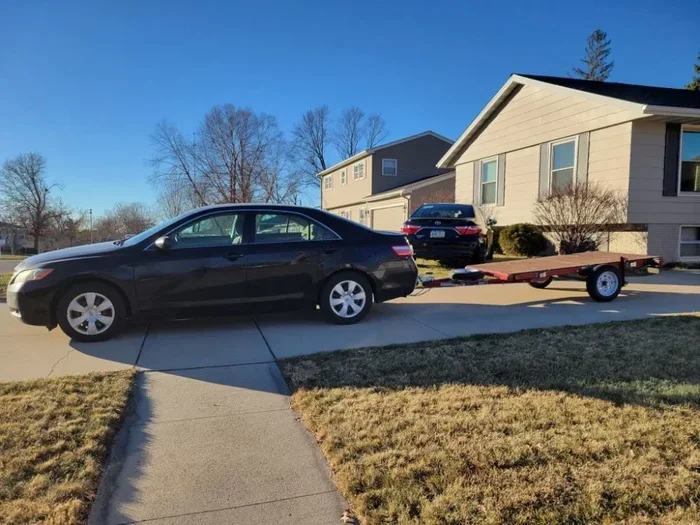
Can a Toyota Camry Pull a Small U Haul Trailer Safely
Yes, a Toyota Camry can pull a small U-Haul trailer, but only under specific conditions. Most Camry models have a towing capacity of around 1,000 pounds, which limits you to very lightweight trailers. Understanding your Camry towing limits, proper equipment, and safe towing practices is essential before hitting the road. This guide breaks down everything Camry owners need to know about safely pulling a U-Haul trailer.
Key Takeaways
- Camry Towing Capacity: Most Toyota Camry models can tow up to 1,000 lbs with the right hitch setup.
- Small Trailer Only: Only very lightweight, empty U-Haul trailers are within the Camry’s safe towing range.
- Proper Equipment Matters: A weight-distributing hitch, towing mirrors, and brake controller are essential for safe towing.
- Know Your Payload: Payload capacity and tongue weight directly affect whether your Camry can handle a trailer safely.
- Safety First: Always check your owner’s manual and follow safe towing practices before every trip.
📑 Table of Contents
Can a Toyota Camry Pull a Small U Haul Trailer?
If you have ever rented a U-Haul trailer and wondered whether your Toyota Camry could handle the job, you are not alone. Many Camry owners find themselves in situations where they need to move furniture, appliances, or other items and think, “Why not just hook up my trailer?” The answer is not a simple yes or no. It depends on several important factors that every driver should understand before attempting to tow a trailer with their sedan.
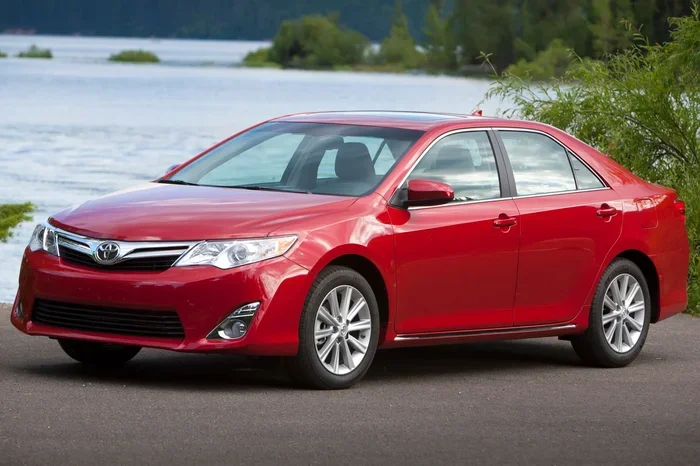
The Toyota Camry is a reliable, fuel-efficient midsize sedan. It has served millions of drivers well for decades. But when it comes to Camry towing, there are real limitations. Most Camry models come with a towing capacity of around 1,000 pounds. That number might sound generous until you realize that even a small, empty U-Haul trailer can weigh between 1,000 and 2,000 pounds. So the short answer is yes, a Camry can pull a very small U-Haul trailer, but only if it is nearly empty and properly equipped.
In this guide, we will walk through everything you need to know. We will cover your Camry’s towing capacity, the right equipment, safety tips, and common mistakes to avoid. Whether you are moving across town or hauling gear for a weekend trip, this article will help you make informed decisions about towing with your Camry.
Understanding Your Camry Towing Capacity
Before you attach any trailer to your Camry, you need to understand what “towing capacity” really means. Many people confuse towing capacity with payload capacity, and that confusion can lead to serious problems on the road.
What Is Towing Capacity?
Towing capacity is the maximum weight your vehicle can safely pull behind it. For the Toyota Camry, this number is typically around 1,000 pounds for recent model years. However, this number can vary depending on your specific trim level, engine type, and any towing package your Camry may have.
Here are the key factors that determine your Camry’s towing capacity:
- Engine type: The standard Camry engine produces less torque than the V6 option, which affects towing ability.
- Transmission: An automatic transmission handles towing loads differently than a manual.
- Drivetrain: Front-wheel drive and rear-wheel drive models may have slightly different towing ratings.
- Model year: Older and newer Camry models may have different towing specifications.
- Towing package: Some Camry trims come with a factory towing package that includes upgraded cooling and stronger components.
Payload Capacity vs Towing Capacity
Understanding the difference between payload capacity and towing capacity is critical. Payload capacity refers to how much weight your vehicle can carry inside it, including passengers, cargo, and the tongue weight of the trailer. Towing capacity is how much weight you can pull behind the vehicle.
Here is why this matters for your Camry. When you attach a trailer, the tongue weight (the downward force the trailer puts on the hitch) counts against your Camry’s payload capacity. If your trailer has a tongue weight of 100 pounds, that 100 pounds comes off your Camry’s available payload. This means you have less room for passengers and cargo inside the vehicle.
Always check your Camry’s owner manual for the exact weight rating specific to your model. You can also find a sticker inside the driver’s door jamb that lists your vehicle’s gross vehicle weight rating (GVWR) and payload limits.
What Size U-Haul Trailer Can a Camry Handle?
Not all U-Haul trailers are created equal. U-Haul offers a wide range of trailer sizes, from tiny open utility trailers to large enclosed cargo trailers. Knowing which ones your Camry can safely handle is essential.
U-Haul Trailer Weight Breakdown
Here is a general breakdown of U-Haul trailer weights and whether a Camry can handle them:
- U-Haul 4×6 Utility Trailer: Empty weight around 700 to 1,000 lbs. A Camry can likely pull this trailer when it is empty or lightly loaded.
- U-Haul 5×8 Utility Trailer: Empty weight around 1,000 to 1,200 lbs. This is right at the edge of a Camry’s towing capacity.
- U-Haul 6×12 Enclosed Trailer: Empty weight around 1,500 to 2,000 lbs. This exceeds a Camry’s towing capacity and should not be pulled by a Camry.
- U-Haul 10×10 Open Trailer: Empty weight around 1,200 to 1,500 lbs. Too heavy for a Camry to tow safely.
The safest option for Camry owners is the small trailer category, specifically the 4×6 utility trailer. Even then, you should only load it with lightweight items and keep the total trailer weight well under 1,000 pounds.
Real-World Towing Scenarios
Let us look at a few real-world examples to put this into perspective:
- Moving a few boxes: If you load a 4×6 U-Haul trailer with boxes weighing 300 to 500 pounds, your total trailer weight stays within a Camry’s towing limits. This is a safe scenario.
- Hauling furniture: A couch, a mattress, and some boxes might weigh 600 to 800 pounds. Still within range, but you need to be careful not to overload the trailer.
- Moving a full apartment: Loading a small trailer with furniture, appliances, and boxes could easily push the weight past 1,500 pounds. This is far beyond what a Camry should attempt.
The key takeaway is to keep your loaded trailer weight well below your Camry’s maximum towing capacity. A good rule of thumb is to stay at 80% or less of the rated towing capacity for a safety margin.
Towing Equipment You Will Need
Towing a trailer with a Camry requires more than just a ball hitch. You need the right equipment to ensure safe and legal towing. Skipping any of these items can compromise your safety and the safety of others on the road.
Trailer Hitch and Ball Hitch
The first piece of equipment you need is a trailer hitch rated for your Camry’s towing capacity. Most Camry models use a Class I or Class II hitch, which can handle 1,000 to 3,500 pounds of towing capacity depending on the class.
Make sure your ball hitch matches the trailer’s coupler size. Common sizes include 1-7/8 inches and 2 inches. The hitch ball should be rated for at least the total weight of your loaded trailer.
Weight-Distributing Hitch
For better stability, consider using a weight-distributing hitch. This type of hitch spreads the tongue weight more evenly across all axles of your vehicle. It helps prevent the front of your Camry from lifting and improves steering and braking control.
Towing Mirror
A towing mirror is essential for seeing around your trailer. Most Camry rearview mirrors may not provide enough visibility when a trailer is attached. Clip-on or extended towing mirrors are affordable and easy to install. They give you a much better view of the road behind and beside your trailer.
Brake Controller
If your U-Haul trailer has its own brakes, you will need a trailer brake controller. This device lets you apply the trailer brakes independently from your Camry’s brakes. It is especially important when descending hills or stopping quickly with a heavy load.
Safety Chains and Wiring
Always use safety chains crossed under the trailer tongue. They serve as a backup if the hitch ever fails. You should also connect the trailer wiring harness so your brake lights and turn signals work properly on the trailer.
Quick Tips for Equipment Setup
- Double-check that all connections are secure before every trip.
- Test your trailer lights and brakes before leaving the lot.
- Make sure the hitch ball is the correct size and rated for your trailer weight.
- Use a hitch pin and clip to lock the hitch ball into place.
Safety Tips for Towing with a Camry
Towing a trailer changes how your vehicle drives. Even with a small U-Haul trailer, you need to adjust your driving habits to stay safe on the road. Following proper safe towing practices can prevent accidents and protect your Camry from damage.
Pre-Trip Safety Checklist
Before every towing trip, go through this checklist:
- Check your tire pressure on both the Camry and the trailer.
- Verify that all lug nuts are tight on the trailer wheels.
- Inspect the hitch connections, safety chains, and wiring.
- Confirm your trailer lights and brake lights work.
- Make sure the load is evenly distributed and securely tied down.
- Check your Camry’s fluid levels, especially coolant and transmission fluid.
Driving Adjustments
Driving with a trailer requires more space and patience. Here are some adjustments to make:
- Increase following distance: Your stopping distance increases with a trailer. Leave at least 5 to 6 seconds of following distance.
- Take wider turns: Trailers have a wider turning radius. Be mindful of curbs, poles, and other vehicles when turning.
- Reduce speed: Drive slower than you normally would, especially on highways. This reduces wind resistance and strain on your Camry.
- Avoid sudden braking: Slamming the brakes can cause the trailer to sway or jackknife. Brake gently and early.
- Use lower gears on hills: Downshift when going uphill or downhill to reduce strain on your brakes and engine.
Towing Safety in Different Weather
Weather conditions can make towing more dangerous. Rain, wind, and uneven roads all affect trailer stability. In windy conditions, a trailer can act like a sail and push your Camry sideways. In rain, your stopping distance increases significantly. Always check the weather forecast before a towing trip and avoid driving in severe conditions if possible.
Common Towing Mistakes to Avoid
Even experienced drivers make towing mistakes. Here are the most common ones Camry owners should watch out for:
- Overloading the trailer: This is the number one mistake. Exceeding your Camry’s towing capacity puts stress on the engine, transmission, and brakes.
- Ignoring tongue weight: Too much or too little tongue weight causes trailer sway. Aim for 10 to 15 percent of the total trailer weight on the tongue.
- Not checking tire pressure: Underinflated trailer tires are a leading cause of trailer accidents.
- Skipping the test drive: Always do a short test drive in a safe area to make sure everything is stable before heading out on a long trip.
- Using the wrong hitch: A hitch that is not rated for your trailer weight can fail under load.
Expert Insights on Car Towing
We spoke with automotive experts about towing with sedans like the Camry. Their advice reinforces what we have covered in this guide.
What the Experts Say
According to towing safety professionals, most sedans are not designed for heavy towing. The Toyota Camry falls into the “light-duty towing” category. Experts recommend that Camry owners only tow trailers that are well within the vehicle’s rated capacity and that they invest in proper equipment.
“The biggest mistake we see is drivers treating their sedan like a truck,” says one towing instructor. “A Camry can handle light towing, but it does not have the same cooling systems, braking power, or frame strength as a full-size truck. Respect the limits, and you will stay safe.”
When to Rent a Truck Instead
Sometimes, a Camry simply cannot handle the job. If you need to move a large amount of furniture or heavy appliances, it is better to rent a proper moving truck from a U-Haul truck rental location. Trying to force a Camry to tow beyond its limits can damage the engine, transmission, and void your warranty.
Consider these signs that you should rent a truck instead:
- Your loaded trailer exceeds 1,000 pounds.
- You need to tow a trailer with its own brakes.
- You are planning a long-distance move with heavy cargo.
- Your Camry does not have a factory towing package.
Conclusion
The question of whether a Toyota Camry can pull a small U-Haul trailer does not have a one-size-fits-all answer. It depends on your specific Camry model, the trailer size, the load weight, and the equipment you use. The good news is that with the right setup and precautions, a Camry can safely tow a very small, lightly loaded U-Haul trailer for short trips.
Always respect your vehicle’s towing capacity and payload limits. Invest in quality towing equipment, follow safe towing practices, and never exceed your Camry’s rated limits. If the job is too big for your Camry, do not hesitate to rent a proper moving truck.
Towing safely protects your vehicle, your belongings, and everyone else on the road. Take the time to prepare properly, and your Camry towing experience will be a smooth and successful one.
Frequently Asked Questions
Can a Toyota Camry tow a U-Haul trailer?
Yes, a Toyota Camry can tow a very small U-Haul trailer, but only if the total trailer weight stays within the Camry’s towing capacity of approximately 1,000 pounds. Always check your specific model’s towing ratings before attempting to tow.
What is the towing capacity of a Toyota Camry?
Most Toyota Camry models have a towing capacity of around 1,000 pounds. However, this number can vary depending on the model year, trim level, engine type, and whether a towing package is installed. Always refer to your owner manual for exact specifications.
Do I need a special hitch to tow a trailer with my Camry?
Yes, you need a properly rated trailer hitch, typically a Class I or Class II hitch for the Camry. You should also use a ball hitch that matches your trailer’s coupler size and weight rating. Safety chains, wiring, and towing mirrors are also essential.
What size U-Haul trailer can a Camry pull?
A Camry can safely pull a small 4×6 U-Haul utility trailer when it is empty or lightly loaded. Larger trailers like the 5×8, 6×12, or 10×10 exceed the Camry’s towing capacity and should not be pulled by a Camry.
Is it safe to tow a U-Haul trailer with a Camry on the highway?
It can be safe if the trailer is within the Camry’s towing limits, properly equipped, and not overloaded. However, highway towing puts more stress on the vehicle. Always reduce your speed, increase following distance, and check all connections before highway driving.
What happens if I exceed my Camry’s towing capacity?
Exceeding your Camry’s towing capacity can cause overheating, transmission damage, brake failure, and loss of vehicle control. It can also void your warranty. Always stay within your vehicle’s rated limits for safe and legal towing.