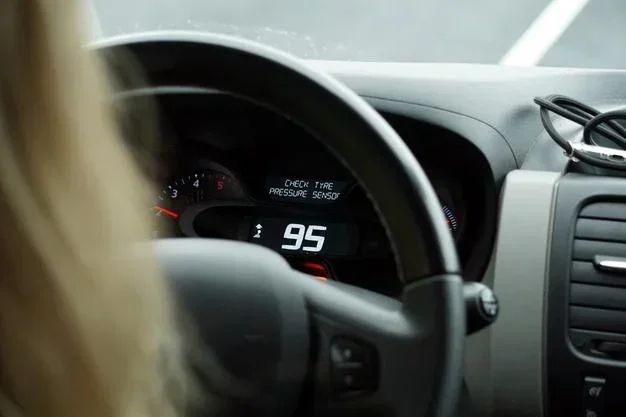
Understanding a Driver of a Car Travelling at 52 Class 9
Understanding a driver of a car travelling at 52 class 9 is all about mastering speed, distance, and time calculations in Class 9 physics. This guide breaks down the motion and time concepts with simple formulas, real-world examples, and practical tips that make speed calculation easy for every student.
Have you ever wondered what happens when a driver of a car travelling at 52 class 9 problems come up in your physics homework? It might sound like a strange phrase, but it is one of the most common topics in Class 9 physics. Whether you are preparing for exams or just curious about how car speed works, this topic covers some really important basics.
The idea behind a driver of a car travelling at 52 class 9 is simple. You learn how to calculate speed, figure out distance covered, and understand time taken for a moving vehicle. These skills form the foundation of motion and time, a chapter that appears in every NCERT solutions guide for Class 9.
In this article, we will walk through everything step by step. You will learn the key formulas, see how distance time graph readings work, and pick up practical tips that make speed calculation feel easy. By the end, you will have a solid grasp of uniform motion, non uniform motion, and how physics formulas apply to real driving situations.
Key Takeaways
- Speed Basics: A driver of a car travelling at 52 class 9 problems teach you how to calculate speed using simple distance and time values.
- Formulas Matter: The velocity formula and average speed equations are the backbone of Class 9 physics motion chapters.
- Graphs Help: Reading a distance time graph makes it easy to visualize how a car moves at a constant traveling speed.
- Units Are Key: The SI unit of speed is metres per second, but km per hour is also widely used in car speed problems.
- Practice Wins: Solving NCERT solutions and real-world car speed problems builds confidence for exams.
- Avoid Mistakes: Common errors include mixing up units and confusing uniform motion with non uniform motion.
- Real-World Value: These concepts apply to everyday driving, odometer reading, and understanding acceleration on the road.
📑 Table of Contents
- What Does “a Driver of a Car Travelling at 52 Class 9” Mean?
- Understanding Speed and Distance in Class 9 Physics
- Key Formulas You Need to Know
- Common Problems and How to Solve Them
- Real-World Applications of Car Speed Calculations
- Tips for Mastering Motion and Time in Class 9
- How This Connects to Broader Physics Concepts
- Key Takeaways
What Does “a Driver of a Car Travelling at 52 Class 9” Mean?
Breaking Down the Concept
When your teacher writes “a driver of a car travelling at 52 class 9” on the board, they are setting up a speed calculation problem. The number 52 usually refers to a speed value, often in km per hour or metres per second. The goal is to help you understand how fast a vehicle moves and how far it goes over a certain time taken.
In Class 9 physics, this type of problem teaches you three core ideas:
- Speed: How fast an object moves. The SI unit of speed is metres per second (m/s).
- Distance: How far the car travels during a given period.
- Time: The duration of the journey, usually measured in seconds or hours.
These three values are connected through simple formulas. Once you understand the relationship between them, solving any problem about a driver of a car travelling at 52 class 9 becomes straightforward.
Why This Topic Matters for Students
This topic is not just about passing exams. Understanding car speed and motion and time helps you make sense of the world around you. When you look at a speedometer reading on a dashboard, you are reading the traveling speed of the vehicle. When you check the odometer reading, you see the total distance covered by the car.
Moreover, uniform motion and non uniform motion are concepts that appear in higher classes too. Getting them right in Class 9 sets you up for success in Class 10 and beyond. The physics formulas you learn here are the building blocks for more advanced topics like acceleration and force.
Understanding Speed and Distance in Class 9 Physics
What Is Speed?
Speed tells you how quickly an object covers distance. If a driver is moving at 52 km per hour, it means the car covers 52 kilometres in one hour. In SI unit of speed terms, you would convert this to metres per second for most Class 9 physics calculations.
The basic speed formula is:
Speed = Distance / Time
This formula is the heart of every problem involving a driver of a car travelling at 52 class 9. You simply plug in the values and solve for the unknown. Let us look at a quick example.
Example: A car moves at 52 km/h for 2 hours. How far does it go?
Distance = Speed × Time = 52 × 2 = 104 km.
That is all there is to it. The speed calculation becomes even easier once you practice it a few times.
Uniform vs Non Uniform Motion
Not all car movement is the same. In uniform motion, the car travels at a constant speed. The distance covered in every second or minute stays the same. Think of a car cruising on a highway at a steady 52 km/h with no changes in traveling speed.
In non uniform motion, the speed changes. The driver might accelerate, slow down, or stop at traffic lights. Non uniform motion is more complex and often involves the concept of acceleration, which measures how quickly speed changes over time taken.
Here is a simple way to remember the difference:
- Uniform Motion: Same speed, same distance covered in equal time intervals.
- Non Uniform Motion: Changing speed, different distance covered in equal time intervals.
Reading a Distance Time Graph
A distance time graph is one of the most useful tools in Class 9 physics. It shows how far a car has travelled over time. When a driver of a car travels at a steady 52 km/h, the graph shows a straight line. A straight line means uniform motion.
If the line curves upward, the car is speeding up, which means non uniform motion or positive acceleration. If the line is flat, the car is stopped and the distance covered is not changing.
Learning to read these graphs helps you solve exam questions faster. Many NCERT solutions include graph-based questions, and they are easy to score if you practice them.
Key Formulas You Need to Know
The Core Physics Formulas
There are only a few physics formulas you need to master for this topic. Here they are, listed clearly:
- Speed = Distance / Time — This is the most basic formula. It works for every car speed problem.
- Distance = Speed × Time — Use this when you know the speed and want to find how far the car goes.
- Time = Distance / Speed — Use this when you know the distance and need to find the time taken.
- Average Speed = Total Distance / Total Time — This is useful when the traveling speed changes during a journey.
- Acceleration = Change in Speed / Time Taken — This helps when the car is speeding up or slowing down.
These formulas appear in almost every a driver of a car travelling at 52 class 9 problem set. Keep them handy and refer to them often.
Converting Units Correctly
One of the biggest mistakes students make is mixing up units. The SI unit of speed is metres per second, but many problems give speed in km per hour. You need to know how to convert between them.
Quick Tip: To convert km/h to m/s, multiply by 5/18. To convert m/s to km/h, multiply by 18/5.
So, 52 km/h becomes 52 × 5/18 = 14.44 m/s. This conversion is essential for solving Class 9 physics problems accurately.
Common Problems and How to Solve Them
Problem Type 1: Finding Distance
These are the most common problems in NCERT solutions. You are given the car speed and the time taken, and you must find the distance covered.
Example: A driver of a car travelling at 52 km/h drives for 3 hours. What is the distance covered?
Solution: Distance = 52 × 3 = 156 km. Simple and direct.
Problem Type 2: Finding Speed
Sometimes you know the distance covered and the time taken, and you need to find the speed of car.
Example: A car covers 260 km in 5 hours. What is its car speed?
Solution: Speed = 260 / 5 = 52 km/h. Notice how this relates back to the original a driver of a car travelling at 52 class 9 scenario.
Problem Type 3: Finding Time
These problems ask for the time taken when distance and speed are known.
Example: How long does it take a car moving at 52 km/h to cover 208 km?
Solution: Time = 208 / 52 = 4 hours.
Problem Type 4: Average Speed
When a car does not travel at the same speed throughout, you use the average speed formula.
Example: A car travels 60 km in the first hour and 44 km in the second hour. What is the average speed?
Solution: Total distance = 60 + 44 = 104 km. Total time = 2 hours. Average speed = 104 / 2 = 52 km/h. This is a clever way NCERT solutions test your understanding of motion and time.
Real-World Applications of Car Speed Calculations
How Drivers Use These Concepts Every Day
The math behind a driver of a car travelling at 52 class 9 is not just for exams. Real drivers use these ideas every day. When you check your speedometer reading, you are reading the instantaneous traveling speed of your car. When you plan a road trip and estimate arrival time, you are doing speed calculation in your head.
The odometer reading on your dashboard tracks the total distance covered by your vehicle. Mechanics and service centres use this data to schedule maintenance and track fuel efficiency.
Speed Limits and Road Safety
Every road has a speed limit, and understanding car speed helps drivers stay safe. If the speed limit is 52 km/h in a school zone, drivers must maintain that uniform motion or slower to protect pedestrians.
Knowing how distance covered changes with time taken at different speeds helps drivers judge safe following distances. The faster the traveling speed, the longer the stopping distance. This is why acceleration and deceleration are important safety concepts.
Fuel Efficiency and Speed
Did you know that car speed affects fuel economy? Driving at a steady 52 km/h is often more fuel-efficient than frequent acceleration and braking, which creates non uniform motion. This is one reason highway cruising can save petrol compared to city driving with lots of stops.
Tips for Mastering Motion and Time in Class 9
Practice with NCERT Solutions
The best way to master a driver of a car travelling at 52 class 9 problems is to practice regularly. Work through every motion and time question in your NCERT textbook. The NCERT solutions provide step-by-step explanations that help you understand the logic behind each answer.
Focus on problems that involve distance time graph interpretation. These questions appear frequently in exams and are excellent for building conceptual clarity.
Use Real-Life Examples
Make the concepts stick by connecting them to real life. Next time you are in a car, check the speedometer reading and estimate how far you will travel in the next hour. Think about the odometer reading and how it increases with every kilometre you drive.
This simple habit reinforces your understanding of speed of car, distance covered, and time taken without any extra effort.
Memorize Key Conversions
Keep a small notebook with the most important physics formulas and unit conversions. Review it every day for five minutes. Over time, converting between km per hour and the SI unit of speed will become second nature.
Watch Out for Common Mistakes
Here are the most frequent errors students make with Class 9 physics motion problems:
- Forgetting to convert units — Always check if the speed is in km/h or m/s before calculating.
- Confusing speed with velocity — Speed has no direction; velocity does.
- Mixing up uniform and non uniform motion — A straight line on a graph means uniform motion.
- Ignoring total time in average speed problems — Always add up all the time intervals.
- Misreading the distance time graph — A flat line means the object is at rest, not moving.
Avoiding these mistakes alone can boost your exam scores significantly.
How This Connects to Broader Physics Concepts
The ideas you learn from a driver of a car travelling at 52 class 9 do not stop at this chapter. They connect directly to other topics in physics. Acceleration builds on speed calculation by measuring how quickly speed changes. Force and Newton’s Laws in Class 9 explain why cars speed up, slow down, or change direction.
Understanding uniform motion and non uniform motion also prepares you for topics like momentum and energy in higher classes. The motion and time chapter is truly the foundation of kinematics, and mastering it now pays off throughout your physics journey.
Many students find that once they get comfortable with car speed problems, other chapters in Class 9 physics feel much easier. The physics formulas follow consistent patterns, and the logical thinking you develop here applies everywhere.
So the next time you see a problem about a driver of a car travelling at 52 class 9, do not feel overwhelmed. Take a deep breath, identify the known values, pick the right velocity formula, and solve step by step. With practice, these problems become second nature.
Remember, every expert was once a beginner. The distance covered by your understanding grows with every problem you solve. Keep practising, stay curious, and let the world of motion and time make sense to you one calculation at a time.
Key Takeaways
- Speed Basics: A driver of a car travelling at 52 class 9 problems teach you how to calculate speed using simple distance and time values.
- Formulas Matter: The velocity formula and average speed equations are the backbone of Class 9 physics motion chapters.
- Graphs Help: Reading a distance time graph makes it easy to visualize how a car moves at a constant traveling speed.
- Units Are Key: The SI unit of speed is metres per second, but km per hour is also widely used in car speed problems.
- Practice Wins: Solving NCERT solutions and real-world car speed problems builds confidence for exams.
- Avoid Mistakes: Common errors include mixing up units and confusing uniform motion with non uniform motion.
- Real-World Value: These concepts apply to everyday driving, odometer reading, and understanding acceleration on the road.
Frequently Asked Questions
What does “a driver of a car travelling at 52 class 9” refer to in physics?
This phrase refers to a standard Class 9 physics problem about motion and time. It involves calculating speed, distance covered, or time taken for a car moving at 52 units of speed, usually km per hour or metres per second.
How do I convert 52 km/h to metres per second?
To convert km per hour to the SI unit of speed, multiply by 5/18. So 52 km/h equals 52 × 5/18, which is approximately 14.44 m/s. This conversion is essential for solving most Class 9 physics problems accurately.
What is the difference between uniform and non uniform motion?
In uniform motion, the car speed stays the same and the distance covered in equal time intervals is constant. In non uniform motion, the speed changes, meaning the distance covered varies in equal time intervals. A straight line on a distance time graph shows uniform motion.
Why is the distance time graph important for Class 9 exams?
The distance time graph helps you visualise motion and time relationships. A straight line means constant traveling speed, a curved line means changing speed or acceleration, and a flat line means the object is at rest. Many NCERT solutions questions use graphs to test understanding.
How can I improve my speed calculation skills for Class 9?
Practice regularly with your textbook and NCERT solutions. Focus on unit conversions, reading distance time graph plots, and solving problems about average speed. Connecting car speed problems to real driving situations also makes the concepts easier to remember.
What role does acceleration play in car speed problems?
Acceleration measures how quickly the speed of car changes over time taken. It is calculated as the change in velocity formula values divided by the time taken. Understanding acceleration helps you solve problems involving speeding up, slowing down, or starting from rest in Class 9 physics.
=== CONCLUSION ===
A driver of a car travelling at 52 class 9 is more than just a textbook phrase. It is your gateway to understanding speed, distance, and time in Class 9 physics. From mastering the basic speed formula to interpreting distance time graph readings, every concept you learn here builds a stronger physics foundation.
Remember to practise regularly, convert units carefully, and connect car speed problems to real-world driving. The NCERT solutions and physics formulas in this guide give you everything you need to excel. Focus on uniform motion, non uniform motion, and average speed to build confidence for your exams.
Now that you understand the core ideas behind a driver of a car travelling at 52 class 9, put them into practice. Solve problems, check your speedometer reading next time you ride in a car, and watch how the odometer reading changes as you travel. The more you engage with motion and time, the more natural it becomes. Keep learning, keep growing, and let physics make sense every step of the way.