Everything You Need to Know About a 4 Channel Car Amp
A 4 channel car amp powers four speakers or a mix of speakers and a subwoofer for a louder, clearer sound. It is one of the most popular upgrades for car audio lovers who want better sound without buying multiple amps. This guide walks you through everything from how a 4 channel car amp works to choosing, installing, and maintaining one.
If you love listening to music in your car, you know how much the sound system matters. A great setup can turn a boring commute into a concert on wheels. But stock audio systems in most vehicles leave a lot to be desired. That is where a 4 channel car amp comes in. It is one of the simplest and most effective ways to improve your car audio. In this guide, we will cover everything you need to know. By the end, you will understand what a 4 channel car amplifier does, how to pick the right one, and how to get the most out of it.
Car audio has come a long way. Today, drivers want rich bass, clear highs, and balanced midrange sound. A four channel car amp delivers all of that. It powers up to four speakers, giving you more control over your sound. Whether you drive a sedan, truck, or SUV, a 4 channel amp for car can make a huge difference. Let us dive into the details.
Key Takeaways
- A 4 channel car amp boosts sound to four speakers at once, giving your car audio a big upgrade.
- You can wire a 4 channel car amp in different ways, including full-range mode or bridged mode for a subwoofer.
- RMS power, impedance, and amplifier class are key specs to understand before buying.
- Installation is manageable for DIYers, but professional help ensures the best results.
- Common mistakes include mismatching speakers, ignoring wiring gauge, and skipping fuses.
- Regular maintenance keeps your 4 channel car amp performing at its best for years.
📑 Table of Contents
- What Is a 4 Channel Car Amp?
- Why Should You Use a 4 Channel Car Amp?
- How to Choose the Right 4 Channel Car Amp
- How to Install a 4 Channel Car Amp
- Common Mistakes to Avoid with a 4 Channel Car Amp
- Tips for Getting the Best Sound from Your 4 Channel Car Amp
- 4 Channel Car Amp vs. Other Amplifier Configurations
- Maintenance Tips for Your 4 Channel Car Amp
- Final Thoughts on the 4 Channel Car Amp
What Is a 4 Channel Car Amp?
A 4 channel car amplifier is a device that takes a low-level audio signal from your head unit and boosts it. It then sends that stronger signal to your speakers. The word “4 channel” means it has four separate outputs. Each output can power one speaker. This gives you the ability to run your front left, front right, rear left, and rear right speakers. Some people also use a 4 channel amplifier to power two full-range speakers and one or two subwoofers.
The basic idea is simple. Your factory stereo produces a weak signal. It simply does not have the power to drive speakers properly. A car amplifier 4 channel fills that gap. It provides clean, powerful energy to your speakers. The result is louder volume, better clarity, and improved sound quality overall.
How Does a 4 Channel Amp Work?
When your head unit sends an audio signal, it is very weak. A 4 channel car amp takes that signal and amplifies it. The amplifier uses power from your car battery to boost the signal. It then sends the stronger signal to each speaker through its own channel. Each channel works independently. This means you can adjust the volume or tone for each pair of speakers.
Most 4 channel amps use Class A, Class B, or Class D amplification. Class D amps are the most popular today. They are efficient, produce less heat, and fit easily in tight spaces. If you are new to car audio, look for a Class D 4 channel amp. It offers great performance without draining your battery.
Why Should You Use a 4 Channel Car Amp?
There are many reasons to add a 4 channel car amp to your vehicle. Let us look at the biggest benefits.
Better Sound Quality
Factory speakers often sound flat and distorted at higher volumes. A 4 channel amplifier gives them the power they need. Your music sounds fuller, cleaner, and more detailed. High notes become crisp, and bass becomes tighter. You will hear details in songs you never noticed before.
More Power for Your Speakers
Stock stereos usually produce around 10 to 20 watts per channel. A dedicated 4 channel car amp can deliver 50 to 100 watts per channel or more. That extra power makes a massive difference. Your speakers can play louder without distorting. This is especially important if you like driving with the windows down.
Flexibility in Speaker Setup
One of the best things about a 4 channel amp for car is its flexibility. You have several wiring options:
- Full-range setup: Power four speakers for balanced sound across all frequencies.
- Two front speakers + subwoofer: Use two channels for your front speakers and bridge the other two for a subwoofer.
- Component speaker setup: Power separate tweeters and woofers for each channel.
This flexibility means a single 4 channel amplifier can serve many different audio configurations.
Easy Installation
Compared to installing multiple single-channel or two-channel amps, a 4 channel car amplifier is much simpler. You run one power wire, one ground wire, and one remote turn-on wire. You connect four speaker outputs instead of managing several separate amps. This keeps your wiring cleaner and your installation faster.
How to Choose the Right 4 Channel Car Amp
Not all 4 channel amps are the same. Choosing the right one can feel overwhelming. Here are the key factors to consider.
Check the RMS Power Rating
RMS stands for Root Mean Square. It measures the continuous power an amp can deliver. This is the number you should care about most. Do not confuse RMS with peak power. Peak power is a short burst. RMS is what your speakers actually use during normal listening. Match the RMS power of your amp to the power handling of your speakers. If your speakers handle 50 watts RMS, look for a 4 channel car amp that delivers around 50 watts RMS per channel.
Consider Amplifier Class
As mentioned earlier, amplifier class affects efficiency and heat. Here is a quick comparison:
- Class A: Great sound quality but less efficient. Produces more heat.
- Class B: More efficient than Class A but can have some distortion.
- Class AB: A good balance of sound quality and efficiency. Very common in 4 channel amps.
- Class D: The most efficient. Produces the least heat. Ideal for most car audio setups.
For most people, a Class D 4 channel car amp is the best choice. It saves energy and runs cool.
Think About Impedance
Impedance is measured in ohms. It tells you how much resistance your speakers put on the amp. Most car speakers are 4 ohms. Some are 2 ohms. A good 4 channel amplifier can handle both. Check the amp’s minimum impedance rating before you buy. Wiring speakers in parallel lowers the total impedance, which means the amp has to work harder.
Look for Built-In Crossovers
A built-in crossover is a feature that splits audio frequencies. It sends the right frequencies to the right speakers. For example, it sends low frequencies to your subwoofer and high frequencies to your tweeters. Many quality 4 channel car amps include adjustable crossovers. This makes tuning your system much easier.
Brand and Budget
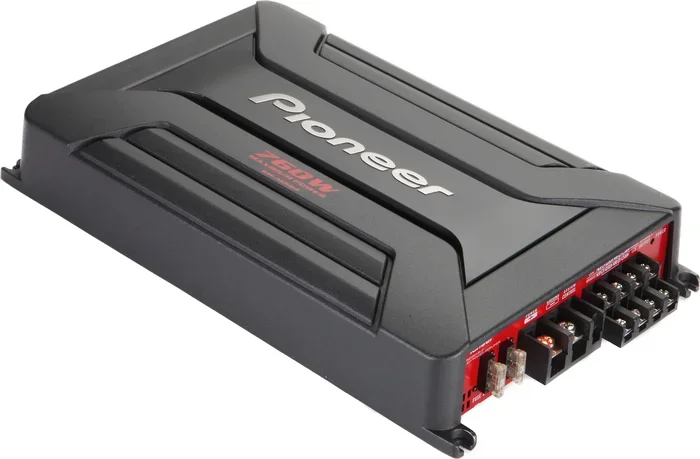
Popular brands for 4 channel car amplifiers include Pioneer, Rockford Fosgate, JL Audio, and Kicker. You can find solid options at every price point. Set a budget before you shop. Remember that a mid-range amp often outperforms a cheap one in terms of sound quality and durability.
How to Install a 4 Channel Car Amp
Installing a 4 channel amp for car is a project many DIYers can handle. Here is a step-by-step overview.
Step 1: Gather Your Tools and Materials
Before you start, make sure you have everything you need:
- A 4 channel car amp
- Power wire (gauge depends on amp wattage)
- Ground wire
- Remote turn-on wire
- Speaker wire for all four channels
- RCA cables for the audio signal
- Fuse and fuse holder
- Wire crimps and connectors
- Basic hand tools
Step 2: Find a Good Mounting Spot
Place the amp where it is protected from moisture and heat. Under a seat or behind a panel works well. Make sure it is close to your battery to keep the power wire short.
Step 3: Run the Power Wire
Run the power wire from your battery to the amp. Install a fuse as close to the battery as possible. Use the correct wire gauge for your amp’s power rating. A thicker wire handles more current safely.
Step 4: Ground the Amp
Connect the ground wire to a clean, bare metal spot on the car chassis. Remove any paint or rust from the contact point. A solid ground prevents noise and ensures safe operation.
Step 5: Connect the RCA Cables
Run the RCA cables from your head unit to the amp inputs. Keep them away from power wires to avoid interference. This reduces the chance of buzzing or humming in your audio.
Step 6: Wire the Speakers
Connect speaker wire from each amp channel to the corresponding speaker. Pay attention to positive and negative terminals. Reversing polarity can cause sound cancellation and weak bass.
Step 7: Connect the Remote Turn-On Wire
This wire tells the amp to turn on and off with your ignition. It usually connects to the blue wire from your head unit.
Step 8: Test the System
Once everything is connected, turn on your car and the stereo. Play some music and check all four channels. Listen for any distortion or buzzing. Adjust the gain and crossover settings on the amp for the best sound.
Quick Tip: Always let your amp break in for a few hours before making final adjustments. This helps the capacitors charge fully and the sound stabilize.
Common Mistakes to Avoid with a 4 Channel Car Amp
Even experienced car audio enthusiasts make mistakes. Here are some common ones to watch out for.
Mismatching Power Ratings
One of the biggest mistakes is pairing an amp with speakers that have different power ratings. If your amp overpowers your speakers, you risk blowing them. If it underpowers them, you will not get the full benefit. Always match the RMS power of your amp to your speakers.
Using the Wrong Wire Gauge
Thin wires cannot handle high current safely. They can overheat and even cause a fire. Always use the recommended wire gauge for your 4 channel car amplifier. A quick chart can help you choose the right size based on your amp’s power output and the length of the wire run.
Skipping the Fuse
Never skip the fuse on your power wire. A fuse protects your amp and your car’s electrical system. Without it, a short circuit can cause serious damage or even a fire.
Ignoring Impedance Limits
Wiring speakers in a way that drops impedance below your amp’s minimum rating can damage the amplifier. Always check your amp’s specifications and wire your speakers correctly.
Poor Grounding
A bad ground causes all kinds of audio problems. Buzzing, humming, and weak sound can all result from a poor ground connection. Always clean the contact point and use a short, direct ground wire.
Tips for Getting the Best Sound from Your 4 Channel Car Amp
Once your 4 channel car amp is installed, you can fine-tune it for the best possible sound.
Set the Gain Properly
The gain control on your amp sets the input sensitivity. Setting it too high causes distortion. Setting it too low wastes potential. Use a multimeter or follow the manufacturer’s guidelines to set the gain correctly.
Tune Your Crossovers
Adjust the low-pass and high-pass filters on your 4 channel amplifier. Send low frequencies to your subwoofers and high frequencies to your tweeters. This ensures each speaker handles only the frequencies it is designed for. The result is cleaner, more accurate sound.
Use Quality Speaker Wire
Cheap speaker wire can introduce resistance and reduce power delivery. Use oxygen-free copper (OFC) speaker wire for the best results. It conducts electricity efficiently and lasts longer.
Keep Your Wires Organized
Tidy wiring does more than look good. It prevents wires from vibrating and creating noise. Use zip ties and wire loom to keep everything neat behind your panels.
Let the Amp Break In
New amplifiers often sound slightly different after the first few hours of use. The internal components settle and performance stabilizes. Give your 4 channel car amp a few hours of playtime before making final tuning decisions.
4 Channel Car Amp vs. Other Amplifier Configurations
There are several types of car amplifiers. How does a 4 channel car amplifier compare to the rest?
4 Channel vs. Mono Amp
A mono amp powers a single subwoofer. It is designed specifically for low frequencies. A 4 channel car amp can power full-range speakers and also drive a subwoofer if you bridge two channels. A mono amp will always deliver more power to a single subwoofer, but a 4 channel amp for car offers more versatility.
4 Channel vs. 2 Channel Amp
A 2 channel amp powers two speakers. It works great for a front-stage setup. But if you want sound in all four doors, a 4 channel car amp is the better choice. It saves space and wiring complexity compared to running two separate 2 channel amps.
4 Channel vs. 5 Channel Amp
A 5 channel amp adds an extra channel for a subwoofer. It is essentially a 4 channel amplifier with a built-in mono channel. If you want a full system with four speakers and a subwoofer, a 5 channel amp can simplify things. But a 4 channel car amp paired with a separate mono amp gives you more flexibility and often better sound quality.
| Feature | 4 Channel Amp | Mono Amp | 2 Channel Amp | 5 Channel Amp |
|---|---|---|---|---|
| Number of Channels | 4 | 1 | 2 | 5 |
| Best For | Full-range speakers or mixed setup | Subwoofer only | Front or rear speakers | Full system with sub |
| Versatility | High | Low | Medium | Very High |
| Wiring Complexity | Moderate | Simple | Simple | Moderate |
| Cost | Mid-range | Budget to mid | Budget to mid | Higher |
As you can see, a 4 channel car amp strikes a great balance between versatility, cost, and performance. It is the go-to choice for most car audio upgrades.
Maintenance Tips for Your 4 Channel Car Amp
Your 4 channel car amplifier is an investment. Proper care keeps it running strong for years.
- Keep it clean: Dust can build up and cause overheating. Wipe down your amp regularly with a soft cloth.
- Check your connections: Loose wires cause sound problems and can even damage your amp. Inspect connections every few months.
- Monitor heat: If your amp feels excessively hot, check for ventilation issues. Make sure air can flow around it freely.
- Avoid clipping: Running your amp at distortion consistently can damage internal components. Set your gain properly and turn down the volume if you hear distortion.
- Protect it from moisture: Do not mount your amp in areas exposed to water or heavy humidity. Moisture causes corrosion and electrical problems.
With basic care, your 4 channel car amp can last for many years. It will continue to deliver great sound every time you hit the road.
Final Thoughts on the 4 Channel Car Amp
A 4 channel car amp is one of the best upgrades you can make to your car audio system. It delivers more power, better clarity, and greater flexibility than a stock stereo ever could. Whether you are a casual listener or a serious audiophile, a 4 channel amplifier can transform your driving experience.
Take the time to choose the right amp for your setup. Match the power ratings, pick the right amplifier class, and follow proper installation practices. Avoid common mistakes like poor grounding or mismatched speakers. Once your system is dialed in, you will wonder how you ever drove without it.
The world of car audio is exciting and rewarding. A 4 channel car amp is the perfect place to start your upgrade journey. Your ears will thank you every time you turn the key.
Frequently Asked Questions
What is a 4 channel car amp used for?
A 4 channel car amp is used to power up to four speakers in your car. It can run all four doors as full-range speakers or be configured to power speakers and a subwoofer. It is the most versatile amp for improving your car audio system.
Can I bridge a 4 channel amp to power a subwoofer?
Yes, you can bridge two channels of a 4 channel car amplifier to create a single, more powerful channel. This is commonly used to power a subwoofer. Bridging doubles the voltage and increases power output to the single channel.
How much power does a 4 channel car amp need?
The power you need depends on your speakers. A good rule is to match the amp’s RMS power to your speakers’ RMS power handling. For most factory-upgraded systems, a 4 channel amp with 50 to 75 watts RMS per channel works well.
Is it hard to install a 4 channel car amp?
Installation difficulty varies. If you are comfortable with basic car electronics, you can handle it. It involves running power wire, connecting RCA cables, and wiring speakers. If you are not confident, a professional installer can do it quickly and safely.
What is the difference between a 4 channel amp and a 4 channel car amplifier?
There is no difference. “4 channel amp” and “4 channel car amplifier” are just two ways of saying the same thing. Both refer to an amplifier with four independent output channels for car audio use.
How do I know if my 4 channel car amp is working properly?
Listen for clear, distortion-free sound on all four channels. Check that your amp’s power light turns on when you start the car. If you hear buzzing or no sound from one channel, check your wiring and ground connections first.
=== CONCLUSION ===
A 4 channel car amp is a smart and rewarding upgrade for any car audio system. It boosts your speakers, improves sound quality, and gives you the flexibility to customize your setup. From choosing the right RMS power and amplifier class to proper installation and maintenance, this guide has covered the essentials. Now you have the knowledge to make confident decisions about your car audio upgrade. Take what you learned here, apply it to your own setup, and enjoy the music the way it was meant to be heard.