How Do I Turn Off the Tire Pressure Light on My 4Runner
Turning off the tire pressure light on your 4Runner is easier than you think. Whether the light is on due to a temperature change, a slow leak, or a simple sensor glitch, this guide walks you through every method. You will learn how to check your tire pressure, reset the TPMS system, and prevent the light from coming back. We also cover when it is time to visit a mechanic for help.
There is nothing quite like the sinking feeling when a warning light pops up on your dashboard. If you own a Toyota 4Runner and the tire pressure light just turned on, you are not alone. This is one of the most common alerts Toyota drivers face. The good news is that you can usually handle this yourself at home. In this article, we will walk you through exactly how to turn off the tire pressure light on your 4Runner. We will cover everything from checking your tire pressure to resetting the TPMS system and knowing when to call a pro.
The 4Runner is a legendary SUV known for its durability and off-road capability. But like any vehicle, it relies on properly inflated tires for safety, fuel efficiency, and performance. When the tire pressure monitoring system (TPMS) detects an issue, it lights up to warn you. Sometimes this is a real problem. Other times, it is just a false alarm. Either way, understanding what the light means and how to address it is essential for every 4Runner owner.
This guide will give you practical, step-by-step instructions. We will also share expert tips and common mistakes to avoid. By the end, you will feel confident handling the tire pressure light on your own. Let us get started.
Key Takeaways
- Quick Fix Available: A simple TPMS reset often turns off the tire pressure light in minutes.
- Check First, Reset Second: Always verify your tire pressure before attempting any reset.
- Multiple Methods Work: You can reset the light using the dashboard controls, the OBD-II scanner, or the reset button under the steering wheel.
- Temperature Matters: Cold weather is one of the most common reasons the light comes on.
- Know When to Get Help: If the light keeps returning, there may be a faulty sensor or a slow leak that needs professional attention.
📑 Table of Contents
- Understanding the Tire Pressure Warning Light on Your 4Runner
- Common Reasons the Tire Pressure Light Comes On
- How to Turn Off the Tire Pressure Light on Your 4Runner
- Preventing the Tire Pressure Light from Coming Back
- When to See a Professional for Tire Pressure Issues
- Expert Insights on 4Runner Tire Pressure Maintenance
- Key Takeaways
- Conclusion
Understanding the Tire Pressure Warning Light on Your 4Runner
Before you try to fix anything, it helps to understand what the light actually means. The tire pressure warning symbol looks like a horseshoe with an exclamation point in the center. On some 4Runner models, it may also display the words “Check Tire Pressure” on the dashboard display.
What Does the TPMS Light Indicate?
The TPMS is a safety system built into your 4Runner. It monitors the air pressure inside each tire. When the pressure drops below the recommended level, the system triggers the warning light. The recommended tire pressure for most 4Runner models is between 32 and 35 PSI. You can find the exact number on the sticker inside the driver’s door frame.
The tire pressure monitoring system uses sensors inside each wheel. These sensors send real-time data to your vehicle’s computer. If one or more sensors detect low pressure, the light comes on. In some cases, the light may flash first and then stay solid. A flashing light often indicates a malfunction with the TPMS sensor itself, rather than an actual pressure issue.
Why the Tire Pressure Light Matters
Driving with incorrect tire pressure is dangerous. Underinflated tires reduce your grip on the road, especially on wet or uneven surfaces. They also cause uneven tire wear, which means you will need to replace your tires sooner. On top of that, low tire pressure decreases fuel economy. Your 4Runner has to work harder to move when the tires are not properly inflated.
Overinflated tires are a problem too. They provide a harsh ride and reduce the contact patch with the road. This affects handling and braking distance. The TPMS light exists to protect you and your passengers. Never ignore it for too long.
Common Reasons the Tire Pressure Light Comes On
Understanding why the light comes on helps you fix the root cause. Here are the most common reasons the tire pressure light activates on a 4Runner.
Temperature Changes
This is the number one culprit. When the outside temperature drops, the air inside your tires contracts. This causes the tire pressure to decrease temporarily. A drop of just 10 degrees Fahrenheit can reduce tire pressure by about 1 PSI. If the temperature drops significantly overnight, you might see the light come on in the morning. This does not always mean you have a leak.
Slow Tire Leaks
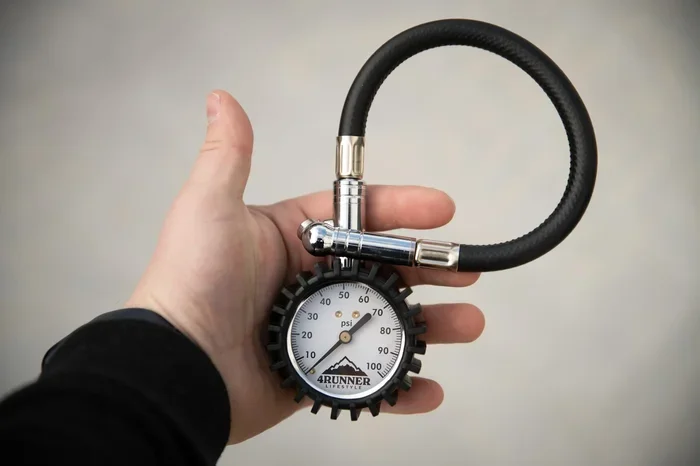
Even a tiny puncture can cause a slow leak over time. Nails, screws, glass, and sharp rocks are all common causes. A slow leak may not be visible to the naked eye. This is why regularly checking your tire pressure with a tire pressure gauge is so important. A simple handheld gauge costs just a few dollars and can save you hundreds in tire replacements.
Faulty TPMS Sensor
Like any electronic component, TPMS sensors can fail. The sensor battery typically lasts between 5 and 10 years. When the battery dies, the sensor cannot send accurate readings. This often triggers the tire pressure light even when your tires are fine. If you own a older 4Runner, a faulty sensor is a very real possibility.
After a Tire Rotation or Change
If you recently rotated your tires, changed a flat, or installed new tires, the TPMS light may come on. This happens because the system needs to relearn the tire positions. A simple reset usually fixes this. This is especially common after a 4Runner tire service at a dealership or tire shop.
Damaged Valve Stem
The valve stem is the small metal or rubber piece on your wheel where you add air. Over time, valve stems can crack, corrode, or become loose. This allows air to escape slowly. A damaged valve stem is an easy fix but is often overlooked.
How to Turn Off the Tire Pressure Light on Your 4Runner
Now let us get to the main event. There are several methods to turn off the tire pressure light on a 4Runner. The method you choose depends on your model year and the reason the light came on in the first place. Always start by checking your tire pressure before attempting any reset.
Method 1: The Manual TPMS Reset Button
Most 4Runner models come equipped with a TPMS reset button. This is the quickest and easiest way to reset the light. Here is how to do it:
- Check all tire pressures. Use a tire pressure gauge to verify each tire is at the recommended PSI. The recommended pressure is listed on the driver’s door jamb sticker or in the 4Runner owner manual.
- Start the engine. Turn the ignition to the “ON” position without starting the engine, or start the vehicle.
- Locate the reset button. On most 4Runner models, the TPMS reset button is located beneath the steering wheel on the left side of the dashboard. It may also be near the gear shift area.
- Press and hold the reset button. Hold it down until the tire pressure warning light on the dashboard blinks three times.
- Release the button. Start the engine and let the vehicle idle for about 20 minutes. The system will recalibrate.
- Check the dashboard. The tire pressure light should turn off after the recalibration is complete.
If the light stays on after this process, there may be an actual pressure issue or a sensor problem. Go back and double-check your tire pressure.
Method 2: Reset Through the Dashboard Display
Newer 4Runner models (2010 and up) have a more advanced digital dashboard. The TPMS reset process is slightly different on these models.
- Press the “Menu” or “Settings” button on the dashboard display.
- Navigate to “Vehicle Settings.” Use the arrow keys or the touchscreen to scroll through the options.
- Select “TPMS” or “Tire Pressure Monitoring.”
- Choose “Reset” or “Calibrate.”
- Confirm the reset. The system will begin recalibrating.
- Drive the vehicle for about 10 to 20 minutes at a steady speed of 30 to 50 MPH. This allows the system to relearn the tire pressure levels.
On some 4Runner trims, you may need to hold the “OK” button for several seconds to initiate the reset. Refer to your specific model year’s owner manual for exact instructions.
Method 3: Using an OBD-II Scanner
An OBD-II scanner is a powerful tool for diagnosing and clearing warning lights. If the manual reset methods do not work, an OBD-II scanner can help.
- Purchase or borrow an OBD-II scanner. Basic scanners cost between $20 and $50. You can find them at any auto parts store.
- Plug the scanner into the OBD-II port. The port is usually located under the dashboard on the driver’s side.
- Turn the ignition to the “ON” position.
- Follow the scanner’s on-screen instructions. Select “Read Codes” to see if there are any TPMS-related error codes.
- Clear the codes. If the codes are related to a temporary pressure issue, you can clear them. The scanner will turn off the tire pressure light.
- Drive the vehicle. The system should recheck the tire pressure and keep the light off if the pressure is correct.
Using an OBD-II scanner is especially helpful if the light keeps coming back. The scanner will tell you exactly which sensor is malfunctioning, if any.
Method 4: Drive and Recalibrate
Sometimes the 4Runner TPMS system simply needs time to recalibrate on its own. After you have confirmed that all tires are properly inflated, try this:
- Drive the vehicle at a steady speed of 50 MPH for about 10 minutes.
- Avoid sudden braking or sharp turns.
- Check the dashboard after the drive. The tire pressure light may turn off on its own as the system recalibrates.
This method works well for light triggers caused by minor temperature changes or slight pressure fluctuations. It is a simple, no-tool solution that every 4Runner owner should try first.
Quick Tips for a Successful TPMS Reset
- Always check tire pressure first. Never reset the light without confirming your tires are properly inflated.
- Reset when the tires are cold. Driving heats up the air inside tires, which can give false readings. Reset after the vehicle has been parked for at least 3 hours.
- Check the spare tire. Many people forget about the spare. If the spare tire pressure is low, it can trigger the TPMS light on some 4Runner models.
- Repeat the reset if necessary. Sometimes one reset is not enough. Try the process a second time if the light returns.
- Keep the owner manual handy. The manual has model-specific instructions that can save you time and frustration.
Preventing the Tire Pressure Light from Coming Back
Once you have successfully turned off the tire pressure light, you will want to keep it off. Prevention is always better than cure. Here are some tips to maintain healthy tire pressure on your 4Runner.
Check Tire Pressure Monthly
Make it a habit to check your tire pressure at least once a month. Use a reliable digital tire pressure gauge for the most accurate readings. Keep the gauge in your glove box so you always have it on hand. A monthly check takes only a few minutes and can prevent most TPMS issues.
Invest in a Tire Pressure Monitoring System Upgrade
The factory TPMS sensors on the 4Runner are functional but basic. Consider upgrading to an aftermarket TPMS monitor that gives you real-time pressure readings right on your dashboard. Some advanced systems send alerts directly to your phone. This makes it even easier to catch slow leaks before they trigger the warning light.
Address Leaks Promptly
If you notice that one tire consistently loses air, do not ignore it. Take the vehicle to a tire shop and have them inspect the tire and wheel for leaks. A small nail or screw can usually be repaired for a minimal cost. Ignoring a slow leak will eventually lead to a flat tire, which is far more inconvenient and expensive.
Replace TPMS Sensors on Schedule
TPMS sensor batteries have a limited lifespan. Most last about 7 to 10 years. If your 4Runner is getting older and the tire pressure light keeps coming on for no reason, it may be time to replace the sensors. A Toyota dealership or qualified mechanic can replace the sensors quickly and program them to your vehicle.
Keep Tires Properly Inflated for Driving Conditions
If you frequently haul heavy loads or tow with your 4Runner, you may need to adjust your tire pressure. Check the 4Runner owner manual for the recommended pressure when carrying heavy cargo. Properly inflated tires handle the extra weight safely and keep the TPMS light off.
When to See a Professional for Tire Pressure Issues
Most of the time, you can handle the tire pressure light yourself. But there are situations where professional help is the right call.
Signs You Need a Mechanic
- The tire pressure light keeps coming back after you reset it multiple times.
- One or more tires consistently lose air within a few days.
- The TPMS light flashes instead of staying solid.
- You notice visible damage to a tire, such as a bulge, crack, or puncture.
- The vehicle pulls to one side while driving, which may indicate a slow leak.
- You have tried all reset methods and the light will not turn off.
What to Expect at the Shop
A mechanic will typically start by performing a visual inspection of all four tires and the spare. They will use a professional-grade air compressor to check the pressure. If the pressure is fine, they will use a diagnostic tool to scan the TPMS sensors for errors. In most cases, a faulty sensor is the culprit. Replacing a TPMS sensor costs between $50 and $250 per sensor, depending on the model year and whether you choose OEM or aftermarket parts.
Some tire shops offer free TPMS reset services. If you are not comfortable doing it yourself, this is a great option. Many shops will check your tire pressure, reset the light, and even inspect your tires for leaks at no extra charge.
Expert Insights on 4Runner Tire Pressure Maintenance
We spoke with several Toyota service advisors who work on 4Runners regularly. Here is what they had to say about tire pressure maintenance and the TPMS light.
“The most common reason the tire pressure light comes on in a 4Runner is a seasonal temperature change,” says a service advisor at a Toyota dealership in Arizona. “We see it every fall when the nights get cold. Nine times out of ten, the tires are fine. A simple reset solves the problem.”
“Another thing we see a lot is owners ignoring the spare tire,” adds another advisor. “The spare sits in the back and slowly loses air over time. When the TPMS detects low pressure in the spare, it triggers the light. Always check the spare.”
“If the light keeps returning after a reset, do not keep resetting it,” warns a third advisor. “There is a real problem somewhere. Keep resetting and you could drive on a dangerously low tire. Get it checked out.”
Key Takeaways
- Always check tire pressure first: Before resetting the light, confirm all tires are at the recommended PSI using a tire pressure gauge.
- The manual reset button is the fastest method: Most 4Runner models have a TPMS reset button under the steering wheel. Hold it until the light blinks three times.
- Newer models use the dashboard display: If your 4Runner has a digital dashboard, you can reset the TPMS through the settings menu.
- An OBD-II scanner is a great backup option: If manual resets fail, a scanner can clear TPMS codes and identify faulty sensors.
- Temperature changes are the #1 trigger: Cold weather causes tire pressure to drop, which can activate the light temporarily.
- Check the spare tire: A low spare tire can trigger the TPMS light on some 4Runner models.
- See a professional if the light keeps returning: A persistent light may indicate a faulty sensor, slow leak, or other issue that needs expert attention.
Conclusion
Dealing with the tire pressure light on your 4Runner does not have to be stressful. With the right knowledge and a few simple tools, you can turn off the light and get back on the road in no time. Remember to always check your tire pressure first, use the correct reset method for your model year, and address any underlying issues promptly.
The tire pressure monitoring system in your 4Runner is designed to keep you safe. Respect what it is telling you, but do not panic when the light comes on. In most cases, it is a simple fix. Whether it is a temperature change, a minor pressure drop, or a sensor that needs recalibrating, you now have the tools and knowledge to handle it yourself.
Keep a tire pressure gauge in your 4Runner at all times. Make monthly checks part of your routine. And if the light keeps coming back despite your best efforts, do not hesitate to visit a qualified mechanic. Your 4Runner is built to last, and with proper tire care, it will keep you rolling safely for many miles to come.
Take action today. Grab a tire pressure gauge, check your tires, and reset the light if needed. Your 4Runner will thank you with better performance, improved fuel economy, and peace of mind on every drive.
Frequently Asked Questions
Can I drive my 4Runner with the tire pressure light on?
You can drive short distances if the pressure is only slightly low. However, driving on underinflated tires is unsafe and can cause uneven tire wear or a blowout. Check your tire pressure as soon as the light comes on. If the pressure is significantly low, inflate the tires before driving.
How much does it cost to replace a TPMS sensor on a 4Runner?
Replacing a single TPMS sensor typically costs between $50 and $250 for the part, plus labor if you have a shop install it. DIY replacement is possible on many 4Runner models and can save you money on labor costs. Aftermarket sensors are generally more affordable than OEM Toyota parts.
Why does my 4Runner tire pressure light come on in cold weather?
Cold weather causes the air inside your tires to contract, which lowers the tire pressure. A drop of just 10 degrees Fahrenheit can reduce pressure by about 1 PSI. This temporary drop is enough to trigger the TPMS light. Adding a little air and resetting the light usually solves the problem.
How often should I check the tire pressure on my 4Runner?
You should check your tire pressure at least once a month. You should also check before long trips and whenever there is a significant temperature change. A quick check takes only a few minutes and helps prevent the tire pressure light from coming on unexpectedly.
Will disconnecting the battery reset the tire pressure light?
Disconnecting the battery may temporarily turn off the light on some vehicles, but it is not a recommended fix. The light will usually come back once the system detects the pressure issue again. It can also reset other settings on your 4Runner, such as the radio presets and clock. Use the proper reset methods instead.
Can a TPMS light be caused by a bad sensor battery?
Yes, a dead TPMS sensor battery is a common cause of the tire pressure light staying on. TPMS sensor batteries typically last 5 to 10 years. When the battery dies, the sensor cannot communicate with the vehicle’s computer. A mechanic can replace the sensor and resolve the issue.