How Much Does It Really Cost to Run a Diagnostic Test
So how much does it cost to run a diagnostic test? The answer depends on your vehicle, the shop, and what needs fixing. On average, you will pay between $60 and $250 for a professional diagnostic test, but DIY options can cost as little as $20. This guide breaks down every cost factor so you know exactly what to expect before walking into a repair shop.
This is a comprehensive guide about How Much Does It Cost to Run a Diagnostic Test?.
Key Takeaways
- Average cost: Professional diagnostic tests typically range from $60 to $250, depending on your vehicle and location.
- DIY options save money: Buying an OBD2 scanner for $20 to $150 lets you run tests at home and avoid shop labor fees.
- Vehicle type matters: Luxury and European cars often cost more for diagnostics due to specialized equipment and expertise.
- Complex issues raise prices: If the mechanic needs to dig deeper into multiple systems, the diagnostic fee can increase significantly.
- Common codes have common costs: Simple fixes like replacing a sensor may cost $50 to $200, while major repairs can reach $1,000 or more.
- Ask questions upfront: Always ask about diagnostic fees before work begins to avoid surprise charges on your bill.
[FEATURED_IMAGE_PLACEHOLDER]
Have you ever seen that dreaded check engine light pop up on your dashboard and wondered what it actually means? Most drivers experience this moment of panic at least once. The first instinct is to drive to the nearest shop and ask them to figure out what is going on. But before you hand over your keys, it helps to understand what you are getting into, especially when it comes to how much does it cost to run a diagnostic test.
A diagnostic test is essentially a health check for your vehicle. It uses specialized tools to read data from your car’s onboard computer and identify problems. Think of it like a doctor running blood work to find out what is wrong. The results give mechanics a starting point, which saves time and helps you understand what repairs are needed.
But here is the part that catches many people off guard: the cost is not always clear upfront. Some shops charge a flat fee, while others bill by the hour. And if your car needs a more complex scan, the price can jump. That is exactly why this guide exists. By the end, you will know the average diagnostic test cost, what factors change the price, and how to avoid getting overcharged.
What Is a Diagnostic Test and Why Does It Matter?
How Diagnostic Tests Work
Every modern vehicle built after 1996 has an onboard diagnostics system, known as OBD. This system monitors all the major components of your car, from the engine to the transmission. When something goes wrong, the computer stores a diagnostic trouble code, or DTC, which triggers the check engine light.
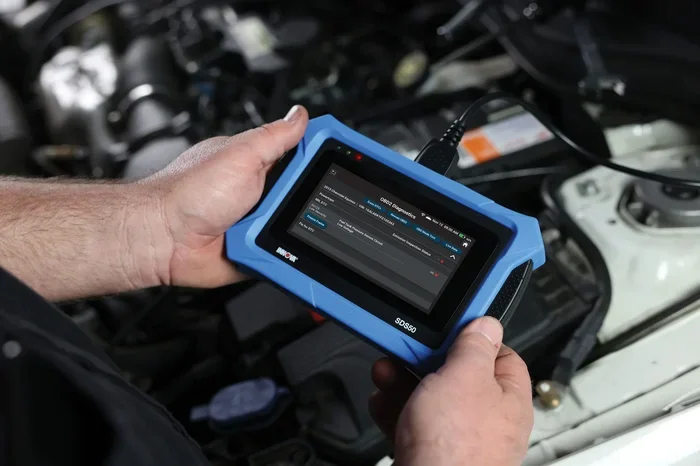
To read these codes, a mechanic plugs a tool into your car’s OBD port. This tool communicates with the vehicle’s computer and pulls up error codes. Each code corresponds to a specific problem. For example, a P0301 code means there is a misfire in cylinder one. The mechanic then uses this information to narrow down the issue.
The process itself is relatively quick. A basic scan takes about 10 to 15 minutes. However, if the problem is not obvious, the mechanic may need to perform additional tests, which takes more time and increases the cost.
What the Scan Reveals
A vehicle diagnostic testing session can reveal a lot about your car’s health. Here are some of the common things a scan might uncover:
- Engine problems: Issues with fuel injection, ignition, or emissions systems.
- Transmission faults: Problems with shifting, slipping gears, or overheating.
- Oxygen sensor failures: A faulty sensor can reduce fuel efficiency and increase emissions.
- Catalytic converter issues: A failing converter can cause poor performance and failed emissions tests.
- EVAP system leaks: These relate to fuel vapor leaks, which are common but often inexpensive to fix.
Understanding what a scan reveals helps you make informed decisions. Instead of blindly agreeing to repairs, you can ask your mechanic specific questions about the diagnostic trouble codes and what they mean for your vehicle.
How Much Does It Cost to Run a Diagnostic Test?
Average Diagnostic Test Prices
The diagnostic fee varies widely depending on several factors. Here is a general breakdown of what you can expect:
- Basic scan: $60 to $100. This covers a standard OBD2 scan and code reading.
- Intermediate scan: $100 to $150. This includes a more detailed read of multiple systems.
- Comprehensive diagnostic: $150 to $250. This involves in-depth testing across engine, transmission, and electrical systems.
For most drivers, a basic or intermediate scan covers their needs. But if you have a complex problem or a high-end vehicle, you may need the full comprehensive test. Either way, knowing the range helps you budget appropriately.
Diagnostic Costs by Vehicle Type
Not all cars are created equal when it comes to diagnostic testing. The type of vehicle you drive plays a big role in the final price. Here is a closer look:
- Domestic cars (Ford, Chevrolet, Toyota, Honda): These are the easiest to diagnose. Most mechanics have the tools and experience, so the cost stays on the lower end of the spectrum.
- European luxury cars (BMW, Mercedes, Audi): These vehicles require specialized diagnostic equipment that not all shops carry. Expect to pay $100 to $300 or more for a scan.
- Hybrid and electric vehicles: These cars have complex electrical systems. A car diagnostic scan on a hybrid may cost more because of the additional systems involved.
- Older vehicles (pre-1996): These do not have OBD2 systems. Mechanics must rely on manual testing, which can be more time-consuming and costly.
DIY vs Professional Diagnostic Testing
One of the best ways to save money is to run the diagnostic test yourself. OBD2 scanners are widely available and easy to use. You plug the device into the port under your steering column, and the scanner reads the codes for you.
Here is a quick cost comparison:
- Basic code reader: $20 to $50. This gives you the error codes but little else.
- Mid-range OBD2 scanner: $50 to $100. These offer live data readings and freeze frame data.
- Advanced diagnostic tool: $100 to $300. These provide in-depth analysis and manufacturer-specific codes.
While DIY tools save you money upfront, they do have limitations. A basic code reader tells you the code but not what caused it. A professional mechanic can interpret the code in context and identify the root problem. So there is a trade-off between cost and accuracy.
Factors That Influence Diagnostic Test Prices
Shop Location and Overhead
Where you take your car matters more than you might think. A repair shop in a major city with high rent will generally charge more than a shop in a rural area. This is simply a matter of overhead costs. The mechanic needs to cover their rent, utilities, and staff wages, and that cost gets passed on to you.
If you live in a large metropolitan area, you might pay $100 to $250 for a diagnostic test. In a smaller town, the same test might cost $60 to $120. Shopping around can make a real difference in your final bill.
Complexity of the Issue
A simple check engine light caused by a loose gas cap is easy to diagnose. But if the light is triggered by a complex electrical fault, the mechanic will spend more time and use more advanced tools. This naturally increases the diagnostic test cost.
Some shops charge a flat fee for the initial scan and then bill hourly for further investigation. Others include a set amount of diagnostic time in the fee and charge extra for anything beyond that. Always ask how the shop structures its diagnostic charges before work begins.
Equipment and Technology
Modern vehicles are essentially computers on wheels. A computerized vehicle inspection requires specialized software and equipment. Shops that invest in manufacturer-level diagnostic tools can often diagnose problems faster and more accurately. But that investment comes at a cost, which is reflected in their pricing.
For example, a dealership may charge $200 or more for a diagnostic test because they have access to proprietary software and factory-trained technicians. An independent shop might charge $80 to $150 for the same test using aftermarket tools.
Common Diagnostic Trouble Codes and Their Repair Costs
Once you know the diagnostic trouble code, you can start to understand the potential repair costs. Here are some of the most common codes and what they typically mean for your wallet:
- P0420 (Catalyst System Efficiency): This is one of the most common codes. Repair costs range from $200 to $1,000 depending on whether you need a new catalytic converter.
- P0301-P0308 (Cylinder Misfire): A misfire can be caused by spark plugs, ignition coils, or fuel injectors. Repairs typically cost $100 to $500.
- P0171 (System Too Lean): This often points to a vacuum leak or oxygen sensor issue. Fixing it usually costs $100 to $300.
- P0442 (EVAP Leak Detected): A small leak in the evaporative emission system. Common fix: replace the gas cap ($10 to $30) or repair a hose ($50 to $150).
- P0401 (Insufficient EGR Flow): This involves the exhaust gas recirculation valve. Repair costs range from $150 to $400.
Keep in mind that these are general estimates. The actual car repair costs depend on your vehicle model, the severity of the issue, and labor rates in your area. Always get a detailed estimate before approving any repairs.
How to Save Money on Diagnostic Testing
Quick Tips to Reduce Costs
Nobody wants to overspend on car repairs. Here are some practical tips to keep your diagnostic fee as low as possible:
- Buy your own OBD2 scanner. A basic code reader costs $20 to $50 and can save you the diagnostic fee entirely for simple issues.
- Get multiple quotes. Call three or four shops and ask for their diagnostic rate. Prices can vary significantly between locations.
- Check for free diagnostics. Some auto parts stores like AutoZone and O’Reilly offer free code reading. This is a great way to get a starting point without spending a dime.
- Ask about the diagnostic fee policy. Many shops will apply the diagnostic fee toward the repair cost if you have the work done with them. Always ask before you leave.
- Be specific about your symptoms. The more information you give the mechanic, the faster they can diagnose the problem. This reduces labor time and lowers the bill.
Common Mistakes to Avoid
Even the best car owners make mistakes when it comes to diagnostics. Here are a few to watch out for:
- Ignoring the check engine light. What starts as a small issue can become a major problem if left unchecked. Early detection saves money in the long run.
- Choosing the cheapest option without research. A very low diagnostic fee might mean the shop uses outdated equipment or lacks expertise. Look for reviews and recommendations.
- Not asking for a written estimate. Always get a clear breakdown of diagnostic fees and expected repair costs before any work begins.
- Assuming the code tells the whole story. A diagnostic trouble code points to a symptom, not always the root cause. Trust a professional to dig deeper if needed.
When to Skip the Diagnostic Test
There are times when a diagnostic test might not be necessary. For instance, if the check engine light comes on and goes off within a day or two, it could be a temporary issue. Sometimes a loose gas cap or a brief electrical glitch triggers the light, and the problem resolves itself.
Similarly, if you already know the issue and just need a specific part replaced, you might skip the full diagnostic. But be cautious. If the light comes back after a repair, a diagnostic test is essential to ensure the problem is truly fixed.
Also, if your vehicle is showing any of these warning signs, do not skip the diagnostic:
- Persistent check engine light
- Unusual noises or vibrations
- Decreased fuel efficiency
- Difficulty starting the engine
- Strange smells or smoke from the exhaust
These symptoms suggest something is seriously wrong, and a prompt diagnostic test can prevent costly damage down the road.
The Bottom Line
Understanding the cost of a diagnostic test empowers you as a car owner. The average diagnostic test cost ranges from $60 to $250, but many factors influence the final price. Your vehicle type, the shop you choose, and the complexity of the problem all play a role.
The best approach is to be proactive. Invest in a basic OBD2 scanner if you want to handle simple issues yourself. For anything more complex, find a reputable shop that offers transparent pricing. And always ask questions before work begins. A good mechanic will explain the diagnostic findings clearly and help you make the best decision for your vehicle and your budget.
Knowing how much does it cost to run a diagnostic test is just the first step. The real value comes from using that knowledge to take better care of your car. Stay informed, stay proactive, and your vehicle will reward you with years of reliable service.
FAQ
Can I reset my check engine light without a diagnostic test?
Yes, you can disconnect your car battery for a few minutes to reset the light. However, this does not fix the underlying problem. The light will likely come back once the computer detects the issue again. A proper diagnostic test is always the better long-term solution.
How long does a diagnostic test take?
A basic scan takes about 10 to 15 minutes. If the mechanic needs to investigate further or run additional tests, it could take an hour or more. The time depends on the complexity of the issue and the type of vehicle you drive.
Are free diagnostic tests at auto parts stores reliable?
They are reliable for getting a quick read of your error codes. However, they usually do not include a full analysis of what caused the problem. Use free code readings as a starting point, but visit a trusted mechanic for a thorough diagnosis if the issue persists.
Will my car insurance cover the cost of a diagnostic test?
Generally, no. Car insurance covers accidents and specific types of damage, not routine maintenance or diagnostics. However, if the diagnostic is related to a covered accident claim, your insurance might cover the cost. Check with your provider to be sure.
Is it cheaper to get a diagnostic test at a dealership or an independent shop?
Independent shops are usually cheaper for diagnostic testing. Dealerships often charge more because they use manufacturer-specific tools and employ factory-trained technicians. That said, dealerships may offer more specialized expertise for certain vehicle brands, which can justify the higher cost in some cases.
What happens if I ignore the check engine light?
Ignoring the light can lead to bigger and more expensive problems over time. A small issue like a faulty oxygen sensor can cause poor fuel economy and eventually damage the catalytic converter, which is a much more costly repair. Addressing the warning early almost always saves money in the long run.
Frequently Asked Questions
What is How Much Does It Cost to Run a Diagnostic Test??
How Much Does It Cost to Run a Diagnostic Test? is an important topic with many practical applications.