Does Mazda Use Ford Engines The Real Answer Explained
So, does Mazda use Ford engines? The short answer is no — not anymore. Mazda and Ford had a long partnership where they shared engines and platforms, but that era ended in 2015. Today, Mazda relies entirely on its own SkyActiv engine technology to power its vehicles.
Have you ever wondered about the Mazda Ford engine connection? Maybe you were shopping for a used car and saw a Mazda model that looked suspiciously similar to a Ford. Or perhaps you just love cars and want to understand the history behind Mazda engine technology. Whatever your reason, you have come to the right place.
The question “Does Mazda Use Ford Engines” is one that pops up a lot among car enthusiasts and shoppers alike. The answer is more interesting than a simple yes or no. Mazda and Ford shared a deep partnership for decades, and during that time, they did share engines, platforms, and technology. But today? Mazda stands completely on its own feet when it comes to powertrains.
In this article, we are going to break it all down. You will learn about the Ford Mazda partnership history, which specific engines were shared, why the partnership ended, and what Mazda uses today. By the time you finish reading, you will know more about Mazda powertrain choices than most car salespeople.
Key Takeaways
- Ford Owned a Stake in Mazda: Ford held roughly 33% of Mazda from 1979 to 2015, which led to significant engine and platform sharing.
- Shared Ford Duratec Engines Were Used: Some Mazda models, especially in certain markets, used Ford-sourced Duratec engines during the partnership years.
- Mazda Now Uses SkyActiv Technology: Mazda has fully moved on to its own SkyActiv-G and SkyActiv-X engines, which are highly efficient and powerful.
- Platform Sharing Still Exists in Some Areas: While engine sharing has ended, Mazda and Ford still share some vehicle platforms in certain regions.
- The Partnership Ended in 2015: Ford sold its stake in Mazda, marking the end of their deep mechanical collaboration.
- Mazda Engines Are Now Fully Independent: Every current Mazda vehicle uses a proprietary Mazda powertrain designed in-house.
📑 Table of Contents
The History of Mazda and Ford: A Deep Partnership
The relationship between Mazda and Ford is one of the most fascinating stories in the automotive world. Ford Motor Company became a major shareholder in Mazda back in 1979. At that time, Mazda was struggling financially and needed a partner to help it grow. Ford saw something special in Mazda, especially its rotary engine technology and its lean manufacturing philosophy.
Over the years, Ford increased its ownership stake to about 33%. This gave Ford significant influence over Mazda’s decisions. The two companies worked together on many fronts, from vehicle platforms to engine development. They even shared factories and supply chains in some cases.
Why Ford Invested in Mazda
Ford wanted access to Mazda’s expertise in building small, efficient engines. Mazda had mastered the art of extracting power from small displacement engines. Ford, on the other hand, brought financial stability and a global distribution network. Together, they made sense as partners.
Some key reasons for the partnership included:
- Shared manufacturing costs and economies of scale
- Access to Mazda’s rotary engine knowledge and small engine expertise
- Ford’s global dealer network helping Mazda reach new markets
- Platform sharing to reduce development expenses
- Technology exchange in areas like fuel efficiency and emissions
How Long Did the Partnership Last?
The Ford Mazda partnership lasted for about 36 years. It began in 1979 and came to a formal end in 2015 when Ford sold its remaining stake in Mazda. Over those decades, the two companies grew apart in terms of philosophy. Mazda focused on driver-focused engineering and unique rotary engines, while Ford moved toward mass-market practicality.
Which Ford Engines Did Mazda Use?
Now let us get to the heart of the matter. Does Mazda Use Ford Engines, and if so, which ones? The answer is yes — but only during specific periods and in certain markets. Mazda used several Ford-sourced engines over the years, and understanding which ones is key to answering this question fully.
The Ford Duratec Engine Family
The most notable engines Mazda borrowed from Ford belong to the Ford Duratec engine family. The Duratec is a line of four-cylinder gasoline engines that Ford developed in the 1990s. These engines were known for being reliable, affordable, and reasonably efficient. They came in various displacements, including 1.8 liters, 2.0 liters, and 2.5 liters.
Mazda used Ford Duratec engines in several models, particularly in markets outside of Japan. Some of the most common applications included:
- Mazda 323 — used the Ford 1.8L and 2.0L Duratec engines in certain markets
- Mazda Protege — also known as the Mazda 323 in some regions, featured Ford-sourced engines
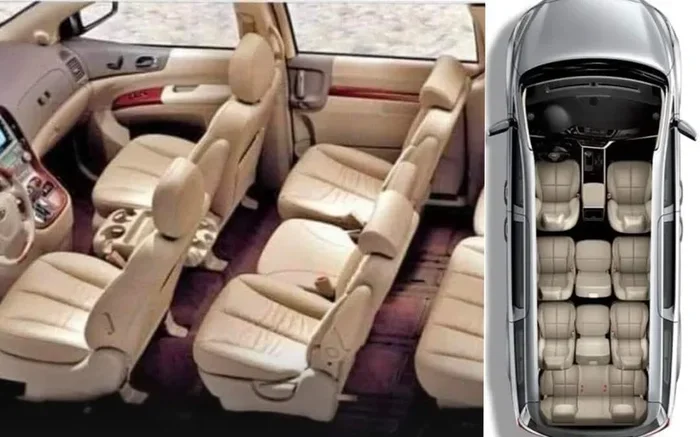
- Mazda MPV — the Mazda MPV minivan used a Ford 2.5L Duratec V6 engine in some versions
- Mazda Tribute — a compact SUV that was essentially a rebadged Ford Escape and shared its engine
The Ford 1.8L and 2.0L Engines in Detail
The Ford 1.8L Duratec engine was a popular choice for entry-level Mazda sedans and hatchbacks. It produced around 120 to 130 horsepower, which was plenty for daily driving. The Ford 2.0L Duratec engine bumped that up to about 140 to 150 horsepower and offered better highway cruising ability.
These engines were not bad by any means. They were dependable and had decent fuel economy. However, they lacked the character and refinement that Mazda is known for today. Mazda enthusiasts often look back at this era with mixed feelings.
The Ford Ranger and Mazda BT-50 Connection
One of the most visible examples of the Ford Mazda collaboration is the Mazda BT-50 pickup truck. The BT-50 is essentially a Ford Ranger underneath. Both trucks share the same platform, the same engines, and even the same assembly lines in some factories.
The BT-50 has used Ford-sourced diesel engines, including the Ford 2.2L Duratorq diesel and the Ford 3.2L Duratorq diesel. These are robust, work-capable engines that suit a pickup truck well. So even today, some Mazda vehicles still carry Ford engines — specifically in the pickup truck segment.
Quick Tip: If you are shopping for a used Mazda BT-50, check which engine it has. Some versions use Ford diesel engines, while newer models may use a different powertrain. Always ask the seller for the engine code and specifications.
Why Did Mazda Stop Using Ford Engines?
The Ford Mazda partnership was successful for a long time, but eventually, the two companies went in different directions. Several factors led to Mazda ending its reliance on Ford engines.
Mazda’s Vision for Independent Engine Development
Mazda always had a strong identity. The company is famous for its rotary engines, its focus on driving feel, and its commitment to efficiency. Using Ford engines, which were designed for a broader market, did not always align with Mazda’s brand identity. Mazda wanted to develop engines that reflected its philosophy of joy of driving.
This vision led Mazda to invest heavily in its own engine development program. The result was the SkyActiv technology suite, which includes the SkyActiv-G gasoline engine and the SkyActiv-X compression ignition engine. These are entirely Mazda-designed and built.
Ford’s Decision to Sell Its Mazda Stake
In 2015, Ford made the decision to sell its entire remaining stake in Mazda. This was a strategic move by Ford to focus on its own core brands and operations. For Mazda, it was a liberating moment. The company could now pursue its own engineering direction without any outside influence.
After 2015, Mazda committed fully to its proprietary engine lineup. Every new Mazda model launched since then has used a Mazda-designed powertrain. The era of Ford engines in Mazda vehicles was effectively over.
Mazda’s SkyActiv Revolution
The SkyActiv-G engine is Mazda’s flagship gasoline engine. It comes in 1.5L, 2.0L, and 2.5L displacements. These engines use high compression ratios, direct injection, and advanced combustion techniques to deliver impressive fuel economy and strong performance.
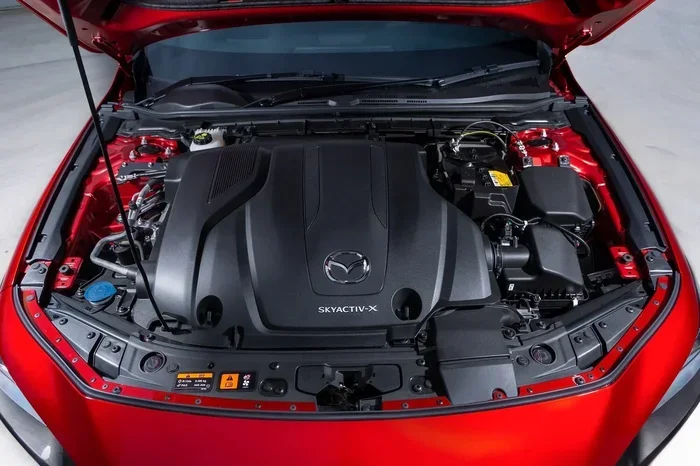
The SkyActiv-X engine takes things even further. It uses a unique compression ignition process that combines the best of gasoline and diesel engines. The result is an engine that is both powerful and remarkably efficient. This is a technology that Ford never contributed to — it is pure Mazda innovation.
| Feature | Ford Duratec (Shared Era) | Mazda SkyActiv-G (Current) |
|---|---|---|
| Engine Type | Naturally aspirated 4-cylinder | Naturally aspirated 4-cylinder with advanced combustion |
| Compression Ratio | Around 10:1 to 11:1 | Up to 15:1 (SkyActiv-G) |
| Fuel Economy | Average for its class | Excellent, class-leading |
| Power Output | 120-150 hp | 130-190 hp depending on displacement |
| Technology | Conventional multi-point injection | Direct injection, SkyActiv-X compression ignition available |
| Engine Origin | Ford designed | Mazda designed and manufactured |
Current Mazda Engine Lineup: Fully Independent
Today, every Mazda vehicle rolls off the line with a Mazda-designed engine. The company has completely moved away from Ford-sourced powertrains. Let us take a look at what Mazda’s current engine lineup looks like.
SkyActiv-G Gasoline Engines
The SkyActiv-G engines are the backbone of Mazda’s current offerings. They are available in three sizes:
- 1.5L SkyActiv-G: Found in the Mazda2 and Mazda3 in some markets. Produces around 90 to 120 horsepower.
- 2.0L SkyActiv-G: The most popular option, used in the Mazda3, Mazda6, and CX-30. Delivers about 148 to 186 horsepower.
- 2.5L SkyActiv-G: Available in the Mazda6 and CX-50. Produces around 186 to 227 horsepower.
These engines are known for being remarkably efficient while still delivering engaging driving dynamics. Mazda achieves this through high compression, precise fuel injection, and lightweight engine components.
SkyActiv-X: The Future of Gasoline Engines
The SkyActiv-X engine is Mazda’s most revolutionary powertrain to date. It uses spark-controlled compression ignition, which means it ignites the fuel-air mixture through compression rather than a spark plug under certain conditions. This technology was inspired by diesel engines but uses gasoline fuel.
The SkyActiv-X engine delivers the efficiency of a diesel with the smoothness and responsiveness of a gasoline engine. It currently produces around 186 to 190 horsepower and is available in select Mazda3 and CX-5 models.
Expert Insight: The SkyActiv-X engine represents a major leap forward for Mazda. It shows that the company has the engineering talent to develop cutting-edge powertrain technology entirely on its own. This would not have been possible without the years of experience gained during the Ford partnership, but the innovation is entirely Mazda’s own.
Mazda Diesel Engines
In markets outside of North America, Mazda also offers diesel engines. These are Mazda-designed and built, not sourced from Ford. The SkyActiv-D diesel engines are available in 1.8L and 2.2L displacements and are known for their strong torque and excellent fuel economy.
It is worth noting that the Mazda BT-50, as mentioned earlier, may still use Ford-sourced diesel engines in some markets. However, Mazda has been working on transitioning this model to its own powertrains as well.
Common Mistakes People Make About Mazda and Ford Engines
There are several misconceptions that circulate about the Mazda Ford engine relationship. Let us clear up some of the most common ones.
Mistake 1: Assuming All Mazdas Used Ford Engines
Not every Mazda ever used a Ford engine. Mazda has always been an independent automaker with its own engine design heritage. The Mazda rotary engine, the Mazda Wankel engine, and the iconic Mazda RX-7 all used Mazda-designed powerplants. Ford engines were only used in specific models and specific markets.
Mistake 2: Thinking the Partnership Is Still Active
Many people assume that because Ford and Mazda once shared so much, they still do. The truth is that the partnership ended in 2015. While some platform sharing continues for certain models like the BT-50, the engine sharing is largely a thing of the past.
Mistake 3: Confusing Platform Sharing with Engine Sharing
Just because two companies share a platform does not mean they share engines. A shared platform means the basic chassis, suspension, and body structure are similar. The engines can be completely different. This is an important distinction to understand when comparing vehicles from different brands.
Mistake 4: Underestimating Mazda’s Engine Quality
Some people assume that because Mazda once used Ford engines, its engines must be of lower quality. This is far from the truth. Mazda’s current engines are among the best in the industry. They consistently earn top marks for reliability, efficiency, and driving pleasure. The SkyActiv engines have won numerous awards and accolades.
What Does the Future Hold for Mazda Engines?
Mazda is not resting on its laurels. The company has ambitious plans for the future of its powertrain technology. Here are some trends and developments to watch.
Hybrid and Electric Powertrains
Like every automaker, Mazda is moving toward electrification. The company has introduced mild hybrid versions of its SkyActiv engines and plans to launch full hybrid and electric vehicles in the coming years. Mazda’s approach to electrification is characteristically thoughtful — the company wants to get it right rather than rush to market.
Continued Focus on Internal Combustion Efficiency
Even as Mazda embraces electrification, it continues to improve its internal combustion engines. The SkyActiv-X Gen 2 and future iterations promise even better efficiency and performance. Mazda believes that the internal combustion engine still has a long and productive life ahead, especially when paired with hybrid technology.
Mazda’s Engineering Independence
One of the most exciting aspects of Mazda’s future is its commitment to independent engineering. Mazda designs and builds its own engines, transmissions, and drivetrains. This independence allows the company to create vehicles with a unique character that cannot be replicated by simply badge-engineering a Ford product.
Key Takeaways
- Ford Owned a Stake in Mazda: Ford held roughly 33% of Mazda from 1979 to 2015, which led to significant engine and platform sharing.
- Shared Ford Duratec Engines Were Used: Some Mazda models, especially in certain markets, used Ford-sourced Duratec engines during the partnership years.
- Mazda Now Uses SkyActiv Technology: Mazda has fully moved on to its own SkyActiv-G and SkyActiv-X engines, which are highly efficient and powerful.
- Platform Sharing Still Exists in Some Areas: While engine sharing has ended, Mazda and Ford still share some vehicle platforms in certain regions.
- The Partnership Ended in 2015: Ford sold its stake in Mazda, marking the end of their deep mechanical collaboration.
- Mazda Engines Are Now Fully Independent: Every current Mazda vehicle uses a proprietary Mazda powertrain designed in-house.
Conclusion
So, does Mazda use Ford engines? The answer is a clear and definitive no — at least for the vast majority of current Mazda vehicles. The Ford Mazda partnership was a significant chapter in automotive history, and during that time, Mazda did use Ford-sourced engines like the Duratec family. But those days are behind us.
Today, Mazda is a fully independent engine manufacturer. The SkyActiv-G and SkyActiv-X engines are marvels of modern engineering, and they power everything from the compact Mazda2 to the midsize Mazda6 and the CX-5 SUV. These engines deliver the kind of driving experience that Mazda has always been known for — engaging, efficient, and fun.
If you are considering a Mazda vehicle, you can do so with confidence knowing that every engine under the hood was designed, engineered, and built by Mazda itself. The company’s commitment to independent powertrain development is one of its greatest strengths. And with exciting hybrid and electric options on the horizon, the future of Mazda engine technology looks brighter than ever.
So the next time someone asks you, “Does Mazda use Ford engines?”, you can give them the full story. Share what you have learned here, and help spread the word about Mazda’s impressive engineering journey.
Frequently Asked Questions
Did Mazda ever use Ford engines in its sedans?
Yes, in certain markets and during specific time periods, Mazda sedans like the Protege and 323 used Ford-sourced Duratec engines. However, this was not universal across all Mazda sedans or all model years.
Is the Mazda BT-50 still built on a Ford platform?
Yes, the current Mazda BT-50 is built on the same platform as the Ford Ranger and still uses Ford-sourced diesel engines in many markets. However, Mazda may transition to its own powertrains in future generations.
What is Mazda’s best engine ever made?
Many enthusiasts consider the SkyActiv-X to be Mazda’s most impressive engine yet. It combines the efficiency of a diesel with the refinement of a gasoline engine. The SkyActiv-G 2.5L is also highly regarded for its balance of power and fuel economy.
Are Mazda engines more reliable than Ford engines?
Reliability depends on the specific engine and model. Generally, Mazda engines have earned strong reliability ratings in recent years. The SkyActiv engines have shown excellent durability and low maintenance costs in long-term reviews.
Will Mazda ever partner with Ford again?
There is no current indication that Mazda and Ford will rekindle their deep partnership. Both companies are pursuing independent strategies, though they may continue to share certain platforms in specific markets like the BT-50 and Ranger.
What should I look for when buying a used Mazda that might have a Ford engine?
Check the model year and model name. Mazdas from the early 2000s to mid-2010s, especially the Protege, 323, Tribute, and MPV, are most likely to have used Ford engines. Always ask the seller for the engine code and service history before purchasing.