How to Tell If an Engine Is Damaged from Overheating
Finding out whether your engine suffered damage from overheating can save you thousands in repair costs. When an engine runs too hot, critical parts like the head gasket, cylinder head, and pistons can suffer serious harm. In this guide, you will learn the most common overheating engine symptoms, understand what actually breaks inside, and discover step-by-step how to tell if an engine is damaged from overheating before it is too late.
Every driver dreads the moment the temperature gauge spikes into the red zone. How to tell if an engine is damaged from overheating is a question many car owners face after a scary moment on the road. Heat is the enemy of every engine, and when it gets out of control, the damage can be severe and expensive.
Whether you noticed steam coming from your hood or your car just felt different after a long drive, understanding the signs of overheating engine damage is essential. This guide breaks down everything you need to know. You will learn the warning signs, the types of damage that can occur, how mechanics diagnose the problem, what repairs cost, and how to stop it from happening again.
Let us walk through this together. By the end, you will feel confident about spotting overheating engine symptoms early and making smart decisions about your vehicle.
Key Takeaways
- Watch for white smoke, coolant loss, and bubbles in the radiator — these are top signs of overheating damage.
- A blown head gasket is the most common result of an engine running too hot for too long.
- Warped cylinder heads and cracked engine blocks can happen when heat goes unchecked.
- Early detection saves money — the sooner you spot the signs, the less costly the repair.
- Regular coolant flushes and temperature checks are the best ways to prevent overheating damage.
- Never ignore a rising temperature gauge — pulling over quickly can prevent total engine failure.
📑 Table of Contents
What Happens When an Engine Overheats
The Science Behind Engine Heat
Your engine generates a tremendous amount of heat during normal operation. The cooling system is designed to manage this heat and keep your engine running at a safe temperature. When everything works as it should, coolant flows through the engine block, absorbs heat, and carries it to the radiator where it cools down. The water pump pushes coolant through the system, and the thermostat regulates the flow to maintain the right temperature range.
But when the cooling system fails, that heat has nowhere to go. Temperatures inside the engine can climb well beyond safe limits. Normal operating temperature for most engines sits between 195 and 220 degrees Fahrenheit. When it climbs past 230, things start to get dangerous. Past 250 degrees, serious overheating damage begins to occur.
The metal parts inside your engine expand when they get hot. This is called thermal expansion. When parts expand beyond their normal limits, they can warp, crack, or seize up entirely. Different components respond to heat in different ways, which is why the damage patterns can vary so much from one engine to another. For example, aluminum components expand faster than cast iron, making aluminum engines more vulnerable to heat-related warping and distortion.
Another factor that compounds the problem is engine oil degradation. When oil temperatures exceed 250 degrees, the oil begins to break down chemically. It loses its viscosity and its ability to form a protective film between moving parts. This means metal-on-metal contact increases, accelerating wear and creating even more heat. It is a dangerous feedback loop that can destroy an engine in a surprisingly short amount of time.
Why Overheating Causes So Much Harm
The real danger of an overheating engine is not just the peak temperature. It is how long the engine stays hot. A brief spike might not cause permanent harm, especially if you catch it quickly and shut the engine off. But sustained overheating — even for just a few minutes — can lead to irreversible damage that requires expensive repairs.
Different engines respond differently to overheating. A modern aluminum engine may show damage faster than an older cast-iron design because aluminum loses strength at lower temperatures. But no engine is immune to the destructive effects of prolonged heat exposure. Even diesel engines, which are built for heavy-duty use, can suffer catastrophic failure if the cooling system stops working.
The engine overheating causes that lead to the worst damage include a failed water pump, a broken radiator fan, a clogged radiator, a stuck thermostat, or a major coolant leak. Any of these can cause the temperature to rise rapidly, and the damage accumulates with every passing minute.
Common Signs Your Engine Is Damaged from Overheating
Visual and Physical Warning Signs
The first step in how to tell if an engine is damaged from overheating is looking for visible clues. Your car often gives you plenty of warning before the damage becomes catastrophic. Paying attention to these physical signs can help you catch problems early and avoid a total engine failure.
- Steam or smoke from the hood — This is the most obvious sign. White steam usually means coolant is leaking onto hot engine parts and turning to vapor immediately. Dark smoke may indicate burning oil from heat-damaged seals.
- Coolant puddles under your car — A bright green, orange, or pink fluid leak suggests your cooling system has a breach somewhere. Even a small coolant leak can lead to a complete cooling system failure if left unaddressed.
- Rust or discoloration on coolant caps — Brownish residue around the radiator cap can indicate internal contamination from combustion gases leaking into the cooling system.
- Swollen or cracked hoses — Rubber coolant hoses can warp, crack, or burst from excessive heat exposure. Check the hoses regularly for any signs of softening or bulging.
- Radiator fins that look bent or damaged — Physical damage to the radiator can restrict airflow and cause overheating, especially at low speeds or when idling.
- Dried coolant residue on engine components — White or colored crusty deposits around hose connections and the water pump can indicate slow, recurring leaks.
Do not ignore any of these signs. Many drivers see steam and assume it will just go away. But steam is your engine screaming for help. Address it immediately to prevent further overheating damage.
Changes in Engine Performance
Beyond visual signs, your engine’s performance will often change in noticeable ways when overheating damage has occurred. These changes can be subtle at first, but they tend to get worse over time if the underlying problem is not fixed.
- Loss of power — The engine may feel sluggish or weak, especially when climbing hills or carrying heavy loads. Heat-damaged engines cannot burn fuel efficiently.
- Rough idling — Your engine might shake or run unevenly when sitting at a stoplight. This can indicate cylinder damage or misfires caused by heat.
- Misfires — Cylinders that have been damaged by heat may fire inconsistently or not at all. You might feel a jerking sensation during acceleration.
- Difficulty starting — Heat damage can affect spark plugs, ignition coils, and internal components that are needed for proper combustion.
- Increased fuel consumption — An engine running inefficiently due to heat damage will burn more fuel than normal, costing you money at the pump.
Many drivers dismiss these performance changes as normal aging. But if you have recently experienced an overheating engine episode, these drops in performance are red flags that should never be ignored. They are your engine telling you something is seriously wrong.
Sounds and Smells That Signal Trouble
Your senses are powerful diagnostic tools. After an overheating episode, pay close attention to what you hear and smell inside and around the vehicle. These sensory clues often reveal damage before visible symptoms appear.
- Knocking or pinging sounds — These often indicate pre-ignition caused by hot spots inside the combustion chamber. The sound is usually a metallic tapping that gets louder under load.
- Hissing sounds from the engine bay — This could mean coolant is leaking onto hot surfaces and turning to steam instantly. It often accompanies a visible steam cloud.
- Sweet smell from the engine or cabin — Coolant has a distinct sweet, almost syrupy smell. If you notice it inside the cabin or under the hood, you likely have an internal or external coolant leak.
- Burning oil smell — Degraded oil from overheating can produce a sharp, acrid odor. This smell often comes with blue or gray smoke from the exhaust.
Engine overheating signs like these should prompt you to pull over safely and investigate. Continuing to drive with these symptoms can turn a repairable problem into a total engine replacement. Trust your instincts — if something smells or sounds wrong, get it checked.
The Most Serious Types of Overheating Damage
Head Gasket Failure and Blown Seals
The head gasket sits between the engine block and the cylinder head. It seals the combustion chambers and keeps coolant and oil in their proper channels. When an engine overheats, the thermal expansion can cause the head gasket to fail. This is one of the most common outcomes of a severely overheating engine.
A blown head gasket is a serious repair, but it is also one of the more manageable ones if caught early. When the gasket fails, coolant can leak into the cylinders or oil passages. Oil can leak into the cooling system. Combustion gases can escape into the cooling system, creating pressure problems that can push coolant out of the overflow reservoir.
Common symptoms of a head gasket failure include:
- White smoke from exhaust that smells sweet — this means coolant is burning inside the combustion chamber.
- Milky residue on the oil dipstick or under the oil cap — this is coolant mixing with engine oil, which is very harmful to internal bearings and surfaces.
- Bubbles in the radiator or coolant reservoir — combustion gases are entering the cooling system, which disrupts proper coolant flow and heat transfer.
- Overheating that returns shortly after adding coolant — the system cannot hold pressure because the gasket seal is compromised.
- Loss of coolant with no visible external leak — the coolant is disappearing internally, often into the cylinders or oil system.
A blown head gasket is serious, but it is also one of the more repairable forms of overheating damage if caught early. Delaying the repair, however, can lead to secondary damage like cylinder scoring and bearing failure.
Warped Cylinder Heads and Cracked Engine Blocks
When an engine gets extremely hot, the cylinder head can warp. Aluminum heads are especially vulnerable to this because aluminum expands more than cast iron and loses strength at high temperatures. A warped cylinder head ruins the seal between the head and the engine block, even if the gasket is still intact. This leads to compression loss, coolant leaks, and inconsistent engine performance.
In more severe cases, the engine block itself can crack. Cracks in the engine block are extremely serious because they compromise the structural integrity of the entire engine. Coolant can leak into the cylinders or oil passages. Combustion gases can escape into the cooling system or oil galleries. In the worst cases, coolant can enter the combustion chamber and cause hydrolock, which can bend connecting rods or break pistons.
Engine block cracks are often diagnosed through pressure testing or by using a dye penetrant method that reveals the path of the crack. In many cases, a cracked engine block means the engine needs to be replaced or undergo a very expensive weld repair that may not be reliable long-term.
| Damage Type | Severity | Typical Repair Cost | Can It Be Fixed? |
|---|---|---|---|
| Blown Head Gasket | Moderate | $1,000 – $2,000 | Yes, with repair |
| Warped Cylinder Head | Moderate to Severe | $500 – $1,500 (resurfacing) | Yes, if warping is minor |
| Cracked Engine Block | Severe | $3,000 – $7,000+ | Sometimes, often requires replacement |
| Piston Damage from Overheating | Moderate to Severe | $1,500 – $4,000 | Yes, with engine rebuild |
| Cracked Cylinder Head | Severe | $2,000 – $5,000+ | Sometimes, depends on crack location |
Piston and Ring Damage from Heat
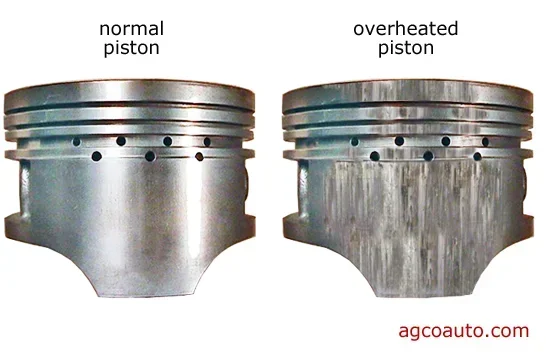
Extreme heat can cause piston damage from overheating in several destructive ways. Pistons expand when hot, and if the engine exceeds safe temperatures, they can seize against the cylinder walls. This is called engine seizure, and it often means catastrophic internal damage that requires a full engine rebuild or replacement.
Even before a full seizure occurs, heat can cause piston rings to weaken, soften, or break entirely. Broken rings fail to seal the combustion chamber properly, which leads to loss of compression, increased oil consumption, and blue smoke from exhaust. The engine will also lose power and run rough because the combustion seal is compromised.
The connecting rods and main bearings inside the engine are also vulnerable to overheating. When oil breaks down from excessive heat, the bearing surfaces lose their lubrication film. This leads to bearing failure, which creates knocking sounds and, in the worst cases, a thrown connecting rod that punches through the engine block. At that point, the engine is typically beyond repair and must be replaced.
How Mechanics Diagnose Overheating Damage
Diagnostic Tests and Inspections
If you suspect your engine has suffered overheating damage, a qualified mechanic will perform several diagnostic tests to determine the extent of the problem. Understanding what these tests involve can help you feel more confident when you visit the repair shop and know what to expect.
The first step is usually a compression test. This measures the pressure inside each cylinder and reveals whether the combustion chambers are sealing properly. Low compression in one or more cylinders can point directly to a blown head gasket, a warped head, or piston ring damage from heat. The test involves removing all spark plugs and threading a pressure gauge into each spark plug hole.
Next, the mechanic will likely perform a leak-down test. This pressurizes each cylinder and measures how quickly pressure escapes. The escaping air can tell the technician exactly where the leak is coming from — whether it is into the cooling system, the oil system, or out the exhaust. This test is incredibly precise and can pinpoint damage that other tests might miss.
Other diagnostic steps include:
- Cooling system pressure test — Pressurizes the closed cooling system to check for both external and internal coolant leaks.
- Oil analysis — Checks the engine oil for coolant contamination, which is a clear sign of internal head gasket failure.
- Block test — Uses a chemical reagent to detect combustion gases in the coolant, confirming a blown head gasket.
- Visual inspection of the radiator and hoses — Checks for physical damage, cracks, and leaks in the external cooling system.
- Thermostat and water pump check — Verifies that these components are functioning correctly and not contributing to the overheating problem.
What to Expect at the Repair Shop
When you bring your vehicle in for an overheating damage inspection, the mechanic will start by asking about the history of the overheating event. They will want to know when it happened, how long the engine was hot, what symptoms you noticed, and whether you continued driving after it overheated. All of this information helps the technician narrow down the likely damage.
The mechanic will then go through the diagnostic tests mentioned above. Depending on what they find, they may recommend further disassembly to get a clear picture of internal damage. This is especially likely if the compression test reveals significant problems or if the block test confirms combustion gases in the coolant.
Be prepared for the diagnosis to take a few hours. Overheating repair cost can vary widely depending on what is found, so getting an accurate diagnosis before committing to repairs is essential. Ask the mechanic to explain each finding in plain language so you fully understand the scope of the damage and your options.
Overheating Damage Repair Costs and Timeline
Average Costs by Damage Type
Understanding the potential overheating repair cost helps you make informed decisions and avoid financial surprises. The cost depends heavily on the type and severity of the damage, as well as the make and model of your vehicle. Labor rates vary by region, and luxury or performance vehicles typically cost more to repair.
A simple head gasket replacement typically costs between $1,000 and $2,000. This includes parts, labor, and the coolant flush needed afterward. The mechanic will need to remove the intake and exhaust manifolds, valve covers, and the cylinder head to access and replace the gasket. It is a significant repair but far less expensive than replacing an entire engine.
If the cylinder head is warped, the mechanic may recommend resurfacing the head. This process uses a precision milling machine to flatten the mating surface and restore a proper seal. Resurfacing usually costs between $500 and $1,500. In some cases, the head can be resurfaced and reused, saving you the cost of a replacement head gasket set and new head hardware.
However, if the engine block cracks or the head cracks, the repair becomes much more expensive. Crack repairs using epoxy or welding can cost $2,000 to $5,000 or more. In many cases, especially with modern engines, a full engine replacement is more practical and reliable. A new engine can cost anywhere from $4,000 to $8,000 or more, depending on the vehicle. A remanufactured engine is often a more affordable alternative at $2,500 to $5,000 installed.
How Long Repairs Take
The timeline for overheating damage repair varies depending on the severity of the damage and the availability of parts. Here is a realistic breakdown of what to expect:
- Head gasket replacement — typically takes 1 to 3 days, depending on the engine design and whether the cylinder head needs resurfacing.
- Cylinder head resurfacing — adds a few hours to the gasket job and is usually done at a machine shop while the engine is disassembled.
- Piston and ring replacement — usually requires a full engine rebuild, taking 3 to 7 days of labor in the shop.
- Engine replacement — can be completed in 1 to 2 days if using a remanufactured or used engine that is ready to install.
- Custom engine repair or welding — can take a week or more depending on the complexity of the crack or damage.
While waiting for repairs, you may need a rental car or alternative transportation. Factor this into your decision-making when choosing between a repair and a replacement. Sometimes paying a bit more for a remanufactured engine with a warranty is the smarter long-term choice.
How to Prevent Engine Damage from Overheating
Regular Maintenance Tips
The best way to deal with overheating engine damage is to prevent it from happening in the first place. Regular maintenance of your cooling system is the most effective strategy, and it costs a fraction of what repairs would run. Staying on top of these simple tasks can add years of reliable life to your engine.
- Flush and replace coolant on schedule — Most manufacturers recommend a coolant flush every 30,000 to 50,000 miles. Check your owner’s manual for the exact interval for your vehicle. Old coolant loses its ability to prevent corrosion and transfer heat effectively.
- Inspect hoses and belts regularly — Look for cracks, swelling, or soft spots in coolant hoses. Check belt tension and condition every few months. Replacing a $20 hose before it fails can save you from a roadside breakdown.
- Monitor your temperature gauge — Make it a habit to glance at your engine temperature gauge during every drive. Know what normal looks like for your vehicle so you can spot changes immediately.
- Check coolant levels monthly — Low coolant is one of the leading causes of overheating. Check the reservoir when the engine is cool and top it off with the correct type of coolant.
- Replace the thermostat before it fails — Thermostats are inexpensive and can prevent overheating if replaced at recommended intervals. A stuck thermostat is one of the most common cooling system failure points.
- Keep the radiator clean — Debris on the radiator fins can restrict airflow and reduce cooling efficiency. Use a gentle stream of water to clean the fins during regular car washes.
- Check the radiator cap — A weak radiator cap cannot hold proper system pressure, which raises the boiling point of coolant and reduces cooling efficiency. Replace the cap every few years as preventative maintenance.
What to Do When Your Engine Starts to Overheat
Even with the best maintenance, overheating can still happen. Knowing how to respond in the moment can make the difference between a minor repair and a totaled engine. Here is a clear action plan to follow if your temperature gauge starts climbing while you are driving.
- Turn on the heater — This sounds counterintuitive, but it helps pull heat away from the engine and into the cabin. Crank it to full blast and open the windows if needed.
- Pull over safely as soon as possible — Do not keep driving. Shut off the engine and let it cool naturally. Continuing to run the engine will only make the damage worse.
- Do not open the radiator cap immediately — The system is under pressure, and hot coolant can cause severe burns. Wait at least 15 to 20 minutes before attempting to open anything.
- Check the coolant level once the engine is cool — If it is low, add a 50/50 mix of coolant and water. Do not pour cold water into a hot engine, as the sudden temperature change can crack the block.
- Call for roadside assistance if needed — If you cannot identify the problem or the engine is still hot, get professional help. Towing is always cheaper than a new engine.
Remember, pulling over quickly at the first sign of overheating can prevent the vast majority of severe engine damage. Your willingness to stop and address the problem is the single most important factor in limiting overheating damage. Do not be a hero and keep driving — your engine will thank you for pulling over.
Learning how to tell if an engine is damaged from overheating empowers you as a vehicle owner. You do not need to be a mechanic to recognize the warning signs. By paying attention to your engine temperature gauge, watching for visual clues like steam or coolant leaks, and listening for unusual sounds, you can catch overheating damage early.
The key is to act quickly. Every minute you spend driving with an overheating engine increases the risk of permanent harm. Whether the damage turns out to be a simple head gasket replacement or something more serious, early intervention always leads to better outcomes and lower costs. Take care of your cooling system, respond promptly to warning signs, and your engine will reward you with years of reliable service. Engine overheating is a serious issue, but with the right knowledge, you can handle it confidently and protect your investment.
Frequently Asked Questions
Can I still drive my car if the engine has been overheating?
No, you should not continue driving if your engine is overheating. Continuing to drive can turn a repairable problem into a catastrophic engine failure. Pull over safely, turn off the engine, and let it cool down before investigating the cause or calling for help.
How much does it cost to repair an engine damaged from overheating?
The overheating repair cost varies widely depending on the damage. A head gasket replacement typically costs $1,000 to $2,000, while a cracked engine block or engine replacement can cost $3,000 to $8,000 or more. Getting an accurate diagnosis is the first step to understanding your specific repair cost and making the best decision for your vehicle.
What is the most common damage caused by a overheating engine?
The most common result of an overheating engine is a blown head gasket. When the engine gets too hot, the head gasket fails and allows coolant and oil to mix or leak into the wrong areas. This is followed by warped cylinder heads and, in severe cases, cracked engine blocks and piston damage.
How long can you drive an engine before overheating causes permanent damage?
Even a few minutes of sustained overheating can cause permanent damage. The exact time depends on how high the temperature climbs and the engine design. However, most experts agree that driving more than a few minutes past the normal temperature range significantly increases the risk of serious and costly harm.
Can low oil cause an engine to overheat?
Yes, low oil is a common cause of engine overheating. Engine oil lubricates internal components and helps carry away heat. When oil levels are low, friction increases and heat builds up, which can lead to overheating and subsequent engine damage. Always keep your oil at the proper level.
Is engine overheating damage covered by warranty?
It depends on the warranty and the cause of the overheating. Most factory warranties do not cover damage caused by neglected maintenance, such as low coolant or ignored warning signs. However, if a manufacturing defect in the cooling system caused the overheating, the warranty may apply. Check with your dealer for specific coverage details.